

Audio & Headphones
The Best Desktop DAC/Amps: 4 Compared (and One to Skip)
We compared four desktop headphone DAC/amps on power, sound signature, connectivity, and value to find the best all-in-one box for a computer desk.
The short version
For most desks, the FiiO K7 is the one to buy: a fully balanced dual-DAC, dual-THX design that drives almost any headphone with clean, neutral sound and every input you need, all at a mid-range price. The iFi ZEN DAC 3 is the pick if you'd rather have warmth and a physical analog bass switch than reference neutrality. Topping's DX5 II is superb, but it depends on you wanting a pricier, fully loaded hub with Bluetooth, a remote and pre-amp outputs, and actually using them. The Creative Sound Blaster X5 is the one to skip for music: it leans on gaming DSP and fussy software while cheaper rivals sound as good or better. Best for: buy the K7 as an all-rounder, choose the ZEN DAC 3 for a warmer sound, and step up to the DX5 II only if its extras earn their keep.
Our picks at a glance
- FiiO K7 - Buy. A fully balanced dual-DAC, dual-THX box that quietly drives almost any headphone for a mid-range price.
- iFi ZEN DAC 3 - Buy. A warm, characterful DAC/amp with a proper analog bass switch, for people who don't want clinical neutrality.
- Topping DX5 II - It depends. A reference-clean, fully loaded desktop hub that's worth the premium only if you'll use its extras.
- Creative Sound Blaster X5 - Skip. A gaming-flavored DAC/amp whose DSP tricks and fussy software don't justify the price for music-first buyers.
The verdict in 30 seconds
What mattered most
- Headphone drive
- Sound signature
- Balanced output
- Connectivity
- Extra features
- Build & footprint
A desktop DAC/amp is the one-box upgrade that turns a laptop or PC headphone jack into a clean, powerful source for good headphones. The category is crowded and mostly excellent, so the real question is fit: raw amp muscle, a warmer or a strictly neutral tuning, and which extras you'll actually use. Two of our four are easy buys, one is a superb-but-conditional pick, and one is a genuine skip if music is your priority.
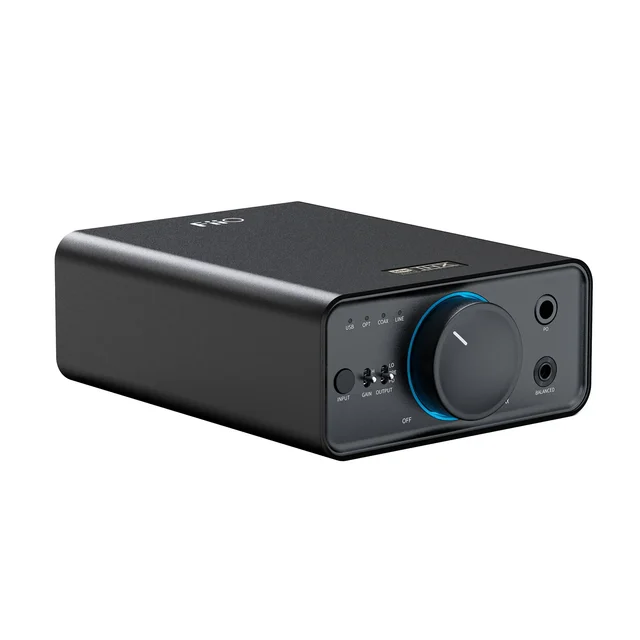
A fully balanced dual-DAC, dual-THX box that quietly drives almost any headphone for a mid-range price.
Best for: Most people who want a single box that quietly powers any headphone on a desk.
- Dual-DAC, dual-THX amp design has the power to drive demanding planars and high-impedance cans
- Clean, neutral sound that adds nothing and subtracts nothing
- Generous inputs (USB, optical, coax, plus an RCA analog input) and at least 2,000 mW balanced into 32 ohms
- No Bluetooth on the standard model and no built-in EQ or tone controls
- Plain, no-frills feature set with no remote or on-screen menus
Own the FiiO K7? Tell us how it held up.
Thanks. Counted, and shown once enough owners have weighed in.
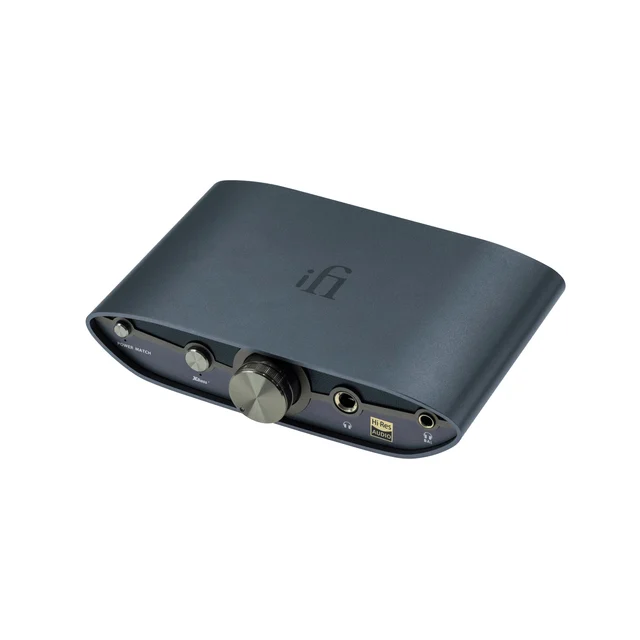
A warm, characterful DAC/amp with a proper analog bass switch, for people who don't want clinical neutrality.
Best for: Listeners who want a touch of warmth and a physical bass switch rather than reference neutrality.
- Warm, musical Burr-Brown sound that flatters bright headphones and everyday tracks
- Analog XBass boost and PowerMatch gain add genuinely useful tuning without menus
- Balanced 4.4mm and single-ended outputs in a compact, distinctive chassis
- Runs on USB-C power, with iFi's iPower2 supply sold separately as the upgrade for a cleaner feed
- Softer, more colored presentation than strictly neutral rivals, and a lighter build
Own the iFi ZEN DAC 3? Tell us how it held up.
Thanks. Counted, and shown once enough owners have weighed in.
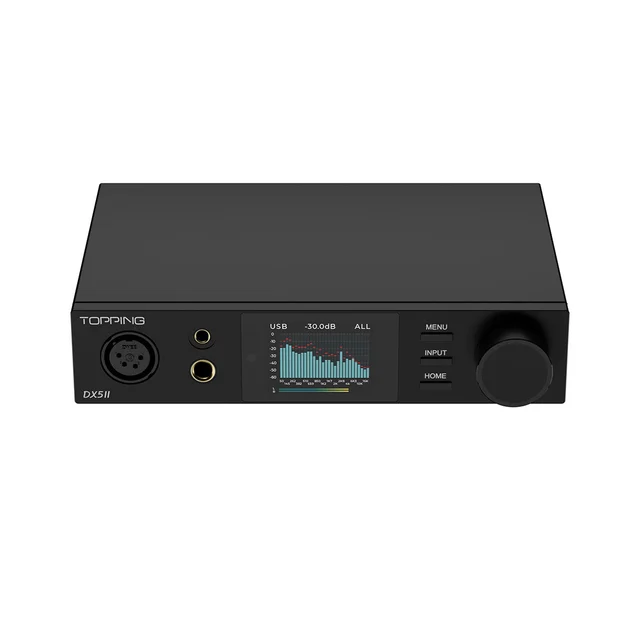
A reference-clean, fully loaded desktop hub that's worth the premium only if you'll use its extras.
Best for: Measurement-minded users who want a fully balanced, do-everything desktop hub and will actually use the Bluetooth, remote and pre-amp outputs.
- Reference-grade, essentially transparent sound
- Loaded: Bluetooth, remote, display, PEQ, pre-amp outputs, plus balanced 4-pin XLR and 4.4mm outputs
- Doubles as a pre-amp hub for powered studio monitors
- Costs noticeably more than the K7 for broadly similar real-world listening
- Analytical, deliberately character-free sound and busier menus won't suit everyone
Own the Topping DX5 II? Tell us how it held up.
Thanks. Counted, and shown once enough owners have weighed in.
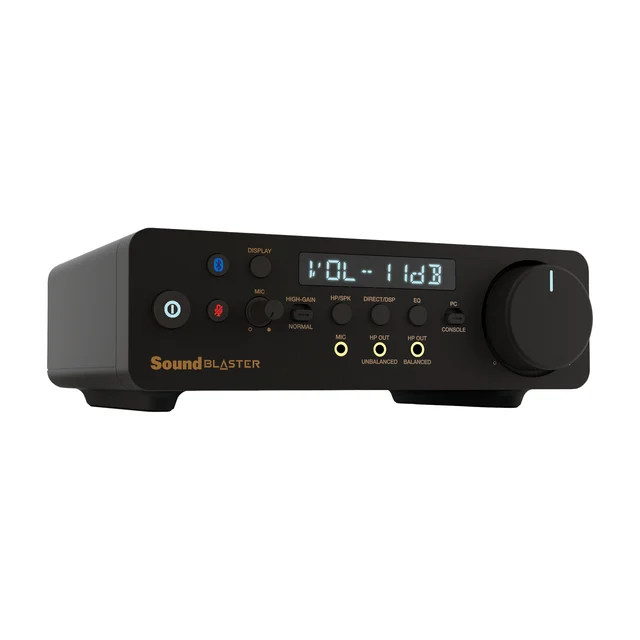
A gaming-flavored DAC/amp whose DSP tricks and fussy software don't justify the price for music-first buyers.
Best for: PC gamers who prioritize chat and DSP features over last-word music fidelity; most music-first buyers should pass.
- Dual CS43198 DACs with balanced output and a genuine mic input for chat and gaming
- Acoustic Engine DSP effects, Scout Mode and a 10-band EQ via the Creative app
- Cheaper Topping and FiiO units sound as good or better for pure music
- Owners note the companion software and drivers can be finicky
- You're paying for gaming DSP features rather than fidelity or amp muscle
Own the Creative Sound Blaster X5? Tell us how it held up.
Thanks. Counted, and shown once enough owners have weighed in.
| Criteria | FiiO K7 Top pick Buy it Buy | iFi ZEN DAC 3 Buy it Buy | Topping DX5 II It depends Buy | Creative Sound Blaster X5 Skip it Buy |
|---|---|---|---|---|
| Best for | Most people who want a single box that quietly powers any headphone on a desk. | Listeners who want a touch of warmth and a physical bass switch rather than reference neutrality. | Measurement-minded users who want a fully balanced, do-everything desktop hub and will actually use the Bluetooth, remote and pre-amp outputs. | PC gamers who prioritize chat and DSP features over last-word music fidelity; most music-first buyers should pass. |
| Price tier | $$ · mid-range | $$ · mid-range | $$$ · premium | $$ · mid-range |
| Headphone drive | Powerful - handles demanding planars | Strong - ample for most headphones | Very powerful, fully balanced | Adequate, less amp muscle |
| Sound signature | Neutral, transparent | Warm, musical | Reference-clean, analytical | Neutral with optional DSP coloration |
| Balanced output | Yes - 4.4mm | Yes - 4.4mm | Yes - 4.4mm and 4-pin XLR | Yes - 4.4mm |
| Connectivity | USB, optical, coax, RCA in | USB-C; RCA line-out | USB, digital inputs, Bluetooth; pre-out | USB, optical, Bluetooth; mic in |
| Extra features | None - pure DAC/amp | Analog XBass + PowerMatch | Remote, display, pre-amp, EQ | Acoustic Engine DSP, 10-band EQ |
| Build & footprint | Compact metal box | Compact, lighter chassis | Larger metal component | Wide component-style case |
| Value for money | Excellent | Very good | Good but pricey | Below par for the money |
| Price tier | $$ · mid-range | $$ · mid-range | $$$ · premium | $$ · mid-range |
Which one is right for you?
- Most people who want a single box that quietly powers any headphone on a desk. Buy it FiiO K7
- Listeners who want a touch of warmth and a physical bass switch rather than reference neutrality. Buy it iFi ZEN DAC 3
- Measurement-minded users who want a fully balanced, do-everything desktop hub and will actually use the Bluetooth, remote and pre-amp outputs. It depends Topping DX5 II
- PC gamers who prioritize chat and DSP features over last-word music fidelity; most music-first buyers should pass. Skip it Creative Sound Blaster X5
How we judged the field
We don’t run our own lab. Instead we synthesize independent bench testing, expert listening reviews and aggregated owner reports, then weight them toward the things that matter on a real desk. Four criteria did most of the sorting.
- Amp power and headphone drive. A desktop unit’s main job over a laptop jack is clean power. We favored units that reviewers and owners confirm can drive demanding planar and high-impedance headphones without strain.
- Sound signature and measured cleanliness. Independent testing shows most modern DACs are effectively transparent, so we leaned on how each amp stage is described in listening: strictly neutral, warm, or analytical.
- Connectivity and features you’ll actually use. Balanced output, digital inputs, pre-amp outs, Bluetooth and EQ only count if they fit your setup rather than padding a spec sheet.
- Value and reliability. We cross-checked owner reports for software quirks, noise, and whether the price buys real performance or mostly marketing features.
FiiO K7
Buy itThe K7 is the box we’d hand to almost anyone. It pairs dual DAC chips with a dual THX amplifier stage and a fully balanced signal path, and both independent testing and owner reports agree it has the power to drive the vast majority of headphones, including hungry planars, with obvious headroom left over. The sound is described consistently as clean and neutral: it doesn’t editorialize, which is exactly what you want from a reference source. You get USB, optical, coaxial and RCA analog inputs, a two-level gain switch, and both 4.4mm balanced and 6.35mm single-ended headphone jacks. The trade-off is that it is deliberately plain, with no Bluetooth on the standard model, no EQ and no remote. For the money, reviewers repeatedly treat it as the default recommendation, and we agree.
iFi ZEN DAC 3
Buy itThe ZEN DAC 3 is the pick for people who find neutral a little boring. Its Burr-Brown DAC and amp stage are described by reviewers as warm and musical, taking the edge off bright headphones and forgiving less-than-perfect recordings. Two features set it apart: XBass, an analog bass boost you flip with a physical switch rather than a menu, and PowerMatch gain, which lets you match output to your headphones. It offers balanced 4.4mm and single-ended outputs in a compact, characterful chassis. Two caveats: it runs on USB-C power, with iFi’s iPower2 supply sold separately as an upgrade, and the presentation is softer and more colored than strictly neutral rivals, with a lighter feel to the build. If you want personality and a real tone control, it’s an easy buy.
Topping DX5 II
It dependsThe DX5 II is arguably the most capable unit here, and that’s precisely why it’s a conditional pick. Independent testing places its design among the most transparent you can buy, and it is loaded: Bluetooth, a remote, a display, PEQ, pre-amp outputs, and balanced 4-pin XLR plus 4.4mm headphone outputs. It can act as the digital hub and pre-amp for a set of powered monitors as well as a headphone amp. But it costs meaningfully more than the K7 while delivering broadly similar real-world listening for headphones, and its sound is described as analytical and character-free, which not everyone enjoys. It makes sense if you specifically want a fully balanced, do-everything centerpiece and will use the Bluetooth, remote and pre-amp features. If you won’t, you’re paying for capability you’ll leave switched off.
Creative Sound Blaster X5
Skip itThe X5 isn’t a bad piece of hardware; it’s the wrong priorities for a music-first buyer. It uses dual Cirrus Logic DACs, offers balanced output and even includes a microphone input, and it leans hard on gaming-oriented extras: Acoustic Engine effects, Scout Mode and a 10-band EQ driven by the Creative app. The problems are value and focus. For pure music, cheaper Topping and FiiO units are reported to sound as good or better, and owners regularly flag the companion software and drivers as finicky. You end up paying for gaming DSP rather than amp muscle or fidelity. If you’re a PC gamer who wants chat and spatial effects in one box, it has a niche. As a best desktop DAC/amp for listening to music, it’s the one to pass on.
Sources
Specs in this review come from these pages.
FiiO K7 vs iFi ZEN DAC 3: which should you buy?
These are the two we’d steer most people toward, and the choice comes down to taste, not quality. The K7 is the more powerful and more neutral of the pair, with extra digital inputs and a genuinely transparent presentation; it’s the better fit if you own demanding headphones or simply want a source that gets out of the way. The ZEN DAC 3 is warmer and more fun, and its analog XBass switch is a real tool for taming bright headphones or adding weight to thin recordings, all in a smaller footprint. If you want maximum power and reference neutrality, buy the K7. If you want warmth, character and a physical bass boost, the ZEN DAC 3 is the more enjoyable everyday companion. Neither is a mistake.
What to look for
- Match power to your headphones. Efficient headphones barely need an amp; high-impedance and planar models benefit from a powerful desktop unit with a gain switch.
- Decide on a sound signature. Neutral units get out of the way; warmer units flatter bright headphones. Pick the coloration you actually want.
- Check the inputs and outputs you need. Look for USB plus optical or coax if you’ll connect a console or TV, and a line-out or pre-out if you also run powered speakers.
- Treat Bluetooth, EQ and displays as bonuses. They add convenience but shouldn’t outrank amp quality and reliability. Wired USB remains the best-sounding connection.
- Read owner reports on software. Units that depend on companion apps for their headline features are more prone to driver and stability gripes.
Our final take
Buy the FiiO K7 if you want one dependable box that powers anything and colors nothing; it’s the all-rounder that suits the most desks. Choose the iFi ZEN DAC 3 if you’d rather have warmth and a real analog bass switch than clinical neutrality. Step up to the Topping DX5 II only when its Bluetooth, remote, pre-amp and reference measurements genuinely fit your setup, because otherwise you’re paying for features you won’t switch on. And unless you’re specifically a gamer chasing DSP tricks, skip the Creative Sound Blaster X5: for music, quieter and cheaper rivals simply make more sense.
Questions, answered
Do I actually need a desktop DAC/amp?
If you use hard-to-drive headphones, or your laptop or PC output sounds weak, noisy or hissy, a desktop DAC/amp is a clear upgrade in power and cleanliness. If you mainly use efficient in-ear monitors or easy-to-drive headphones straight from a decent laptop, the improvement is smaller and you may not need one.
How are these different from a portable headphone amp or an AV receiver?
Desktop DAC/amps are mains- or USB-powered units that sit on your desk and are optimized for driving headphones from a computer. Portable headphone amps run on a battery for use on the go and trade some power for size. AV receivers are built to drive loudspeakers for home theater across many channels, not to be a compact headphone source at a desk.
Is a balanced headphone output worth it?
Balanced output mostly buys you more power and, on some designs, a slightly lower noise floor. Whether that is audible depends on your headphones. All four units here offer a balanced jack, but a good single-ended connection is perfectly fine for many headphones, so don't treat balanced as mandatory.
Will these power planar magnetic headphones?
The FiiO K7 and Topping DX5 II have the most headroom and drive demanding planars comfortably. The iFi ZEN DAC 3 handles most planars well, especially through its balanced output. The Creative Sound Blaster X5 can run easier planars but has the least amp muscle of the group for the toughest loads.
Do I need Bluetooth on a desktop DAC/amp?
Only if you want to stream wirelessly from a phone or tablet at the desk. The Topping DX5 II and the Creative Sound Blaster X5 include Bluetooth, while the standard FiiO K7 and the iFi ZEN DAC 3 do not. For best quality you'll use a wired USB connection regardless, so treat Bluetooth as a convenience, not a deciding factor.
Deciding between the top two? See our head-to-head: FiiO K7 vs iFi ZEN DAC 3.
More in Audio & Headphones
Desktop DAC/Amps, Explained Plain-English guide → FiiO K7 vs iFi ZEN DAC 3 Head-to-head →  The Best Digital Pianos: 4 Compared (and One to Skip)
  The Best DJ Headphones: 4 Compared (and One to Skip)
  Which Premium Dolby Atmos Soundbar Should You Buy? 6 Compared
  The Best Replacement Earbud Tips: 4 Compared (and One to Skip)