

Tools & DIY
The Best Belt Sanders: 4 Compared (and One to Skip)
We compared four belt sanders on belt size, published belt speed, amperage and noise, and found the speed figures are not published in the same unit.
The short version
Makita's 9403 is the pick for flattening work: a 4 by 24 inch belt running at 1,640 ft/min off an 11 amp motor, at a published 84 dB, which is quiet for this class. The 9903 is the value buy, a 3 by 21 inch machine with a variable speed dial from 690 to 1,440 ft/min and an 8.8 amp motor, and at 9.5 lbs it is the one most people should own. The DeWalt DCW220B is the depends pick: a cordless 3 by 21 with a 25-position speed dial, worth it if you sand away from an outlet, though DeWalt's own spec table calls it a 3 by 12 and lists its speed as 1,050 with no unit attached. Skip the Craftsman CMEW213. It has no variable speed and runs at 800 fpm, roughly half the Makita 9903's top speed, and its spec table labels that number opm. Best for: anyone flattening panels, fitting doors, or stripping finish who wants to know what speed they are buying.
Our picks at a glance
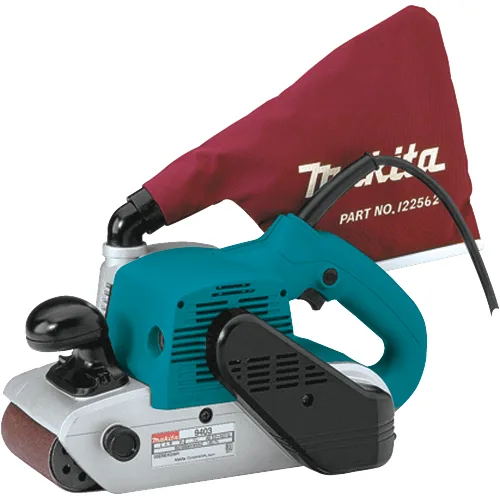
- Makita 9403 4 in. x 24 in. Belt Sander - Buy. The biggest belt and the fastest published speed in the group, and the only one that tells you how loud it is.
- Makita 9903 3 in. x 21 in. Variable Speed Belt Sander - Buy. The 3 by 21 that most people should buy, and the only corded machine here with a real speed range.
- DeWalt DCW220B 20V MAX XR Brushless 3 in. x 21 in. Belt Sander - It depends. The cordless option, with the finest speed adjustment here and a spec sheet that argues with its own product title.
- Craftsman CMEW213 3 in. x 21 in. Belt Sander - Skip. The cheapest way into the category, running at roughly half the Makita 9903's top speed with no way to change it.
The verdict in 30 seconds
What mattered most
- Belt size
- Published belt speed
- Unit the spec sheet uses
- Variable speed
- Power
- Published noise
A belt sander is the tool you use when a random orbital sander would take an hour: flattening a glued-up panel, taking a door down to fit, stripping paint off a deck rail. Buying one should come down to belt size and belt speed. It does not, because two of these four publish their speed under a unit that does not apply to a belt sander at all, and one contradicts its own product title on belt size. We pulled the specs for four current machines and lined up what each manufacturer actually states.
The biggest belt and the fastest published speed in the group, and the only one that tells you how loud it is.
Best for: Flattening glued-up panels, leveling large surfaces, and any job where removing material quickly is the whole point.
- 4 by 24 inch belt covers more surface per pass than any 3 inch machine here.
- 1,640 ft/min belt speed from an 11 amp motor, the highest published figure in this comparison.
- 84 dB published sound level, the lowest of the two machines here that state one.
- Sands flush to a wall on one side, and a dust bag is included.
- 12.6 lbs, over 3 lbs heavier than the 9903 and nearly 5 lbs heavier than the Craftsman.
- No variable speed, so it runs at one rate whatever the material.
- A 4 inch belt is harder to control on narrow stock and easier to dig in with.
- 4 by 24 belts cost more and are stocked less widely than 3 by 21.
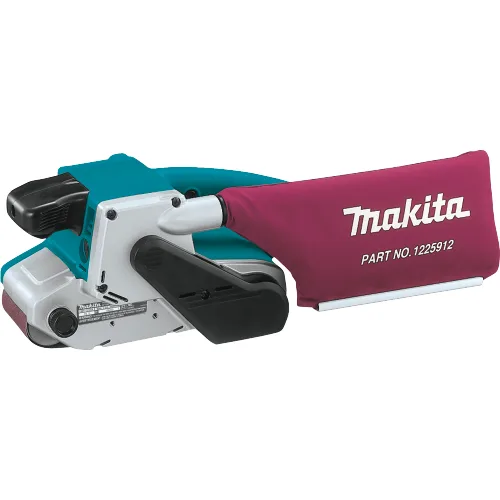
The 3 by 21 that most people should buy, and the only corded machine here with a real speed range.
Best for: General shop work: door fitting, panel cleanup, paint removal, and anything where you want to dial the speed back rather than commit to one rate.
- Variable speed dial from 690 to 1,440 ft/min, so it can be slowed for veneer, plastic or paint.
- 8.8 amp motor and 9.5 lbs, light enough to use on a vertical surface without fighting it.
- 85 dB published, one of only two machines here with a stated noise figure.
- Sands flush to a wall and takes the widely stocked 3 by 21 belt size.
- 3 inch belt removes material more slowly than the 9403 on a wide panel.
- Top speed of 1,440 ft/min is 200 ft/min below the 9403.
- Dust collection is a bag; Makita lists no vacuum port.
- Corded, so an extension cord is part of every job.
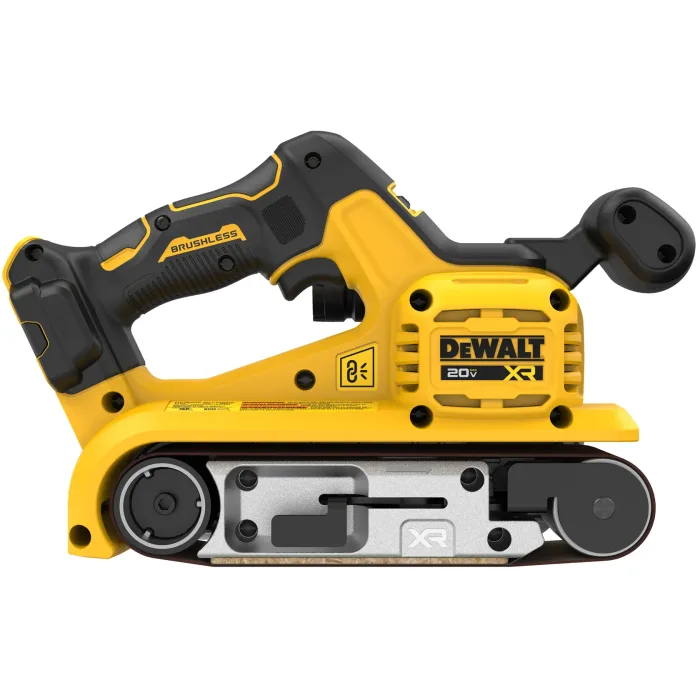
The cordless option, with the finest speed adjustment here and a spec sheet that argues with its own product title.
Best for: Job site work away from an outlet, or anyone already on 20V MAX who sands in short bursts rather than for hours.
- Cordless on the 20V MAX platform, which is the reason to buy it and a genuine one on a job site.
- Brushless motor and a 25-position speed selection dial, the finest speed adjustment in this group.
- 9.26 lbs bare, lighter than the Makita 9903 before you add a battery.
- Dust collection listed, and a variable speed trigger in addition to the dial.
- DeWalt's spec table lists the belt size as 3 in. x 12 in. while the product title and description say 3 in. x 21 in.
- Its speed figure is published as 1,050 with no unit shown, in a field DeWalt's own data schema names for orbits per minute.
- The power claim is up to 22 percent more than a corded version, without naming which corded version.
- No published noise figure, and battery draw on a belt sander is high enough that runtime is a real constraint.
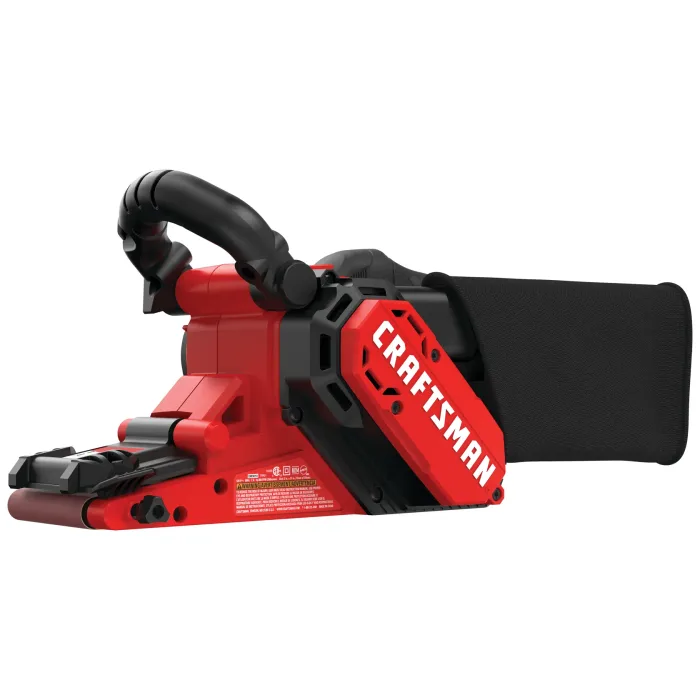
The cheapest way into the category, running at roughly half the Makita 9903's top speed with no way to change it.
Best for: Occasional light sanding where speed and material removal genuinely do not matter. For anything structural, the extra amps and the speed dial are worth the money.
- 7.75 lbs, the lightest machine in this comparison.
- Angled belt design lets it sand closer to an adjoining surface.
- Tool-free belt release, and dust collection is listed.
- 800 fpm with no variable speed, against 690 to 1,440 ft/min on the Makita 9903.
- Craftsman's own spec table labels that 800 as opm, a unit that describes orbital sanders and does not apply to a belt.
- 7 amp motor, the smallest here, on a tool class where amperage is what carries a cut through hardwood.
- No published noise figure and no vacuum port specification.
| Criteria | 9403 4 in. x 24 in. Belt Sander Top pick Buy it Buy | 9903 3 in. x 21 in. Variable Speed Belt Sander Buy it Buy | DCW220B 20V MAX XR Brushless 3 in. x 21 in. Belt Sander It depends Buy | CMEW213 3 in. x 21 in. Belt Sander Skip it Buy |
|---|---|---|---|---|
| Best for | Flattening glued-up panels, leveling large surfaces, and any job where removing material quickly is the whole point. | General shop work: door fitting, panel cleanup, paint removal, and anything where you want to dial the speed back rather than commit to one rate. | Job site work away from an outlet, or anyone already on 20V MAX who sands in short bursts rather than for hours. | Occasional light sanding where speed and material removal genuinely do not matter. For anything structural, the extra amps and the speed dial are worth the money. |
| Price tier | $$$ · premium | $$ · mid-range | $$$ · premium | $ · budget |
| Belt size | 4 in. x 24 in. | 3 in. x 21 in. | 3 in. x 21 in. in the title, 3 in. x 12 in. in the spec table | 3 in. x 21 in. |
| Published belt speed | 1,640 ft/min | 690 - 1,440 ft/min | 1,050, no unit given | 800 fpm |
| Unit the spec sheet uses | ft./min. | ft./min. | field named for orbits per minute | listed as opm |
| Variable speed | No | Yes, dial | Yes, 25-position dial and trigger | No |
| Power | 11 amps, corded | 8.8 amps, corded | 20V MAX battery, brushless | 7 amps, corded |
| Published noise | 84 dB | 85 dB | Not published | Not published |
| Weight | 12.6 lbs | 9.5 lbs | 9.26 lbs bare | 7.75 lbs |
| Sands flush to a wall | Yes | Yes | Not stated | Angled belt design |
Which one is right for you?
- Flattening glued-up panels, leveling large surfaces, and any job where removing material quickly is the whole point. Buy it Makita 9403 4 in. x 24 in. Belt Sander
- General shop work: door fitting, panel cleanup, paint removal, and anything where you want to dial the speed back rather than commit to one rate. Buy it Makita 9903 3 in. x 21 in. Variable Speed Belt Sander
- Job site work away from an outlet, or anyone already on 20V MAX who sands in short bursts rather than for hours. It depends DeWalt DCW220B 20V MAX XR Brushless 3 in. x 21 in. Belt Sander
- Occasional light sanding where speed and material removal genuinely do not matter. For anything structural, the extra amps and the speed dial are worth the money. Skip it Craftsman CMEW213 3 in. x 21 in. Belt Sander
How we judged the field
Five things decide a belt sander. Belt size comes first, because it sets both how much surface you cover per pass and how easy the machine is to keep flat. Belt speed comes second, stated as surface speed in feet per minute, because that is what determines how fast the abrasive cuts. Third is whether that speed is adjustable, since one rate is wrong for at least half the materials people put a belt sander on. Fourth is power, amperage on a corded machine, because a belt sander bogs down under load in a way a random orbital does not. Fifth is weight, which cuts both ways: heavy machines flatten better and are miserable on a vertical surface.
The field splits by belt size and by cord. The 3 by 21 inch corded machine is the volume seller and where most people should look. Above it sits the 4 by 24 class, built for flattening wide panels and priced and weighted accordingly. Alongside both is a growing cordless tier that trades runtime for the ability to work away from power. We took the two Makita corded machines because they publish the most complete specs in the category, added DeWalt’s cordless 3 by 21 to show what the battery costs and what its spec sheet does not say, and included the Craftsman because it is the machine people buy when they want a belt sander without spending much.
Makita 9403 4 in. x 24 in. Belt Sander
Buy itThe 9403 is the flattening machine. A 4 by 24 inch belt running at 1,640 ft/min from an 11 amp motor gives it the highest published surface speed and the widest cut here, and on a glued-up panel that combination is the difference between one session and three. What sets it apart from other 4 by 24 machines is the noise figure: Makita publishes 84 dB, and in a category where nobody else states one at all, having the number is worth something. It sands flush to a wall on one side and comes with a dust bag. The costs are exactly what you would expect. It weighs 12.6 lbs, which is fine pushed along a bench top and unpleasant held against a vertical surface, and it has no speed control, so it does one thing at one rate. Four by twenty-four belts also cost more and are stocked in fewer grits. Buy it if flattening wide surfaces is a regular part of what you do.
Makita 9903 3 in. x 21 in. Variable Speed Belt Sander
Buy itThe 9903 is the one to buy if you are buying one belt sander. The variable speed dial spanning 690 to 1,440 ft/min is the feature that matters most, because it turns a stock removal tool into something you can also use on paint, plastic and softwood without loading the belt or burning the surface. An 8.8 amp motor is enough to carry a 3 inch belt through hardwood, and at 9.5 lbs it is light enough to work on a door edge or a vertical rail without your shoulders giving out. Makita publishes 85 dB, one of only two figures in this comparison. It sands flush on one side and takes 3 by 21 belts, which every hardware store stocks in every grit. The compromises are honest: a 3 inch belt is slower across a wide panel than the 9403, the top speed is 200 ft/min lower, and dust handling is a bag, with no vacuum port listed. None of those is a reason to buy something else.
DeWalt DCW220B 20V MAX XR Brushless 3 in. x 21 in. Belt Sander
It dependsThe DCW220B is the one worth thinking about carefully, because the reason to buy it is clear and the spec sheet is not. Cordless on the 20V MAX platform, brushless, with a 25-position speed selection dial that gives finer adjustment than either Makita’s analog dial, and 9.26 lbs bare. If you sand on job sites or outdoors, that is a real advantage no corded machine can offer. But DeWalt’s own published data works against it. The spec table lists the belt size as 3 in. x 12 in. while the product title, the meta description and the marketing copy all say 3 in. x 21 in. The speed figure appears as 1,050 with no unit attached, in a field DeWalt’s product schema names sanding_speed_maximum_opm, which is the field used for orbital sanders. And the headline power claim is up to 22 percent more power versus a corded version, without saying which corded version. Buy it for the cord you get to leave behind, not for numbers you can compare.
Craftsman CMEW213 3 in. x 21 in. Belt Sander
Skip itThe CMEW213 is the one to skip, and the reason is speed. Craftsman’s marketing copy states 800 fpm, and against the Makita 9903’s 690 to 1,440 ft/min range, that is a machine running at roughly the bottom of what a good belt sander can do, with no way to change it. The 7 amp motor is the smallest here, which matters because a belt sander under load is a tool that either carries the cut or bogs. And Craftsman’s structured spec table labels that 800 as opm, orbits per minute, a unit that belongs to random orbital sanders and means nothing on a belt. The machine has real virtues: 7.75 lbs makes it the lightest here, the angled belt design gets it closer to an adjoining surface, and belt changes are tool-free. If you want a belt sander for occasional light work and know you will never lean on it, it will do that. For anything where material removal is the job, the extra amps and the speed dial are the difference between a tool and a toy.
Sources
Specs in this review come from these pages.
Makita 9403 4 in. x 24 in. Belt Sander vs Makita 9903 3 in. x 21 in. Variable Speed Belt Sander: which should you buy?
The two Makita machines are the same tool at two sizes, and choosing between them is genuinely about what is on your bench. The 9403 runs a 4 by 24 belt at a fixed 1,640 ft/min off 11 amps, and on a wide glued-up panel it will finish in a fraction of the time the 9903 needs. It is also 12.6 lbs, which is a real number when the surface is vertical or overhead, and it has no speed control, so paint, softwood and plastic are all at its mercy.
The 9903 gives up the width and buys back the dial. Being able to drop to 690 ft/min is what makes it usable on a painted door or a veneered panel, and 9.5 lbs is the difference between a tool you take to the work and one you bring the work to. Belt supply favors it too, since 3 by 21 is stocked in every grit everywhere while 4 by 24 is a special trip. The rule is simple: if you flatten wide panels regularly, the 9403 pays for itself in passes. Everyone else should take the 9903 and put the difference into good belts.
What to look for
- A speed figure with a unit attached: belt speed belongs in feet per minute, and a page that shows a bare number or labels it opm is not describing a belt.
- Belt size stated the same way twice: check the spec table against the product title, because on one machine here they disagree by nine inches.
- Variable speed: a fixed-speed sander is right for hardwood and wrong for paint, plastic and softwood, which is most of what people actually sand.
- Amperage on a corded machine: the difference between 7 and 11 amps is whether the tool carries a cut through hardwood or bogs against it.
- A published noise level: belt sanders sit in the range where hearing protection is not optional, and only two machines here state a figure at all.
- Belt availability in your grits: 3 by 21 is stocked everywhere, 4 by 24 is a special order in half the grits you will want.
Our final take
This is a category where the number that should settle the question is the number you cannot trust. Belt speed decides how fast the abrasive cuts, and two of these four machines publish it in a field built for a different kind of sander. The Makita 9403 is the pick if you flatten wide surfaces, with the largest belt, the highest stated speed, and a published 84 dB. The 9903 is the machine most people should own: variable speed from 690 to 1,440 ft/min, 8.8 amps, 9.5 lbs, and belts you can buy anywhere. The DeWalt is worth buying for the cordless freedom and nothing on its spec sheet. The Craftsman runs at 800 fpm with no way to change it, and that is the whole review.
Questions, answered
Why can't I just compare belt sanders on the speed number?
Because the four machines on this page do not publish that number the same way. Makita states belt speed in feet per minute, which is the surface speed of the belt and the figure that actually matters. Craftsman's marketing copy says 800 fpm, but its structured spec table labels the same number opm, which stands for orbits per minute and describes a random orbital sander. DeWalt shows 1,050 with no unit displayed at all, in a data field its own schema names sanding_speed_maximum_opm. Two of the four are storing belt speed in a field built for a different tool, so the numbers only compare if you know what each one means.
3 by 21 or 4 by 24: which belt size should I buy?
3 by 21 is the size to own if you only own one. Belts are stocked everywhere in every grit, the machines are lighter, and a 3 inch platen is much easier to keep flat on anything narrower than a tabletop. Go to 4 by 24 when you are regularly flattening wide glued-up panels or leveling large surfaces, where the extra width genuinely halves your passes. The cost is weight and control: the Makita 9403 is 12.6 lbs against the 9903's 9.5 lbs, and a wider belt digs in faster if you tilt it.
Do I need variable speed on a belt sander?
You need it more than you would expect. Full speed is right for stock removal on hardwood, but it is wrong for softwood, which loads the belt and burns, and wrong for paint and plastic, which melt and gum the abrasive. A dial that drops to around 700 ft/min turns the tool into something you can use on a painted door without smearing the finish into the grain. Both Makita machines and the DeWalt offer it. The Craftsman does not, which is the largest single reason we would not buy it.
Can a cordless belt sander replace a corded one?
For short bursts on a job site, yes. For hours of flattening, no. A belt sander is a continuous high-draw tool, unlike a drill that works in short pulls, so it empties a battery quickly and the pack gets hot. DeWalt claims up to 22 percent more power than a corded version for the DCW220B, but does not name which corded version it is comparing against, so treat that as a marketing claim rather than a spec. Buy cordless because you need to sand where there is no outlet.
How do I stop a belt sander from gouging the workpiece?
Start the tool before it touches the wood and lift it off before you release the trigger. A belt sander that is already spinning will settle flat; one that starts under load will dig in at whichever corner is touching. Keep it moving in long overlapping passes with the grain, and let the machine's weight do the work rather than pressing down, because pressure loads the belt and concentrates the cut. Most gouges happen at the start and end of a pass, not in the middle.
Deciding between the top two? See our head-to-head: Makita 9403 4 in. x 24 in. Belt Sander vs Makita 9903 3 in. x 21 in. Variable Speed Belt Sander.
More in Tools & DIY
Belt Sanders, Explained Plain-English guide → Makita 9403 4 in. x 24 in. Belt Sander vs Makita 9903 3 in. x 21 in. Variable Speed Belt Sander Head-to-head →  The Best Bench Vises: 4 Compared (and One to Skip)
  The Best Benchtop Planers: 4 Compared (and One to Skip)
  The Best Block Planes: 4 Compared for Fine Woodworking
  The Best Brad Nailers: 4 Compared (and One to Skip)