

Outdoors & Fitness
The Best Belay Devices: 4 Compared (and One to Skip)
We compared four current belay devices on the things you can actually check: which part of EN 15151 they are certified to, their published rope diameter range, weight, whether they can belay a second from an anchor, and what carabiner the maker requires.
The short version
The Petzl GRIGRI is the device to buy if you mostly belay a leader on a single rope at a crag or a gym: it is the only one of the four certified under EN 15151-1, the part of the standard covering braking devices with manually assisted locking, and Petzl publishes both a certified range of 8.5 to 11 mm and a narrower optimal range of 8.9 to 10.5 mm. The Black Diamond ATC-Guide is the value pick and the one to own if you ever leave the ground twice on the same climb: 80 g, 8.1 to 11 mm, and a guide mode for bringing up one or two seconds. The Climbing Technology CLICK UP+ is the depends pick, an excellent gym and sport-crag device whose own instructions say it should not be used for trad routes or mountaineering and cannot belay a second directly from the anchor. Skip the Edelrid Mega Jul II unless you specifically want it: it is certified only to 10.0 mm, which rules out plenty of gym ropes, and its lowering and rope-feeding technique is its own thing that you have to learn separately. None of these four is hands-free or auto-locking, and all four manuals say the brake hand stays on the rope. Best for: a climber who already has instruction and wants to match the device to the ropes and the terrain they actually use.
Our picks at a glance
- Petzl GRIGRI - Buy. The cam-assisted device that most gyms and sport crags are built around, with the clearest published guidance on which ropes it likes.
- Black Diamond ATC-Guide - Buy. The cheap, light, do-everything tube with a guide mode, and the device that covers the widest range of ropes here.
- Climbing Technology CLICK UP+ - It depends. A passive assisted-braking device that is very good at the job it was designed for and explicitly not certified for the jobs it was not.
- Edelrid Mega Jul II - Skip. A clever stainless steel tube that claims the whole job list, and asks you to learn a device-specific technique for every part of it.
The verdict in 30 seconds
What mattered most
- Device family
- Certification as published
- Certified rope diameter
- Maker's optimal range
- Weight
- Belays a second from an anchor
A belay device is life-safety equipment, and buying one is the smallest part of using one. This piece compares four devices that are on shelves now: a cam-assisted device, a tube with guide mode, a passive assisted-braking device built for the gym and the crag, and a steel do-everything tube that a lot of people buy and then fight with. We stuck to numbers and wording published by the manufacturers themselves, mostly from their own instruction manuals rather than their marketing pages. Nothing here teaches you to belay, and none of these devices belays for you.
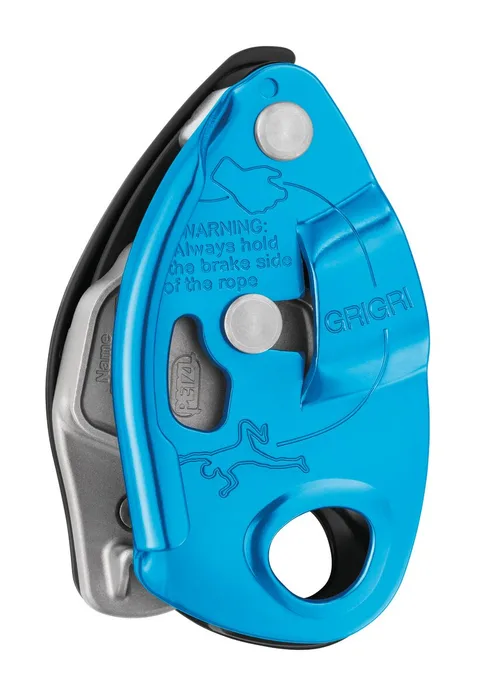
The cam-assisted device that most gyms and sport crags are built around, with the clearest published guidance on which ropes it likes.
Best for: Sport climbers and gym regulars belaying a leader on one rope who want the most margin for error on the catch.
- Certified to EN 15151-1 type 6, the part of the standard for braking devices with manually assisted locking, which none of the other three here carry.
- Petzl publishes a certified range of 8.5 to 11 mm plus a narrower optimal band of 8.9 to 10.5 mm, so you can check your rope against a real number rather than guessing.
- The handle gives smooth, controllable lowering once you have been taught the technique, which is a genuine advantage over the passive devices.
- At 175 g it is the heaviest of the four by a wide margin, and it is the one you notice on a harness all day.
- No guide mode: Petzl's notice covers lead and top-rope belaying, lowering and single-strand rappel, and belaying a second is covered only in a separate Petzl tech tip, one climber at a time.
- Petzl warns that pinning the cam with your thumb while feeding slack can negate the blocking action, which is exactly the habit beginners pick up.
- Single rope only, so it does not cover half or twin rope multipitch days.
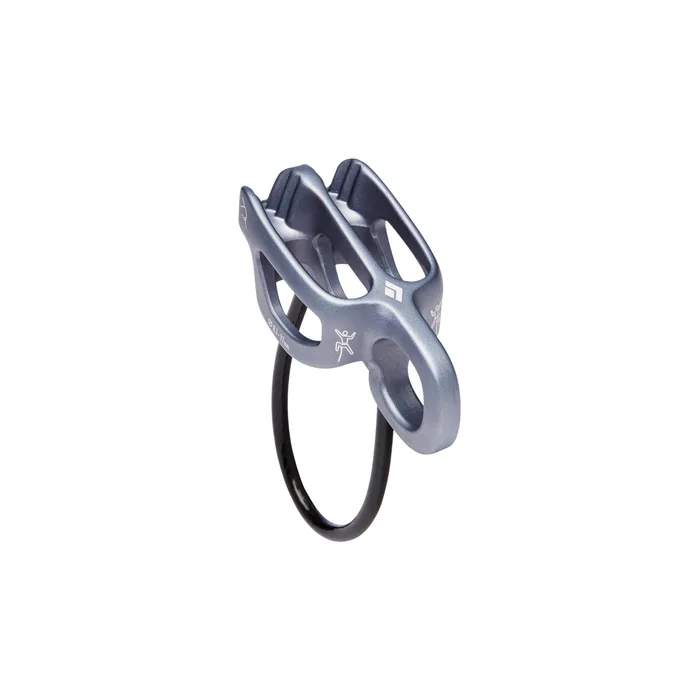
The cheap, light, do-everything tube with a guide mode, and the device that covers the widest range of ropes here.
Best for: Anyone who climbs multipitch, rappels, or wants one device that handles single, half and twin ropes.
- 8.1 to 11 mm of published rope compatibility in 80 g of aluminum, the widest range in this comparison.
- Guide mode belays one or two seconds off an anchor; the CLICK UP+ cannot belay from the anchor at all, and the GRIGRI handles one person at a time.
- Two friction settings, which is why Black Diamond certifies it as EN 15151-2 Type 4, a manual braking device with a function to adjust friction.
- No assisted braking on a lead belay at all: the holding power is entirely your brake hand and the rope's angle.
- Black Diamond's own instructions warn that if you belay two seconds in guide mode and one hangs on the rope, the locking function may not work on the other second's rope.
- Lowering a second out of guide mode is an awkward, learned procedure and a common place for people to get stuck.
- No UIAA certification is listed alongside the CE conformity in the instructions.
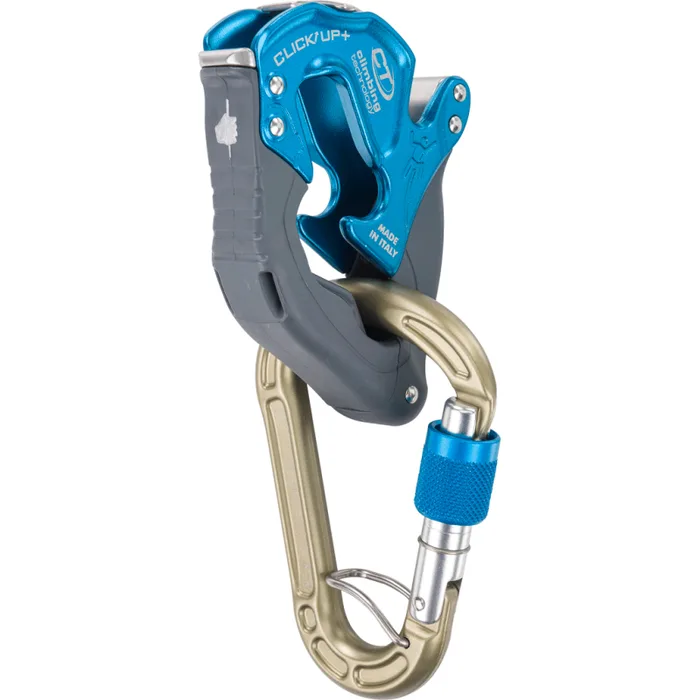
A passive assisted-braking device that is very good at the job it was designed for and explicitly not certified for the jobs it was not.
Best for: Gym and sport climbers who want assisted braking with no moving parts and who are not going to take it up a multipitch route.
- No moving cam to jam, and the instructions describe an audible click as the device rotates into its locked position.
- Certified to EN 15151-2:2012 Type 2 and UIAA 129, so it carries the voluntary federation label as well as the legal CE conformity.
- Ships with the CONCEPT SGL HC carabiner whose ACL bar is specifically there to stop minor-axis cross-loading.
- Climbing Technology states it should not be used for trad routes or mountaineering, which rules out a large slice of climbing.
- Its instructions say it cannot be used to belay a second directly from the belay anchor, so it is a bad only-device for multipitch.
- It is tied to one specific carabiner, and the fallback the maker allows is narrow: an H type carabiner with a 12 mm diameter round section where the rope runs.
- At 110 g for the device alone, plus the required carabiner, it is not a lightweight setup.
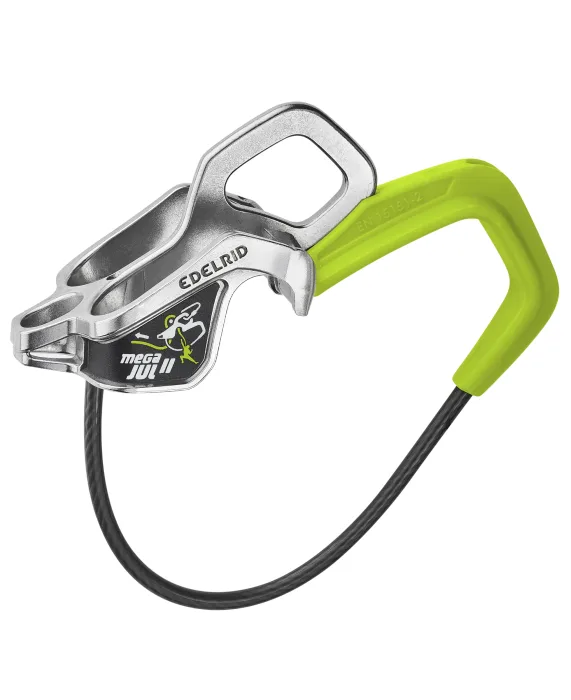
A clever stainless steel tube that claims the whole job list, and asks you to learn a device-specific technique for every part of it.
Best for: Experienced belayers with ropes in the 7.8 to 10.0 mm band who specifically want a tiny steel device with braking assistance, and nobody else.
- A small stainless steel device that does lead belaying, brings up one or more top-rope climbers, and rappels.
- Braking assistance comes from geometry, so there is no cam, no handle and no mechanism to service.
- Made in Germany with a published user manual and declaration of conformity, and the steel body resists the wear that eats aluminum tubes.
- The approved rope diameter stops at 10.0 mm, so a lot of gym and workhorse sport ropes are outside the certified range, and this is the single most checkable reason to walk away.
- Edelrid states the braking action depends on rope diameter, the carabiner used, rope condition and humidity, and tells you to familiarise yourself with those conditions before each use.
- Lowering is not a simple lever pull: the manual's options are deactivating the brake carabiner with redundant backup, or clipping an extra carabiner to a second eyelet and tilting the device.
- For the two-rope top-rope variant, Edelrid warns that especially with thin ropes the rope ends may twist inside the rope channel and cancel out the braking function.
| Criteria | GRIGRI Top pick | ATC-Guide | CLICK UP+ | Mega Jul II |
|---|---|---|---|---|
| Verdict | Buy it | Buy it | It depends | Skip it |
| Best for | Sport climbers and gym regulars belaying a leader on one rope who want the most margin for error on the catch. | Anyone who climbs multipitch, rappels, or wants one device that handles single, half and twin ropes. | Gym and sport climbers who want assisted braking with no moving parts and who are not going to take it up a multipitch route. | Experienced belayers with ropes in the 7.8 to 10.0 mm band who specifically want a tiny steel device with braking assistance, and nobody else. |
| Price tier | $$$ · premium | $ · budget | $$ · mid-range | $$ · mid-range |
| Device family | Cam-assisted braking | Tube with guide mode | Passive assisted braking | Passive assisted-braking tube |
| Certification as published | EN 15151-1 type 6, UIAA | EN 15151-2 Type 4 | EN 15151-2:2012 Type 2, UIAA 129 | EN 15151-2 |
| Certified rope diameter | 8.5 to 11 mm single | 8.1 to 11 mm | 8.5 to 11 mm single | 7.8 to 10.0 mm |
| Maker's optimal range | 8.9 to 10.5 mm | Not published as a narrower band | Not published as a narrower band | Not published as a narrower band |
| Weight | 175 g | 80 g | 110 g, device only | Not listed on the product page |
| Belays a second from an anchor | One second, in a Petzl tech tip rather than the notice | Yes, one or two seconds | No, ruled out by the instructions | Yes, one or more top-rope climbers |
| Main materials | Aluminum, stainless steel, nylon | 100% aluminum | Not published | Steel |
| Belay carabiner requirement | Petzl locking or directional carabiners, otherwise run a compatibility test | Carabiners meeting EN 12275 Type H | CONCEPT SGL HC supplied, or an H type with a 12 mm round section | A locking carabiner in one of the approved shapes shown in the manual |
Which one is right for you?
- Sport climbers and gym regulars belaying a leader on one rope who want the most margin for error on the catch. Buy it Petzl GRIGRI
- Anyone who climbs multipitch, rappels, or wants one device that handles single, half and twin ropes. Buy it Black Diamond ATC-Guide
- Gym and sport climbers who want assisted braking with no moving parts and who are not going to take it up a multipitch route. It depends Climbing Technology CLICK UP+
- Experienced belayers with ropes in the 7.8 to 10.0 mm band who specifically want a tiny steel device with braking assistance, and nobody else. Skip it Edelrid Mega Jul II
How we judged the field
Five things decide whether a belay device is right for you, and four of them are printed on the device or in its manual. First, which part of EN 15151 it is certified to, because Part 1 covers braking devices with manually assisted locking and Part 2 covers manual braking devices, and the type number inside each part tells you more: type 6 under Part 1 means no panic blocking element, Type 2 under Part 2 means no friction adjustment, Type 4 means there is one. Second, the certified rope diameter range, which is the range the device was actually tested with, and which is not the same as the wider band a maker might describe as usable. Third, whether the device can belay one or two seconds directly off an anchor, which is the line between a single-pitch tool and a multipitch tool. Fourth, weight, because you carry it. Fifth, and least negotiable, what the manufacturer says about the belay carabiner, since a cross-loaded or wrong-shaped carabiner changes the friction the device was certified with.
The field splits into three families that do genuinely different jobs. Tube devices are a slot and a wire: light, cheap, rope-agnostic, and the only family here that can bring up two seconds at once off an anchor in guide mode, but they give you no help holding a leader. Cam-assisted devices pinch the rope with a moving cam and lower on a handle, which is why they dominate gyms and sport crags and why they are heavier, pricier and single-rope only. Passive assisted-braking devices sit between the two, using geometry and the belay carabiner rather than a mechanism. We picked one of each family plus a fourth that tries to be a tube and a passive assisted device at once, because that fourth shape is the one people buy on the promise of doing everything and then have to learn from scratch.
Petzl GRIGRI
Buy itThe Petzl GRIGRI is the only device here certified under EN 15151-1, the part of the standard for braking devices with manually assisted locking, and Petzl’s notice names the exact type: EN 15151-1 type 6, devices for belaying and rappelling without a panic blocking element. It takes 8.5 to 11 mm single ropes, and Petzl goes further than anyone else here by publishing bands inside that range, calling 8.9 to 10.5 mm optimal and warning that 8.5 to 8.9 mm ropes are harder to grip and harder to control when lowering or catching a fall. The trade-offs are real. It is 175 g, which is more than double the ATC-Guide. It is single-rope only. Its notice covers lead belaying, top-rope belaying, lowering and single-strand rappel, and belaying a second is covered only in a separate Petzl tech tip, one climber at a time. And Petzl explicitly warns against keeping your thumb pressed on the cam while feeding slack, because doing so negates the blocking action. This is the device for someone who belays a leader on one rope, week in and week out.
Black Diamond ATC-Guide
Buy itThe Black Diamond ATC-Guide is the answer to a different question, and it answers it cheaply. It is 80 g of aluminum, takes 8.1 to 11 mm, and carries two friction settings, which is why Black Diamond certifies it as EN 15151-2, Manual Braking Device, Type 4, a device for belaying and abseiling with a function to adjust friction, assessed by the notified body Apave Exploitation France. Guide mode lets a leader bring up one or two seconds directly off the anchor, which neither assisted-braking device here matches: the CLICK UP+ cannot belay from the anchor at all, and the GRIGRI is rated for one person at a time. What you give up is any braking assistance on a lead belay: the holding power is your brake hand, full stop. Black Diamond also flags a specific hazard worth knowing, that if you belay two seconds in guide mode and one of them hangs on the rope, the locking function may not work on the other second’s rope, so both brake strands stay gripped at all times. Lowering out of guide mode is a fiddly, learned procedure. For anyone who climbs more than one pitch at a time, this is the device to own first.
Climbing Technology CLICK UP+
It dependsThe Climbing Technology CLICK UP+ is the most honest product here about its own limits, and that honesty is what makes it a depends rather than a buy. It is a passive assisted-braking device certified to EN 15151-2:2012 Type 2 and UIAA 129, takes 8.5 to 11 mm single ropes, and weighs 110 g without its carabiner. In a fall, the belayer holds the free end, the device rotates against the carabiner and pinches the rope with an audible click. There is no cam and no handle. But Climbing Technology states that it should not be used for trad routes or mountaineering, and that it cannot be used to belay a second directly from the belay anchor. It is also tied to the CONCEPT SGL HC carabiner, whose ACL spring bar exists to stop minor-axis cross-loading, with only an H type carabiner having a 12 mm round rope-bearing section allowed as a substitute. If your climbing is gyms and bolted crags, this is a genuinely good device. If it is anything else, it is the wrong one.
Edelrid Mega Jul II
Skip itThe Edelrid Mega Jul II is the device people buy because it appears to do everything, and it is the one we would steer most buyers away from. It is a small stainless steel device, certified EN 15151-2, and it will lead belay with braking assistance, bring up one or more top-rope climbers, and rappel. The problem starts with the number: the approved rope diameter is 7.8 to 10.0 mm, which puts a great many gym and sport ropes outside the certified range before you have done anything wrong. Edelrid then tells you that the braking action depends on rope diameter, the carabiner used, rope condition, humidity and other factors, and that you should familiarise yourself with those conditions before each use. Lowering is not a lever pull: the manual’s routes are deactivating the brake carabiner with redundant backup, or clipping a second carabiner to a dedicated eyelet and tilting the device. And in the two-rope top-rope variant, Edelrid warns the rope ends can twist in the channel and cancel out the braking function. Buy it only if you want exactly this device and have ropes in its band.
Sources
Specs in this review come from these pages.
- EVS-EN 15151-1:2012 scope, braking devices with manually assisted locking (evs.ee)
- EVS-EN 15151-2:2012 scope, manual braking devices (evs.ee)
- Petzl GRIGRI product page and technical notice (petzl.com)
- Black Diamond ATC-Guide product page and instructions for use (blackdiamondequipment.com)
- Climbing Technology CLICK UP+ specific instructions (climbingtechnology.com)
- Edelrid Mega Jul II product page and user manual (edelrid.com)
Petzl GRIGRI vs Black Diamond ATC-Guide: which should you buy?
The GRIGRI and the ATC-Guide are not really competing, which is the most useful thing to understand about them. The GRIGRI is a cam-assisted device certified under EN 15151-1 for single ropes from 8.5 to 11 mm, aimed squarely at holding a leader who falls repeatedly on one rope. The ATC-Guide is a manual braking tube certified under EN 15151-2 Type 4 for 8.1 to 11 mm, aimed at rope management across a whole day of climbing: rappelling on two strands, bringing up seconds off an anchor, and dialling friction up or down for the rope in hand. One is 175 g and the other is 80 g. One has a handle and a cam and the other has a slot and a wire.
So choose by terrain, not by which sounds safer. If you spend your climbing life at a gym or a bolted single-pitch crag with one fat-ish rope, buy the GRIGRI and get taught the payout and lowering technique properly, because the technique for feeding slack past the cam is where people go wrong. If you climb multipitch, rappel, use half ropes, or expect to bring up a second, buy the ATC-Guide, and accept that the holding power on a lead belay is entirely your brake hand and your attention. Plenty of climbers own both and clip whichever the day calls for, which at these weights and this price gap is not an extravagant answer. What you should not do is buy one and assume it does the other one’s job.
What to look for
- Read the part and the type, not just the number: EN 15151-1 covers braking devices with manually assisted locking and EN 15151-2 covers manual braking devices, and the type inside each part tells you about panic blocking elements or friction adjustment.
- Match your actual rope to the certified range: check the diameter on your rope’s tag against the range stamped on the device, and remember Black Diamond’s note that stated rope diameters carry a tolerance of plus or minus 0.2 mm.
- Treat a wider usable range as marketing, not permission: the certified range is what was tested, and Petzl is unusual in publishing a narrower optimal band inside its certified range so you can see the difference.
- Decide up front whether you need guide mode: bringing up two seconds at once off an anchor is a tube-device capability; the CLICK UP+ instructions rule out belaying from the anchor entirely, and Petzl covers belaying a single second with the GRIGRI only in a separate tech tip.
- Buy the carabiner the manual asks for: EN 12275 Type H or HMS shapes, no basic Type B lockers on the ATC-Pilot, and Climbing Technology’s own carabiner with its anti-cross-loading bar on the CLICK UP+.
- Budget for instruction before you budget for the device: Black Diamond’s instructions say plainly that they are not intended to teach you how to belay or rappel, and lowering technique differs enough between device families that transferring habits between them causes accidents.
Our final take
Buy the GRIGRI if your climbing is one rope, one pitch, and a partner who falls; buy the ATC-Guide if your climbing involves anchors, rappels, or thinner ropes, and be honest that many people should own both. The CLICK UP+ is excellent inside the boundary its maker draws around it and a poor choice outside it. The Mega Jul II is a specialist tool sold in a general-purpose shape, and its 10.0 mm ceiling alone disqualifies it for a lot of buyers. Whichever you pick, the device is the least important part of the system. Get taught, get checked, practise the lowering technique for that specific device on the ground, and keep your brake hand on the rope, because not one of these four will do that part for you.
Questions, answered
Is an assisted-braking device hands-free?
No, and every manufacturer in this comparison says so in its own instructions. Petzl's GRIGRI notice states that if the brake side of the rope is not held there is a risk that the device will not block the rope, because it is the hand on the brake strand that causes the cam to engage. Black Diamond's ATC-Pilot and ATC-Guide instructions both say never take your braking hand off the rope under any circumstances. Edelrid's Mega Jul II manual says the brake hand must never release the braking rope and must always be held below the device level. Climbing Technology repeats the same instruction at every step of belaying with the CLICK UP+. Assisted braking means the device helps you hold a fall, not that it holds one for you.
What is the difference between EN 15151-1 and EN 15151-2?
They are two parts of the same European standard for mountaineering braking devices. Part 1 covers braking devices with manually assisted locking, and its scope says explicitly that it does not apply to manual braking devices, which are addressed in Part 2. Part 2 covers manual braking devices used with only manual control. Inside each part there are numbered types: the GRIGRI is EN 15151-1 type 6, which Petzl defines as a device for belaying and rappelling without a panic blocking element, while the Reverso and the ATC-Pilot are EN 15151-2 type 2, described as belaying and abseiling without a function to adjust friction, and the ATC-Guide is EN 15151-2 Type 4, which does have that friction adjustment. The part number alone does not tell you whether a device has assisted braking, because both the CLICK UP+ and the ATC-Pilot are assisted-braking devices certified under Part 2.
What happens if my rope is outside the device's certified range?
You are outside what the manufacturer tested and what the notified body assessed, which is a real and checkable problem rather than a technicality. Petzl's own guidance splits its 8.5 to 11 mm range into bands and says ropes from 8.5 up to 8.9 mm are harder to grip and can be more difficult to control while lowering, rappelling or catching a fall, and that using thin ropes with the GRIGRI requires greater vigilance and a high level of experience. Edelrid's Mega Jul II stops at 10.0 mm, so a 10.2 mm gym rope is simply outside the approved range. Black Diamond notes that manufacturers' stated rope diameters carry a tolerance of plus or minus 0.2 mm, so a rope right at the edge of a range may not be where you think it is. Check the diameter printed on your rope's tag against the range stamped on the device, not against a range you remember from a different model.
Does the carabiner really matter?
Yes, and every maker here specifies something about it. Black Diamond tells ATC-Guide users to choose carabiners meeting EN 12275 Type H, and its ATC-Pilot instructions go further: for use with Type H or HMS locking carabiners only, do not use Type B basic locking carabiners. Climbing Technology supplies the CLICK UP+ with a specific carabiner whose ACL spring bar exists to prevent minor-axis cross-loading, and allows only an H type with a 12 mm diameter round section as a substitute. Petzl says the GRIGRI is compatible with its own locking and directional carabiners and that any other carabiner needs a compatibility test, particularly to confirm it does not stop the cam moving freely. Edelrid shows approved carabiner shapes in its manual and requires a locking gate. A cross-loaded or wrongly shaped carabiner changes the friction the device was tested with.
Can I learn to belay from a review like this one?
No. Black Diamond puts it plainly in its own instructions: belaying and rappelling are learned skills that require proper instruction and practice, and while the instructions explain the proper use and limitations of belay devices, they are not intended to teach you how to belay or rappel. Petzl requires users to get specific training in the use of the product and in managing the risks of the activity. Edelrid restricts use to trained, experienced people or those under the direct instruction and supervision of trained, experienced people. Lowering technique in particular differs by device family and is a documented source of accidents, which is why every manual devotes a separate numbered section to it. Take a class, get checked out at a gym, and practise on the ground with a backup before you trust a new device with a person.
Deciding between the top two? See our head-to-head: Petzl GRIGRI vs Black Diamond ATC-Guide.
More Outdoors & Fitness reviews
 The Best Binoculars: 4 Compared (and One to Skip)
  The Best Bivy Sacks: 4 Compared (and One to Skip)
  The Best Camp Cooksets: 4 Compared (and One to Skip)
  The Best Camp Cutlery: 4 Compared (and One to Skip)
  The Best Camp Mugs: 4 Compared (and One to Skip)
  The Best Camp Pillows: 4 Compared (and One to Skip)