

Outdoors & Fitness
The Best Binoculars: 4 Compared (and One to Skip)
We compared four current 8x42-class birding and outdoors binoculars on sharpness, brightness, field of view, and everyday handling.
The short version
For most people getting into birding or general outdoors glassing, the Nikon Monarch M5 8x42 is the pick: a bright, sharp, light, weather-sealed all-rounder at a fair mid-range price. The Vortex Diamondback HD 8x42 is nearly as good for similar money and adds an unconditional lifetime warranty that covers accidents, so risk-averse buyers should start there. Step up to the Zeiss Terra ED 8x42 only if you want the finest image and don't mind a stiff focus wheel or the premium price. Skip the Celestron Nature DX ED 8x42 unless budget is the deciding factor, since its weak low-light performance is exactly where birding gets hard. Best for: birders and outdoors folks who want one dependable 8x42 they won't need to replace.
Our picks at a glance
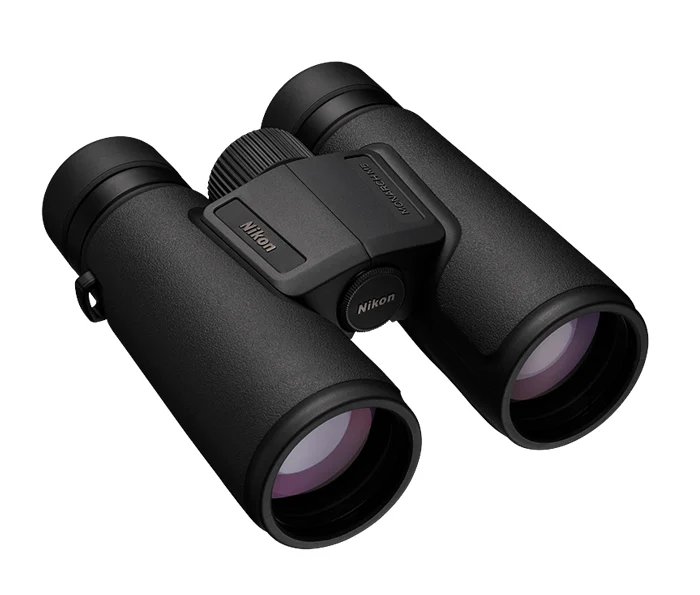
- Nikon Monarch M5 8x42 - Buy. The reliable all-rounder that gives you most of the good stuff for a sane price.
- Vortex Diamondback HD 8x42 - Buy. The value champion, backed by a no-questions lifetime warranty that removes all the risk.
- Zeiss Terra ED 8x42 - It depends. The most refined image here and close focus down to 5.3 ft, if you can live with a stiff focus wheel.
- Celestron Nature DX ED 8x42 - Skip. A capable bargain pair that most people will outgrow faster than they expect.
The verdict in 30 seconds
What mattered most
- Daytime sharpness
- Low-light brightness
- Field of view
- Focus & handling
- Close focus
- Build & warranty
For birding and general outdoors use, an 8x42 or 10x42 roof-prism binocular is the versatile sweet spot: bright enough at dawn and dusk, wide enough to track movement, and light enough to carry all day. We looked at four models you can actually buy in 2026, synthesizing independent testing and long-term owner reports. Two earn a clear buy, one is a it-depends splurge, and one budget pair we'd steer most people away from.
The reliable all-rounder that gives you most of the good stuff for a sane price.
Best for: Birders and hikers who want one dependable do-everything pair without overthinking it.
- Bright, sharp central image with ED glass that controls color fringing well
- Light for a full-size 42mm pair and comfortable for long sessions
- Fully waterproof and fog-proof with a grippy rubber-armored body
- Field of view is narrower than some rivals, which can feel a touch tunnel-like
- Edges soften noticeably before the field's outer margin
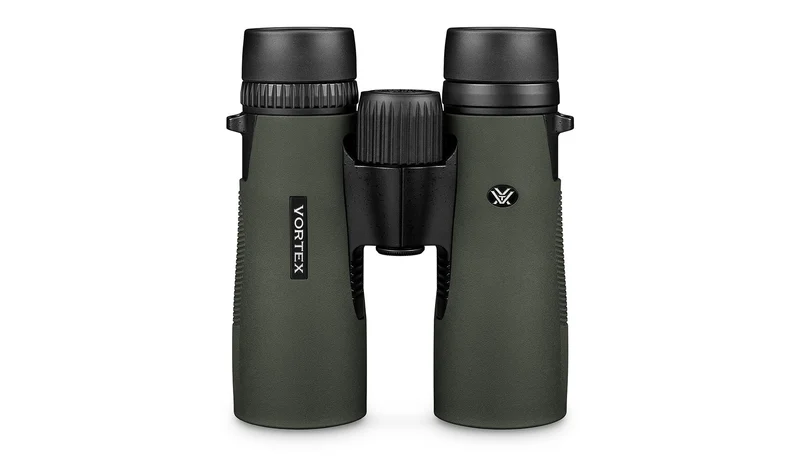
The value champion, backed by a no-questions lifetime warranty that removes all the risk.
Best for: First serious binocular, or anyone who wants strong performance and bulletproof after-sale peace of mind.
- Punches well above its price with good contrast and daytime sharpness
- Vortex's unconditional lifetime VIP warranty covers accidental damage
- Comfortable ergonomics with smooth, twist-up eyecups
- Falls behind pricier glass in low light at dawn and dusk
- Some edge softness and slightly less pop than premium optics
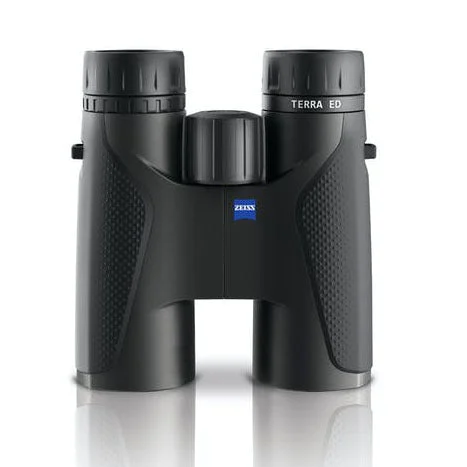
The most refined image here and close focus down to 5.3 ft, if you can live with a stiff focus wheel.
Best for: Enthusiasts who prioritize image quality and will pay a premium for it.
- Crisp, colorful image that stays sharp nearly to the edge
- A 5.3 ft close focus for watching butterflies and insects at your feet
- A 375 ft field of view at 1,000 yards, well wider than the Monarch M5's
- Focus wheel is often reported as stiff and slow to move
- Costs meaningfully more than the mid-range picks
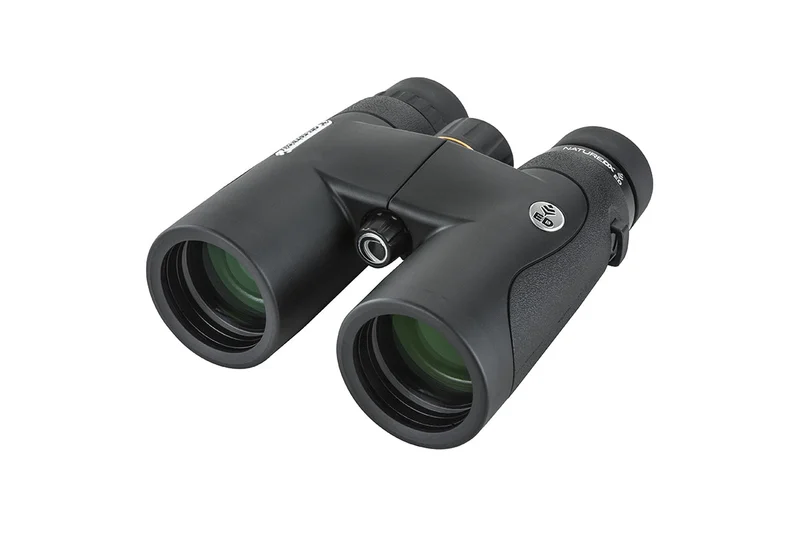
A capable bargain pair that most people will outgrow faster than they expect.
Best for: Absolute beginners on the tightest budget who aren't sure they'll stick with it.
- Impressively sharp daytime image for the low price
- Fast, easy focus and comfortable in the hand
- Good starting point for testing whether the hobby sticks
- Weak in low light, where birding often happens
- Softer edges and lower-grade materials than the step-up models
| Criteria | Nikon Monarch M5 8x42 Top pick Buy it Buy | Vortex Diamondback HD 8x42 Buy it Buy | Zeiss Terra ED 8x42 It depends Buy | Celestron Nature DX ED 8x42 Skip it Buy |
|---|---|---|---|---|
| Best for | Birders and hikers who want one dependable do-everything pair without overthinking it. | First serious binocular, or anyone who wants strong performance and bulletproof after-sale peace of mind. | Enthusiasts who prioritize image quality and will pay a premium for it. | Absolute beginners on the tightest budget who aren't sure they'll stick with it. |
| Price tier | $$ · mid-range | $$ · mid-range | $$$ · premium | $ · budget |
| Daytime sharpness | Very good, sharp center | Good, strong contrast | Excellent, sharp to edge | Good for the price |
| Low-light brightness | Bright, ED glass | Average, dims at dusk | Bright, high transmission | Weak in low light |
| Field of view | 335 ft at 1,000 yd, narrowest here | 393 ft at 1,000 yd | 375 ft at 1,000 yd | 393 ft at 1,000 yd |
| Focus & handling | Smooth, comfortable | Smooth, easy | Refined but stiff wheel | Fast and easy |
| Close focus | 8.2 ft | 5.0 ft | 5.3 ft | 6.5 ft |
| Build & warranty | Waterproof, solid | Waterproof, unconditional lifetime VIP warranty | Waterproof, premium feel | Waterproof, budget materials |
| Weight | 22.2 oz | 21.8 oz | 25.6 oz | 24.9 oz |
| Price tier | $$ · mid-range | $$ · mid-range | $$$ · premium | $ · budget |
Which one is right for you?
- Birders and hikers who want one dependable do-everything pair without overthinking it. Buy it Nikon Monarch M5 8x42
- First serious binocular, or anyone who wants strong performance and bulletproof after-sale peace of mind. Buy it Vortex Diamondback HD 8x42
- Enthusiasts who prioritize image quality and will pay a premium for it. It depends Zeiss Terra ED 8x42
- Absolute beginners on the tightest budget who aren't sure they'll stick with it. Skip it Celestron Nature DX ED 8x42
How we judged the field
We don’t run our own optics lab. Instead, we synthesize independent testing and a large pool of long-term owner reports, then weight the criteria that actually matter in the field for birding and general outdoors use. Those are: daytime sharpness and contrast; low-light brightness at dawn and dusk when wildlife is most active; field of view for finding and tracking movement; focus feel and ergonomics over a long session; close focus for insects and nearby detail; and the build quality and warranty that decide whether a pair survives years of real use. We deliberately stuck to the 8x42 and 10x42 class because it’s the most versatile format for the widest range of people. Prices are given only as qualitative tiers.
Nikon Monarch M5 8x42
Buy itThe Monarch M5 is the pair we’d hand most people without hesitation. Independent testing and owners consistently describe a bright, sharp central image helped by ED glass that keeps color fringing in check, all in a body that’s light for a full-size 42mm and comfortable to hold for hours. It’s fully waterproof and fog-proof with a grippy rubber-armored shell. The trade-offs are honest: the field of view is narrower than some rivals, which a few owners describe as slightly tunnel-like, and the image softens toward the edges before the outer margin. Neither is a dealbreaker for the price, and the overall package is hard to beat as a do-everything choice.
Vortex Diamondback HD 8x42
Buy itThe Diamondback HD is the value play, and it’s a strong one. Reviewers note it punches above its price with good contrast and daytime sharpness, using Vortex’s HD glass at a fraction of what the company’s higher lines cost. Where it truly separates itself is the warranty: Vortex’s VIP coverage is unconditional and lifetime, and it covers damage however it happened and wherever you bought the binocular. For a first serious pair that’s going to get dropped and dragged through years of outings, that’s enormous peace of mind. It does give up ground in low light at dawn and dusk, and premium glass will show a bit more pop, but as an everyday birding and hiking binocular the value is outstanding.
Zeiss Terra ED 8x42
It dependsThe Terra ED delivers the most refined image in this group. Independent testing describes a crisp, colorful view that stays sharp nearly to the edge, 88% light transmission by Zeiss’s figure, and a 375 ft field of view at 1,000 yards. Its 5.3 ft close focus lets you study butterflies and insects almost at your toes. The catch shows up in the mechanics: owners and reviewers repeatedly flag a focus wheel that feels stiff and slow, which matters if you refocus constantly. Add the premium price and this becomes a considered purchase rather than an easy yes. If image quality and close focus top your list and the stiff wheel doesn’t bother you in the store, it’s a rewarding pair; otherwise the mid-range picks give up surprisingly little.
Celestron Nature DX ED 8x42
Skip itThe Nature DX ED is a genuinely capable bargain, and we want to be fair to it: owners praise an impressively sharp daytime image, fast easy focus, and comfortable handling for the money, and it’s a reasonable way to test whether birding sticks. But we’re steering most people past it because its weakness is low light, and low light is exactly when birding gets interesting. Softer edges and lower-grade materials than the step-up models also mean many buyers outgrow it quickly. Unless the lowest possible price is the deciding factor, the small jump to the Diamondback HD or Monarch M5 buys performance you’ll appreciate for years.
Nikon Monarch M5 vs Vortex Diamondback HD: which should you buy?
These two are close, and both are easy to recommend. On optics, the Monarch M5 has a slight edge in brightness and refinement, especially as the light fades, and at 22.2 oz it is light to carry, though the Diamondback HD is a touch lighter at 21.8 oz and has the wider field of view. The Diamondback HD answers with comparable daytime sharpness at similar money and one decisive advantage: the unconditional, accident-covering lifetime warranty. If you’re choosing purely on the view, lean Monarch M5. If you want the most protection for a pair that will take real-world abuse, or this is your first binocular and you’d rather not worry about a drop, the Diamondback HD is the smarter buy. You won’t regret either.
What to look for
- Magnification and objective: 8x42 is the versatile default; pick 10x42 only if you glass across open water or fields and can hold steady.
- Brightness at dusk: A 42mm objective plus good coatings matters most when wildlife is active in low light.
- Field of view: Wider is easier for finding and following moving birds.
- Focus feel: Test the focus wheel yourself; a stiff or vague one gets frustrating fast.
- Close focus: Important if you also watch insects and nearby detail.
- Weatherproofing: Waterproof and nitrogen-purged sealing protects the optics and extends the pair’s life.
- Warranty: For gear that gets knocked around, generous accident coverage can rival a step up in glass.
Our final take
Buy the Nikon Monarch M5 8x42 if you want the best all-around view for the money in a light, weatherproof package, and the Vortex Diamondback HD 8x42 if you want nearly the same for similar money plus a warranty that removes all the risk. The Zeiss Terra ED 8x42 is the reward for enthusiasts who prize image quality and will pay for it, provided the stiff focus wheel doesn’t put you off. And the Celestron Nature DX ED 8x42, while a fair bargain, is the one most people should pass on in favor of a small step up. Any of these will get you outdoors; the top two will keep you happy the longest.
Questions, answered
Should I get 8x42 or 10x42 for birding?
For most birders, 8x42 is the better default. The lower magnification gives a wider field of view (easier to find and follow fast birds), a brighter image, and a steadier view since hand shake is less magnified. Choose 10x42 only if you mainly watch across open water or big fields where the extra reach matters more than a steady, wide view.
What do the numbers like 8x42 actually mean?
The first number is magnification: 8x makes things look eight times closer. The second is the objective (front) lens diameter in millimeters: 42mm gathers plenty of light for bright images in shade and at dawn or dusk. A 42mm objective is the classic full-size compromise between brightness and carry weight.
Is ED glass worth paying for?
ED (extra-low dispersion) glass reduces color fringing around high-contrast edges, so images look a bit crisper and more color-accurate. Reviewers note the benefit is real but often modest at budget price points. It's a nice-to-have that matters more as you move up in price and spend longer looking through the glass.
Do I need waterproof binoculars?
For outdoor use, yes, it's worth it. All four models here are waterproof and gas-purged (nitrogen for the Nikon, Zeiss and Celestron, argon for the Vortex) to resist internal fogging when temperatures swing. That sealing also keeps out dust and humidity, which protects the optics and extends the binocular's usable life even if you never get caught in the rain.
Why does the warranty matter so much on the Vortex?
Vortex's VIP warranty is an unconditional lifetime warranty that covers damage however it happened and wherever you bought the product, excluding loss, theft, deliberate damage and cosmetic wear. Because binoculars get dropped, banged, and knocked out of alignment over years of field use, that coverage can be worth as much as a small step up in optical quality, especially for a first pair.
Deciding between the top two? See our head-to-head: Nikon Monarch M5 8x42 vs Vortex Diamondback HD 8x42.
More in Outdoors & Fitness
Binoculars, Explained Plain-English guide → Nikon Monarch M5 8x42 vs Vortex Diamondback HD 8x42 Head-to-head →  The Best Bivy Sacks: 4 Compared (and One to Skip)
  The Best Camp Cooksets: 4 Compared (and One to Skip)
  The Best Camp Cutlery: 4 Compared (and One to Skip)
  The Best Camp Mugs: 4 Compared (and One to Skip)