

Cycling
The Best Smart Bike Trainers: 4 Compared (and One to Skip)
We compared four smart turbo trainers on power accuracy, simulated gradient, ERG control, noise, and whether they work with any app.
The short version
Buy a direct-drive trainer. The Wahoo KICKR CORE 2 with Zwift Cog and Click is the one to get for most people: accuracy within 2 percent, 16 percent simulated gradient, built-in WiFi, and the Cog and Click shifter included so there is no cassette to source. Step up to the Wahoo KICKR V6 if you race indoors or run long ERG sessions, where 1 percent accuracy, 20 percent gradient and faster resistance changes are worth the money. The Garmin Tacx NEO 3M has the best road feel and the cleanest data of the group, but it costs the most while missing WiFi, race mode and virtual shifting, so it only makes sense if ride feel is the thing you care about. Skip wheel-on units like the Elite Tuo: estimated power around 5 percent, roughly 10 percent gradient, tire wear and extra noise are no longer a fair trade now that direct drive has come down in price. Best for: riders who already own a bike and want their virtual watts to mean something.
Our picks at a glance
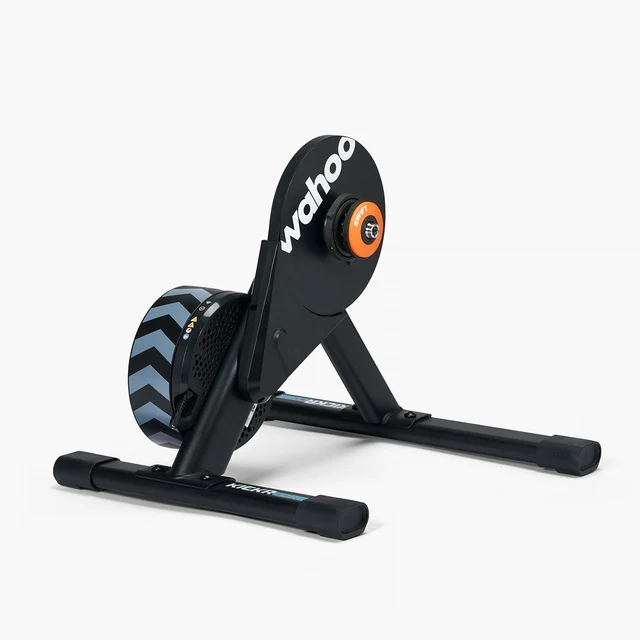
- Wahoo KICKR CORE 2 with Zwift Cog and Click - Buy. Direct-drive power data, virtual shifting and built-in WiFi at a mid-range price, with nothing else to buy.
- Wahoo KICKR V6 Smart Trainer - Buy. The flagship that gets the boring things right: 1 percent accuracy, WiFi, a cassette fitted, and it works with everything.
- Garmin Tacx NEO 3M Smart Trainer - It depends. The most convincing ride feel and the cleanest data of the four, sold at the highest price with the shortest feature list.
- Elite Tuo Interactive Wheel-On Trainer - Skip. A tidy, compact wheel-on trainer that budget direct-drive units have now made hard to justify.
The verdict in 30 seconds
What mattered most
- Drive type
- Claimed power accuracy
- Max simulated gradient
- ERG mode control
- Drivetrain in the box
- App freedom
A smart trainer is not an exercise machine you buy instead of a bike. It is a base your own road, gravel or mountain bike bolts onto, and an app like Zwift, TrainerRoad or Rouvy then changes the resistance in real time as the virtual road tilts. That makes the decision very different from picking a spin bike or an upright exercise bike, and it comes down to four things: direct drive versus wheel-on, how trustworthy the power number is, how steep a climb it can fake, and whether it talks to every app or leans on one company's software. We synthesized independent testing and long-run owner reports across four trainers people actually buy in 2026. Two are easy recommendations, one is a superb machine with holes in the spec sheet, and one is a category we would now walk past.
Direct-drive power data, virtual shifting and built-in WiFi at a mid-range price, with nothing else to buy.
Best for: Almost anyone getting into indoor training who wants proper direct-drive data without paying flagship money
- Ships ready to ride with the Zwift Cog single sprocket and the Click wireless shifter already in the box, so there is no cassette to buy, no gear indexing to fiddle with, and it fits almost any 8 to 13 speed bike
- Claimed power accuracy within 2 percent, 1,800 W of resistance and 16 percent simulated gradient, which covers every structured workout and all but the silliest virtual climbs
- Built-in WiFi handles firmware updates on its own and enables a race mode that pushes power data far faster than Bluetooth alone, a feature normally reserved for flagship trainers
- Fully app agnostic over ANT+ FE-C and Bluetooth FTMS, so Zwift, TrainerRoad, Rouvy, MyWhoosh and the rest all see it as a first-class trainer
- The 5.4 kg flywheel spins down naturally but does not have the motor-driven descent and surface effects of the top-tier units
- Virtual shifting via the Cog means you give up your real cassette on that bike, which is a small annoyance if you swap the bike back outdoors often
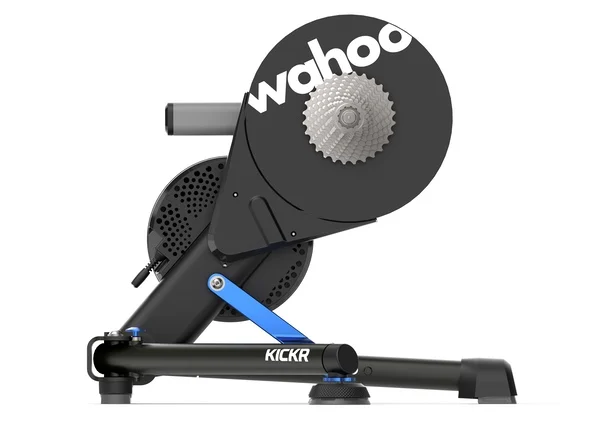
The flagship that gets the boring things right: 1 percent accuracy, WiFi, a cassette fitted, and it works with everything.
Best for: Committed riders doing structured intervals or racing indoors, who want flagship response without a boutique price
- Claimed accuracy within 1 percent, up to 2,200 W of resistance and 20 percent simulated gradient, with independent testing repeatedly finding it tracks reference power meters closely across steady efforts and sprints
- Built-in WiFi plus race mode gives noticeably snappier resistance changes and faster ERG response than Bluetooth-only trainers, and it updates firmware without a phone in your hand
- Comes with an 11-speed cassette pre-installed and AXIS feet that let the frame rock slightly side to side, which owners say takes the harshness out of long sessions
- Broadcasts over ANT+ FE-C and Bluetooth FTMS and can bridge heart-rate sensors, so nothing about it locks you to a single subscription
- A big step up in price over the CORE 2 for gains most riders will feel only in ERG smoothness and top-end resistance
- Heavy and awkward to shift around, so it wants a permanent corner rather than a cupboard
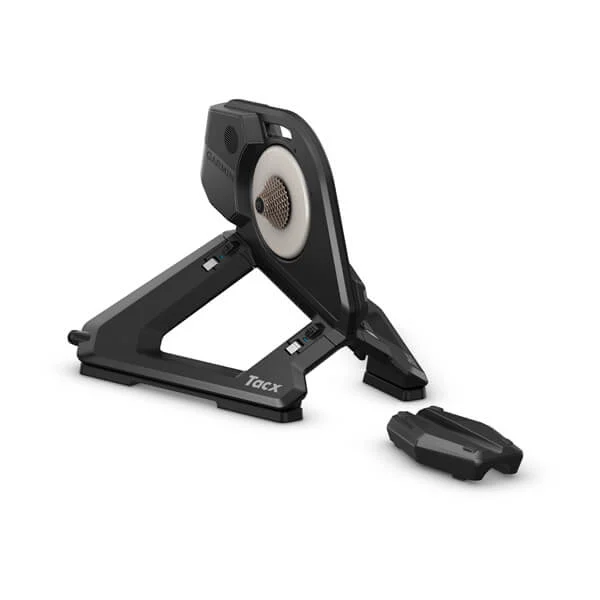
The most convincing ride feel and the cleanest data of the four, sold at the highest price with the shortest feature list.
Best for: Riders chasing the best road feel and reference-grade data who genuinely do not care about the connectivity extras
- Motor-driven resistance rather than a spinning weight means accuracy within 1 percent, 25 percent simulated gradient, and it never needs calibration, which independent testing describes as the cleanest power and cadence data available
- Simulates road surfaces, so gravel and cobbled sections in an app arrive through the pedals rather than only on screen, and it can drive the pedals on descents
- Motion plates are built into the frame, so the bike moves naturally without buying a separate rocker plate
- Runs with limited functionality even unplugged, and includes an 11-speed cassette so it is ready out of the box
- No built-in WiFi, no high-speed race mode and no sensor bridging, all of which the cheaper Wahoo units include, and reviewers judged those gaps hard to excuse at this price
- No virtual shifting support and 11-speed only cassette compatibility, which sits awkwardly against 12-speed drivetrains
- Measured noise sits above the quietest direct-drive trainers, and the motion can feel jerky during hard sprints
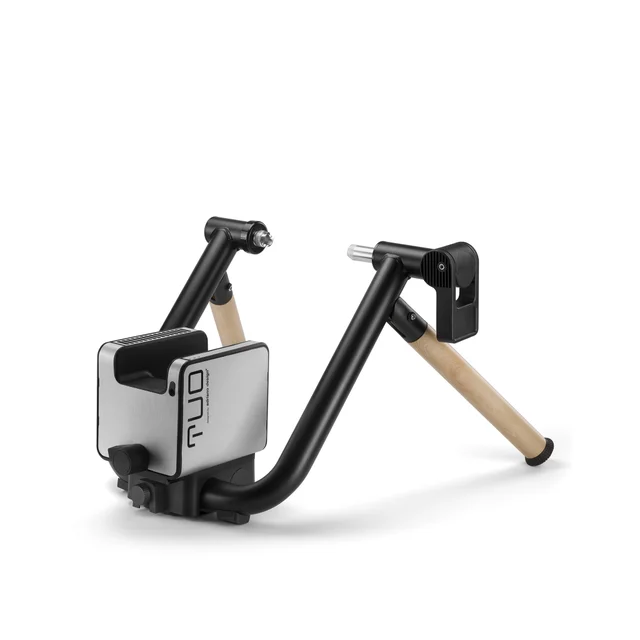
A tidy, compact wheel-on trainer that budget direct-drive units have now made hard to justify.
Best for: Only riders with severe space limits, or someone who needs a trainer for a short block and will not train by power
- Folds small and weighs little, so it genuinely can live behind a sofa, which no direct-drive trainer manages
- Your rear wheel stays on, so setup takes seconds and you can be back outdoors without refitting anything
- Broadcasts on ANT+ FE-C and Bluetooth FTMS, so it drives Zwift and other apps properly rather than acting as a dumb resistance unit
- Power is estimated from the roller rather than measured at the hub, with a stated tolerance around 5 percent, so your numbers will not line up with a power meter or with the same workout on a direct-drive trainer
- Roughly 10 percent maximum simulated gradient and a light flywheel mean steep virtual climbs flatten out and ERG mode hunts more than it should
- The roller presses on your tire, so you get tire wear, rubber dust, more noise and a calibration routine every session if you want repeatable numbers
| Criteria | Wahoo KICKR CORE 2 with Zwift Cog and Click Top pick | Wahoo KICKR V6 Smart Trainer | Garmin Tacx NEO 3M Smart Trainer | Elite Tuo Interactive Wheel-On Trainer |
|---|---|---|---|---|
| Verdict | Buy it | Buy it | It depends | Skip it |
| Best for | Almost anyone getting into indoor training who wants proper direct-drive data without paying flagship money | Committed riders doing structured intervals or racing indoors, who want flagship response without a boutique price | Riders chasing the best road feel and reference-grade data who genuinely do not care about the connectivity extras | Only riders with severe space limits, or someone who needs a trainer for a short block and will not train by power |
| Price tier | $$ · mid-range | $$$ · premium | $$$$ · flagship | $ · budget |
| Drive type | Direct drive (rear wheel off) | Direct drive (rear wheel off) | Direct drive, motor-driven brake | Wheel-on (roller against tire) |
| Claimed power accuracy | Within 2 percent | Within 1 percent | Within 1 percent, no calibration ever | Around 5 percent, estimated |
| Max simulated gradient | 16 percent | 20 percent | 25 percent, plus descent drive | About 10 percent |
| ERG mode control | Smooth and reliable | Smoothest of the four, fastest response | Very smooth, slower data rate | Workable but hunts on changes |
| Drivetrain in the box | Zwift Cog and Click shifter fitted | 11-speed cassette fitted | 11-speed cassette fitted | Nothing needed, uses your wheel |
| App freedom | ANT+ FE-C and Bluetooth FTMS, plus WiFi race mode | ANT+ FE-C and Bluetooth FTMS, WiFi, sensor bridging | ANT+ FE-C and Bluetooth FTMS, WiFi costs extra | ANT+ FE-C and Bluetooth FTMS |
| Noise | Very quiet, drivetrain is the loudest part | Very quiet, drivetrain is the loudest part | Quiet, but not the quietest here | Noticeable tire hum, the loudest of the four |
| Price tier | $$ · mid-range | $$$ · premium | $$$$ · flagship | $ · budget |
Which one is right for you?
- Almost anyone getting into indoor training who wants proper direct-drive data without paying flagship money Buy it Wahoo KICKR CORE 2 with Zwift Cog and Click
- Committed riders doing structured intervals or racing indoors, who want flagship response without a boutique price Buy it Wahoo KICKR V6 Smart Trainer
- Riders chasing the best road feel and reference-grade data who genuinely do not care about the connectivity extras It depends Garmin Tacx NEO 3M Smart Trainer
- Only riders with severe space limits, or someone who needs a trainer for a short block and will not train by power Skip it Elite Tuo Interactive Wheel-On Trainer
How we judged the field
A smart trainer is a strange product to shop for because half of it is already in your garage. You take the rear wheel off your own bike, bolt the frame to the trainer, and an app changes the resistance as the virtual road tilts. So the questions that matter are narrow. Does the power number it reports agree with a real power meter? Does it hold a target wattage smoothly in ERG mode instead of surging? How steep a climb can it fake? Will it talk to whatever app you feel like using next year? And how loud is it at six in the morning through a shared wall?
We do not run a lab. What we did was pull together independent testing (power comparisons against reference pedals and cranks, measured noise, long-term durability notes) alongside aggregated owner reports on setup, firmware behavior and warranty support. Four criteria did most of the sorting: drive type, claimed and observed power accuracy, maximum simulated gradient, and whether the unit is genuinely app agnostic over the open ANT+ FE-C and Bluetooth FTMS standards rather than leaning on one company’s software. We also tracked the cost that never appears on the price tag: whether a cassette or a shifting solution is in the box, because a trainer that needs a cassette plus fitting is not as cheap as it looks.
This is the trainer that reset the category. The CORE has always been the sensible direct-drive choice, but the second generation added the two things that used to separate it from the flagship: built-in WiFi, and a race mode that pushes power data at a much higher rate than Bluetooth manages. The result is resistance changes that land when the app asks for them rather than a beat later, which is exactly what you notice during short intervals and virtual attacks.
The specification is solidly mid-range: accuracy within 2 percent, 1,800 W of resistance, 16 percent simulated gradient, and a 5.4 kg flywheel that spins down convincingly. None of those numbers are limiting in practice. Sixteen percent covers essentially every climb an app will throw at you, and 1,800 W is beyond a sprint most riders will ever produce.
The clever part is the bundle. It arrives with the Zwift Cog, a single sprocket that accepts most 8 to 13 speed chains, plus the Click, a small wireless shifter that straps to your bars and gives you virtual gears in the app. That removes the classic first-timer trap of discovering you also need to buy a cassette that matches your drivetrain and pay someone to fit it. It works with almost any modern bike, and setup becomes a fifteen minute job rather than a workshop visit.
The trade is that on that bike you are running the Cog instead of your cassette, so swapping the bike back to outdoor use means a swap back. If your trainer bike is a dedicated old frame, this is a non-issue. If you have one bike and ride it outside three times a week, factor that in.
The V6 is what you buy when the difference between good data and excellent data matters to you. Accuracy is claimed within 1 percent, resistance runs to 2,200 W, and simulated gradient reaches 20 percent. Independent testing keeps finding it tracks reference power meters closely on steady efforts and during ragged sprints, which is the harder test and where cheaper units drift.
What you feel, though, is not the accuracy figure. It is the speed. WiFi and race mode mean the trainer responds to app commands quickly, and long ERG workouts feel like the resistance is anticipating you rather than catching up. Combine that with the AXIS feet, which let the whole frame rock slightly side to side, and owners consistently report that hour-plus sessions are less punishing on the hands and lower back than on a rigid unit.
It also removes the awkward extras. An 11-speed cassette is already fitted, it bridges heart-rate sensors so your strap can arrive through the trainer, and it speaks ANT+ FE-C and Bluetooth FTMS to every app going. Nothing about owning one commits you to a subscription.
The real limits are physical and financial. It is heavy and unwieldy, so it wants a permanent spot rather than a cupboard, and it costs meaningfully more than the CORE 2 for gains many riders will never consciously notice. If you do not race indoors and your workouts are mostly steady endurance, the extra spend goes into a spec sheet rather than into your legs.
The NEO 3M works differently to everything else here. Instead of a brake pressing on a spinning flywheel, it uses a motor to generate resistance, which has consequences that are genuinely fun. It never needs calibration, ever. It simulates road surfaces, so a gravel or cobbled section in an app arrives through the pedals as a real texture rather than as a change of scenery. It can drive the pedals on descents. And because motion plates are built into the frame, the bike moves naturally without you buying a rocker plate.
The data is the best of the group. Independent testing describes the power and cadence output as the cleanest available from a smart trainer, matching on-bike meters closely, with 25 percent simulated gradient and 2,200 W of resistance well past anything a rider needs.
Then you read the rest of the spec sheet. There is no built-in WiFi, so getting it costs extra. There is no high-speed race mode. It will not bridge sensors. It does not support Zwift’s virtual shifting, and its cassette compatibility stops at 11-speed, which sits awkwardly next to 12-speed drivetrains. Every one of those things is standard on Wahoo units costing substantially less, and reviewers were blunt about how hard that is to defend at flagship money. Measured noise is fine but not class-leading, and the motion that feels lovely at endurance pace turns jerky in a sprint.
So it depends on what you are buying a trainer for. If you want the most convincing simulation of riding a road and reference-grade numbers, this is it and nothing else is close. If you want a modern, connected, fast-responding training tool, you are paying the most for the shortest feature list.
The Tuo is a nicely made thing. It folds down small, it is light enough to move with one hand, and it looks better than a trainer needs to. It is also a proper smart trainer rather than a dumb one, broadcasting on ANT+ FE-C and Bluetooth FTMS so apps can control it.
The problem is what wheel-on means. The roller presses on your inflated rear tire and estimates power from how fast that roller turns, with a stated tolerance around 5 percent. Five percent is a lot. It means your indoor FTP and your outdoor power meter tell different stories, it means the same workout reads differently after a tire change, and it means a calibration routine every session if you want any consistency at all. Maximum simulated gradient sits around 10 percent, so long virtual climbs go flat, and the light flywheel makes ERG mode hunt around the target instead of settling on it.
Then there is the day-to-day cost: tire wear, black rubber dust on the floor, and noticeably more noise than any direct-drive unit here. A trainer tire helps with the first two and adds another purchase.
None of that would matter much if wheel-on saved a fortune, but that gap has closed. Budget direct-drive trainers now land close enough that reviewers have started describing wheel-on as effectively obsolete, and we agree. Unless your storage situation is genuinely impossible, skip it and save a little longer.
Wahoo KICKR CORE 2 vs Wahoo KICKR V6: which should you buy?
These two are closer than the price gap suggests, because the CORE 2 inherited the features that used to define the flagship. Both have built-in WiFi. Both do race mode. Both are app agnostic over ANT+ FE-C and Bluetooth FTMS. Both are direct drive and both are quiet enough that your chain is the loudest thing in the room.
What you actually pay more for on the V6 is margin. Accuracy tightens from 2 percent to 1 percent, resistance goes from 1,800 W to 2,200 W, gradient from 16 to 20 percent, and the flywheel gets heavier. Add the AXIS feet for a little lateral give, and sensor bridging so a heart-rate strap can route through the trainer.
Here is how to choose. If you ride indoors mostly for fitness, follow structured plans, and race occasionally, the CORE 2 bundle is the smarter buy and the Cog and Click inclusion means you spend nothing more. If you race indoors seriously, chase numbers against a power meter you also use outdoors, or spend hours a week in ERG mode where response speed and stability are the whole experience, the V6 earns the upgrade. What should not decide it is the gradient figure, since almost nobody rides sustained 18 percent virtual climbs.
What to look for
- Direct drive over wheel-on. Better accuracy, quieter, steeper gradients, no tire wear. The price gap no longer justifies the compromise.
- Check what is in the box. A trainer without a cassette or a Zwift Cog needs one bought and fitted, which changes the real price.
- Accuracy claim, not maximum watts. Within 1 to 2 percent is what you want. Anything estimated at around 5 percent will not match a power meter.
- ERG behavior matters more than gradient. Most training happens between 0 and 10 percent. Smooth, fast resistance changes are what you feel every session.
- ANT+ FE-C and Bluetooth FTMS. These open standards mean any app can drive the trainer. Treat their absence as a hard no.
- WiFi and fast data rates. Once a nicety, now the difference between resistance that lands on cue and resistance that arrives late.
- Space and noise. Direct-drive units are heavy and want a permanent home. A mat helps the floor, the neighbors and the sweat.
Our final take
The smart trainer market has quietly sorted itself out. Direct drive won, the open ANT+ FE-C and Bluetooth FTMS standards won, and the features that used to justify flagship pricing have trickled down. The Wahoo KICKR CORE 2 with Zwift Cog and Click is the clearest expression of that: mid-range money for accuracy, WiFi, fast data and a complete package with no cassette to source. It is the trainer we would recommend to most riders without hesitation.
The Wahoo KICKR V6 is a real upgrade rather than a badge, but a narrow one, aimed at people who race indoors or live inside ERG workouts. The Garmin Tacx NEO 3M is the most interesting machine here and the one we would most enjoy riding, yet it asks the most money while leaving out connectivity features its cheaper rivals include, so it suits a specific rider rather than a general one. And the Elite Tuo represents a format that has run out of road: charming, compact and no longer worth the accuracy you give up. Buy the drive type first, the brand second.
Questions, answered
What is the actual difference between direct drive and wheel-on?
On a direct-drive trainer you remove the rear wheel and bolt the bike straight to the unit, so resistance and measurement happen at the hub. That gives tighter power figures, quieter running, steeper simulated climbs and no tire wear. A wheel-on trainer presses a roller against your inflated rear tire and infers power from roller speed, which is cheaper and folds smaller but introduces slip, noise, rubber dust and a wider error margin. For anyone training to power numbers, direct drive is the answer.
Do I need to buy a cassette as well?
Sometimes, and it catches a lot of first-time buyers. The KICKR V6 and the Tacx NEO 3M arrive with an 11-speed cassette already fitted. The KICKR CORE 2 bundle sidesteps the question entirely by shipping with the Zwift Cog, a single sprocket that works with most 8 to 13 speed bikes while the app handles the gears. A bare direct-drive trainer with no cassette means buying one that matches your drivetrain and having it fitted, so check what is in the box before you compare prices.
What is ERG mode and does it matter?
ERG mode lets the app set your wattage rather than you chasing it with gears. You pick a workout, the trainer holds 250 W (or whatever the interval calls for) regardless of your cadence or gear, and you just pedal. It is the single best reason to own a smart trainer over a dumb one, and it is where the flagship units earn their keep: better trainers change resistance faster and hold the target without the surging that cheaper units show at low cadence.
Will these work with Zwift, TrainerRoad and everything else, or am I locked in?
All four here broadcast on ANT+ FE-C and Bluetooth FTMS, which are the open standards every major training app speaks. That means one trainer covers Zwift, TrainerRoad, Rouvy, MyWhoosh, Wahoo SYSTM and the rest, and no purchase forces a particular subscription. The nuance is virtual shifting: Zwift's Cog and Click system is supported by the Wahoo units but not by the Tacx NEO 3M, so shifting there stays with your real drivetrain.
How is this different from a spin bike or an exercise bike?
A trainer has no saddle, bars or pedals of its own. You supply the bike, which means your existing fit, your own contact points and a setup that folds away when you take the bike back outside. A spin bike or exercise bike is a standalone machine with its own frame and console, better if you do not own a road bike or do not want to keep mounting and dismounting one. If you already ride outdoors, a trainer is almost always the better value and the better fit.
Deciding between the top two? See our head-to-head: Wahoo KICKR CORE 2 with Zwift Cog and Click vs Wahoo KICKR V6 Smart Trainer.
More Cycling reviews
 The Best Handlebar Tape: 4 Compared (and One to Skip)
  The Best Bike Bells: 4 Compared (and One to Skip)
  The Best Bike Bottle Cages: 4 Compared (and One to Skip)
  The Best Bike Chain Cleaners: 4 Compared (and One to Skip)
  The Best Bike Chain Lubes: 4 Compared (and One to Skip)
  The Best Bike Cleaning Brushes: 4 Compared (and One to Skip)