Explained
Notebooks, Explained
After reading, you'll understand how to match a notebook's paper, size and binding to the pens you use and the notes you keep.
In this guide
Notebooks are sold on covers, but the difference you feel every day is the paper. Paper weight decides whether ink bleeds, how many pages fit, and how heavy the book is. Binding decides whether it lies flat. Size names like A5 sound precise but vary between brands. And reusable smart notebooks promise to replace all of it, with trade-offs that are not obvious until you use one.
The 30-second version
- GSM is paper weight, and it is the single best predictor of how ink will behave.
- Heavier paper means fewer pages, so a thick book can hold less than a thin one.
- Thread binding lies flat, which is why it is worth paying for.
- Dot grid is the flexible choice, structured enough for writing and open enough for layouts.
- Smart notebooks keep nothing, unless you scan each page before wiping it.
The products this guide is about
Our verdict on each, with the full reasoning on the companion review.
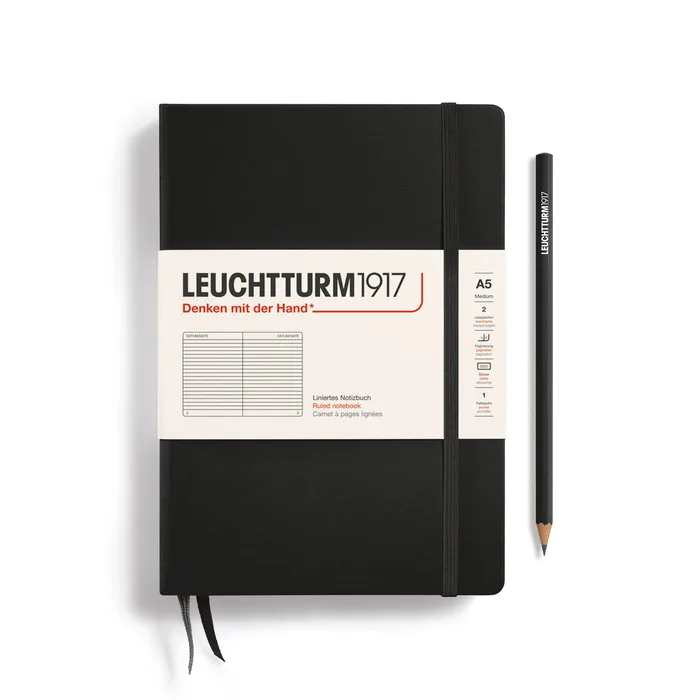
- Buy Leuchtturm1917 Hardcover Notebook, Medium (A5) 251 numbered pages, a table of contents, two markers and a flat-opening thread-bound spine, with every format fully specified.
- Buy Baron Fig Confidant Hardcover Notebook A clothbound, thread-bound notebook with heavier 90 gsm acid-free paper, made in the USA.
- It depends Archer & Olive Field Mouse Dot Grid Notebook Ultra-thick 160 gsm paper for fountain pens, markers and paint, which is either essential or wasted depending on what you write with.
- Skip Rocketbook Core, Next Gen A reusable, erasable notebook that keeps nothing unless you scan it, sold with 36 pages in the Executive size.
What actually matters
- Paper weight (gsm) - light paper suits ballpoints and keeps page counts high; heavier paper suits fountain pens, markers and paint.
- Page count - how long the notebook lasts. Compare pages rather than thickness, because heavy paper takes up more space.
- Binding - thread-bound and lay-flat bindings open fully; glued bindings resist and can crack.
- Ruling - ruled, dot grid, squared and blank each suit different work. Check the spacing, commonly 5 mm for dots and grids and 6 to 7 mm for lines.
- Size - A5 is the most popular portable size, but exact dimensions vary. Check inches or millimetres before buying a cover or case.
- Organisation features - numbered pages, contents pages, markers and pockets matter for anyone keeping records.
- Cover - hardcovers protect pages and give a writing surface; soft covers flex and weigh less.
The specs, in plain English
Green flags vs red flags
Green flags
- Paper weight published for the exact size you are buying.
- Page count stated, ideally with numbered pages.
- Thread-bound or lay-flat binding described.
- Exact dimensions in inches or millimetres.
- Ruling spacing stated.
Red flags
- No paper weight anywhere on the listing.
- Page counts that count sheets as pages or vice versa without saying.
- No mention of binding type.
- Size names with no dimensions.
- Smart notebooks sold as a full paper replacement without mentioning page count.
Who's who: the brands
- Leuchtturm1917 - German notebook maker known for numbered pages, contents pages and a wide range of formats and rulings.
- Baron Fig - New York brand making clothbound, thread-bound notebooks with heavier acid-free paper.
- Archer & Olive - Journal brand known for very heavy 160 gsm paper aimed at bullet journalling and art.
- Rocketbook - Makes reusable, app-connected notebooks designed for scanning and wiping clean.
How to read a listing without getting fooled
Start with the paper weight and match it to your pens. Then check the page count for the specific size, since the same notebook often has different page counts and paper weights in different formats. Look for the binding type and make sure it opens flat. Check the exact dimensions rather than relying on the size name, especially if you plan to use a cover. Finally look at the extras, such as numbered pages, a contents page, markers and pockets, which matter more the longer you keep the notebook.
How much should you spend?
Budget notebooks usually have lighter paper, glued bindings and no published specifications, and they are fine for rough notes. The mid-range is where the best everyday notebooks sit: thread-bound, published paper weights, good rulings and useful extras. Premium pricing buys heavier paper, special covers and design, and it is worth paying if you use fountain pens or markers. Reusable smart notebooks cost as much as a mid-range paper notebook and only make sense if you already work digitally.
Questions, answered
Which size notebook should I buy?
A5 is the most popular size because it fits in a bag and gives enough room to write comfortably. Pocket sizes suit quick notes and lists, and B5 or larger suits meetings, study and sketching. If you are unsure, start with A5.
Can I use fountain pens in any notebook?
You can, but results vary a lot. Thin paper tends to feather, ghost or bleed with wet inks. Paper of 90 gsm and above, especially smooth, well-sized paper, handles fountain pens much better. Test with your usual pen and ink before committing to a notebook for a long project.
Why do some notebooks have perforated pages?
So you can remove a page cleanly without loosening the binding. They are usually at the back of the book and are handy for notes you need to hand to someone or file separately.
Are hardcover notebooks better?
They protect the pages better and give you a firm surface to write on without a desk, which is useful when travelling. Softcover notebooks are lighter and more flexible. For daily carry in a bag, a hardcover usually lasts longer.
Or jump to the head-to-head: Leuchtturm1917 Hardcover Notebook, Medium (A5) vs Baron Fig Confidant Hardcover Notebook.