Explained
Camp Tables, Explained
After reading, you'll know which height to buy, why capacity does not track weight, and when a mesh top is the wrong choice.
In this guide
Camp tables look like the simplest purchase in a camp kit and generate more quiet regret than most. The usual mistake is buying on surface area or price and discovering the table is the wrong height to use from the chair you already own. The second most common is assuming a heavier table is a stronger one, which turns out to be close to backwards.
The 30-second version
- Height is compatibility, so the number that matters is the seat height of the chair you already have rather than anything about the table.
- Capacity comes from structure, which is why a hubbed frame with a tensioned top can hold more than a heavier telescoping design.
- Packed shape beats packed weight, since a table folding flat slides in beside everything else while a bundle demands its own space.
- Polyester tops are not heatproof, so a hot pan needs a table that specifically claims a heat-resistant surface.
- A missing load rating is the red flag, because bearing weight is the only thing a table is for.
The products this guide is about
Our verdict on each, with the full reasoning on the companion review.
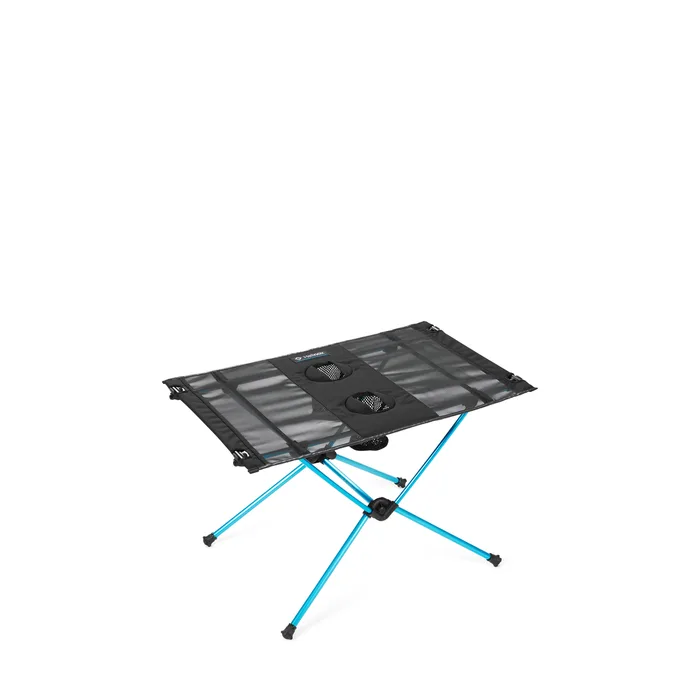
- Buy Helinox Table One Lightest table here and the highest stated capacity, which is not a combination you expect.
- Buy Kelty Rad-Arondack Table The same 15 inch height and a stated 100 pound capacity, fully specified, at three times the weight.
- It depends GCI Outdoor Compact Camp Table 20 A 24 inch standing-height table sold in the same category as three 15 inch side tables.
- Skip NEMO Equipment Moonlander Dual-Height Camp Table The smartest design in the category, sold without saying what it holds.
What actually matters
- Height - the distance from ground to tabletop, typically 15 inches for a side table and around 24 for a standing surface. It has to agree with your chair's seat height, and it is the one spec that cannot be judged in isolation.
- Weight capacity - the stated load the table will carry. It is the specification describing whether the table does its job, and it varies by nearly a factor of two across products that look interchangeable.
- Frame architecture - hubbed shock-corded poles versus telescoping legs. Hubbed frames spread load through the whole structure, while telescoping legs concentrate it at sliding joints, which is usually what sets the limit.
- Top material - tensioned polyester, mesh panels, or solid aluminium. This decides stability under narrow-based items and whether anything hot can go on the table at all.
- Packed size - the folded profile. A table that folds flat to an inch or two packs against a boot wall or into a bag, while one that folds to a long bundle competes with your other gear for space.
- Packed weight - what you carry. It matters enormously for anything walked in and barely at all for car camping, and it correlates poorly with how much the table holds.
- Warranty - the term the maker will stand behind. Folding furniture fails at hinges and hubs, so a stated multi-year term is a meaningful signal about the parts you cannot inspect.
The specs, in plain English
Green flags vs red flags
Green flags
- A weight capacity is published as a number with units.
- Table height is stated, so you can check it against your chair.
- Packed size is given as three dimensions rather than as a single word like compact.
- The frame is named specifically rather than described as aluminium.
- A warranty term is stated in years.
Red flags
- No load rating anywhere on a product whose only function is bearing load.
- Height described as compact or low without a figure.
- A premium price attached to a thinner specification than cheaper rivals publish.
- Lifestyle copy occupying the space where the dimensions should be.
- Heat resistance implied by an aluminium top without the claim being made.
Who's who: the brands
- Helinox - Specialises in packable alloy-framed outdoor furniture, generally the lightest in any category and the most completely specified.
- Kelty - Long-standing camping brand whose furniture pages carry full specification blocks including capacity and packed size.
- GCI Outdoor - Folding outdoor furniture specialist, strongest in taller telescoping designs and one of the few offering heat-resistant tops.
- NEMO Equipment - Design-led brand with genuinely original mechanisms, published through specification panels that are easy to miss and sometimes incomplete.
- Snow Peak - Japanese brand known for heavier, more permanent camp furniture in steel and bamboo, aimed at basecamp rather than portability.
How to read a listing without getting fooled
Find the height first and hold it next to the seat height of the chair you own, because everything else is secondary to those two numbers agreeing. Then find the weight capacity, and if there isn't one, stop and treat that as the review. When you have both, compare capacity to packed weight rather than reading either alone, since that ratio tells you whether the frame is doing clever work or just being heavy. Check what the top is made of before assuming anything hot can go on it. Finally, look for a collapsed specifications panel before concluding a brand publishes nothing, because some pages hide a complete spec sheet behind a script-rendered accordion.
How much should you spend?
Camp tables span a wide range for what is a genuinely simple object. Budget buys a telescoping aluminium table that will hold a moderate load and probably stands taller than a side table should, which is fine if standing preparation is what you wanted. Mid-range buys a fully specified low table with a stated capacity around 100 pounds and a durable polyester top, which is the sweet spot for car camping and where most people should be looking. Premium buys weight savings and materials, meaning a named alloy frame, a sub-kilogram packed weight and a multi-year warranty, and the capacity often goes up rather than down at this tier. The premium is worth paying only if you carry the table rather than transport it.
Questions, answered
Do I need a camp table at all?
If you use a low camp chair, a side table changes the experience more than its cost suggests, because the alternative is putting food and drinks on the ground where they attract insects and get knocked over. If you camp with a picnic bench or eat standing up, it is genuinely optional. The people who regret buying one usually bought the wrong height rather than the wrong table.
How stable are these on uneven ground?
Less than you would like, and the frame architecture decides it. Four rigid legs on a hubbed frame will rock on uneven ground because none of the legs adjust, while telescoping legs can sometimes be set to different lengths to compensate. In practice most people find a flat patch rather than adjusting the table. Wider feet help on soft ground, since narrow tube ends sink and put the table out of level as you load it.
Can I leave a camp table set up in the rain?
The frames are aluminium and will cope, but the tops are the issue. Polyester and mesh will shed water and dry out fine, though a tensioned fabric top left loaded and wet for long periods will stretch. The bigger risk is ultraviolet exposure over a season, which degrades fabric far faster than rain does. Packing it away between trips is worth more to its lifespan than avoiding a shower.
Is a bigger surface always better?
No, and the comparison above shows why. The largest table by external dimensions had one of the smaller usable surfaces, because a taller frame and telescoping legs consume space the tabletop does not use. Compare stated surface dimensions rather than overall size, and remember that a table twice the area is not twice as useful when the thing you actually put on it is two mugs and a plate.
Or jump to the head-to-head: Helinox Table One vs Kelty Rad-Arondack Table.