

Home & Kitchen
The Best Woks: 4 Compared (and One to Skip)
We compared carbon steel, ceramic nonstick, and cast iron flat-bottom woks on heat control, wok hei, handling, and upkeep for real home stoves.
The short version
For real stir-frying on a home stove, carbon steel is the material to buy, and both our picks are flat-bottomed so they work on gas, electric, and induction. The Made In Seasoned Carbon Steel Wok is the top performer, with carbon steel that heats and recovers fast and seasons into a slick surface. The Yosukata is a pre-seasoned carbon steel option at a lower price tier, making it the best value. The GreenPan Lima ceramic nonstick wok is only an 'it depends' pick: easy and PFAS-free, but it can't reach the heat for true wok hei and the coating wears over time. Skip the Lodge cast iron wok for stir-frying: it's a great brand but heavy and slow to respond. Best for: home cooks who want fast, high-heat stir-fries should buy carbon steel and reserve nonstick for gentle, low-oil cooking.
Our picks at a glance
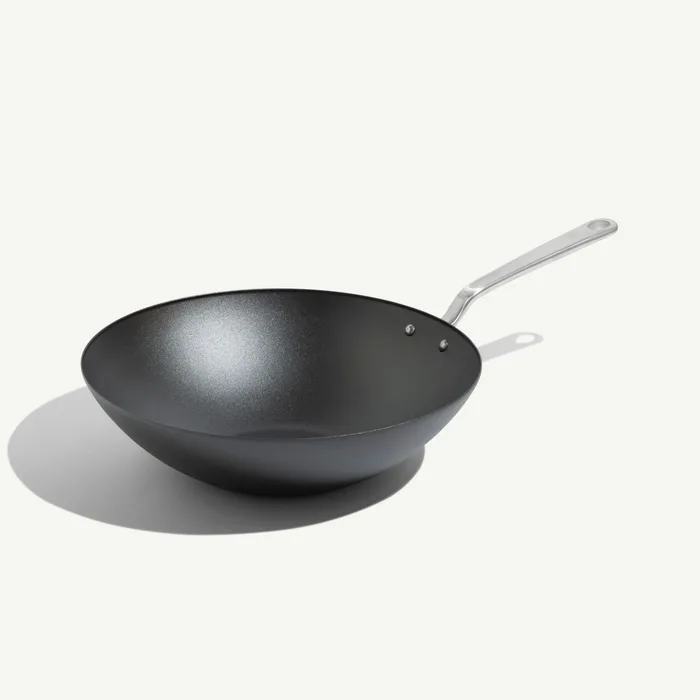
- Made In Seasoned Carbon Steel Wok - Buy. A pre-seasoned carbon steel wok with a flat bottom made for all home stovetops.
- Yosukata Black Carbon Steel Wok (Flat Bottom, 13.5") - Buy. A pre-seasoned, flat-bottom carbon steel wok at a lower price tier.
- GreenPan Lima Ceramic Nonstick Wok (12.5") - It depends. A PFAS-free ceramic nonstick wok that's great for easy cleanup and low-fat cooking, but can't chase true wok hei.
- Lodge 14-Inch Cast Iron Wok - Skip. A beloved brand making the wrong tool for the job: cast iron is heavy and slow to stir-fry with.
The verdict in 30 seconds
What mattered most
- Material
- Bottom & stove fit
- Heat response (stir-fry control)
- Wok hei potential
- Maintenance
- Weight & handling
A wok lives or dies on how fast it heats and how quickly it responds when you drop food in. We looked at the current crop of flat-bottom woks built for Western gas, electric, and induction stoves and sorted them by material. Two carbon steel picks earn a clear buy, a PFAS-free ceramic nonstick wok is a genuine 'it depends,' and one famous-brand cast iron wok is a hard skip for stir-frying.
A pre-seasoned carbon steel wok with a flat bottom made for all home stovetops.
Best for: Cooks who want restaurant-level wok hei on a home stove and don't mind the seasoning and upkeep
- Carbon steel (1.5mm per the maker) heats fast and responds quickly when food hits the pan
- Flat bottom is designed for gas, electric, and induction cooktops
- Ships pre-seasoned (shea nut and coconut oil, per the maker) and builds into a naturally slick surface with no coating to wear out
- Riveted stainless stay-cool handle, made in Sweden
- Maker lists it as heat safe to 1200°F and covers it with a lifetime warranty
- Carbon steel needs ongoing seasoning, hand-washing, and re-oiling, so it isn't grab-and-go
- A single long handle; the maker lists no helper handle for two-handed tossing
- You pay a premium price for what is, at heart, a simple piece of carbon steel
Own the Made In Seasoned Carbon Steel Wok? Tell us how it held up.
Thanks. Counted, and shown once enough owners have weighed in.
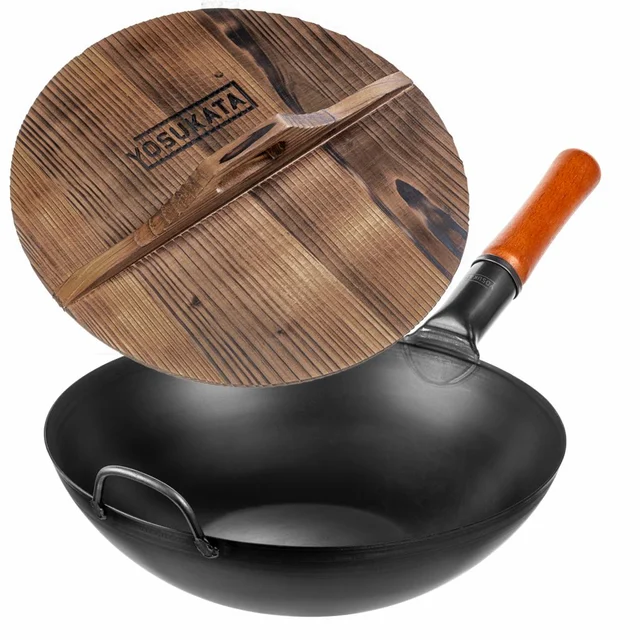
A pre-seasoned, flat-bottom carbon steel wok at a lower price tier.
Best for: First-time carbon steel buyers who want the best performance-per-dollar
- Sold pre-seasoned, so it's usable sooner than a bare-steel wok
- Flat bottom design for stovetops
- Check the listing for the handle setup before buying
- Owner reports praise its even heating and how quickly it builds a patina
- The factory pre-seasoning still needs building up over the first several cooks
- Wooden handle parts, if present, are not oven-safe and can scorch over an open flame
- Steel may be thinner than pro-tier woks, so it can show hot spots on weaker burners
Own the Yosukata Black Carbon Steel Wok (Flat Bottom, 13.5")? Tell us how it held up.
Thanks. Counted, and shown once enough owners have weighed in.
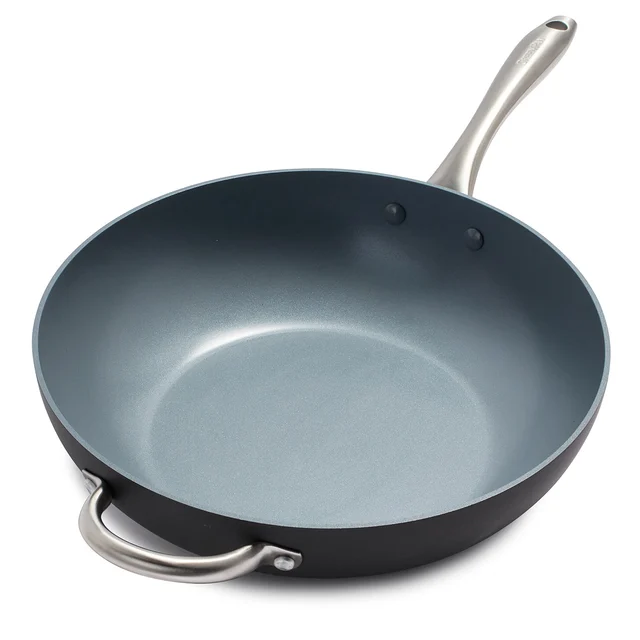
A PFAS-free ceramic nonstick wok that's great for easy cleanup and low-fat cooking, but can't chase true wok hei.
Best for: Beginners, health-conscious cooks, or anyone on gas or electric who values convenience over char
- Nonstick from day one with no seasoning required
- Ceramic coating is marketed as PFAS- and PFOA-free
- Flat base and a light body that's easy to lift (the maker lists it for all stovetops except induction)
- Forgiving and easy to clean for eggs, noodles, and low-oil everyday stir-fries
- Ceramic nonstick coatings tend to lose slickness over time with regular use
- Not built for the very high heat real stir-frying wants, so you won't get charred wok hei
- Metal utensils, high heat, and dishwashers can shorten the coating's life
Own the GreenPan Lima Ceramic Nonstick Wok (12.5")? Tell us how it held up.
Thanks. Counted, and shown once enough owners have weighed in.
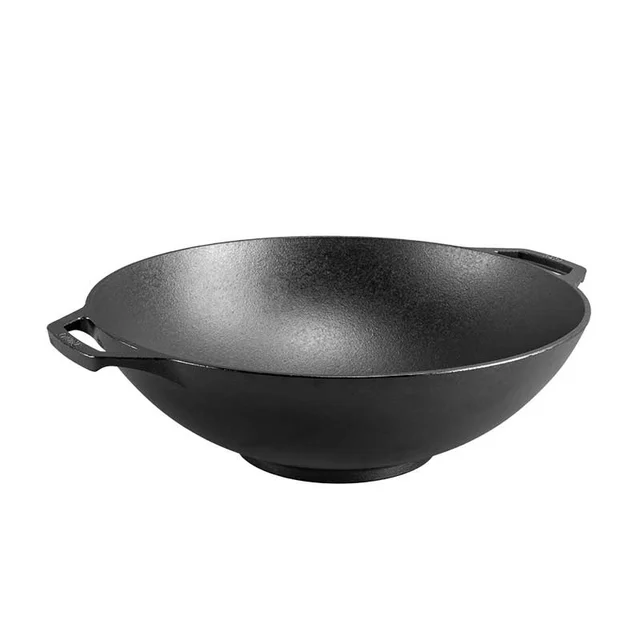
A beloved brand making the wrong tool for the job: cast iron is heavy and slow to stir-fry with.
Best for: Almost no one shopping for a stir-fry wok; keep it in mind only as a braising or deep-frying vessel
- Lodge durability and value; Lodge cast iron is sold pre-seasoned
- Superb heat retention if you mainly want to braise or deep-fry
- Very durable
- Heavy, so tossing and flipping food (the whole point of a wok) is impractical
- Cast iron heats and cools slowly, the opposite of the fast, responsive control stir-frying needs
- A small flat base can concentrate heat in a narrow zone
Own the Lodge 14-Inch Cast Iron Wok? Tell us how it held up.
Thanks. Counted, and shown once enough owners have weighed in.
| Criteria | Made In Seasoned Carbon Steel Wok Top pick Buy it Buy | Yosukata Black Carbon Steel Wok (Flat Bottom, 13.5") Buy it Buy | GreenPan Lima Ceramic Nonstick Wok (12.5") It depends Buy | Lodge 14-Inch Cast Iron Wok Skip it Buy |
|---|---|---|---|---|
| Best for | Cooks who want restaurant-level wok hei on a home stove and don't mind the seasoning and upkeep | First-time carbon steel buyers who want the best performance-per-dollar | Beginners, health-conscious cooks, or anyone on gas or electric who values convenience over char | Almost no one shopping for a stir-fry wok; keep it in mind only as a braising or deep-frying vessel |
| Price tier | $$$ · premium | $$ · mid-range | $$ · mid-range | $$ · mid-range |
| Material | Carbon steel (1.5mm) | Pre-seasoned carbon steel | Ceramic nonstick over aluminum | Cast iron |
| Bottom & stove fit | Flat, gas / electric / induction | Flat base | Flat base | Flat but small base |
| Heat response (stir-fry control) | Excellent | Very good | Fair | Poor |
| Wok hei potential | Excellent | Very good | Limited | Poor |
| Maintenance | Season & hand-wash (ships pre-seasoned) | Season & hand-wash (ships pre-seasoned) | Wipe clean, no seasoning | Season & hand-wash |
| Weight & handling | Lighter than cast iron | Lighter than cast iron | Light | Heavy, hard to toss |
| Expected longevity | Long-lived with care | Long-lived with care | Coating wears with use | Long-lived (but wrong tool) |
| Price tier | $$$ · premium | $$ · mid-range | $$ · mid-range | $$ · mid-range |
Which one is right for you?
- Cooks who want restaurant-level wok hei on a home stove and don't mind the seasoning and upkeep Buy it Made In Seasoned Carbon Steel Wok
- First-time carbon steel buyers who want the best performance-per-dollar Buy it Yosukata Black Carbon Steel Wok (Flat Bottom, 13.5")
- Beginners, health-conscious cooks, or anyone on gas or electric who values convenience over char It depends GreenPan Lima Ceramic Nonstick Wok (12.5")
- Almost no one shopping for a stir-fry wok; keep it in mind only as a braising or deep-frying vessel Skip it Lodge 14-Inch Cast Iron Wok
How we judged the field
We don’t run our own test kitchen. Instead we synthesize maker specifications and aggregated owner reports, then weigh them against what actually matters for wok cooking on a home stove. A wok’s whole reason to exist is fast, high-heat stir-frying: you want a pan that gets ripping hot, recovers heat the instant cold food hits it, and is light enough to toss one-handed. So we prioritized heat response and control, the ability to develop wok hei (the smoky char that defines great stir-fry), and honest everyday practicality: weight and handling, how it behaves on Western gas, electric, and induction burners, and how much maintenance it demands.
We deliberately compared across materials. Carbon steel is the traditional stir-fry choice; ceramic nonstick trades outright performance for convenience; and cast iron is a popular impulse buy that owner reports suggest is a poor fit for a wok. Every pick here is flat-bottomed, because a round-bottom wok simply doesn’t make good contact with a flat home cooktop.
Made In Seasoned Carbon Steel Wok
Buy itThis is the performance benchmark. It’s carbon steel with a flat bottom designed for home stovetops, and it behaves the way a wok should: it heats fast, and crucially it recovers heat quickly when you add a batch of cold vegetables or protein, which is exactly what lets you build char instead of steaming your food. Owners note that once it’s seasoned it turns glossy and naturally slick, and because there’s no coating to fail, it can last a long time; Made In lists a lifetime warranty. The trade-offs are the trade-offs of all bare steel: you have to season it, hand-wash it, and keep it oiled, and here you pay a premium for the privilege. There’s also a single long handle with no helper grip for two-handed tossing. None of that changes the verdict: if you want the best stir-fry results a home stove can produce, this is it.
Yosukata Black Carbon Steel Wok (Flat Bottom, 13.5”)
Buy itThe Yosukata is the pick most people should actually buy. It offers the same basic carbon steel cooking experience in a lower price tier. It is sold pre-seasoned so you can start cooking sooner, and its flat bottom suits Western burners. Owner reports highlight even heating and how fast it develops a patina. The catches are minor: the factory seasoning still needs building, check the listing for handle details, and the steel may be thinner than pro-tier woks, so weak burners may reveal hot spots. For value per dollar, it is the better buy here.
GreenPan Lima Ceramic Nonstick Wok (12.5”)
It dependsThis one earns a real ‘it depends’ rather than a yes or no. As a nonstick pan it’s excellent: slick from the first use with no seasoning, a ceramic coating marketed as PFAS- and PFOA-free for cooks who avoid traditional nonstick chemistry, a flat base (for all stovetops except induction, per the maker), and a light body that’s a pleasure to clean. For eggs, noodles, fried rice, and low-oil everyday cooking it’s genuinely useful. But it isn’t really a stir-fry wok. Ceramic coatings don’t love the very high heat that produces wok hei, and owner reports suggest ceramic nonstick loses its slickness over time, faster if you reach for metal utensils or the dishwasher. Buy it if convenience and low-fat cooking matter more to you than char; skip it if authentic stir-fry is the goal.
Lodge 14-Inch Cast Iron Wok
Skip itWe like Lodge, and this is a well-made, pre-seasoned piece of cast iron. It’s just the wrong tool for the job. A wok needs to be light enough to toss and quick to change temperature; cast iron is neither. It’s heavy enough that flipping food one-handed is impractical, and it heats and cools slowly, which is the opposite of the responsive control stir-frying rewards. A small flat base can also concentrate heat in a narrow zone. As a braising or deep-frying vessel it’s fine, but as a stir-fry wok it’s outclassed by every other pick here, including the far cheaper Yosukata.
Sources
Specs in this review come from these pages.
Made In vs Yosukata: which should you buy?
These are our two strongest picks and they’re both flat-bottom carbon steel, so the real question is how much you want to spend. The Made In is the premium option: its 1.5mm steel, per the maker, gives good heat response, and it sits in a premium tier. Both ship pre-seasoned. The Yosukata gives you the same fundamental carbon steel experience for meaningfully less money, though check its listing for the handle setup. If you cook stir-fries constantly, chase maximum wok hei, and want a premium pan, spend up for the Made In. For nearly everyone else, the Yosukata is the smarter buy and the one we’d hand a first-time wok cook. Either is a reasonable choice.
What to look for
- Material: Carbon steel is the best all-round choice for stir-frying; nonstick is for convenience and gentle cooking; skip cast iron for a wok.
- Flat bottom: Essential for Western gas, electric, and induction stoves so the pan makes real contact with the heat.
- Heat response, not just heat: The best woks recover temperature fast when cold food goes in; that’s what builds char instead of steam.
- Weight and handling: You should be able to toss the wok one-handed; a helper handle is a bonus for pouring and lifting.
- Seasoning and upkeep: Bare steel and cast iron need seasoning and hand-washing; ceramic nonstick needs none but wears out.
- Size: A 13- to 14-inch wok suits most home cooks and stovetops; bigger woks overhang small burners and heat unevenly.
Our final take
Buy carbon steel. It is the material that actually delivers fast, high-heat, well-controlled stir-frying on a home stove, and both of our top picks are flat-bottomed so they work on gas, electric, and induction. The Made In Seasoned Carbon Steel Wok is the outright performance winner with a lifetime warranty for cooks who want the best; the Yosukata gets you nearly all the way there, pre-seasoned and for much less, which makes it the right call for most people. Treat the GreenPan ceramic wok as a convenience pan rather than a true stir-fry wok, and use it for gentle, low-oil cooking where its easy cleanup shines. And skip the Lodge cast iron wok for stir-frying: it’s a fine brand and a fine piece of cast iron, but the wrong shape and weight for the job.
Questions, answered
Carbon steel or nonstick: which wok should I buy?
For stir-frying, carbon steel wins. It tolerates the very high temperatures that create wok hei (that smoky, charred flavor), it responds quickly when you add or remove heat, and a well-seasoned surface becomes naturally slick and can last for years. Nonstick woks are easier to start with and clean, but they can't handle the same heat and the coating wears out. Buy carbon steel if you actually want to stir-fry; consider nonstick only if you mostly cook eggs, noodles, and low-oil dishes at moderate heat.
Do I need a flat-bottom or round-bottom wok?
For a Western home stove, get a flat-bottom wok. Round-bottom woks are designed for the high-output round burners common in commercial and traditional Asian kitchens; on a flat home cooktop they only touch the burner at a tiny point and need a wok ring to stay put. All four woks here are flat-bottomed so they sit stable and make direct contact with the cooktop.
Will these woks work on an induction or electric stove?
Generally yes. Carbon steel and cast iron are magnetic, so they work on induction as well as gas and electric. The GreenPan is the exception, since the maker lists it for all stovetops except induction. On electric coil or smooth-top stoves, a flat bottom matters even more because it maximizes the contact patch; just expect a bit less heat than a powerful gas burner delivers, and preheat the wok well before adding oil.
How do I season and care for a carbon steel wok?
Wash off the factory coating, dry it, then heat the wok and wipe on a very thin layer of high-smoke-point oil, repeating until it darkens; cooking fatty foods early on speeds this along. After each use, rinse with hot water (little or no soap once seasoned), dry it on the burner, and wipe on a light film of oil to prevent rust. Avoid the dishwasher and long soaks. Do the same for cast iron; ceramic nonstick needs none of this, just gentle washing.
Is a cast iron wok ever a good idea?
Rarely, for stir-frying. Cast iron holds heat beautifully, but a wok's job is fast, responsive, high-heat cooking with constant tossing, and cast iron is heavy and slow to change temperature, so it fights you on both counts. If you already own one, it's better suited to braising or deep-frying. For genuine stir-fry cooking, a carbon steel wok is lighter, quicker to respond, and far easier to handle.
Deciding between the top two? See our head-to-head: Made In Seasoned Carbon Steel Wok vs Yosukata Black Carbon Steel Wok (Flat Bottom, 13.5").
More in Home & Kitchen
Woks, Explained Plain-English guide → Made In Seasoned Carbon Steel Wok vs Yosukata Black Carbon Steel Wok (Flat Bottom, 13.5") Head-to-head →  The Best Wool Slippers: 4 Compared (and One to Skip)
  The Best Yogurt Makers: 4 Compared (and One to Skip)
  The Best Chest Freezers: 4 Compared (and One to Skip)
  The Best Clothes Drying Racks: 4 Compared (and One to Skip)