

Home & Kitchen
The Best Window Vacuums: 4 Compared (and One to Skip)
We compared four cordless window vacuums on runtime, tank size, blade width, drip control and shower-glass use to find the streak-free pick.
The short version
A window vacuum leaves glass, mirrors and shower screens streak-free by vacuuming the water off after you wash. The Kärcher WV 6 Plus is our overall pick for its ~100-minute runtime, digital battery display and interchangeable wide and narrow blades. The Bosch GlassVAC is the value runner-up, arriving as a full set with two heads that make it a bathroom and mirror specialist, held back only by ~30-minute runtime. The Vileda Windomatic is a fair budget choice if you just clean ordinary windows and skip the extras. We would pass on the Leifheit Dry & Clean, which still works but feels dated and asks near-rival money for less kit. Best for: streak-free windows, mirrors and shower glass with the least fuss.
The verdict in 30 seconds
What mattered most
- Runtime per charge
- Dirty-water tank
- Blade widths
- Battery display
- In-box bundle
- Weight
A window vacuum sucks the dirty water off glass after you wash it, so you get streak-free windows, mirrors and shower screens without a pile of soggy cloths. We looked at four of the most widely sold cordless squeegee vacuums and weighed manufacturer specs against what independent testing and owner reports say about real use. Two are easy recommendations, one is a fair-value pick with caveats, and one is showing its age enough that we would skip it.
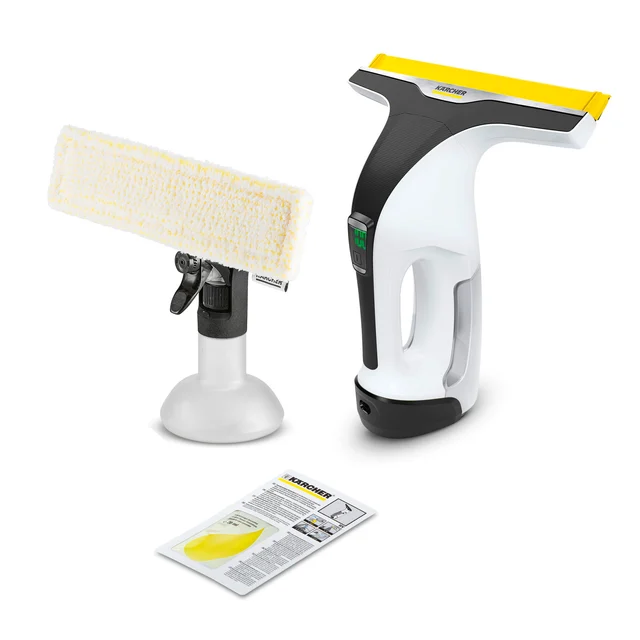
The most complete window vac: long runtime, a digital charge display and two interchangeable blade widths.
Best for: Anyone who cleans a lot of glass and wants the longest runtime, a battery readout and a narrow blade for mirrors and shower corners.
- Around 100 minutes of runtime per charge — comfortably the longest here
- Interchangeable wide (280 mm) and narrow (170 mm) suction nozzles for big panes or tight corners and mirrors
- Digital display shows remaining battery, so you are not caught mid-window
- No-drip design and a comfortable weight around 0.7 kg
- Priciest of the four, especially once you add spare blades
- Manufacturer packshots ship it with a spray bottle and cloth you may already own
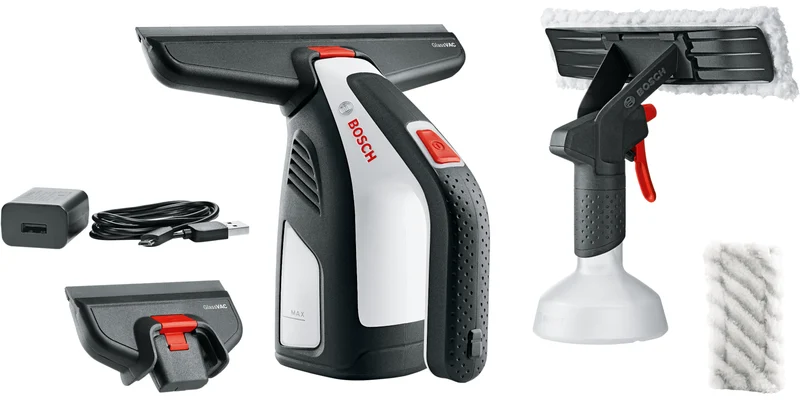
A light, well-priced all-rounder that swaps between a large and small head and excels on mirrors and shower screens.
Best for: Households that mainly do bathrooms, mirrors and a normal number of windows and want the best kit-in-the-box value.
- Comes as a set with a spray bottle, microfibre wipe, both nozzles and a USB charger
- Two heads — a large squeegee for windows and a small one for mirrors, small panes and car glass
- Light (about 0.7 kg) and easy to steer one-handed on shower screens
- USB-C charging means no proprietary brick to lose
- Runtime is short at roughly 30 minutes, so big cleaning days need a top-up
- No battery gauge — you clean until it fades
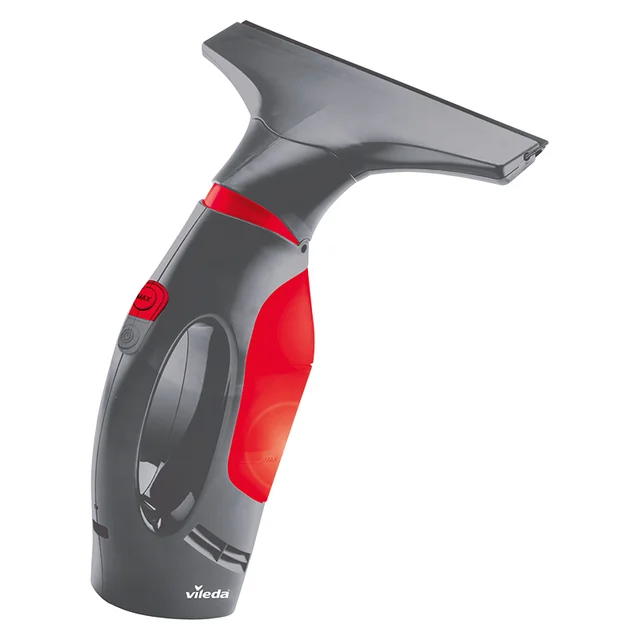
A budget-friendly single-blade vac with a roomy tank — fine if you skip the extras and keep expectations modest.
Best for: Occasional users on a tight budget who mostly clean standard windows and do not need a mirror-sized head.
- Lowest price here and a generous dirty-water tank so you empty it less often
- Angled handle makes it easy to reach the top of tall windows
- Simple, no-fuss operation that new users pick up quickly
- Single fixed blade width — no narrow nozzle for mirrors or shower corners
- No battery indicator and a middling runtime of around half an hour
- Feels more basic in the hand than the Kärcher or Bosch
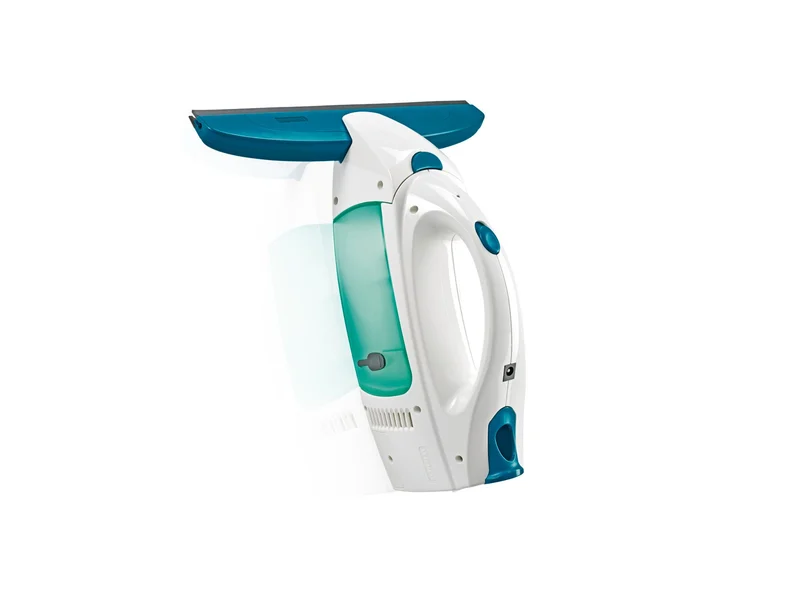
A wide-bladed veteran that still works, but a dated design and thin standard kit leave it behind newer rivals.
Best for: Someone who only wants a wide blade for big windows and can find it at a genuine discount — otherwise the money is better spent elsewhere.
- Wide 28 cm blade clears large panes in fewer passes
- Simple to empty and maintain
- No battery display and a shorter runtime around 35 minutes
- The narrow 17 cm nozzle for mirrors and small panes is a separate purchase
- Design and ergonomics feel a generation behind the Kärcher and Bosch for a similar outlay
| Criteria | Kärcher WV 6 Plus Top pick | Bosch GlassVAC | Vileda Windomatic | Leifheit Dry & Clean |
|---|---|---|---|---|
| Verdict | Buy it | Buy it | It depends | Skip it |
| Best for | Anyone who cleans a lot of glass and wants the longest runtime, a battery readout and a narrow blade for mirrors and shower corners. | Households that mainly do bathrooms, mirrors and a normal number of windows and want the best kit-in-the-box value. | Occasional users on a tight budget who mostly clean standard windows and do not need a mirror-sized head. | Someone who only wants a wide blade for big windows and can find it at a genuine discount — otherwise the money is better spent elsewhere. |
| Price tier | $$$ · premium | $$ · mid-range | $ · budget | $$ · mid-range |
| Runtime per charge | ~100 min | ~30 min | ~30–35 min | ~35 min |
| Dirty-water tank | 100 ml | ~100 ml | Generous (largest here) | 100 ml |
| Blade widths | Interchangeable 280 mm + 170 mm | Large + small heads | Single fixed blade | 28 cm (17 cm sold separately) |
| Battery display | Digital readout | None | None | None |
| In-box bundle | Spray bottle + cloth | Spray bottle, cloth, both nozzles, USB charger | Basic; spray tools vary by pack | Vac only in base set |
| Weight | ~0.7 kg | ~0.7 kg | ~0.7 kg | ~0.74 kg |
| Shower & mirror use | Excellent (narrow nozzle) | Excellent (small head) | OK (wide blade only) | OK (wide blade only) |
| Price tier | $$$ · premium | $$ · mid-range | $ · budget | $$ · mid-range |
Which one is right for you?
- Anyone who cleans a lot of glass and wants the longest runtime, a battery readout and a narrow blade for mirrors and shower corners. Buy it Kärcher WV 6 Plus
- Households that mainly do bathrooms, mirrors and a normal number of windows and want the best kit-in-the-box value. Buy it Bosch GlassVAC
- Occasional users on a tight budget who mostly clean standard windows and do not need a mirror-sized head. It depends Vileda Windomatic
- Someone who only wants a wide blade for big windows and can find it at a genuine discount — otherwise the money is better spent elsewhere. Skip it Leifheit Dry & Clean
How we judged the field
We do not run our own cleaning lab. Instead we synthesise the manufacturers’ published specifications with independent testing and aggregated owner reports, then weigh the things that actually decide whether a window vac earns its place in the cupboard. The criteria that mattered most were: runtime per charge and how long charging takes; dirty-water tank capacity, since a small tank means frequent trips to the sink; blade width and whether you can swap between a wide blade for big panes and a narrow one for mirrors and shower corners; drip and leak control when the tool is tilted; what comes in the box, such as a spray bottle and microfibre pad; weight and one-handed balance; and how well each copes with the jobs people buy these for — condensation on shower glass, mirrors and steamed-up bathroom tiles. Prices are given only as qualitative tiers.
Kärcher WV 6 Plus — buy
Kärcher effectively invented this category, and the WV 6 Plus is the most rounded tool of the group. Runtime is the headline: roughly 100 minutes per charge, far ahead of the others, so a whole-home window session rarely needs a mid-clean recharge. A small digital display shows remaining battery, which sounds minor until you have had a cheaper vac die halfway down a patio door. The suction nozzles are interchangeable — a wide 280 mm blade for windows and doors, and a narrow 170 mm nozzle that transforms it for mirrors, glazing bars and shower corners. It is a no-drip design, weighs about 0.7 kg, and pairs with the usual spray bottle and microfibre pad. The catch is price: it is the dearest here, and spare nozzles add up. If you clean glass often and want the fewest compromises, that premium is easy to justify.
Bosch GlassVAC — buy
The GlassVAC is the value play, and a very good one. It arrives as a complete set — the vac, a spray bottle, a microfibre wipe, both a large and a small squeegee head, and a USB charger — so there is nothing else to buy to get started. Those two heads are the story: the large one takes on windows, while the small head makes it genuinely excellent on mirrors, small panes and car glass. It is light, easy to steer one-handed on a shower screen, and USB-C charging means no special brick to misplace. The trade-off is battery life of around 30 minutes and no charge gauge, so the biggest cleaning days will want a top-up. For most homes that mainly tackle bathrooms, mirrors and a normal number of windows, it is the smart buy.
Vileda Windomatic — it depends
The Windomatic is the budget-friendly option, and for the right person it is enough. It is the cheapest here, pairs a roomy dirty-water tank with an angled handle that reaches the top of tall windows comfortably, and is simple enough that a first-time user is productive within minutes. But you are buying the basics: a single fixed blade width with no narrow nozzle for mirrors or shower corners, no battery indicator, and a runtime of around half an hour. In the hand it feels a step below the Kärcher and Bosch. If you clean standard windows occasionally and do not need a mirror-sized head, it depends entirely on whether you value the low price over refinement — and for many people, it will.
Leifheit Dry & Clean — skip
The Dry & Clean is a competent, long-serving design, and its wide 28 cm blade does clear large panes in fewer passes. But it is showing its age. There is no battery display, runtime lands around 35 minutes, and the narrow nozzle you would want for mirrors and small panes is a separate purchase rather than in the box. The bigger problem is value: it typically costs close to the Bosch, which gives you more in the box and a small head as standard, or points you toward the far more capable Kärcher for a bit more. Unless you specifically want only a wide blade and find it heavily discounted, your money works harder elsewhere — so we would skip it.
Kärcher WV 6 Plus vs Bosch GlassVAC: which should you buy?
These are the two to weigh against each other. The Kärcher WV 6 Plus wins on endurance and flexibility: about three times the runtime, a battery readout, and interchangeable wide and narrow blades that let one tool do both a wall of windows and a bathroom mirror. The Bosch GlassVAC wins on value and out-of-the-box completeness: it costs less, includes the spray bottle, cloth, both heads and a USB charger, and its small head makes it a natural for mirrors and shower screens. Choose the Kärcher if you clean a lot of glass, want the longest runtime and like knowing your battery level. Choose the Bosch if you mainly do bathrooms and everyday windows and want the most kit for your money, and you do not mind recharging more often. Neither will disappoint; the decision is runtime and blade flexibility versus price and bundle.
What to look for
- Runtime and charging: 30 minutes suits most homes; look for 60 minutes-plus if you clean a lot of glass in one go, and value a battery display so you are not caught out.
- Blade options: a wide blade is faster on big panes, but a narrow nozzle (or a small head) is what makes a vac good on mirrors, shower corners and glazing bars.
- Tank size and no-drip design: a larger dirty-water tank means fewer sink trips, and a sealed no-drip tank keeps water off your arm when you tilt the tool upward.
- What is in the box: a spray bottle and microfibre pad or wipe save a separate purchase; check whether extra nozzles are included or cost more.
- Weight and handle: anything around 0.7 kg is easy one-handed; an angled handle helps reach the tops of tall windows.
- Spare blades: rubber blades wear out and are cheap to replace on all the major brands, so factor that in rather than the whole unit.
Our final take
For the best all-round window vacuum, the Kärcher WV 6 Plus is our pick: the longest runtime, a digital battery display and two interchangeable blade widths make it the one tool that handles everything from patio doors to bathroom mirrors without compromise, and it justifies its premium if you clean glass regularly. The Bosch GlassVAC is the value runner-up and the one we would steer most people to first — it bundles everything you need, its small head is a mirror and shower specialist, and only its shorter runtime keeps it from the top spot. The Vileda Windomatic is a reasonable budget choice for simple, occasional window cleaning. The Leifheit Dry & Clean still works, but for similar money the Bosch and Kärcher simply offer more, so it is the one to skip.
Questions, answered
Do window vacuums actually stop streaks?
Yes — the point of a window vac is to remove the washing water before it can dry into streaks or drips. You still wash the glass with a spray and cloth or pad first; the vacuum then squeegees and sucks the water into a tank so nothing runs down the pane. Owners consistently report cleaner, faster results than wiping dry with paper or microfibre alone, especially on large windows and glass doors.
Can I use a window vacuum on shower screens and mirrors?
That is one of the best uses for them. A window vac clears condensation and water spots off shower glass, mirrors and tiles in seconds, which helps limit limescale build-up. For mirrors, small panes and shower corners, a narrow nozzle helps — the Kärcher WV 6 Plus includes an interchangeable narrow blade and the Bosch GlassVAC comes with a small head, while the Vileda and Leifheit rely on their single wider blade.
How long do they run and how long do they take to charge?
Runtime depends on the battery. The Kärcher WV 6 Plus leads at roughly 100 minutes per charge; the Bosch, Vileda and Leifheit sit around 30 to 35 minutes, which is still enough for a typical round of windows. Charging generally takes a few hours, and the USB-charged Bosch is convenient if you would rather not manage a separate charger. Only the Kärcher shows remaining battery on a display.
Will a window vacuum drip or leak water on me?
Modern models are designed to be no-drip: the dirty water collects in a sealed tank and stays there until you empty it, even when you tilt the tool to reach the top of a window. Leaks are usually a sign of an overfilled tank or a tank cap that is not seated properly. Empty the tank before it reaches the max line and rinse it occasionally to keep the seal clean.
Are the blades and batteries replaceable?
The rubber squeegee blades wear over time and are sold as inexpensive spares for all four brands, so a worn blade is not a reason to replace the whole tool. Kärcher also sells interchangeable wide and narrow nozzles, and Leifheit offers a separate narrow blade. Batteries are built in on these consumer models and are not designed for easy owner swapping, so treat runtime as a long-term consideration when you buy.
More Home & Kitchen reviews
 The Best Wine Fridges: 4 Compared (and One to Skip)
  The Best Woks: 4 Compared (and One to Skip)
  The Air Fryer Everyone Actually Recommends (and Two Strong Runners-Up)
  The Best Air Mattresses With Built-In Pumps: 4 Compared (and One to Skip)
  The Best Bidet Attachments and Seats: 4 Compared (and One to Skip)
  The Best Bread Machines: 4 Compared (and One to Skip)