

Health & Wellness
The Best Under-Desk Walking Treadmills: 4 Compared (and One to Skip)
We compared four current walking pads on speed, deck size, noise, weight capacity, and how easily each tucks away.
The short version
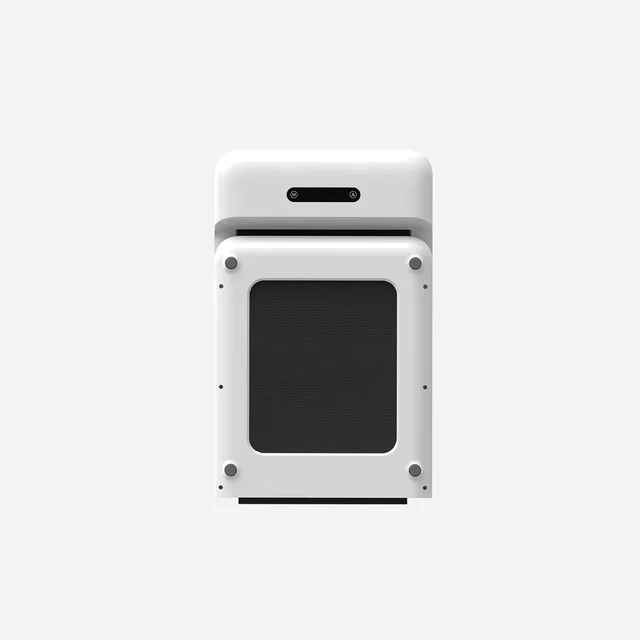
Under-desk walking pads have converged on a similar formula, so the differences that matter are build quality, deck size, and how easily each disappears when you are done. The WalkingPad C2 wins on refinement: a whisper-quiet brushless motor and a genuine fold make it the one most people should buy. The UREVO SpaceWalk E1L is the value champion, light and cheap with an unexpectedly high weight capacity, held back only by a short deck. The UREVO SpaceWalk 3S is worth it only if you truly want its auto-incline, since it trades away portability and price to get there. The Sunny TreadPad is fine but outclassed here by a narrow belt and no fold. Check any brand for regulatory safety warnings before you buy. Best for: desk workers who want to add daily steps quietly, with the C2 for build quality and the E1L for value.
Our picks at a glance
- WalkingPad C2 - Buy. The best-built compact pad here, quiet and foldable enough to justify the premium.
- UREVO SpaceWalk E1L - Buy. Featherweight and affordable, with a surprising 265-lb capacity: the easy pick for renters and tight spaces.
- UREVO SpaceWalk 3S - It depends. Adds genuine auto-incline and a roomy belt, but you pay for it in bulk, weight, and price.
- Sunny Health & Fitness SF-T7945 SMART TreadPad - Skip. A competent big-brand pad let down by the narrowest belt here and no fold-away trick.
The verdict in 30 seconds
What mattered most
- Top speed
- Belt (deck) size
- Weight capacity
- Noise
- Portability
- Incline
Under-desk walking pads promise steps without stealing focus, but they range from featherweight budget slabs to auto-incline machines that fight your standing desk for floor space. We synthesized independent testing and a large pool of owner reports to sort four current 2026 models into two we would buy, one that depends on your needs, and one we would pass on. The short version: the most refined pad is not the cheapest, and the value pick punches far above its price.
The best-built compact pad here, quiet and foldable enough to justify the premium.
Best for: Anyone who wants the most polished, quietest fold-away pad and will pay for build quality.
- Brushless motor that owners describe as very quiet
- Folds roughly in half to about a 5-inch profile, so it slides under a sofa or against a wall
- Step-sensor speed control and an app plus LED readout feel a cut above budget rivals
- Weight capacity tops out lower than the field at around 220 lb
- Premium price for a walking-only pad with no incline
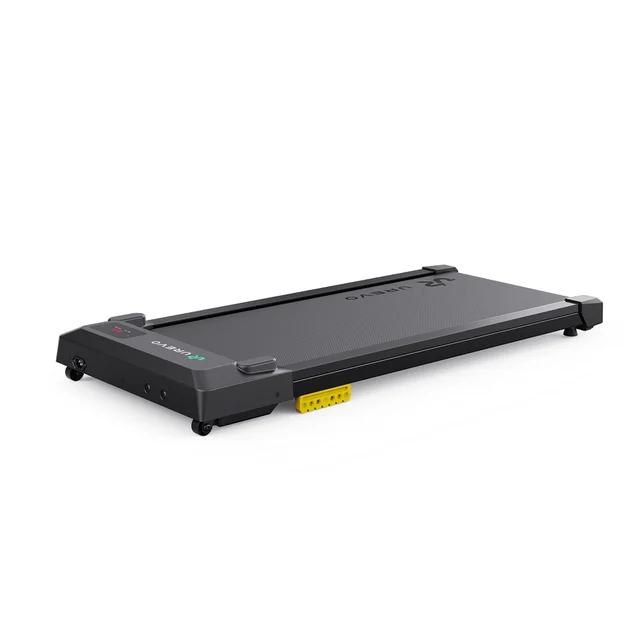
Featherweight and affordable, with a surprising 265-lb capacity: the easy pick for renters and tight spaces.
Best for: Budget-minded buyers and small apartments who prize portability over a big deck.
- One of the lightest pads here, so it is genuinely easy to reposition daily on its transport wheels
- Handles up to about 265 lb despite the budget price, with shock-absorbing deck layers owners praise
- Reaches roughly 4 mph, covering brisk walking for most desk users
- Short walking surface (about 35 inches) can feel tight for taller users or a longer stride
- Basic display and no vertical fold, so it stores flat rather than tucking upright
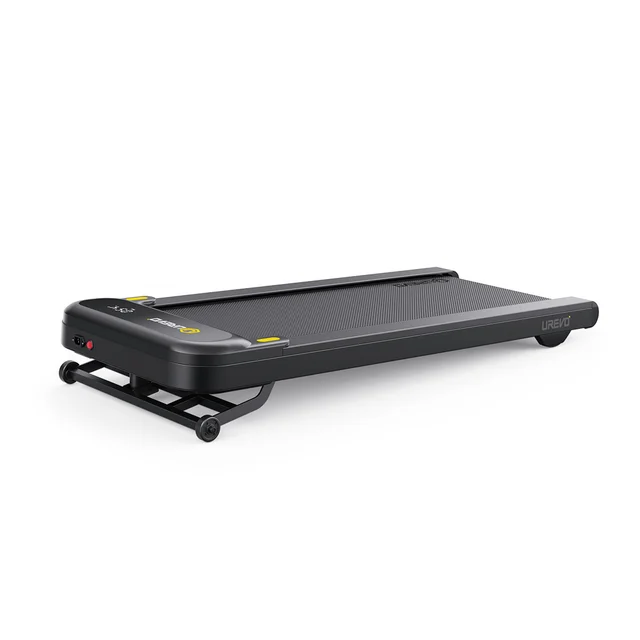
Adds genuine auto-incline and a roomy belt, but you pay for it in bulk, weight, and price.
Best for: Steppers who specifically want incline training and have permanent floor space for it.
- Motorized 0 to 9 percent auto-incline meaningfully raises effort and calorie burn at walking speed
- Longer, wider deck (about 42 by 16.5 inches) that owners find comfortable for a natural stride
- Same generous 265-lb capacity as the lighter UREVO
- Heavier and bulkier than the E1L, and the listing describes wheels and a handle rather than a fold
- A premium price that only pays off if you will use incline
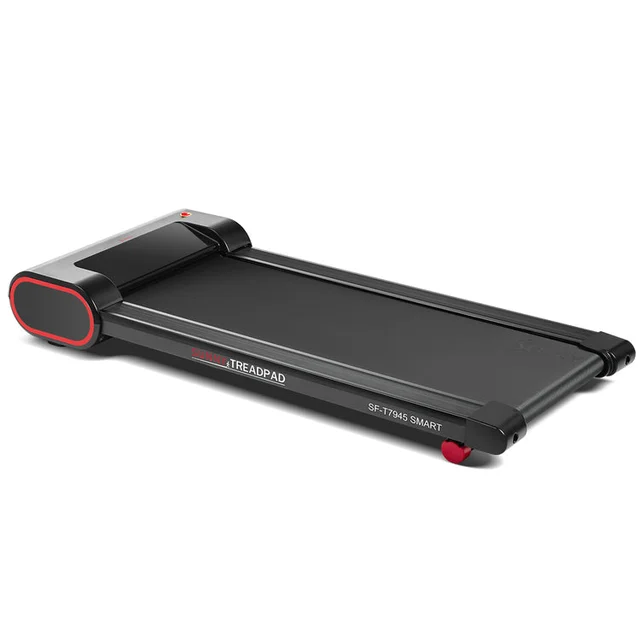
A competent big-brand pad let down by the narrowest belt here and no fold-away trick.
Best for: Brand-loyal buyers who value app ecosystem over belt width, though the others do more for the money.
- Backed by a large, established brand with a mature companion app and guided routes
- Solid 245-lb capacity and a clear LCD readout
- Tilt-and-roll wheels make short moves easy
- At about 14 inches, the belt is the narrowest of the group and can feel confining
- Does not fold, so it is the hardest of these four to store out of sight
- Top speed of roughly 3.7 mph and no incline leave it without a standout feature
| Criteria | WalkingPad C2 Top pick | UREVO SpaceWalk E1L | UREVO SpaceWalk 3S | Sunny Health & Fitness SF-T7945 SMART TreadPad |
|---|---|---|---|---|
| Verdict | Buy it | Buy it | It depends | Skip it |
| Best for | Anyone who wants the most polished, quietest fold-away pad and will pay for build quality. | Budget-minded buyers and small apartments who prize portability over a big deck. | Steppers who specifically want incline training and have permanent floor space for it. | Brand-loyal buyers who value app ecosystem over belt width, though the others do more for the money. |
| Price tier | $$$ · premium | $ · budget | $$$ · premium | $$ · mid-range |
| Top speed | Up to ~4 mph (walk/brisk) | Up to ~4 mph | Up to ~4 mph | Up to ~3.7 mph |
| Belt (deck) size | 47.2 x 15.7 in | 35.4 x 15 in (short) | 42.5 x 16.5 in (roomy) | 39 x 14 in (narrow) |
| Weight capacity | ~220 lb | ~265 lb | ~265 lb | ~245 lb |
| Noise | Very quiet (brushless) | Quiet | Quiet | Quiet |
| Portability | Folds ~in half, slim; rolls | Very light, rolls; no fold | Heavier, rolls; no fold | No fold; tilt-and-roll |
| Incline | None | None | Auto 0-9% | None (fixed) |
| Display & app | LED + app, step sensor | Basic LED + remote/app | LED + app, auto programs | LCD + app, routes |
| Price tier | $$$ · premium | $ · budget | $$$ · premium | $$ · mid-range |
Which one is right for you?
- Anyone who wants the most polished, quietest fold-away pad and will pay for build quality. Buy it WalkingPad C2
- Budget-minded buyers and small apartments who prize portability over a big deck. Buy it UREVO SpaceWalk E1L
- Steppers who specifically want incline training and have permanent floor space for it. It depends UREVO SpaceWalk 3S
- Brand-loyal buyers who value app ecosystem over belt width, though the others do more for the money. Skip it Sunny Health & Fitness SF-T7945 SMART TreadPad
How we judged the field
We do not run our own lab. Instead, we synthesize independent testing, manufacturer specifications, and a broad pool of owner reports, then weight the criteria that actually shape daily use of a walking desk. For under-desk pads, five things matter most: how quiet the motor is at walking pace, how roomy the belt feels for a natural stride, how much weight it safely supports, whether it can disappear when you are done, and whether the speed range fits real desk work. We treat any marketing dB figures with caution and lean on the consistency of owner feedback, and we flag any documented safety concerns rather than burying them. Speed, we should say up front, is not a differentiator here: every model tops out at a brisk walk, so we focused on the things that separate a pad you enjoy from one you resent.
WalkingPad C2
Buy itThe C2 is the pad that feels engineered rather than assembled. Its 3 HP brushless motor is the one owners praise most for low noise in this group, and it is the only model here that folds roughly in half to a slim profile you can slide under a sofa or stand against a wall. Step-sensor speed control, a clean LED readout, and app support round out an experience that consistently reads as a tier above budget rivals. The trade-offs are honest: the weight capacity is the lowest of the four at around 220 lb, and you pay a premium for a walking-only pad with no incline. For most desk workers who want one pad that is quiet, capable, and genuinely storable, that premium is easy to justify.
UREVO SpaceWalk E1L
Buy itThe E1L is the value story of the roundup. It is one of the lightest pads here, which sounds trivial until you realize portability is the single feature people use every day, and it rolls out of the way without a fight. Owners are pleasantly surprised that a pad this inexpensive is rated to about 265 lb and layers in shock absorption that keeps walking comfortable. It reaches roughly 4 mph, so brisk walking is covered. The compromises are a short walking surface near 35 inches, which taller users or long striders will notice, and a basic display with no vertical fold. None of that undercuts the core proposition: it delivers most of the daily experience of pricier pads for a fraction of the cost.
UREVO SpaceWalk 3S
It dependsThe 3S is the most capable machine here, and also the one most likely to be the wrong choice. Its headline feature is genuine motorized auto-incline from 0 to 9 percent, which meaningfully raises effort and calorie burn at the same walking speed, paired with a longer, wider deck that owners find comfortable. But incline hardware has costs: the pad is heavier and bulkier, it does not fold away, the price sits at the premium end. If you specifically want incline training and have permanent floor space, it is excellent. If you just want more steps while you work, you are paying for capability you will not use.
Sunny Health & Fitness SF-T7945 SMART TreadPad
Skip itThere is nothing broken about the Sunny TreadPad. It comes from a large, established brand with a mature app and guided routes, supports about 245 lb, and moves easily on tilt-and-roll wheels. The problem is that it does not lead in any category that matters to us. Its belt, at roughly 14 inches, is the narrowest of the group, and owners with a wider gait notice the constraint. It does not fold, making it the hardest of these four to store out of sight, and with a top speed near 3.7 mph and no incline it lacks a standout reason to choose it over the alternatives. In a field this competitive, competent is not enough.
WalkingPad C2 vs UREVO SpaceWalk E1L: which should you buy?
This is the decision most readers will actually face: the refined pick versus the value pick. The C2 wins on the things you feel over months of ownership, a quieter motor, a wider and longer belt, and a true fold that makes it easy to hide. The E1L wins on the things you feel at checkout and on moving day, a much lower price and a lighter body that is trivial to reposition, plus a higher weight capacity. If your budget is flexible and you want the best daily experience with the least noise, buy the C2. If you are furnishing a rental, watching your spending, or simply want the pad that is easiest to pick up and stash, the E1L gives you the large majority of that experience for far less. Both are genuinely good; the gap between them is money and polish, not competence.
What to look for
- Belt width and length: A belt around 16 inches wide and 40-plus inches long feels natural; 14 inches or a very short deck can cramp your stride.
- Noise at walking pace: Look for brushless motors and any published decibel rating, then verify against owner reports for real-world quiet.
- How it stores: A pad that folds or is light enough to move daily is a pad you will keep using; a bulky non-folding slab tends to get abandoned.
- Weight capacity and stability: Match the rating to your weight with margin, and favor decks with shock absorption for comfort.
- Speed range over top speed: You want smooth control at 1 to 2.5 mph, not a high ceiling; treat about 4 mph as the practical maximum for walking pads.
- Incline, only if you will use it: It boosts effort but adds cost, weight, noise, and storage hassle.
- Safety record: Check for regulatory warnings or recalls on the brand before buying.
Our final take
The category has matured to the point where the smart buying question is not how fast a pad goes but how well it fits your room and routine. The WalkingPad C2 is the pad we would recommend to most people without hesitation: it is the quietest, the best built, and the easiest to make disappear. The UREVO SpaceWalk E1L is the one we would recommend to anyone weighing cost or portability, because it gets the fundamentals right for far less. Reach for the UREVO SpaceWalk 3S only if incline is a real goal, and pass on the Sunny TreadPad in this company. Above all, buy from a brand with a clean safety record, and remember this is general product information rather than medical advice; if you are new to exercise, check with a professional before you start logging miles at your desk.
Questions, answered
Are walking pads quiet enough to use during video calls?
Generally yes. The makers describe the motors as quiet but publish no decibel ratings, and owners generally report they are quiet enough for calls and shared rooms at walking pace. The WalkingPad C2's brushless motor draws praise for low noise, while the auto-incline UREVO can add some mechanical hum. Your footfalls and shoes often make more noise than the motor, so soft soles and a mat under the pad help.
How fast does an under-desk treadmill actually need to go?
For typing while walking, most people settle between about 1 and 2.5 mph, and all four models cover that comfortably. Top speeds here cluster around 3.7 to 4 mph, which is a brisk walk rather than a jog. If you want to run, an under-desk pad is the wrong tool; look at a folding treadmill with handrails instead.
Can I run on one of these?
No. These are walking pads, not running treadmills. They lack handrails, the decks are short, and the motors and belts are tuned for walking speeds. Owners who push them into a jog report instability, and running voids the intended use. Treat roughly 4 mph as a hard ceiling.
Are under-desk treadmills safe, and are there any recalls I should know about?
Most are safe when used at walking speed with the deck clear and the pad on a firm, level floor. Before buying any walking pad, search the brand name alongside recall or stop-use to check for regulatory warnings. This article is general product information, not medical advice; if you have a health condition or are new to exercise, consult a qualified professional before starting a walking-desk routine.
Do I really need incline?
Only if you want it. Incline raises effort and calorie burn at the same speed, which is why the UREVO SpaceWalk 3S offers motorized 0 to 9 percent adjustment. But incline hardware adds cost, weight, and a bit of noise, and it makes the pad harder to store. If your goal is simply more daily steps while you work, a flat pad like the C2 or E1L is simpler and easier to live with.
Deciding between the top two? See our head-to-head: WalkingPad C2 vs UREVO SpaceWalk E1L.
More Health & Wellness reviews
 The Best Weighted Blankets: An Honest Comparison
  The Best Infrared Sauna Blankets: 4 Compared (and One to Skip)
  The Best Acupressure Mats: 4 Compared (and One to Skip)
  The Best Balance Boards: 4 Compared (and One to Skip)
  The Best Indoor Air Quality Monitors: What's Worth Buying in 2026
  The Best Blood Glucose Meters: 4 Compared (and One to Skip)