

Outdoors & Fitness
The Best Bike Tire Levers: 4 Compared (and One to Skip)
We compared four tire levers on published dimensions and weight, stated materials, carbon rim guidance and what each maker will commit to in writing.
The short version
Pedro's Tire Levers remain the default answer and the one to buy if you just want a pair that works: molded box construction in a proprietary plastic blend, a chisel tip that slides under a tight bead, and a deliberately thick body that resists twisting out from under the tire. SILCA's Tire Levers Premio are the pick for carbon rims, built as a forged alloy lever with a reinforced nylon rim shield rather than a plastic lever with a metal core, weighing 36 grams for two levers and a sleeve, and covered by SILCA's lifetime warranty. They also come with the most honest instructions here, including SILCA's own statement that they should only be used to remove a tire and never to help install one. Wolf Tooth's 8-Bit Tire Lever and Disc Brake Multi-Tool is a single 29.5 gram lever that also carries an 8mm flare wrench and a rotor truing slot, which is a good trade for a saddle bag and a bad one for a workbench. Muc-Off's Rim Stix publish no material, no dimensions and no weight for a tool whose whole job is not to break. Best for: anyone who has snapped a lever halfway through a roadside repair.
Our picks at a glance
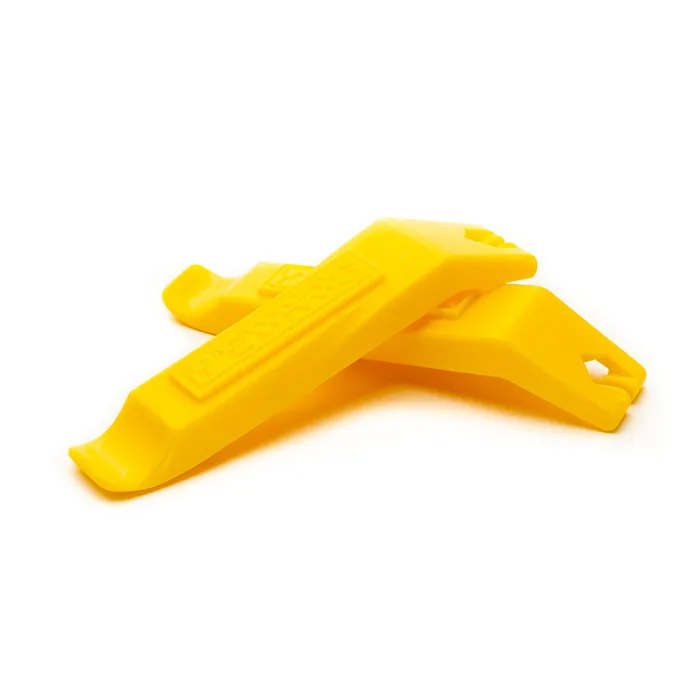
- Pedro's Tire Levers - Buy. The thick yellow lever that has survived a generation of tight tires.
- SILCA Tire Levers Premio - Buy. A forged alloy lever with a nylon rim shield, built for carbon rims and sold with real instructions.
- Wolf Tooth 8-Bit Tire Lever and Disc Brake Multi-Tool - It depends. One long lever that also carries an 8mm flare wrench and a rotor truing slot.
- Muc-Off Rim Stix Tyre Lever - Skip. A perfectly ordinary pair of levers sold on adjectives, with no material, weight or size published.
The verdict in 30 seconds
What mattered most
- Published dimensions
- Published weight
- Stated material
- Carbon rim guidance
- Levers per pack
- Extra functions
A tire lever is the cheapest tool in the bag and the one most likely to fail at the worst moment. Modern tubeless tires sit tighter on the rim than tires ever have, which means more force through a thin piece of plastic, and carbon rims add a surface you can damage permanently with the wrong lever used the wrong way. The interesting thing about this category is how differently makers treat it. Two of the four here publish dimensions, weights, materials and usage limits. The other two publish adjectives.
The thick yellow lever that has survived a generation of tight tires.
Best for: Almost everyone, as the pair that lives in the saddle bag and the pair on the bench.
- Molded box construction rather than a solid blade, which is what stops a plastic lever folding under load.
- The chisel tip is shaped to slide under a bead, and the deliberately thick body resists twisting out from under the tire.
- Sold as a pair and cheap enough to keep a set in every bag rather than moving one set around.
- Pedro's publishes no weight, no length and no specific material beyond a proprietary plastic blend.
- There is no carbon rim guidance on the product page, which matters on a lever this stiff.
- No secondary function, so it is a lever and nothing else.
- The strongest levers available is a maker's claim with no test behind it on the page.
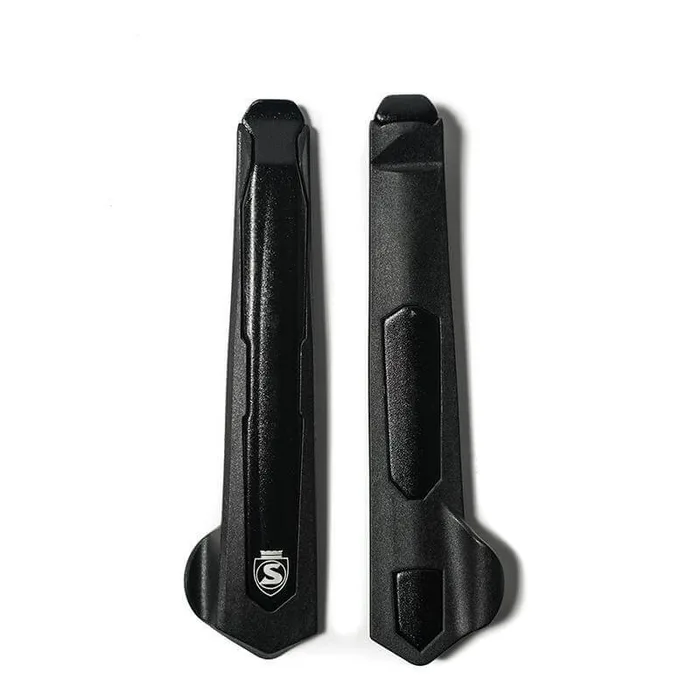
A forged alloy lever with a nylon rim shield, built for carbon rims and sold with real instructions.
Best for: Carbon rim owners who want a lever that will not gouge the bead seat, and who will read the instructions.
- Forged alloy construction with a reinforced nylon rim shield puts the stiffness in the body and the soft surface where it touches the rim.
- SILCA publishes the numbers: 105 x 25 x 7mm and 36 grams for two levers plus a neoprene sleeve.
- Covered by SILCA's lifetime warranty against manufacturing defects, with hard part function covered for seven years.
- SILCA states they should only be used to remove a tire, never to help install one.
- SILCA also says it does not recommend using tire levers at all with latex inner tubes.
- SILCA tells you to check your wheel maker's own guidelines before using any lever on carbon, so carbon safe is conditional.
- It costs several times what a plastic pair costs and does the same job on an alloy rim.
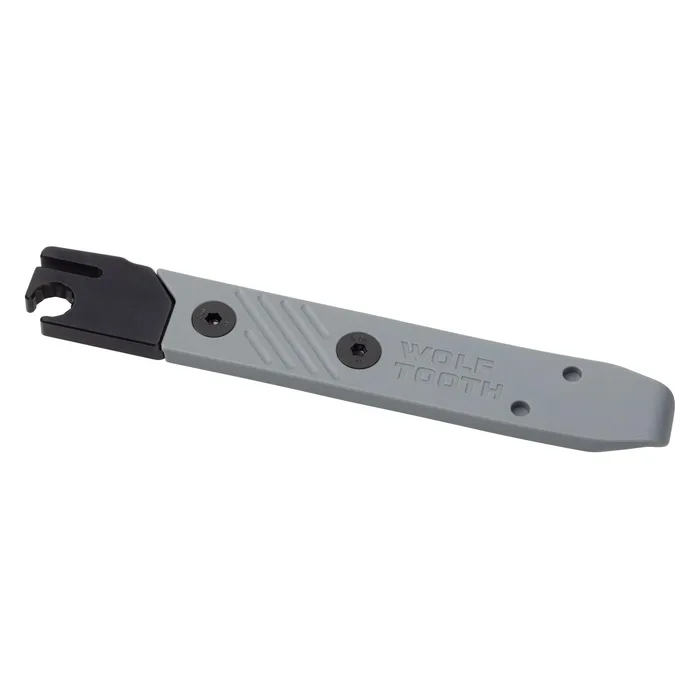
One long lever that also carries an 8mm flare wrench and a rotor truing slot.
Best for: Mountain and gravel riders building a minimal saddle bag who also service their own hydraulic brakes.
- Wolf Tooth publishes 29.5 grams, 146 x 20 x 8mm, and names the materials as 7075-T6 aluminium with a high-strength nylon composite lever.
- The extra length gives real leverage, and the edges are rounded specifically to avoid damaging the rim and rim tape.
- The machined end carries an 8mm flare wrench for a hydraulic brake compression nut and a slot for truing rotors.
- It is one lever, and most tire removals want two.
- The alloy body means it is not the tool to reach for on a carbon rim without care.
- Paying multi-tool money for a lever only makes sense if you will use the brake functions.
- At 146mm it is long for a jersey pocket, which is the trade for the leverage.
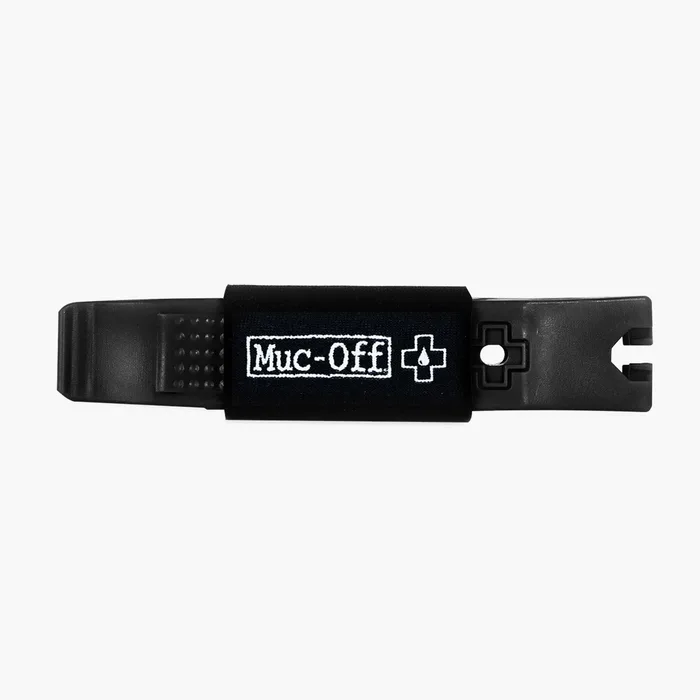
A perfectly ordinary pair of levers sold on adjectives, with no material, weight or size published.
Best for: Nobody in particular, since Pedro's costs about the same and tells you more.
- An integral emergency valve core remover means one fewer small tool to lose.
- A rear spoke hook lets you park one lever while you work the bead round with the other.
- Sold as a pair, which is the right way to sell tire levers.
- Muc-Off publishes no material beyond high-strength materials, and no length, thickness or weight.
- The listing claims they work perfectly with all tyre and rim combos, an absolute with nothing behind it.
- It also promises no danger of it snapping in two, which is the one claim a buyer cannot check and the one every broken lever was sold with.
- There is no carbon rim guidance of any kind, where SILCA gives a full set of conditions.
| Criteria | Tire Levers Top pick | Tire Levers Premio | 8-Bit Tire Lever and Disc Brake Multi-Tool | Rim Stix Tyre Lever |
|---|---|---|---|---|
| Verdict | Buy it | Buy it | It depends | Skip it |
| Best for | Almost everyone, as the pair that lives in the saddle bag and the pair on the bench. | Carbon rim owners who want a lever that will not gouge the bead seat, and who will read the instructions. | Mountain and gravel riders building a minimal saddle bag who also service their own hydraulic brakes. | Nobody in particular, since Pedro's costs about the same and tells you more. |
| Price tier | $ · budget | $ · mid-range | $ · mid-range | $ · budget |
| Published dimensions | Not published | 105 x 25 x 7mm | 146 x 20 x 8mm | Not published |
| Published weight | Not published | 36g for two levers and sleeve | 29.5g | Not published |
| Stated material | Proprietary plastic blend, molded box construction | Forged alloy with reinforced nylon rim shield | 7075-T6 aluminium and nylon composite lever | High-strength materials, not named |
| Carbon rim guidance | Not published | Carbon safe, with stated conditions of use | Rounded edges to avoid rim and tape damage | Not published |
| Levers per pack | Two | Two plus a neoprene sleeve | One | Two |
| Extra functions | None | Integrated spoke-hook wing | 8mm flare wrench and rotor truing slot | Valve core remover and spoke hook |
| Maker's use restrictions | None published | Removal only, and not advised with latex tubes | None published | None published |
| Warranty | Not published | Lifetime on defects, seven years on hard part function | Not published | Not published |
Which one is right for you?
- Almost everyone, as the pair that lives in the saddle bag and the pair on the bench. Buy it Pedro's Tire Levers
- Carbon rim owners who want a lever that will not gouge the bead seat, and who will read the instructions. Buy it SILCA Tire Levers Premio
- Mountain and gravel riders building a minimal saddle bag who also service their own hydraulic brakes. It depends Wolf Tooth 8-Bit Tire Lever and Disc Brake Multi-Tool
- Nobody in particular, since Pedro's costs about the same and tells you more. Skip it Muc-Off Rim Stix Tyre Lever
How we judged the field
Five things matter in a tire lever, and only the first is obvious. Strength comes first, because a lever that folds or snaps under a tight tubeless bead has failed at the only job it has, and the design answers are cross-section and material rather than brute thickness. Second is tip geometry: the tip has to slide between the bead and the rim without catching the tube or the rim tape, which means a chisel or tapered profile and not a point. Third is what the lever touches. A carbon rim’s bead seat can be gouged, so a lever intended for carbon either uses a soft material throughout or puts a soft shield at the contact surface. Fourth is whether the lever can park itself on a spoke, since almost every removal technique involves holding one section of bead while you work the next. Fifth is what the maker is prepared to publish, which in this category turns out to be the sharpest divider of all.
The field splits by material philosophy. Plastic levers, of which Pedro’s is the benchmark, solve strength with a structural cross-section and are cheap enough to buy in threes. Hybrid designs put metal where the load is and plastic where the contact is, which is what SILCA’s forged alloy body with a nylon rim shield does. Multi-tool levers, like Wolf Tooth’s 8-Bit, accept a compromise on lever count in exchange for carrying brake tools in the same part. We took one of each, plus a mainstream plastic pair whose listing publishes nothing at all, because comparing what makers will and will not commit to is the most useful thing you can do in a category this cheap.
Pedro’s levers are the ones most shops have had in the counter display for years, and the construction is the reason. Instead of a flat blade, Pedro’s uses molded box construction, which means the lever is a hollow structural section rather than a solid piece of plastic, and that is what resists folding when a tight bead loads it sideways. The material is a proprietary plastic composite blend, which Pedro’s says makes them the strongest levers available, and the tip is a chisel shape that slides under a bead without needing a sharp point. The body is deliberately slightly thicker than it needs to be so it does not twist out from under the tire mid-pull. What Pedro’s does not do is publish anything measurable: no weight, no length, no material name and no carbon rim guidance. That is a real gap on a lever this stiff. It is also, at this price, easy to forgive, because the sensible way to own these is to buy two pairs and stop thinking about it.
The Premio is SILCA’s answer to a specific problem: carbon rims are damaged by the wrong lever, and the usual fix, a metal core inside a plastic lever, puts the metal in the place where it adds the least stiffness. SILCA inverted it. The Premio is a forged alloy lever with a reinforced nylon rim shield at the contact surface, so the body is stiff and the part that touches carbon is not. There is an integrated spoke-hook wing, and the pair plus a neoprene sleeve comes in at 36 grams, with each lever measuring 105 x 25 x 7mm. SILCA’s lifetime warranty covers manufacturing defects for the life of the user, with hard part function covered for seven years. The instructions are unusually candid and count as real limitations: SILCA says the Premio should only be used to remove a tire and never to help install one, that it does not recommend using levers with latex inner tubes, and that you must check your own wheel maker’s guidelines before using any lever on carbon.
Wolf Tooth’s 8-Bit Tire Lever and Disc Brake Multi-Tool is two tools sharing a body. One end is a high-strength nylon composite lever with a tapered angled tip and rounded edges, stated to remove tires without damaging the rim or the rim tape. The other end is machined 7075-T6 aluminium carrying an 8mm flare wrench, sized for the compression nut on a hydraulic brake hose, and a slot for truing a disc rotor. Wolf Tooth publishes the specifics, which is welcome at this price: 29.5 grams, 146 x 20 x 8mm, made in the USA. The extra length is genuinely useful leverage on a stubborn mountain bike tire. The reason it is a depends rather than a buy is arithmetic. It is one lever, and most removals want two, so it works as the tool in a minimal pack rather than as your tire levers. It also only makes financial sense if the brake functions are ones you will actually use.
Muc-Off’s Rim Stix do the job. They are a pair of plastic levers with a scooped tip, a recess underneath, a spoke hook and an integral valve core remover, which is a genuinely handy thing to have on a lever. The problem is everything Muc-Off will not say. There is no material named, only high-strength materials. There is no length, no thickness and no weight. There is no carbon rim guidance at all. In their place the listing offers two absolutes: that they work perfectly with all tyre and rim combos, and that there is no danger of it snapping in two. Neither is checkable, and the second is the claim every lever that has ever snapped was sold with. Against Pedro’s, which costs about the same and at least describes its construction, or SILCA, which publishes dimensions, weight, material and a list of things not to do, there is no reason to choose these.
Pedro’s Tire Levers vs SILCA Tire Levers Premio: which should you buy?
Pedro’s and the SILCA Premio are separated by what your rims are made of and how much you want to spend on a tool that costs nothing to replace. Pedro’s wins on ubiquity and on the sensible ownership pattern: buy two pairs, leave one in each bag, and never think about levers again. The molded box section is a real engineering answer to the real failure mode, and at this price a broken lever is an inconvenience rather than a loss. The Premio wins on precision and on carbon. A forged alloy body with a nylon rim shield gives you stiffness where the load is and a soft surface where the rim is, which is exactly the right arrangement, and SILCA backs it with a lifetime warranty on defects.
The tiebreaker is the instructions. SILCA’s product page states three limits that apply to every lever on this page whether the maker says so or not: use levers to remove a tire, not to install one; do not use them with latex inner tubes; and check your wheel manufacturer’s guidelines before levering on carbon. Reading that is worth more than the difference in price. If your rims are alloy and your tires are not brutal, buy Pedro’s. If your rims are carbon, buy the Premio and follow the instructions, or buy Pedro’s and follow them anyway.
What to look for
- Construction, not just thickness: a hollow box section like Pedro’s resists folding far better than a solid flat blade of the same weight.
- A named material: 7075-T6 aluminium or a nylon composite tells you something, and high-strength materials tells you nothing.
- Published dimensions and weight: SILCA gives 105 x 25 x 7mm and 36 grams for the pair, Wolf Tooth gives 29.5 grams, and the rest of this category gives neither.
- A spoke hook: almost every removal technique needs to park one lever while the second walks the bead, so a hook is a technique enabler rather than a gimmick.
- Carbon guidance if you run carbon: the useful listings state conditions of use, and SILCA goes as far as telling you to check your wheel maker’s rules first.
- Levers per pack: two is the working minimum, so a single lever multi-tool is a supplement to a pair rather than a replacement for one.
Our final take
Tire levers are the clearest example of a category where the cheap option is genuinely correct. Pedro’s give you a structural cross-section, a chisel tip and a price low enough to keep a spare pair in every bag, which is the right way to own them. The SILCA Premio is the one upgrade worth making, and only for carbon rims, where the forged alloy body and nylon rim shield are the right arrangement and where SILCA’s unusually specific instructions are worth as much as the tool. Wolf Tooth’s 8-Bit earns its place in a minimal pack if you will use its brake tools, not as a replacement for a pair. And a lever whose maker will not name its material is asking you to trust a promise you cannot check.
Questions, answered
Can I use a tire lever to put a tire back on?
You can, and makers who care about carbon rims tell you not to. SILCA states plainly that its Premio levers should only be used to remove a tire and never to help install one, because levering a bead over the rim puts the force in the wrong direction and can pinch a tube or damage a carbon bead seat. The safe technique is to start opposite the valve, push both beads into the centre channel of the rim to gain slack, and work the last section on with your thumbs. If you genuinely cannot, a tire jack designed for installation is the right tool.
Are metal tire levers ever a good idea?
On an alloy rim with a very tight tire, a metal lever is effective and unlikely to do lasting damage if you are careful. On a carbon rim it is a real risk, which is why carbon-focused designs use either a plastic lever or, like SILCA's Premio, a forged alloy body with a nylon shield on the surface that touches the rim. That construction is deliberate: the stiffness sits in the body where you want it, and the soft material sits at the contact point. A bare metal lever gives you no such separation.
How many levers should I carry?
Two is the usual answer and three is the comfortable one. The technique most people use is to hook one lever under the bead and hold it with a spoke hook, then walk a second lever around the rim, which requires at least two. A third is insurance against a break and costs almost nothing. Note that single-lever multi-tools like Wolf Tooth's 8-Bit are sold individually, so if you carry one you are relying on technique rather than a second tool.
Why do tire levers break?
Because a thin plastic blade loaded across its weak axis will fold, and a tight tubeless bead loads it hard. The design answers are thickness, cross-section and material. Pedro's uses molded box construction, which is a hollow structural section rather than a flat blade, and Wolf Tooth names a nylon composite. The user-side fix is to get more of the lever under the bead before you pull, and to move to a fresh bite rather than trying to lever a long section at once.
Do I need a different lever for tubeless?
Not a different type, but a stronger one. Tubeless-ready rims and tires are designed to fit tightly so the bead stays seated at low pressure, which means more force on the lever than an old clincher ever needed. Look for a lever that publishes its material or its construction, and avoid the thin flat blades that came free with a pump. A spoke hook also becomes more useful, because you often need to hold one section of bead over the rim while you work the next.
Deciding between the top two? See our head-to-head: Pedro's Tire Levers vs SILCA Tire Levers Premio.
More Outdoors & Fitness reviews
 The Best Trail Running Shoes: 4 Compared (and One to Skip)
  The Best Treadmills: 4 Compared (and One to Skip)
  The Best Trekking Poles: 4 Compared (and One to Skip)
  The Best Tubeless Sealants: 4 Compared (and One to Skip)
  The Best Tubeless Valves: 4 Compared (and One to Skip)
  The Best Via Ferrata Sets: 4 Compared (and One to Skip)