

Ski & Snowboard
The Best Ski Boot Heaters: 4 Compared (and One to Skip)
We compared battery boot heaters, a DIY heated insole kit, heated ski socks and disposable toe warmers on run time, heat settings, fit in a ski boot and ongoing cost.
The short version
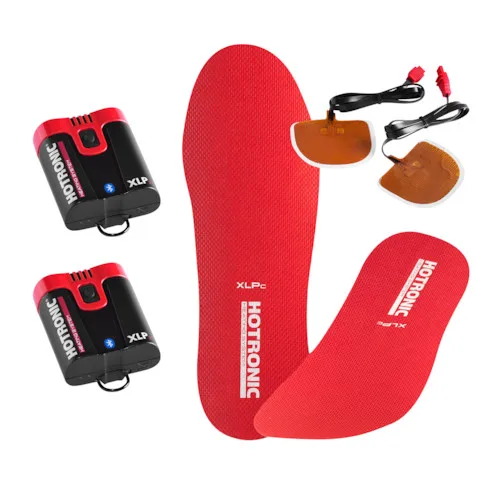
The Hotronic XLP 2C BT is our pick: a heating element that sits under your toes on your own insole, two-cell 6000 mAh batteries rated for 20 to 24 hours on the lowest setting, and control from the buttons or a phone app. The Therm-ic Heat Kit with C-Pack 1700B batteries is the value pick, turning any insole into a heated one with up to 17 hours of warmth and Bluetooth control. Therm-ic's Powersocks Heat Fusion suit skiers who want heat without touching their insoles, at the cost of washing and battery-swapping a sock. Skip HotHands Toe Warmers for regular skiing: they are single-use and air-activated, and skiers report they fade inside a closed boot. Best for: skiers with chronically cold feet who ski more than a few days a season.
Our picks at a glance
- Hotronic XLP 2C BT Custom - Buy. A battery boot heater with long run times and app control that fits on your existing insoles.
- Therm-ic Heat Kit + C-Pack 1700B - Buy. A DIY kit that turns any insole into a heated one, with Bluetooth batteries and up to 17 hours of warmth.
- Therm-ic Powersocks Heat Fusion Uni + S-Pack 1200 - It depends. Heated ski socks that warm the toes without touching your insoles, powered by cuff batteries.
- HotHands Toe Warmers - Skip. Cheap single-use toe warmers that need air to work, which a closed ski boot does not supply well.
The verdict in 30 seconds
What mattered most
- Type
- Rated warmth
- Heat control
- Battery
- Installation
- Reusable
Cold toes end more ski days than tired legs, and a tight ski boot makes it worse by limiting circulation. Battery boot heaters, heated socks and disposable toe warmers all promise warm feet, but they work very differently inside a closed boot. We compared a premium battery heater, a do-it-yourself heated insole kit, heated ski socks and the disposable toe warmers most skiers try first.
A battery boot heater with long run times and app control that fits on your existing insoles.
Best for: Frequent skiers with cold feet who want the longest run time and easy control.
- Two-cell 6000 mAh lithium-ion batteries, rated by Hotronic for 20 to 24 hours on setting 1.
- Three constant heat settings plus a Power Boost, adjustable on the battery or in the free HOTRONIC Heat app.
- Cambrelle covers integrate with preshaped or custom insoles, so you keep your own footbed.
- Batteries clip to the outside of the boot, about 5 oz each with the clip.
- Installing elements on custom insoles is often best left to a boot fitter.
- The most expensive way to warm your feet in this comparison.
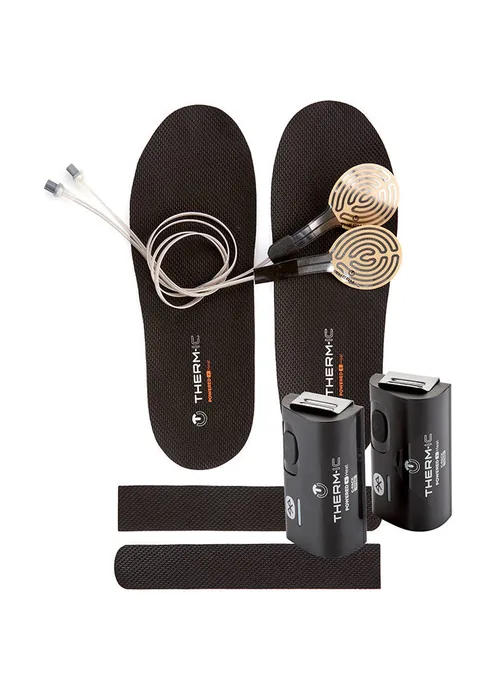
A DIY kit that turns any insole into a heated one, with Bluetooth batteries and up to 17 hours of warmth.
Best for: Handy skiers who want heated insoles in their own footbeds for less.
- Two ultra-fine heating elements stick to the front of your own insoles, with covers you trim to shape.
- Therm-ic rates the system at up to 17 hours of warmth.
- C-Pack batteries with Bluetooth let you adjust heat from the Thermic Heat Control app.
- Installation means cutting a small hole in your insole for the cable.
- Only Therm-ic C-Pack batteries fit the heating element cables.
- Therm-ic does not publish run times per heat setting on this page.
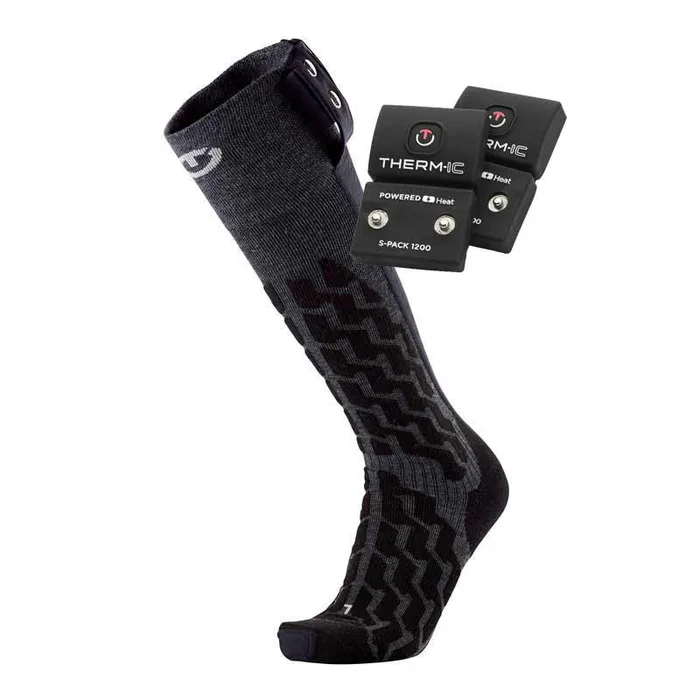
Heated ski socks that warm the toes without touching your insoles, powered by cuff batteries.
Best for: Skiers who rent boots or switch boots and want heat that moves with them.
- Heat Fusion technology spreads heat around the toes, with no changes to boots or insoles.
- Breathable socks with micro-channels to wick moisture, plus heel and toe reinforcement.
- Therm-ic rates the S-Pack 1200 set at up to 12 hours of warmth, with a USB charging cable included.
- Batteries snap onto the sock cuff, which some skiers feel under a tight boot cuff.
- You need to remove the batteries and wash the socks, and a second pair means buying more heated socks.
- The USB mains charger is not included.
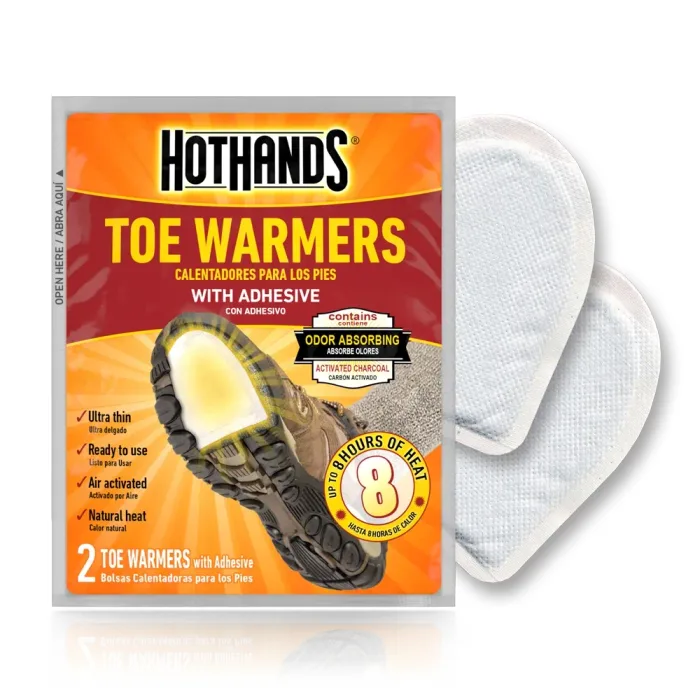
Cheap single-use toe warmers that need air to work, which a closed ski boot does not supply well.
Best for: Occasional skiers who want a backup for one very cold day.
- HotHands rates them at up to 8 hours of warmth.
- No batteries, no charging and nothing to install.
- Cheap enough to keep a few in a pocket for an unexpectedly cold day.
- HotHands calls them single-use and air-activated; a buckled ski boot limits the air they need, and skiers often report them fading.
- Every ski day uses a new pair, so the cost and waste add up over a season.
- No heat control: you get whatever the packet produces.
- Adhesive packets take up space in an already tight toe box.
| Criteria | Hotronic XLP 2C BT Custom Top pick | Therm-ic Heat Kit + C-Pack 1700B | Therm-ic Powersocks Heat Fusion Uni + S-Pack 1200 | HotHands Toe Warmers |
|---|---|---|---|---|
| Verdict | Buy it | Buy it | It depends | Skip it |
| Best for | Frequent skiers with cold feet who want the longest run time and easy control. | Handy skiers who want heated insoles in their own footbeds for less. | Skiers who rent boots or switch boots and want heat that moves with them. | Occasional skiers who want a backup for one very cold day. |
| Price tier | $$$ · premium | $$ · mid-range | $$ · mid-range | $ · budget |
| Type | Battery heater on your insole | DIY heated insole kit | Heated socks | Disposable air-activated warmers |
| Rated warmth | 20 to 24 h on setting 1 | Up to 17 h | Up to 12 h | Up to 8 h |
| Heat control | 3 settings + boost, button or app | Bluetooth app | Battery settings | None |
| Battery | 2-cell Li-ion, 6000 mAh | C-Pack 1700B | S-Pack 1200 | None |
| Installation | On your insoles, often by a boot fitter | DIY, cut a cable hole | None, wear the socks | Stick to sock over toes |
| Reusable | Yes | Yes | Yes | No, single-use |
| Works with rental boots | Only if you move your insoles | Only if you move your insoles | Yes | Yes |
| Best for | Frequent skiers | Handy budget buyers | Boot switchers | One-off cold days |
Which one is right for you?
- Frequent skiers with cold feet who want the longest run time and easy control. Buy it Hotronic XLP 2C BT Custom
- Handy skiers who want heated insoles in their own footbeds for less. Buy it Therm-ic Heat Kit + C-Pack 1700B
- Skiers who rent boots or switch boots and want heat that moves with them. It depends Therm-ic Powersocks Heat Fusion Uni + S-Pack 1200
- Occasional skiers who want a backup for one very cold day. Skip it HotHands Toe Warmers
How we judged the field
Five things decide whether a foot warmer helps on the mountain: how long it stays warm, whether you can control the heat, how it fits inside a tight ski boot, what it takes to install, and what it costs over a season. Run time matters because a heater that dies at lunch leaves the coldest part of the day. Control matters because too much heat makes feet sweat, and sweat makes them colder later.
The field splits into battery heaters that attach to your insoles, heated socks with cuff batteries, and disposable air-activated warmers. We picked a premium battery heater, a DIY heated insole kit, a heated sock set and the disposable toe warmers many skiers try first, then compared them on each maker’s published run times, controls and installation details.
The Hotronic XLP 2C BT Custom is the system we would buy for a season of cold days. A thin heating element sits under the toes on your own insole, with Cambrelle covers that integrate with preshaped or custom footbeds. The two-cell lithium-ion batteries hold 6000 mAh, and Hotronic’s spec chart rates them at 20 to 24 hours on setting 1, falling to 5 to 6.5 hours on the Power Boost. You choose from three constant heat settings plus boost with the button on the battery, or from the free HOTRONIC Heat app on a Bluetooth-connected phone, which also shows charge status. The trade-offs are cost and hardware: each battery weighs about 5 oz with its clip and rides on the outside of the boot, and installing elements on custom footbeds is usually a job for a boot fitter. If cold feet are cutting your days short, this is the most complete fix.
The Therm-ic Heat Kit with C-Pack 1700B batteries is the value route to heated insoles. The kit includes two ultra-fine heating elements that stick to the front of your own insoles, adhesive tape to cover the cables and self-adhesive covers you trim to the shape of your footbed. Therm-ic rates the system at up to 17 hours of warmth, and the Bluetooth C-Pack batteries let you adjust heat from the Thermic Heat Control app. The catch is the installation: you mark the insole, cut a small hole for the cable and stick everything down yourself, following Therm-ic’s illustrated steps. Only Therm-ic C-Pack batteries fit the element cables, and this page does not break down run times by heat setting. If you are comfortable with a careful DIY job, it gets you most of the benefit of a premium system for less.
The Therm-ic Powersocks Heat Fusion Uni with S-Pack 1200 batteries take a different approach: the heat is in the sock, not the boot. Therm-ic’s Heat Fusion design spreads warmth around the toes, the socks are breathable with micro-channels that wick moisture, and the heel and toe are reinforced. Therm-ic rates this set at up to 12 hours of warmth, and a USB charging cable is included, though the mains charger is not. Because nothing is installed in the boot, it works with rental boots or when you switch boots. The downsides come with wearing electronics on your leg. The batteries snap onto the cuff, which some skiers can feel under a tight boot cuff, the batteries come off for every wash, and a spare pair means buying more heated socks. For skiers who rent or rotate boots, it is the most flexible option.
HotHands Toe Warmers are the first thing most skiers try, and for regular skiing we would skip them. HotHands describes them as single-use, air-activated heat packs rated for up to 8 hours. The problem is the environment. Air-activated warmers make heat through a reaction that needs oxygen, and a closed, buckled ski boot supplies very little, so skiers commonly report them fading inside the boot and warming again once exposed to air. There is no heat control, the adhesive packets take up space in an already tight toe box, and each ski day uses a new pair, which adds cost and waste over a season. They cost little and need no charging, which makes them a reasonable backup to keep in a pocket. As the main plan for cold feet, a reusable battery system is more dependable.
Hotronic XLP 2C BT Custom vs Therm-ic Heat Kit + C-Pack 1700B: which should you buy?
The Hotronic XLP 2C BT and the Therm-ic Heat Kit both put a thin heating element under your toes on your own insole and let you adjust the heat from a phone. The Hotronic runs longer, rated at 20 to 24 hours on its lowest setting, and is designed to be fitted to custom footbeds, often by a boot fitter. The Therm-ic costs less and is a DIY install rated for up to 17 hours.
If you ski many days a season in very cold places, or you have custom footbeds and a trusted boot fitter, buy the Hotronic. If you are handy and want heated insoles for less, the Therm-ic kit covers most of what matters.
What to look for
- Run time on the setting you will use: manufacturers quote the lowest setting, so check the higher ones too.
- Adjustable heat: several settings let you avoid overheating and sweaty feet.
- Fit in your boot: thin elements and compact batteries matter in a snug ski boot.
- Installation: boot fitter, DIY or none, depending on whether you own your boots.
- Reusable over single-use: battery systems cost more up front but not every day.
- Fix fit first: a boot that is too tight will cause cold toes no matter what heater you add.
Our final take
For skiers with chronically cold feet, a battery boot heater is the fix that lasts. The Hotronic XLP 2C BT is our pick for its long run time, app control and fit with custom footbeds. The Therm-ic Heat Kit is the value choice if you are comfortable installing it yourself. Therm-ic’s heated socks suit anyone who rents or switches boots. Keep a pair of HotHands Toe Warmers as a backup if you like, but do not rely on air-activated packets inside a buckled ski boot. And check your boot fit first, since a boot that is too tight will keep toes cold whatever you add.
Questions, answered
Why do my toes get so cold in ski boots?
Ski boots are stiff and snug, which can limit circulation, and your feet sit still for long chairlift rides in cold air. Sweat that dampens socks and liners makes it worse. A boot that is too tight, or overtightened buckles, often causes cold toes on its own. Fixing fit and keeping feet dry come first; heaters help when those are not enough.
Do disposable toe warmers work in ski boots?
Sometimes. They are air-activated, meaning the reaction that makes heat needs oxygen, and a closed, buckled ski boot supplies little air. Skiers commonly report them fading after a while in the boot and warming up again when exposed to air. They are handy as a backup, but less dependable than battery heat.
Heated socks or boot heaters?
Boot heaters put a heating element under your toes on your own insole, so they stay in the boot and work with whatever socks you like. Heated socks carry the heat with you, which suits rental boots or skiers who switch boots, but you have to charge and wash them. Frequent skiers with their own boots tend to prefer boot heaters.
How long do boot heater batteries last?
Run time depends heavily on the setting. Hotronic rates its XLP 2C BT at 20 to 24 hours on the lowest setting but much less on higher settings and the boost mode. Cold ambient temperatures also shorten battery life. Most skiers run a low setting all day and use boost briefly.
Can a boot fitter install heaters?
Yes, many ski shops install boot heaters, especially on custom footbeds. The element has to sit in the right place under the toes and the cable has to route cleanly out of the liner. A good install avoids pressure points and cable damage.
Deciding between the top two? See our head-to-head: Hotronic XLP 2C BT Custom vs Therm-ic Heat Kit + C-Pack 1700B.
More Ski & Snowboard reviews
 The Best Ski Gloves: 4 Compared (and One to Skip)
  The Best Ski Goggles: 4 Compared (and One to Skip)
  The Best Ski Helmets: 4 Compared (and One to Skip)
  The Best Ski Jackets: 4 Compared (and One to Skip)
  The Best Ski Pants: 4 Compared (and One to Skip)
  The Best Ski Socks: 4 Compared (and One to Skip)