Ski & Snowboard
The Best Ski Goggles: 4 Compared (and One to Skip)
We compared four current ski and snowboard goggles on optics, lens swapping, fog control, and fit to find real winners.
The short version
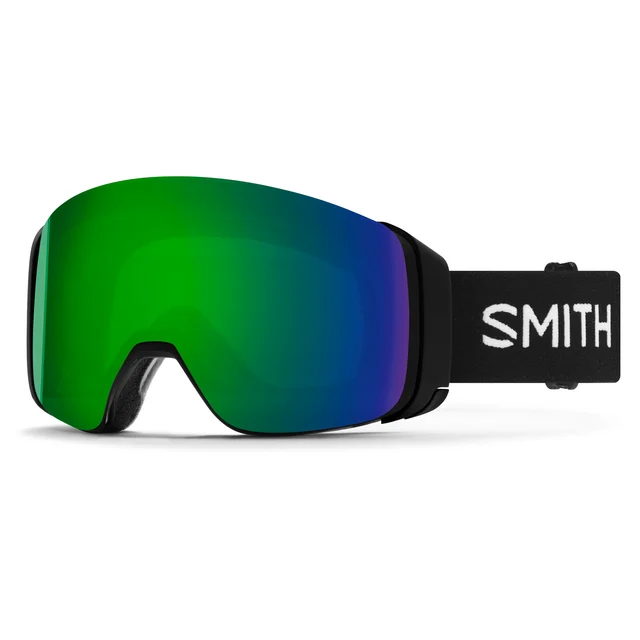
The Smith 4D MAG is the best ski and snowboard goggle of this group: its BirdsEye lens gives Smith's widest field of view, ChromaPop lenses are built to boost contrast and color, and the magnetic lens swap comes with a bonus low-light lens. The Anon M5 is the smart runner-up - its MAGNA-TECH swap takes seconds and its Perceive lenses target high contrast, usually for less money. The OutdoorMaster PRO is a legitimate budget play for beginners and casual skiers, provided you accept weaker flat-light contrast and a shorter service life. The Oakley Flight Deck L still has gorgeous Prizm optics, but its slower Ridgelock lens change makes it hard to recommend at premium pricing in 2026. Best for: dedicated skiers, get the 4D MAG; frequent lens-swappers, get the M5; budget or beginner setups, the OutdoorMaster PRO does the job.
Our picks at a glance
- Smith 4D MAG - Buy. The best all-around goggle in this group, with BirdsEye vision and Smith's widest field of view.
- Anon M5 - Buy. A magnetic lens swap that takes seconds, Perceive optics, and a bonus lens in the box.
- OutdoorMaster PRO Snow Goggles - It depends. Startlingly capable for the money, as long as you accept budget-grade optics and durability.
- Oakley Flight Deck L - Skip. Prizm optics are still superb, but the decade-old design and fiddly lens change no longer justify premium money.
The verdict in 30 seconds
What mattered most
- Lens technology
- Lens-swap system
- Bonus lens included
- Field of view
- Flat-light contrast
- Fog resistance
A good pair of goggles decides whether you can actually read the snow in flat light, swap lenses when the weather turns, and finish the day without fog. We synthesized independent testing and thousands of owner reports across four current models - Smith's flagship 4D MAG, Anon's M5, Oakley's long-running Flight Deck L, and the budget favorite OutdoorMaster PRO. Two earn a clear buy, the budget option makes sense for a specific kind of skier, and one big name is harder to justify at its price in 2026.
The best all-around goggle in this group, with BirdsEye vision and Smith's widest field of view.
Best for: Skiers and riders who are out most weekends and want the best optics and quickest secure lens changes, price be damned.
- BirdsEye vision widens the view, including toward your line and the riders in your periphery
- ChromaPop lenses are built to enhance contrast and natural color
- MAG magnetic lens swap is quick, and a bonus low-light ChromaPop lens plus a hardcase come in the box
- Sits at the top of the price range for goggles
- Some owners notice slight distortion at the very bottom of the curved lens until they acclimate
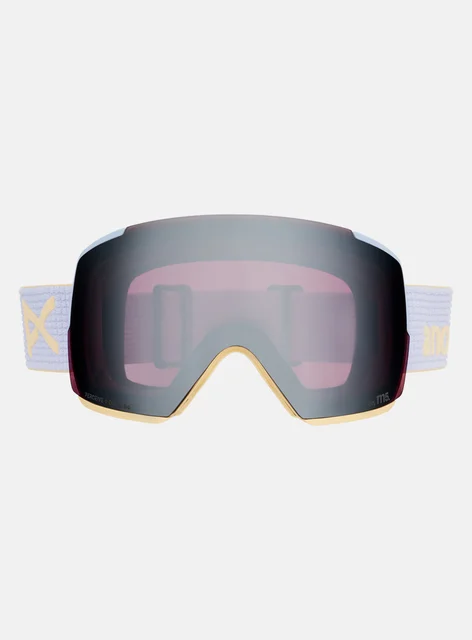
A magnetic lens swap that takes seconds, Perceive optics, and a bonus lens in the box.
Best for: Riders who change lenses often - storm-day skiers and snowboarders who want magnets to do the work mid-chairlift.
- MAGNA-TECH rare earth magnets let you swap lenses in seconds, even with gloves on
- Perceive lenses are built for high contrast in changing light
- Ships with a second Perceive lens and magnetic MFI face mask integration, with a face mask included
- Offered in Regular and Low Bridge fits and a size chart, so check sizing before buying
- The listing mentions no hard case; a goggle accessory case is sold separately
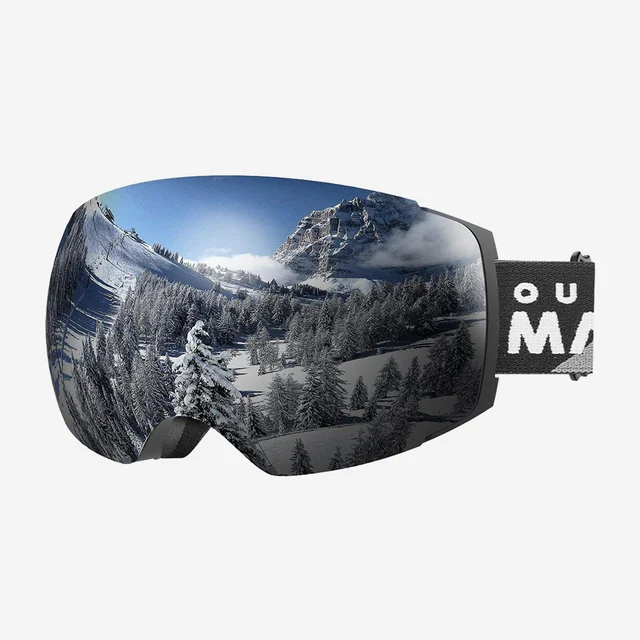
Startlingly capable for the money, as long as you accept budget-grade optics and durability.
Best for: Beginners, occasional skiers, and anyone outfitting a family who wants respectable performance without a premium outlay.
- Frameless lens design with a wide view at a fraction of premium pricing
- Magnetic interchangeable lenses, with 20+ lens colors listed by the maker
- Maker lists OTG (over-the-glasses) compatibility
- Anti-fog coating and foam wear out faster than premium goggles, per long-term owner reports
- Basic tints can't match the contrast of ChromaPop, Perceive, or Prizm in flat light
- Magnet-only lens retention can shift or pop loose in a hard crash
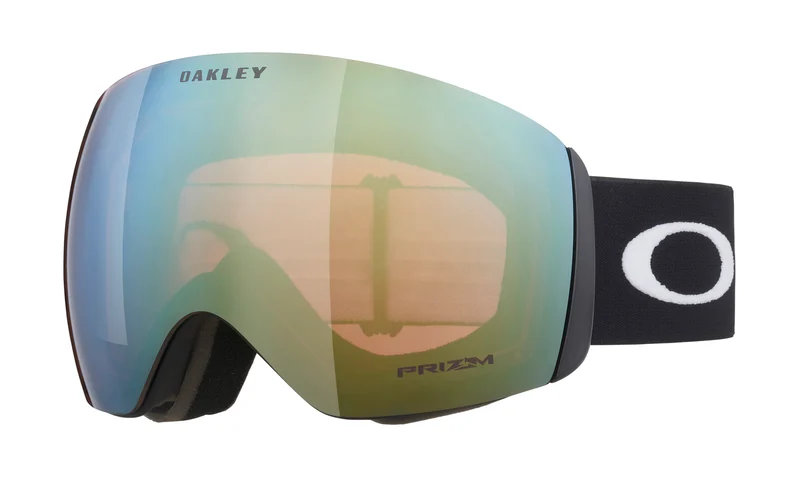
Prizm optics are still superb, but the decade-old design and fiddly lens change no longer justify premium money.
Best for: Committed Oakley fans who ride one lens all season and can find it heavily discounted.
- Prizm lenses are Oakley's contrast-enhancing lens technology
- Large rimless spherical lens gives a panoramic field of view
- Ridgelock lens change is slower than a magnetic swap
- Smith and Anon include a bonus lens, so check what Oakley includes before comparing value
- Older design while magnetic rivals moved the category forward
| Criteria | Smith 4D MAG Top pick Buy it Buy | Anon M5 Buy it Buy | OutdoorMaster PRO Snow Goggles It depends Buy | Oakley Flight Deck L Skip it Buy |
|---|---|---|---|---|
| Best for | Skiers and riders who are out most weekends and want the best optics and quickest secure lens changes, price be damned. | Riders who change lenses often - storm-day skiers and snowboarders who want magnets to do the work mid-chairlift. | Beginners, occasional skiers, and anyone outfitting a family who wants respectable performance without a premium outlay. | Committed Oakley fans who ride one lens all season and can find it heavily discounted. |
| Price tier | $$$$ · flagship | $$$ · premium | $ · budget | $$$ · premium |
| Lens technology | ChromaPop, BirdsEye curved spherical | Perceive, flat toric | Prizm, spherical | Frameless magnetic lens, tints plus photochromic and polarized options |
| Lens-swap system | MAG magnets, quick change | MAGNA-TECH magnets, seconds, gloves OK | Ridgelock rail, slow and fiddly | Magnet-only, easy |
| Bonus lens included | Yes, low-light ChromaPop | Yes, plus MFI face mask | No | No, but replacements are cheap |
| Field of view | Smith's widest field of view | Very wide | Panoramic | Wide for the class |
| Flat-light contrast | Excellent | Excellent | Excellent | Fair |
| Fog resistance | Excellent | Excellent | Very good | Good at first, fades with wear |
| Fit and helmet compatibility | Medium fit, Low Bridge option | Regular or Low Bridge, check size chart | Check fit before buying | OTG-friendly |
| Price tier | $$$$ · flagship | $$$ · premium | $$$ · premium | $ · budget |
Which one is right for you?
- Skiers and riders who are out most weekends and want the best optics and quickest secure lens changes, price be damned. Buy it Smith 4D MAG
- Riders who change lenses often - storm-day skiers and snowboarders who want magnets to do the work mid-chairlift. Buy it Anon M5
- Beginners, occasional skiers, and anyone outfitting a family who wants respectable performance without a premium outlay. It depends OutdoorMaster PRO Snow Goggles
- Committed Oakley fans who ride one lens all season and can find it heavily discounted. Skip it Oakley Flight Deck L
How we judged the field
We don’t run a goggle lab. Instead, we synthesized independent testing - the kind done over full seasons in sun, storm, and flat light - with aggregated owner and customer reports covering long-term durability, fogging, and fit. Four things mattered most: optical quality (especially contrast in flat light, where cheap lenses fall apart), the lens-change system (because weather changes and a lens you can’t swap is a lens you won’t swap), fog resistance over time (not just out of the box), and fit with helmets and glasses. We also weighed what’s in the box, since a bundled low-light lens changes the value math considerably.
Smith 4D MAG
Buy itThe 4D MAG is Smith’s flagship magnetic goggle. Its signature trick is BirdsEye vision, which Smith pairs with its widest field of view - useful in moguls, trees, and steeps. ChromaPop lenses are built to enhance contrast and natural color, and the MAG lens-change system uses magnets for quick, easy swaps. A bonus low-light ChromaPop lens and a hardcase come in the box. The catch is the price - this sits at the top of the goggle price range - and a few owners note mild distortion at the extreme bottom edge of the lens until their brain tunes it out. Neither complaint changes the verdict: this is the goggle to beat.
Anon M5
Buy itThe M5 is a current Anon model and the strongest challenger to the Smith. Its MAGNA-TECH system uses rare earth magnets, and Anon says lenses swap in seconds, even with gloves. Perceive lenses are built for high contrast in changing light, and the box includes two Perceive lenses. Anon also includes its MFI magnetic face mask integration, which attaches the included face mask to the goggle without blocking ventilation. Two caveats: it comes in Regular and Low Bridge fits, with some sizes showing sold out at times, so check the size chart, and the listing mentions no hard case. It is usually priced below the 4D MAG, which makes it the value pick among premium goggles.
OutdoorMaster PRO Snow Goggles
It dependsThe PRO is the perennial budget favorite for a reason. You get a frameless lens with a wide field of view, magnetic interchangeable lenses in 20+ listed colors, and an OTG-compatible fit - at a small fraction of what the premium brands charge. The maker also lists photochromic and polarized lens options. But the gaps are real. The basic tinted lenses cannot match contrast-enhancing optics when light goes flat, which is exactly when good vision matters most. Long-term owner reports note the anti-fog coating and foam degrade faster than on premium goggles, and the magnet-only lens retention - with no mechanical lock - can shift in a hard crash. If you ski a handful of days a year, are outfitting kids or a family, or are just starting out, it’s an easy recommendation. If you’re on snow every weekend chasing storms, spend up.
Oakley Flight Deck L
Skip itThis is a skip on value, not on optics. The Flight Deck L’s large, rimless spherical lens still delivers a panoramic field of view, and Prizm is Oakley’s contrast-enhancing lens technology. But the design is older, and the category has moved. The Ridgelock lens-change system is slower than a magnetic swap, while Smith and Anon lenses swap in seconds. At a premium price, check whether a second lens is included, since Smith and Anon bundle one. Owners who ride a single lens all season and love the aesthetic remain happy - and on deep discount it can still be a fine buy - but at full price against the 4D MAG and M5, it’s outclassed as a system.
Smith 4D MAG vs Anon M5: which should you buy?
Optically, this is close to a draw - ChromaPop and Perceive both target contrast and clarity. The Smith wins on field of view: BirdsEye vision gives Smith’s widest field of view and is useful in technical terrain. The Anon counters with a lens swap that takes seconds, the MFI face mask integration for bitter days, and a typically lower price. Fit may decide it for you: the Smith is a medium fit with a Low Bridge option, while the M5 comes in Regular and Low Bridge. If money is no object or you ski steep, technical terrain, take the 4D MAG. If you swap lenses constantly or want flagship performance for less, the M5 will not feel like a compromise.
What to look for
- Contrast-enhancing lenses matter most. ChromaPop, Perceive, and Prizm genuinely help you read snow texture in flat light - the single biggest upgrade over basic tints.
- Check the lens-change system, not just the lens. Magnetic systems (Smith, Anon) swap in seconds; rail systems are slower, so many owners never bother.
- Count the lenses in the box. A bundled low-light lens can offset a big chunk of the price difference between models.
- Match VLT to your conditions. Lower VLT (darker) for sunny regions, higher VLT for storm-prone or tree-heavy skiing; two lenses cover both.
- Confirm helmet and face fit. A gap at the brow ruins any goggle. Frame sizes vary, so check each maker’s size chart.
- OTG needs come first. If you wear glasses, verify over-the-glasses clearance or plan for inserts before falling in love with a model.
Our final take
The Smith 4D MAG is the best ski and snowboard goggle in this field - Smith’s widest field of view, ChromaPop optics, a quick magnetic lens swap, and a bonus lens in the box. The Anon M5 offers Perceive optics with a lens change that takes seconds and a friendlier price, making it the pick for frequent lens-swappers and anyone who balks at flagship pricing. The OutdoorMaster PRO is the budget answer: real performance for beginners and casual skiers who accept its flat-light and durability limits. And the Oakley Flight Deck L, for all its Prizm brilliance, asks premium money for a dated system - unless you find it deeply discounted and never swap lenses, buy the Smith or the Anon instead.
Questions, answered
Are magnetic lens-change goggles safe, or can the lens fall out?
Premium magnetic systems like Smith's MAG and Anon's MAGNA-TECH (rare earth magnets, up to nine connection points on some Anon models) are designed to hold lenses in place during normal riding. Budget magnet-only designs like the OutdoorMaster PRO hold fine in normal riding, but some owners note the lens shifting or popping loose in a hard fall.
Can I wear any of these over prescription glasses?
OutdoorMaster lists the PRO as OTG (over-the-glasses) compatible. Check each maker's fit notes for the others, since clearance varies by frame size. If you wear larger frames, look for a dedicated OTG version or consider prescription inserts.
Do I really need two lenses?
If you ski more than a few days a season, yes. A dark, mirrored lens is right for bluebird days, while a high-VLT low-light lens makes storm days and dusk laps far safer. The Smith 4D MAG and Anon M5 include a bonus low-light lens in the box; with the Oakley Flight Deck L you'd buy a second lens separately, and OutdoorMaster sells inexpensive spares.
What actually causes goggles to fog, and which of these resist it best?
Fog happens when warm, moist air from your face hits a cold lens - usually from overdressing, tucking a face mask under the foam, or resting goggles on a sweaty forehead. Premium goggles pair anti-fog coatings with venting, and Smith specifies AirEvac ventilation with a moisture-wicking foam; owners report the OutdoorMaster's coating loses effectiveness after a season or two. Never wipe the inner lens surface while wet - blot and air-dry instead.
Is a more expensive contrast lens like ChromaPop, Perceive, or Prizm worth it?
For most people who ski regularly, yes. These lenses filter specific wavelengths to make bumps, ice, and texture in the snow visibly pop, and many skiers notice the difference from basic tints once conditions go flat or shadowed. If you only ski a few sunny days a year, a well-made basic lens like the OutdoorMaster's is perfectly serviceable.
Deciding between the top two? See our head-to-head: Smith 4D MAG vs Anon M5.