

Ski & Snowboard
The Best Ski Boots: 4 Compared (and One to Skip)
We compared four current alpine ski boots on last width, flex, shell material, closure, customization and the walking sole each maker lists.
The short version
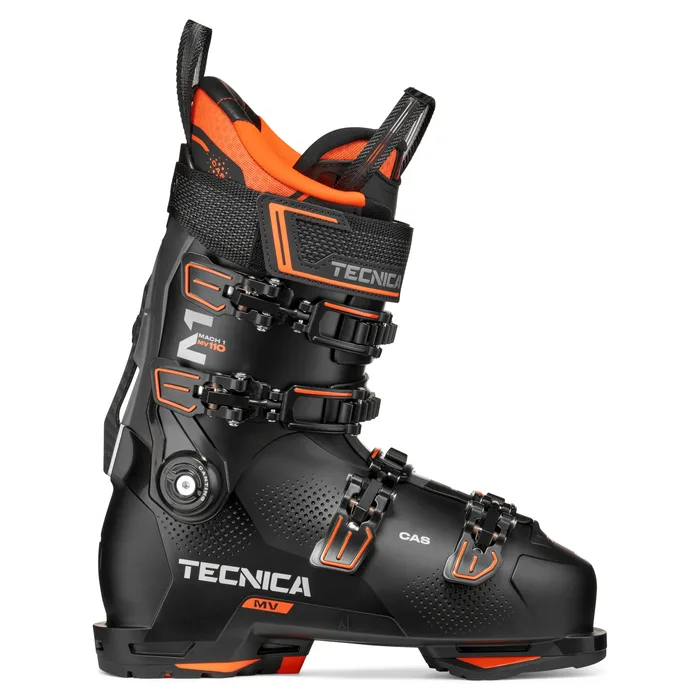
The Tecnica Mach1 MV 110 is our top pick: a 100 mm mid-volume last, a PU shell, a 110 flex, a heat-moldable C.A.S. liner and published shell punching and grinding options for a fitter. The Fischer RC4 110 MV is the value pick, with a mid-volume 98 mm last, a GripWalk sole and Fischer's adjustable Vacuum Fit shell, which the maker says adapts to the shape of your foot. The K2 Recon 110 Zonal BOA depends on your feet and habits: it swaps buckles for BOA dials on the shell and cuff and has a fully heat-moldable shell and cuff, but K2 does not publish a weight. Skip the Rossignol Speed 80 HV+, which pairs a roomy 104 mm last with a soft 80 flex, a polyolefin shell and cuff, and GripWalk soles you have to buy separately. Whatever you buy, have a shop measure your foot first. Best for: intermediate to advanced skiers with average-width feet who want a boot that can be fitted properly.
Our picks at a glance
- Tecnica Mach1 MV 110 - Buy. A mid-volume 110 flex buckle boot with the most fully documented fitting options in this group.
- Fischer RC4 110 MV - Buy. A 110 flex, mid-volume buckle boot with an adjustable Vacuum Fit shell at a lower price tier.
- K2 Recon 110 Zonal BOA - It depends. A 110 flex all-mountain boot that closes with BOA dials on the shell and cuff instead of buckles.
- Rossignol Speed 80 HV+ - Skip. A wide, soft comfort boot with a polyolefin shell and cuff that an improving skier will outgrow quickly.
The verdict in 30 seconds
What mattered most
- Last width
- Flex
- Closure
- Shell / cuff
- Liner
- Shell customization
Ski boots are the one piece of gear where fit beats every other spec, and the spec sheet tells you more about fit than most buyers realize. Last width, flex number, shell plastic and how much the shell can be reshaped decide whether a boot will still feel right in its third season. We compared two buckle boots built on mid-volume lasts, a BOA boot that closes with dials instead of buckles, and a wide comfort boot that many people buy because it feels roomy in the shop. Pair whatever you choose with good ski socks, and see our separate guides on ski boot heaters and ski bags.
A mid-volume 110 flex buckle boot with the most fully documented fitting options in this group.
Best for: Intermediate to advanced skiers with average-width feet who plan to have their boots fitted at a shop.
- Tecnica lists a 100 mm last, a 110 flex and a PU shell, and places the boot in its medium flex band for intermediate to advanced skiers.
- The C.A.S. liner is thermo-shaped at 80°C for 8 minutes, and Tecnica describes punching, grinding up to 2 mm and a Fit Kit for fine-tuning.
- The T-Drive 2.0 link between shell and cuff is meant to keep the flex consistent across temperatures, and the Lift Lock buckles stay up and out of the way when you step in.
- At 1850 g per boot it is not light, though it is in line with the other buckle boots here.
- A 100 mm last will feel snug to anyone with a wide forefoot; Tecnica sells the same boot in LV and in a BOA version for different feet.
- Getting the most from the C.A.S. shell means a visit to a shop with Tecnica's fitting tools.
- It sits in the top price tier of this group.
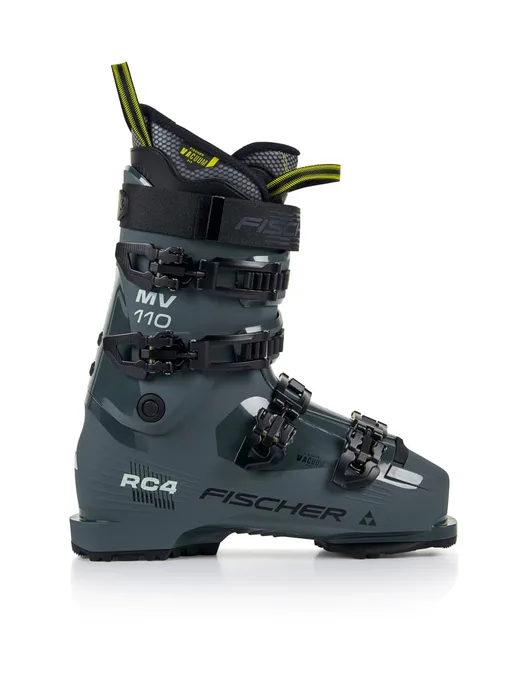
A 110 flex, mid-volume buckle boot with an adjustable Vacuum Fit shell at a lower price tier.
Best for: Advancing skiers with average to slightly narrow feet who want a fit-adjustable shell without the top price.
- Fischer lists a 98 mm last with a medium fit, so it suits average feet that want a closer hold than a 100 mm boot.
- The Vacuum Fit shell is described as adjustable and lightweight, adapting to the shape of your foot, and the liner is the matching RC4 Vacuum Fit liner.
- A GripWalk sole, a 35 mm velcro strap and four buckles cover the basics without paying for extras.
- Fischer does not list a weight or shell material on the product page.
- The page does not explain how the Vacuum Fit adjustment is done, so you need a dealer that offers it.
- Fischer rates it for advanced skiers, and the 98 mm last is narrow for wide feet.
- Sizes listed run from 25.5 to 30.5 Mondopoint, so smaller feet are not covered in this version.
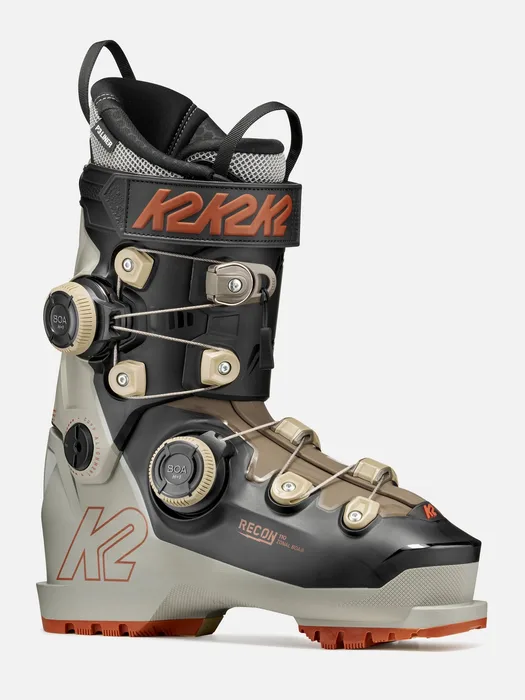
A 110 flex all-mountain boot that closes with BOA dials on the shell and cuff instead of buckles.
Best for: Intermediate skiers who struggle with buckle pressure points or want quick, fine tension changes between runs.
- BOA dials on the shell and a single-cable dial on the cuff give micro-adjustable tension; K2 says the cuff cable self-equalizes for even shin pressure.
- K2 states that both shell and cuff are fully heat-moldable, and the forward lean adjusts with a screwdriver.
- The Mid Volume MultiFit last covers 97 to 100 mm widths, and the TPU shell, 40 mm strap and preinstalled GripWalk soles are all listed.
- K2 does not publish a weight for this boot.
- The P3 liner is described as tuned for comfort and forgiveness, which is softer in feel than the performance liners on the buckle boots here.
- The K2 page says the boot is not sold on its own site and points you to local stores.
- Some skiers prefer the familiar feel and easy field repair of buckles over cables and dials.
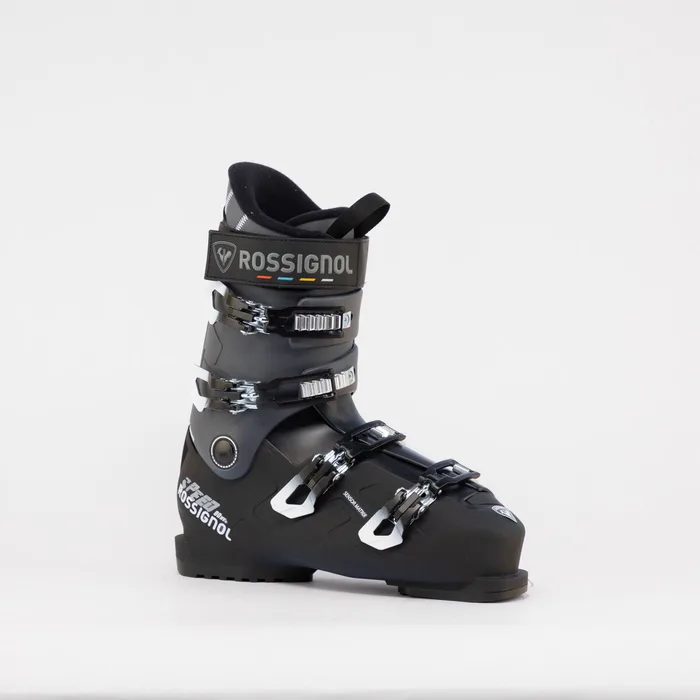
A wide, soft comfort boot with a polyolefin shell and cuff that an improving skier will outgrow quickly.
Best for: Hardly anyone buying their own boots; very wide feet are usually better served by a fitter stretching a mid-volume boot, and beginners by renting for a season.
- The 104 mm HV+ last has a wider forefoot, toe box and ankle, so very wide feet fit straight out of the box.
- Softer plastic around the instep makes it easy to get in and out of.
- The Custom T4 liner is thermo-moldable, and the boot has four micro-adjust buckles and a 40 mm power strap.
- Rossignol lists both the shell and the cuff as polyolefin, the softer, lighter plastic of entry boots, while the other three boots here use PU or TPU shells.
- An 80 flex in a 104 mm last gives an improving skier little to push against, and wide boots tend to feel looser once the liner settles.
- GripWalk soles are listed as compatible but sold separately, so walking soles cost extra.
- Rossignol publishes no weight and describes no shell punching or molding options.
| Criteria | Tecnica Mach1 MV 110 Top pick | Fischer RC4 110 MV | K2 Recon 110 Zonal BOA | Rossignol Speed 80 HV+ |
|---|---|---|---|---|
| Verdict | Buy it | Buy it | It depends | Skip it |
| Best for | Intermediate to advanced skiers with average-width feet who plan to have their boots fitted at a shop. | Advancing skiers with average to slightly narrow feet who want a fit-adjustable shell without the top price. | Intermediate skiers who struggle with buckle pressure points or want quick, fine tension changes between runs. | Hardly anyone buying their own boots; very wide feet are usually better served by a fitter stretching a mid-volume boot, and beginners by renting for a season. |
| Price tier | $$$ · premium | $$ · mid-range | $$$ · premium | $ · budget |
| Last width | 100 mm (MV) | 98 mm (medium) | 97 to 100 mm (mid volume) | 104 mm (HV+) |
| Flex | 110 | 110 | 110 | 80 |
| Closure | 4 aluminium buckles | Buckles | BOA dials on shell and cuff | 4 micro-adjust buckles |
| Shell / cuff | PU shell, bi-injected PP cuff | Not listed | TPU shell, PP cuff | Polyolefin shell and cuff |
| Liner | C.A.S., heat-moldable | RC4 Vacuum Fit | P3 comfort liner | Custom T4, thermo-moldable |
| Shell customization | C.A.S. punching, grinding, Fit Kit | Adjustable Vacuum Fit shell | Fully heat-moldable shell and cuff | None described |
| Sole | GripWalk (ISO 23223) | GripWalk | GripWalk (ISO 23223) | GripWalk compatible, soles sold separately |
| Weight per boot | 1850 g | Not listed | Not listed | Not listed |
Which one is right for you?
- Intermediate to advanced skiers with average-width feet who plan to have their boots fitted at a shop. Buy it Tecnica Mach1 MV 110
- Advancing skiers with average to slightly narrow feet who want a fit-adjustable shell without the top price. Buy it Fischer RC4 110 MV
- Intermediate skiers who struggle with buckle pressure points or want quick, fine tension changes between runs. It depends K2 Recon 110 Zonal BOA
- Hardly anyone buying their own boots; very wide feet are usually better served by a fitter stretching a mid-volume boot, and beginners by renting for a season. Skip it Rossignol Speed 80 HV+
How we judged the field
Five things matter in a ski boot. Last width comes first, because a boot that is too wide lets your heel lift and too narrow crushes the forefoot. Flex is next: it decides how much the boot resists you when you lean forward, and it should match your weight and how hard you ski. Shell plastic matters because it shapes how the boot flexes and how it takes fitting work; performance boots here use PU or TPU, while the wide comfort boot uses polyolefin. Customization decides whether a fitter can fix a hot spot, through heat-moldable liners, shell punching or a brand’s own shell-molding process. Finally, the sole and closure: GripWalk soles walk better, and buckles versus BOA dials changes how pressure is spread.
The market splits into performance buckle boots in LV, MV and HV lasts, BOA boots that trade buckles for dials, and soft wide entry boots sold on comfort. We picked a Tecnica and a Fischer mid-volume 110 flex boot because both publish clear last widths and fit options, a K2 BOA boot for skiers whose feet do not get along with buckles, and a Rossignol wide comfort boot as an example of the roomy boot that feels great in the shop and loose on the hill.
The Tecnica Mach1 MV 110 is the boot we would start most intermediate and advanced skiers with. Tecnica lists a 100 mm last, a 110 flex, a PU C.A.S. shell, a bi-injected PP cuff with a backspine, four micro-adjustable aluminium buckles with Lift Lock and a 45 mm strap. What sets it apart is how clearly Tecnica documents fitting: the C.A.S. liner is thermo-shaped at 80°C for 8 minutes, its microcell material can be punched or ground up to 2 mm, and a Fit Kit reduces volume. The shell’s dimpled surface is designed to heat and reshape more easily with Tecnica’s tools. T-Drive 2.0 links shell and cuff to keep the flex consistent across temperatures, and the Quick Instep uses softer plastic so it is easier to get in and out. It weighs 1850 g per boot, has 13.3° of forward lean and a GripWalk (ISO 23223) sole. The trade-off is price and a last that is not for wide feet. It suits skiers with average feet who will take it to a fitter.
The Fischer RC4 110 MV is the value pick. Fischer lists a 98 mm last with a medium fit, a GripWalk sole, a 35 mm velcro strap, buckle closure and an RC4 Vacuum Fit liner, and rates it for advanced piste skiers. The headline feature is the Vacuum Fit shell, which Fischer describes as adjustable and lightweight and says adapts to the shape of your foot. That gives you a route to a customized shell without paying for the top tier, as long as your dealer offers the process, since the page does not explain how it is done. The page also leaves out weight and shell material, so you are trusting the fit more than the numbers. The 98 mm last is a touch closer than Tecnica’s 100 mm, which suits average to slightly narrow feet well and wide feet badly. Listed sizes run 25.5 to 30.5. It suits advancing skiers who want a 110 flex boot with real fit adjustment at a lower price.
The K2 Recon 110 Zonal BOA depends on your feet. Instead of buckles it uses BOA dials on the shell and a single-cable BOA on the cuff, which K2 says self-equalizes to keep pressure on the shin even. The Mid Volume MultiFit last covers 97 to 100 mm widths, the shell is TPU, the cuff is PP, and K2 states that both are fully heat-moldable. Forward lean adjusts with a screwdriver, the strap is 40 mm and GripWalk soles come preinstalled. K2 rates it for intermediates and calls the feel playful and precise. The trade-offs: no published weight, a P3 liner described as tuned for comfort and forgiveness rather than precision, and a page that sends you to local stores rather than selling it directly. Some skiers also prefer buckles they can adjust and replace easily. It suits intermediate skiers who have had pressure points in buckle boots, or who like fine-tuning tension between runs.
The Rossignol Speed 80 HV+ is the boot to skip. It is built on a 104 mm HV+ last, which Rossignol describes as a relaxed fit with a wider forefoot, toe box and ankle, and it uses softer plastic around the instep for easy entry. The Custom T4 liner is thermo-moldable, and you get four micro-adjust buckles and a 40 mm power strap. The problem is the rest of the spec sheet: an 80 flex, and a shell and cuff both listed as polyolefin, the lighter, softer plastic of entry boots rather than the PU or TPU used by the other three boots here. That combination is the classic shop trap: it feels roomy on day one, then loose once the liner settles, and it gives an improving skier little to push against. GripWalk soles are sold separately, and Rossignol lists no weight and no shell punching or molding options. If your feet are wide, a fitter can usually stretch a mid-volume boot; beginners are often better served renting for a season first.
Tecnica Mach1 MV 110 vs Fischer RC4 110 MV: which should you buy?
The Tecnica Mach1 MV 110 and Fischer RC4 110 MV are both 110 flex, four-buckle, mid-volume boots with GripWalk soles, so the choice comes down to last width, documentation and budget. The Tecnica is 100 mm wide, publishes its weight, shell material and forward lean, and lays out every fitting step from liner molding to shell punching. The Fischer is 98 mm wide and leans on its Vacuum Fit shell, but publishes less detail.
If you measure at 99 to 100 mm or want the most predictable fitting process, buy the Tecnica. If your foot measures slightly narrower, you want to spend less, and your local shop offers Fischer’s Vacuum Fit, the Fischer is the smarter buy. Either way, try both on with the socks you will ski in and let a fitter check shell fit with the liner removed.
What to look for
- Last width: Match the boot’s last to a measured foot width, not to how it feels in the first five minutes.
- Flex in context: Compare flex numbers within one brand, and choose by weight and skiing style rather than by ego.
- Shell plastic: Performance boots generally use PU or TPU shells; softer polyolefin shells point to an entry boot.
- Customization: Look for heat-moldable liners and a shell that can be punched or molded by a fitter.
- Sole standard: Check GripWalk (ISO 23223) against your bindings before you buy.
- Closure: Buckles are simple and familiar; BOA dials spread pressure differently and can help feet with bony spots.
Our final take
For most intermediate and advanced skiers with average feet, the Tecnica Mach1 MV 110 is the boot to try first, because its last, flex and fitting options are all published and all sensible. The Fischer RC4 110 MV is the value alternative with a slightly closer 98 mm last and an adjustable shell. The K2 Recon 110 Zonal BOA is worth a try-on if buckles have given you pressure points. Skip the Rossignol Speed 80 HV+: a roomy, soft polyolefin boot is the kind an improving skier outgrows quickly. Get measured, then buy the boot that fits.
Questions, answered
What flex should I buy?
Flex is a stiffness number, and it is not standardized between brands. Tecnica's own scale puts men's 90 to 110 in its medium band for intermediate skiers, with 120 and up for experts and heavier skiers. A 110 flex is a common target for a confident intermediate or advanced skier of average build. Lighter skiers and true beginners can go softer, but a boot that is too soft gives vague edge control as you improve. Flex the boot in the shop at room temperature and compare within one brand.
How do I know my last width?
A shop can measure the width of your foot at its widest point with a Brannock device or scanner, and that number maps to a last. Tecnica describes LV as 93 to 98 mm, MV as 99 to 100 mm and HV as 103 mm. Most adult feet are best served by a mid-volume boot that a fitter can stretch where needed. Buying a wider last than you need is the most common way to end up with heel lift and sore arches.
Are BOA ski boots better than buckles?
They are different rather than better. BOA dials give fine, quick tension changes and spread pressure along a cable, which helps some feet with bony spots. Buckles are familiar, simple to adjust with gloves and easy for a shop to replace. If you have struggled with pressure points in buckle boots, a BOA boot like the K2 Recon is worth trying on.
Do I need GripWalk soles?
GripWalk (ISO 23223) soles are rockered and rubberized, which makes walking across a car park or lodge floor much easier. They need a binding marked as GripWalk compatible or multi-norm. Older alpine bindings made for ISO 5355 soles may not accept them safely, so have a shop check your bindings when you change boots. Three of the four boots here list GripWalk soles; the Rossignol Speed 80 HV+ is GripWalk compatible, but the soles are sold separately.
Should I buy ski boots online?
Only if you already know your size and last in that exact model. Ski boot sizing varies between brands, and the gains in this category come from the fitting work a shop does: liner molding, shell punching and footbeds. Many shops include basic fitting with a boot purchase. If you do buy online, budget for a fitting appointment.
Deciding between the top two? See our head-to-head: Tecnica Mach1 MV 110 vs Fischer RC4 110 MV.
More Ski & Snowboard reviews
 The Best Ski Gloves: 4 Compared (and One to Skip)
  The Best Ski Goggles: 4 Compared (and One to Skip)
  The Best Ski Helmets: 4 Compared (and One to Skip)
  The Best Ski Jackets: 4 Compared (and One to Skip)
  The Best Ski Pants: 4 Compared (and One to Skip)
  The Best Ski Poles: 4 Compared (and One to Skip)