

Ski & Snowboard
The Best Ski Bindings: 4 Compared (and One to Skip)
Four alpine bindings for adult resort skiers, compared on release range, boot sole compatibility, stand height, listed weight and brake widths.
The short version
The Marker Griffon X 13 is the best binding here for most adult resort skiers: a DIN 4 to 13 range, Alpine and GripWalk sole compatibility, a 14 mm stand height and a toe with an upward release function. The Tyrolia Attack 14 GW is the value pick, the lowest-priced model in Tyrolia's Attack line, with a wider 4 to 14 range and a five-size brake list up to 150 mm. The Atomic Shift² 13 MN makes sense only if you also want to tour uphill, because you pay for pin-tech touring hardware that a resort-only skier never uses. Skip the Look Pivot 2.0 18 GW unless you are a heavy, aggressive expert: its release range starts at 8, it carries the same listed weight and price tier as the Pivot 2.0 15, and the extra top end buys most people nothing. Have a certified shop mount and set any of these. Best for: adult resort skiers on flat (non-system) skis who want one binding for groomers and off-piste days.
Our picks at a glance
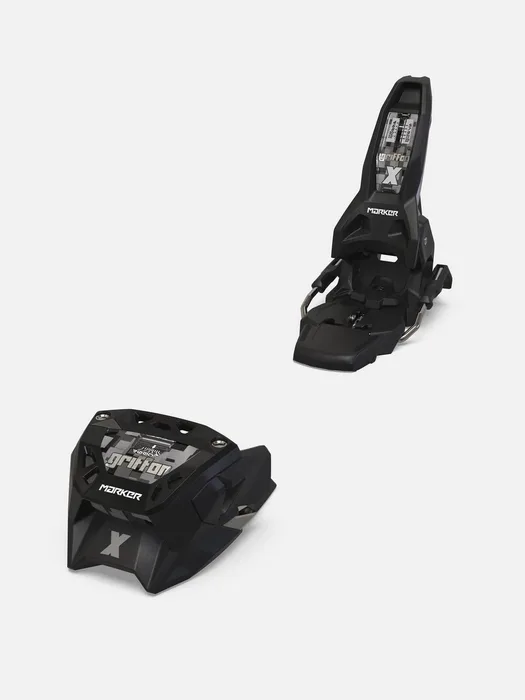
- Marker Griffon X 13 - Buy. A freeride-style alpine binding with a DIN 4 to 13 range, a 14 mm stand height and Alpine plus GripWalk sole compatibility.
- Tyrolia Attack 14 GW - Buy. The lowest-priced Attack, with a DIN 4 to 14 range, a three-piece heel and brakes from 85 to 150 mm.
- Atomic Shift² 13 MN - It depends. A TÜV-certified hybrid that skis as an alpine binding and switches to pin-tech touring mode, if your boots have tech inserts.
- Look Pivot 2.0 18 GW - Skip. A heavy-duty freeride binding whose DIN 8 to 18 range is wrong for most adult resort skiers.
The verdict in 30 seconds
What mattered most
- DIN/ISO release range
- Type
- Boot soles accepted
- Listed weight
- Stand height
- Brake widths
A binding is the one piece of ski gear whose main job is to let go at the right moment, so the spec that matters most is the release (DIN/ISO) range, not the paint. For adult resort skiers the choice comes down to a freeride-style alpine binding, a tougher park and all-mountain binding, or a hybrid that also tours. We compared the Marker Griffon X 13, Tyrolia Attack 14 GW, Atomic Shift² 13 MN and Look Pivot 2.0 18 GW using each maker's published specs. Whatever you buy, a certified ski shop has to mount it and set the release value for you.
A freeride-style alpine binding with a DIN 4 to 13 range, a 14 mm stand height and Alpine plus GripWalk sole compatibility.
Best for: Adult resort skiers on flat all-mountain or freeride skis who want a proven release design with a low stand height.
- The DIN 4 to 13 release range starts low enough for lighter adults and tops out where most strong resort skiers sit.
- Marker lists a 14 mm stand height without the ski, which it says gives more direct power transmission.
- The Triple Pivot Elite X toe includes an upward release function, and the binding accepts Alpine (ISO 5355 A) and GripWalk (ISO 23223 A) soles.
- It does not accept touring (ISO 9523) soles, so it is not the binding for a dedicated touring boot.
- Marker lists the weight as 1,045 g without saying whether that is one binding or a pair.
- Brakes come in 90, 105, 120 and 132 mm only, so very narrow carving skis fall outside the range.
- Marker's recommended skier weight is under 120 kg, which rules out some very heavy skiers.
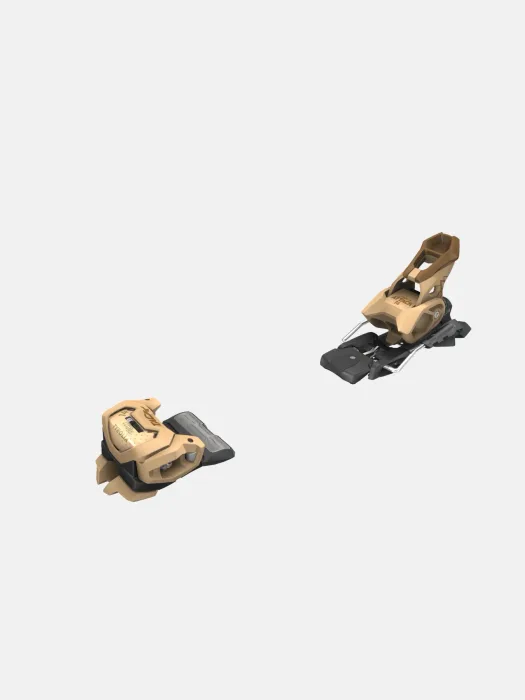
The lowest-priced Attack, with a DIN 4 to 14 range, a three-piece heel and brakes from 85 to 150 mm.
Best for: Resort skiers who want a tough all-mountain and park binding with a wide release range for less money than the premium options.
- The DIN 4 to 14 range is the widest of the four bindings here.
- Five brake widths (85, 95, 110, 130 and 150 mm) cover narrow all-mountain skis through wide powder skis.
- The FR PRO 3 toe has an adjustable AFD for different boot sole heights, and Tyrolia says the heel allows DIN adjustment in open and closed position.
- At a listed 1,025 g per binding it is heavier per piece than the Atomic Shift² 13 MN.
- The 17 mm stand height is taller than the Griffon X 13's 14 mm.
- Tyrolia says Attack models need the boot sole height checked with a tester, so a shop visit is not optional.
- Not compatible with touring (ISO 9523) soles.
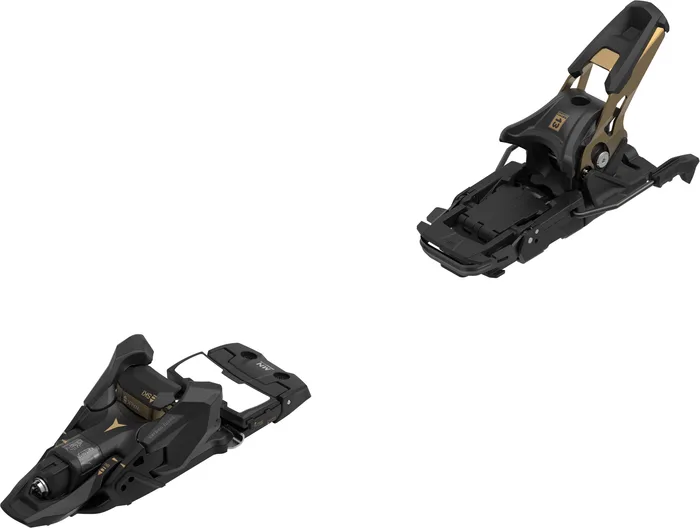
A TÜV-certified hybrid that skis as an alpine binding and switches to pin-tech touring mode, if your boots have tech inserts.
Best for: Resort skiers who also skin uphill a few times a season and own, or plan to buy, a boot with tech inserts.
- Atomic lists it as Multi Norm certified, so it accepts Alpine, GripWalk and touring boot soles in alpine mode.
- The Hike and Ride Switch turns it from a freeride binding into a touring binding, with a two-setting climbing aid.
- At a listed 920 g per binding it is the lightest binding here.
- Touring mode needs boots with tech (pin) inserts, which many resort boots do not have.
- It is the most expensive of the four, and a resort-only skier pays for touring parts they never use.
- The 30 mm heel stand height is the tallest listed here.
- The toe height has to be adjusted manually when you change boot norms.
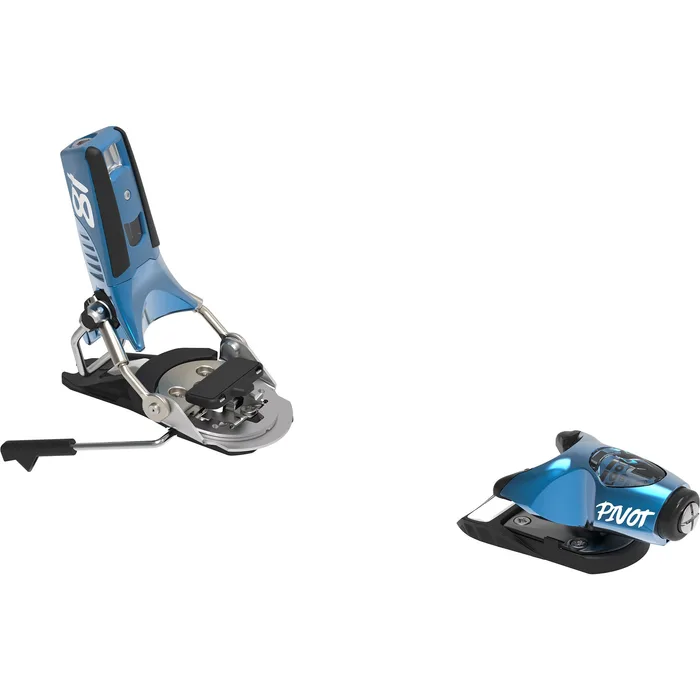
A heavy-duty freeride binding whose DIN 8 to 18 range is wrong for most adult resort skiers.
Best for: Heavy, aggressive expert skiers whose shop-calculated release value sits high in the range; everyone else should look at the Pivot 2.0 15 instead.
- The turntable Pivot heel offers 28 mm of elastic travel, according to Look.
- The all-metal Race toe has 45 mm of elastic travel and 180 degree multi-directional release.
- It accepts both Alpine (ISO 5355) and GripWalk (ISO 23223 A) soles.
- The release range starts at 8, so if a shop calculates a lower value for you, this binding cannot be set there.
- Look lists the same 1,245 g per half pair and the same price tier as the Pivot 2.0 15, so the higher range adds nothing for most skiers.
- It is the heaviest binding in this comparison by listed weight.
- The B95 version's brake covers 75 to 95 mm only, so wider skis need a different variant.
| Criteria | Griffon X 13 Top pick | Attack 14 GW | Shift² 13 MN | Pivot 2.0 18 GW |
|---|---|---|---|---|
| Verdict | Buy it | Buy it | It depends | Skip it |
| Best for | Adult resort skiers on flat all-mountain or freeride skis who want a proven release design with a low stand height. | Resort skiers who want a tough all-mountain and park binding with a wide release range for less money than the premium options. | Resort skiers who also skin uphill a few times a season and own, or plan to buy, a boot with tech inserts. | Heavy, aggressive expert skiers whose shop-calculated release value sits high in the range; everyone else should look at the Pivot 2.0 15 instead. |
| Price tier | $$ · mid-range | $$ · mid-range | $$$ · premium | $$$ · premium |
| DIN/ISO release range | 4 to 13 | 4 to 14 | 6 to 13 | 8 to 18 |
| Type | Alpine freeride | Alpine freeski / all-mountain | Hybrid alpine and pin-tech touring | Alpine freeride |
| Boot soles accepted | Alpine ISO 5355 A, GripWalk ISO 23223 A | Alpine ISO 5355 A, GripWalk ISO 23223 A | Multi Norm (Alpine, GripWalk, touring); pin inserts for touring | Alpine ISO 5355, GripWalk ISO 23223 A |
| Listed weight | 1,045 g (unit not stated) | 1,025 g per binding | 920 g per binding | 1,245 g per half pair |
| Stand height | 14 mm (without ski) | 17 mm | 30 mm (heel) | Not published |
| Brake widths | 90, 105, 120, 132 mm | 85, 95, 110, 130, 150 mm | Not listed in spec table | 75 to 95 mm (B95 version) |
| Touring mode | No | No | Yes, with tech-insert boots | No |
| Maker's skier weight guidance | Under 120 kg | Not published | 66 to 125 kg | Not published |
Which one is right for you?
- Adult resort skiers on flat all-mountain or freeride skis who want a proven release design with a low stand height. Buy it Marker Griffon X 13
- Resort skiers who want a tough all-mountain and park binding with a wide release range for less money than the premium options. Buy it Tyrolia Attack 14 GW
- Resort skiers who also skin uphill a few times a season and own, or plan to buy, a boot with tech inserts. It depends Atomic Shift² 13 MN
- Heavy, aggressive expert skiers whose shop-calculated release value sits high in the range; everyone else should look at the Pivot 2.0 15 instead. Skip it Look Pivot 2.0 18 GW
How we judged the field
Five things matter in an adult alpine binding. First is the release (DIN/ISO) range: the value a certified shop calculates for you should sit comfortably inside it, not at the floor or ceiling. Second is boot sole compatibility, because Alpine (ISO 5355), GripWalk (ISO 23223) and touring (ISO 9523) soles are different shapes and a binding has to be built and set for yours. Third is stand height, which changes how directly the boot drives the ski. Fourth is listed weight, which you feel on every lift ride and every carry. Fifth is brake width, which has to match your ski’s waist.
The field splits into three groups: freeride-style alpine bindings, tougher park and all-mountain bindings, and hybrids that add a touring mode. We picked one strong alpine binding from Marker, the lowest-priced model in Tyrolia’s Attack line, Atomic’s Shift² hybrid for skiers who also tour, and Look’s Pivot 2.0 18 as the skip, because it is a well-made binding that many skiers buy with a range they do not need. All four specs come from the makers’ own pages.
Marker Griffon X 13
Buy itThe Marker Griffon X 13 is the binding we would point most adult resort skiers toward. Its DIN 4 to 13 range starts low enough for lighter adults and reaches high enough for strong skiers, so the value a shop calculates is likely to land mid-range rather than at an end. Marker lists a 14 mm stand height without the ski for this new X version, and pairs a Triple Pivot Elite X toe, which includes an upward release function, with the compact Inter Pivot X heel. It accepts Alpine (ISO 5355 A) and GripWalk (ISO 23223 A) soles, and brakes come in 90, 105, 120 and 132 mm. The trade-offs are small but real: Marker lists 1,045 g without saying per binding or per pair, it does not accept touring soles, and its recommended skier weight is under 120 kg. For most people skiing flat all-mountain or freeride skis at the resort, it is the safe pick.
Tyrolia Attack 14 GW
Buy itThe Tyrolia Attack 14 GW is the value pick and the lowest-priced model in Tyrolia’s Attack line. It has the widest release range here at DIN 4 to 14, and five brake widths from 85 to 150 mm, so it fits narrow all-mountain skis through wide powder boards. The FR PRO 3 toe has a revised AFD that adjusts to different boot sole heights, and Tyrolia says the three-piece heel allows DIN adjustment in open and closed position and makes stepping in easy. You give up a little: the listed 1,025 g per binding is heavier per piece than the Atomic Shift², and the 17 mm stand height is taller than the Griffon’s 14 mm. Tyrolia also says Attack models need the sole height verified with a tester, so a proper shop setup matters. It is a strong choice for resort skiers who ride everything from groomers to park and want to keep money back for skis or boots.
Atomic Shift² 13 MN
It dependsThe Atomic Shift² 13 MN is a hybrid: a full alpine binding on the way down and a pin-tech touring binding on the way up. Atomic lists it as TÜV certified and Multi Norm, meaning it accepts Alpine, GripWalk and touring boot soles in alpine mode, with a DIN 6 to 13 range and a recommended skier weight of 66 to 125 kg. A Hike and Ride Switch changes modes, the climbing aid has two settings, and at a listed 920 g per binding it is the lightest here. The catch is that touring mode needs boots with tech inserts, and many resort boots do not have them. It is also the most expensive binding here, has a 30 mm heel stand height, and needs a manual toe height adjustment when you change boot norms. If you skin uphill even a few days a season, it earns its place. If you never leave the lift, you are paying for parts you will not use.
Look Pivot 2.0 18 GW
Skip itThe Look Pivot 2.0 18 GW is a well-built binding with a strong reputation, which is exactly why it gets bought by the wrong skiers. Its turntable Pivot heel has 28 mm of elastic travel, the all-metal Race toe has 45 mm, and it accepts Alpine and GripWalk soles. The problem is the range: DIN 8 to 18. If the value a certified shop calculates for you falls below 8, the binding cannot be set there, and plenty of adult resort skiers fall into that zone. Look lists the Pivot 2.0 15 GW at the same 1,245 g per half pair and the same price tier, but with a 6 to 15 range. So the 18 offers most buyers nothing extra and removes the bottom of the range. It is the right binding only for heavy, aggressive experts whose shop-set value is high. Everyone else who wants a Pivot should buy the 15.
Sources
Specs in this review come from these pages.
- Marker: Griffon X 13 Bindings (markerbindings.com)
- Tyrolia: Attack 14 GW Freeski Bindings (tyrolia.com)
- Atomic: Shift² 13 MN (atomic.com)
- Look: Pivot 2.0 18 GW B95 (look-bindings.com)
- Look: Pivot 2.0 15 GW B95 (look-bindings.com)
- Look: Bindings basics (boot standards and ISO 11088 adjustment) (look-bindings.com)
- Tyrolia: Boot and binding compatibility (tyrolia.com)
Marker Griffon X 13 vs Tyrolia Attack 14 GW: which should you buy?
The Marker Griffon X 13 and Tyrolia Attack 14 GW overlap a lot. Both are adult alpine bindings that accept Alpine and GripWalk soles, both start their release range at DIN 4, and neither tours. The Griffon wins on stand height (14 mm against 17 mm) and adds a toe with an upward release function, while the Attack wins on release range (up to 14 against 13), brake choice (five sizes up to 150 mm against four up to 132 mm) and price.
Choose the Griffon X 13 if you ski mostly groomers and mixed terrain on a flat all-mountain ski and want the lower, more direct feel. Choose the Attack 14 GW if you ride wide powder skis, spend time in the park, or simply want the lower-cost option with a slightly higher ceiling. Either way, have a certified shop mount it, check your boot sole height and set the release value. If you are still choosing skis, our all-mountain skis review covers which models ship flat and need a separate binding, and our ski boots review explains the GripWalk sole question.
What to look for
- Release range that fits you: The DIN value a certified shop calculates for you should sit inside the range, ideally not at either end.
- Boot sole compatibility: Match the binding to your boot’s sole standard: Alpine (ISO 5355), GripWalk (ISO 23223) or touring (ISO 9523).
- Brake width: Choose a brake at least as wide as your ski’s waist, and not far wider.
- Flat ski or system ski: Skis with a pre-installed plate usually need the matching system binding; flat skis take a screw-on binding.
- Stand height: A lower stand height generally gives a more direct feel; a higher one adds leverage and clearance.
- Touring only if you tour: Hybrid bindings cost more and need tech-insert boots for touring mode, so skip them if you stay on the lifts.
Our final take
For most adult resort skiers, the Marker Griffon X 13 is the binding to buy: a DIN 4 to 13 range, Alpine and GripWalk compatibility and a low 14 mm stand height. The Tyrolia Attack 14 GW is the value pick and the better match for wide skis or park days, with a 4 to 14 range and brakes up to 150 mm. Buy the Atomic Shift² 13 MN only if you will actually tour with tech-insert boots. Skip the Look Pivot 2.0 18 GW unless you are a heavy expert; the Pivot 2.0 15 gives the same build with a range that fits more skiers. Whatever you choose, let a certified shop mount it and set the release value.
Questions, answered
Can I set my own DIN value?
No. The release value depends on your weight, height, age, skier type and boot sole length, and Look's own guidance says it is set in accordance with ISO 11088. A certified ski shop should mount the binding, set the value and test the system with your boots. Home adjustment risks a binding that releases too early or not at all. Bring your boots whenever you have bindings mounted or adjusted.
Does a higher maximum DIN mean a safer or better binding?
Not for most people. A higher maximum mainly raises the top of the range, and on some models it also raises the bottom. The Look Pivot 2.0 18 GW starts at 8, while the Pivot 2.0 15 starts at 6 at the same listed weight. What you want is a binding whose range comfortably includes the value your shop calculates, ideally not right at either end.
Will these bindings work with my GripWalk boots?
All four list GripWalk (ISO 23223 A) compatibility along with standard Alpine (ISO 5355) soles. The Atomic Shift² 13 MN is Multi Norm certified and also accepts touring (ISO 9523) soles. Tyrolia notes that Attack models need the boot sole height checked with a tester, and Atomic's Shift has a manual toe height adjustment. A shop should check the fit whenever you change boots.
What brake width do I need?
Pick a brake at least as wide as your ski's waist, and not much wider, so the arms clear the edges without snagging in turns. Brake widths vary by model: the Griffon X 13 comes in 90 to 132 mm options and the Attack 14 GW in 85 to 150 mm. Check your ski's waist on the maker's spec sheet before ordering. If you have skis that came with a system plate, you usually need the matching system binding instead.
Should a resort skier buy a hybrid touring binding?
Only if you plan to tour. A hybrid like the Atomic Shift² 13 MN costs more, and its touring mode needs boots with tech inserts. If you never skin uphill, an alpine binding gives you the same release function for less money. If you are curious about touring, start with a guide or a rental day before buying the gear.
Deciding between the top two? See our head-to-head: Marker Griffon X 13 vs Tyrolia Attack 14 GW.
More Ski & Snowboard reviews
 The Best Ski Boot Bags: 4 Compared (and One to Skip)
 The Best Ski Boot Heaters: 4 Compared (and One to Skip)
 The Best Ski Boots: 4 Compared (and One to Skip)
 The Best Ski Gloves: 4 Compared (and One to Skip)
 The Best Ski Goggles: 4 Compared (and One to Skip)
 The Best Ski Helmet Audio Systems: 4 Compared (and One to Skip)