

Tools & DIY
The Best Reciprocating Saws: 4 Compared (and One to Skip)
Four reciprocating saws compared on stroke length rather than strokes per minute, and on a vibration claim none of them will put a number to.
The short version
Buy the DEWALT DCS382B. Its 1-1/8 inch stroke at 0 to 3,200 SPM gives the highest cutting rate in this group, and it is brushless, which matters on a tool that stalls in a cut and heats a motor doing it. Buy the Makita XRJ04Z if you cut thick material: at 1-1/4 inches it has the longest stroke here, so it uses more of the blade per cut, which spreads tooth wear and clears the kerf better, and Makita publishes a 10 inch wood and 5-1/8 inch pipe capacity rather than leaving you to guess. The DEWALT DWE305 is the it-depends, a 12 amp corded saw with a 1-1/8 inch stroke and a four-position blade clamp that lets you mount the blade sideways or inverted for flush and overhead work, at the cost of the cord and the lowest cutting rate of the three. Skip the CRAFTSMAN CMCS300B on the arithmetic: a 1 inch stroke at 3,000 SPM works out to the lowest cutting rate here despite quoting a competitive speed figure. Best for: anyone comparing demolition saws on SPM or amps, neither of which describes the cut.
Our picks at a glance
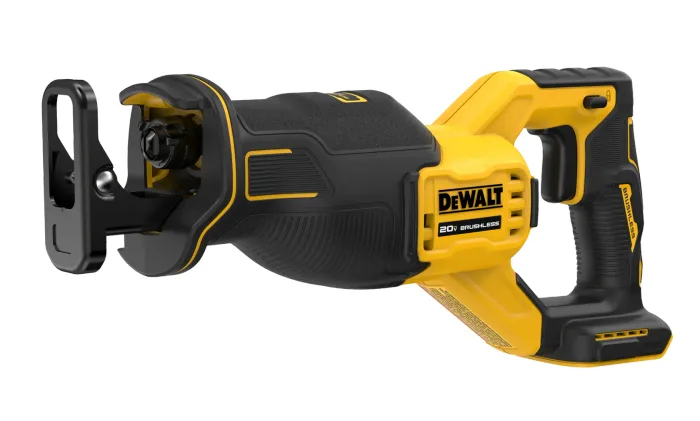
- DEWALT DCS382B 20V MAX XR Brushless Reciprocating Saw - Buy. The highest stroke-times-speed figure in this group, from the only brushless motor here.
- Makita XRJ04Z 18V LXT Lithium-Ion Cordless Recipro Saw - Buy. The longest stroke here at 1-1/4 inches, which uses more of the blade and clears the cut better than a faster short stroke does.
- DEWALT DWE305 12 Amp Corded Reciprocating Saw - It depends. A four-position blade clamp that solves flush and overhead cutting, on a corded motor that never runs out mid-demolition.
- CRAFTSMAN CMCS300B V20 Cordless Reciprocating Saw - Skip. Quotes a competitive 3,000 strokes per minute on the shortest stroke here, which nets out to the slowest cut of the four.
The verdict in 30 seconds
What mattered most
- Stroke length
- Strokes per minute
- Stroke times speed, in./min
- Power
- Published vibration in m/s2
- Orbital action
Reciprocating saws are sold on strokes per minute and amps, and neither tells you how fast the saw gets through anything. Cutting rate is stroke length multiplied by speed, and stroke is where these four actually differ, from one inch to one and a quarter. The saw quoting 3,000 strokes a minute here has the shortest stroke in the group and the lowest cutting rate of the four. The second thing worth knowing is what nobody will tell you. This is the highest-vibration tool most people own, and manufacturers advertise vibration reduction in relative terms, forty percent less than their own previous model, without publishing an absolute figure in metres per second squared. A percentage against an unnamed baseline cannot be compared across brands, which means the specification that governs how long you can safely use the tool is unavailable on every saw here.
The highest stroke-times-speed figure in this group, from the only brushless motor here.
Best for: General demolition and remodelling where cutting rate matters more than the last eighth of an inch of stroke.
- A 1-1/8 in. stroke at 0 to 3,200 SPM works out to the highest cutting rate of the four.
- Brushless motor, which matters on a saw that regularly binds in a cut and heats the motor doing it.
- The fastest top speed here, useful in thin metal where stroke matters less than rate.
- Variable speed trigger, so the saw can be started slowly enough to keep the blade in the line.
- Bare tool, so batteries and a charger are a separate and significant cost.
- No published vibration figure in m/s2, in common with every saw here.
- 1-1/8 in. of stroke is an eighth short of the Makita, which shows in thick timber.
- Cordless run time is a genuine limit in demolition work, which is continuous by nature.
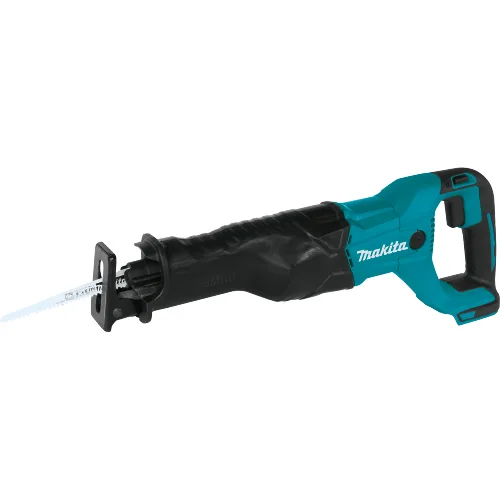
The longest stroke here at 1-1/4 inches, which uses more of the blade and clears the cut better than a faster short stroke does.
Best for: Thick timber, roots and anything where a long stroke and blade life matter more than raw speed.
- A 1-1/4 in. stroke, the longest in this comparison, so each pass uses more blade and spreads tooth wear.
- Makita publishes real capacity figures: 10 in. in wood with a 12 in. blade, and 5-1/8 in. in pipe.
- The longer stroke clears the kerf more effectively, which is what stops the blade binding in wet or resinous timber.
- Makita states plainly that it has no orbital setting, which is more disclosure than a vague feature list.
- 0 to 2,800 SPM is the lowest top speed here, so the cutting rate lands just behind the DEWALT.
- No orbital action at all, which the more aggressive saws use to speed up cuts in wood.
- At 8.3 lb with a battery it is a heavy tool to hold out at arm's length.
- No published vibration figure, again.
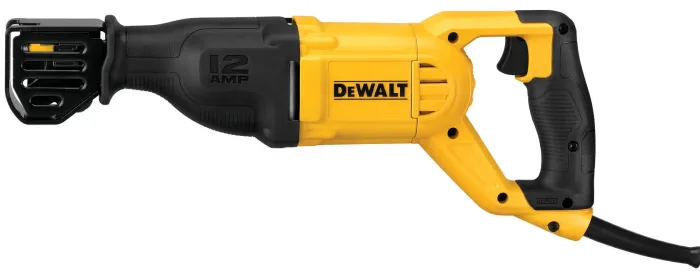
A four-position blade clamp that solves flush and overhead cutting, on a corded motor that never runs out mid-demolition.
Best for: Sustained demolition near power, and any job needing flush cuts where the four-position clamp earns its keep.
- A four-position blade clamp, so the blade can be mounted sideways or inverted for flush cuts and awkward overhead work.
- 12 amps corded, which means the saw does not fade partway through a day of demolition.
- The same 1-1/8 in. stroke as the cordless DEWALT, so the geometry is unchanged.
- Considerably cheaper than any of the cordless tools here once batteries are counted.
- 0 to 2,900 SPM gives it the lowest cutting rate of the three 1-1/8 in. saws.
- Corded, and a demolition saw is used in exactly the places where a lead is most in the way.
- Brushed motor, so there is a wear item the DCS382B does not have.
- No published vibration figure.
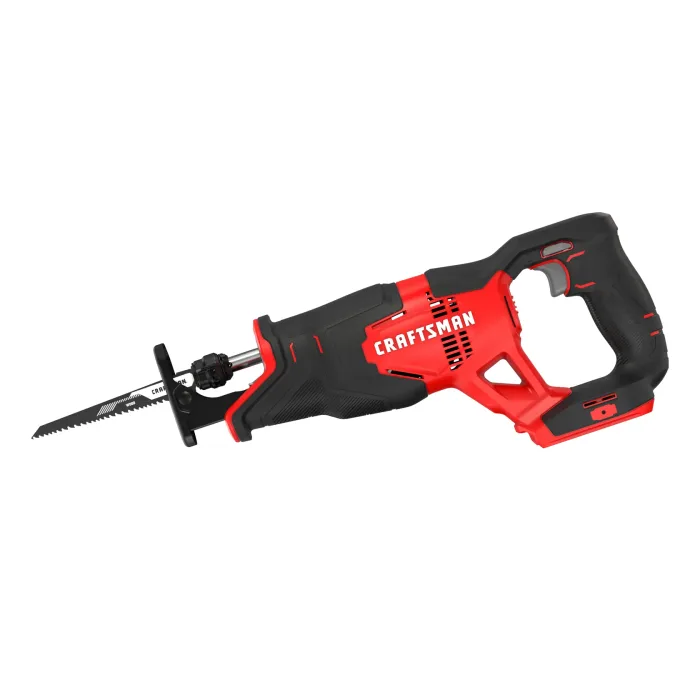
Quotes a competitive 3,000 strokes per minute on the shortest stroke here, which nets out to the slowest cut of the four.
Best for: Occasional garden pruning and light demolition where the saw is out of the cupboard twice a year.
- 3,000 SPM is a competitive speed figure and the specification most buyers compare.
- Light and inexpensive, and the V20 platform is the cheapest entry of the four.
- Variable speed trigger, so the blade can be started under control.
- Perfectly adequate for occasional pruning and light demolition.
- A 1 in. stroke, the shortest here, so it removes the least material per stroke.
- Stroke times speed puts it last of the four for cutting rate, despite the speed figure suggesting otherwise.
- A shorter stroke concentrates wear on fewer blade teeth, so blades dull faster.
- No published vibration figure, and no brushless motor.
| Criteria | DCS382B 20V MAX XR Brushless Reciprocating Saw Top pick Buy it Buy | XRJ04Z 18V LXT Lithium-Ion Cordless Recipro Saw Buy it Buy | DWE305 12 Amp Corded Reciprocating Saw It depends Buy | CMCS300B V20 Cordless Reciprocating Saw Skip it Buy |
|---|---|---|---|---|
| Best for | General demolition and remodelling where cutting rate matters more than the last eighth of an inch of stroke. | Thick timber, roots and anything where a long stroke and blade life matter more than raw speed. | Sustained demolition near power, and any job needing flush cuts where the four-position clamp earns its keep. | Occasional garden pruning and light demolition where the saw is out of the cupboard twice a year. |
| Price tier | $$$ · premium | $$$ · premium | $$ · mid-range | $ · budget |
| Stroke length | 1-1/8 in. | 1-1/4 in. | 1-1/8 in. | 1 in. |
| Strokes per minute | 0 to 3,200 | 0 to 2,800 | 0 to 2,900 | 3,000 |
| Stroke times speed, in./min | About 3,600 | About 3,500 | About 3,263 | About 3,000 |
| Power | 20V brushless | 18V brushed | 12 amp corded | 20V brushed |
| Published vibration in m/s2 | No | No | No | No |
| Orbital action | Not published | Stated as none | Not published | Not published |
| Published cut capacity | Not published | 10 in. wood, 5-1/8 in. pipe | Not published | Not published |
Which one is right for you?
- General demolition and remodelling where cutting rate matters more than the last eighth of an inch of stroke. Buy it DEWALT DCS382B 20V MAX XR Brushless Reciprocating Saw
- Thick timber, roots and anything where a long stroke and blade life matter more than raw speed. Buy it Makita XRJ04Z 18V LXT Lithium-Ion Cordless Recipro Saw
- Sustained demolition near power, and any job needing flush cuts where the four-position clamp earns its keep. It depends DEWALT DWE305 12 Amp Corded Reciprocating Saw
- Occasional garden pruning and light demolition where the saw is out of the cupboard twice a year. Skip it CRAFTSMAN CMCS300B V20 Cordless Reciprocating Saw
How we judged the field
Stroke length first, because it is half of the cutting-rate equation and the half that varies. Across these four it runs from 1 inch to 1-1/4, and multiplying it by the quoted speed reorders the group entirely against how the listings read. Then what each maker publishes beyond the headline: Makita gives real cutting capacities in wood and pipe and states plainly that the saw has no orbital setting, while the others publish neither. Then the blade clamp, because a four-position clamp turns a demolition saw into a flush-cutting tool and only one here has it. We also looked for a hand-arm vibration figure in metres per second squared on all four and found none, which on the highest-vibration tool most people own is the most significant absence in the category.
DEWALT DCS382B 20V MAX XR Brushless Reciprocating Saw
Buy itThe DEWALT DCS382B is the pick because it wins the multiplication. Its 1-1/8 inch stroke at up to 3,200 strokes per minute works out to roughly 3,600 inches of blade travel per minute, the highest of the four, and it is the only brushless motor here. That matters more on this tool than on most: a reciprocating saw binds in the cut regularly, and binding is what heats a brushed motor and burns brushes. The variable speed trigger lets the blade be started slowly enough to stay in the line, which is where most bad cuts with this tool begin. Against it, the stroke is an eighth of an inch shorter than the Makita’s, which shows in thick timber where stroke does more than rate; it is a bare tool, so the platform cost lands on top; and cordless run time is a real constraint in demolition, which is continuous work by nature. Like every saw here, it publishes no vibration figure.
Makita XRJ04Z 18V LXT Lithium-Ion Cordless Recipro Saw
Buy itThe Makita XRJ04Z is the second buy and the better tool once the material gets thick. Its 1-1/4 inch stroke is the longest in this comparison, and stroke does more than move the cutting rate. A longer stroke draws more of the blade through the work, so tooth wear spreads over more teeth and blades last measurably longer, and it clears the kerf better, pushing wet sawdust out instead of packing it in, which is the usual cause of a blade binding and blueing in green timber. Makita also publishes what the saw will actually cut, 10 inches in wood with a 12 inch blade and 5-1/8 inches in pipe, where the others publish nothing, and it states plainly that there is no orbital setting rather than leaving you to infer it. The costs are a 2,800 SPM ceiling, the lowest here, which puts its cutting rate just behind the DEWALT, and 8.3 pounds with a battery, which is a lot to hold at arm’s length overhead.
DEWALT DWE305 12 Amp Corded Reciprocating Saw
It dependsThe DEWALT DWE305 is the it-depends, and its case rests on a feature rather than a number. The four-position blade clamp lets the blade be mounted sideways or inverted, which turns an awkward tool into a usable one for flush cuts along a wall and for overhead work where you cannot get the body of the saw square to the cut. Nothing else here does that. Being corded and drawing 12 amps, it also does not fade partway through a day of demolition, and it costs considerably less than any of the cordless tools once batteries are counted. The trade-offs are consistent: the same 1-1/8 inch stroke as its cordless sibling but only 2,900 SPM, giving it the lowest cutting rate of the three full-stroke saws; a cord, in exactly the places a cord is most in the way; and a brushed motor on a tool that binds regularly.
CRAFTSMAN CMCS300B V20 Cordless Reciprocating Saw
Skip itThe CRAFTSMAN CMCS300B is the skip, and it is the clearest illustration of why the headline number misleads in this category. It quotes 3,000 strokes per minute, which reads as competitive against the DEWALT’s 3,200 and better than the Makita’s 2,800. Then you find the stroke: 1 inch, the shortest here by an eighth. Multiply the two and it produces about 3,000 inches of blade travel per minute against the DEWALT’s 3,600, which is the slowest cut in the group by a clear margin. The short stroke costs twice, because it also concentrates wear on fewer teeth, so blades dull faster and the running cost is higher than the purchase price suggests. It is light, it is cheap, the V20 platform is the least expensive entry here, and for pruning a hedge twice a year none of this matters. For anything sustained it is the wrong end of the arithmetic.
Sources
Specs in this review come from these pages.
- Makita USA, XRJ04Z 18V LXT cordless recipro saw specifications (makitatools.com)
- DEWALT DWE305 12 amp corded reciprocating saw (dewalt.com)
- DEWALT DCS382B 20V MAX XR brushless reciprocating saw specifications (dewalt.com)
- CRAFTSMAN CMCS300B V20 cordless reciprocating saw (craftsman.com)
- Makita on counterweight vibration reduction claims in cordless recipro saws (toolguyd.com)
DEWALT DCS382B 20V MAX XR Brushless Reciprocating Saw vs Makita XRJ04Z 18V LXT Lithium-Ion Cordless Recipro Saw: which should you buy?
The two DEWALTs isolate the cord question on a tool where the answer is less obvious than usual. Both run a 1-1/8 inch stroke, so the geometry is identical and only the power source and the clamp differ. The cordless DCS382B is faster at 3,200 SPM against 2,900, is brushless, and goes where there is no power, which for demolition often means a gutted room with the circuits pulled. The corded DWE305 gives up cutting rate but never fades across a full day, costs far less once batteries are counted, and has the four-position blade clamp that the cordless model lacks entirely. That clamp is the deciding feature for anyone doing flush cuts, because no amount of speed compensates for not being able to get the blade flat against a wall. Buy the cordless for mobility and the corded for endurance and access.
What to look for
- Stroke length, then multiply: stroke times strokes per minute is the cutting rate, and the saw with the best speed figure here has the worst rate.
- A four-position blade clamp: the feature that makes flush and overhead cutting possible, and the one thing on this list that cannot be compensated for elsewhere.
- Published cutting capacity in wood and pipe: most makers publish neither, so a figure is a sign the maker expects to be compared.
- Whether orbital action is stated at all: an unstated feature is usually an absent one, and a maker who says plainly that there is none is being more useful than one who says nothing.
- Brushless on a cordless saw: this tool binds in the cut as a matter of routine, and binding is what cooks a brushed motor.
- Any vibration figure in m/s2: none of these publishes one, so treat percentage claims against a maker’s own previous model as uncomparable between brands.
Our final take
Reciprocating saws are advertised on strokes per minute and amps, and the cutting rate is stroke times speed, which reorders the group. Work that multiplication out first. Then accept that the specification you would most want, how much vibration goes into your hands, is not published by anyone here and cannot be inferred from a percentage claim against an unnamed predecessor.
Questions, answered
Why does stroke length matter more than strokes per minute?
Because the two multiply into how much blade passes through the material each second, and stroke is where these saws differ. The Craftsman here quotes 3,000 SPM on a 1 inch stroke, which works out to about 3,000 inches of blade travel per minute. The DEWALT DCS382B quotes 3,200 on a 1-1/8 inch stroke, or about 3,600. The listing that looks competitive on speed is last on the number that matters. Multiply the two before comparing anything.
Why does nobody publish a vibration figure?
Because they are not required to for this market, and a reciprocating saw is the tool where it would matter most. What manufacturers do publish is relative: claims of forty percent less vibration than their own previous model, achieved with counterweight mechanisms that genuinely work. The problem is the baseline. A percentage against an unnamed predecessor cannot be compared with another brand's percentage against a different unnamed predecessor, so the specification that would tell you how long the tool is safe to hold is missing from all of them.
What does a longer stroke actually buy?
Two things beyond raw cutting rate. It uses more of the blade on each pass, so tooth wear spreads across more teeth and blades last longer. And it clears the kerf better, pushing swarf and wet sawdust out rather than packing it in, which is what causes a blade to bind and heat in green timber. That is why the Makita's 1-1/4 inches is worth having even though its speed figure is the lowest here.
Is orbital action worth looking for?
In wood, yes; in metal, no. Orbital action swings the blade in a slight ellipse so the teeth bite harder on the cutting stroke, which is considerably faster in timber and considerably rougher. In metal it shortens blade life sharply and produces a poor cut. Makita states plainly that the XRJ04Z has no orbital setting, which is more useful than the silence on the other three, since an unstated feature is usually an absent one.
How do I stop the saw juddering out of the cut?
Press the shoe firmly against the workpiece before the blade touches it. The shoe is a pivot, and a saw held off the work has nothing to react against, so the whole tool bounces instead of the blade cutting. Start slowly on the variable speed trigger until the blade has bitten, then bring the speed up. Most of what people describe as excessive vibration on these saws is the shoe not being loaded.
Deciding between the top two? See our head-to-head: DEWALT DCS382B 20V MAX XR Brushless Reciprocating Saw vs Makita XRJ04Z 18V LXT Lithium-Ion Cordless Recipro Saw.
More in Tools & DIY
Reciprocating Saws, Explained Plain-English guide → DEWALT DCS382B 20V MAX XR Brushless Reciprocating Saw vs Makita XRJ04Z 18V LXT Lithium-Ion Cordless Recipro Saw Head-to-head →  The Best Roof Rakes: 4 Compared (and One to Skip)
  The Best Rotary Hammers: 4 Compared (and One to Skip)
  The Best Rotary Tools: 4 Compared (and One to Skip)
  The Best Safety Glasses: 4 Compared (and One to Skip)