

Home & Kitchen
The Best Pasta Makers: 4 Compared (and One to Skip)
We compared the Marcato Atlas 150, a motorized Atlasmotor, Cuisinart's automatic extruder and a $50 clone on roller quality, thickness range and who should actually own one.
The short version
The Marcato Atlas 150 is the pasta maker to gift: Italian, 150mm rollers, 0.3mm sheets - $120 for decades. The Cuisinart Pastafecto is the $260 automatic extruder. The Atlasmotor motorizes the Atlas at $231 - it-depends. Skip Aunt Gina's - the $50 clone copies the shape, not the rollers.
Our picks at a glance
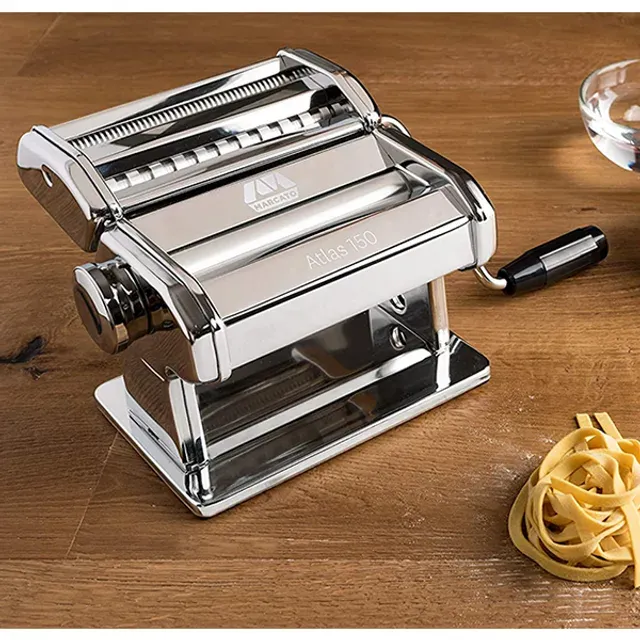
- Marcato Atlas 150 Pasta Machine - Buy. The Italian classic - 150mm rollers, 9 thicknesses down to 0.3mm, made in Italy - $120 and built to outlive you.
- Cuisinart Pastafecto Pasta & Bread Dough Maker - Buy. The automatic extruder - dump flour and egg, get fresh pasta in 20 minutes, 6 shapes - $260.
- Marcato Atlasmotor+ - It depends. The Atlas with the Pastadrive motor bolted on - same rollers, hands-free, no clamp needed - $231.
- Aunt Gina's Pasta Maker - Skip. The $50 Atlas lookalike - same silhouette, same 150mm width, but the clone economics show in the rollers.
The verdict in 30 seconds
What mattered most
- Type
- Roller width
- Thickness range
- Pasta shapes
- Effort
- Price class
A pasta maker is one of the great kitchen gifts - simple machine, dramatic result. The classic is Marcato's Atlas 150, a hand-crank roller made in Italy for over 60 years. The alternatives split two ways: motorize it, or automate it into an extruder. We compared the Atlas 150, its motorized sibling, Cuisinart's Pastafecto and a budget clone on roller quality and what the extra money actually buys.
The Italian classic - 150mm rollers, 9 thicknesses down to 0.3mm, made in Italy - $120 and built to outlive you.
Best for: The definitive pasta-maker gift - the machine Nonna energy comes from, for anyone who'll actually make pasta.
- Made entirely in Italy - the machine that's been the manual-pasta benchmark since the 1960s.
- 150mm-wide rollers adjust to 9 thicknesses, from 2.5mm down to 0.3mm - wide enough for lasagna sheets, thin enough for tagliolini.
- Anodized aluminum-alloy rollers don't shed metal oxides onto dough - the food-safety detail clones skip.
- Interchangeable cutters and accessories: swap heads for fettuccine, spaghetti, ravioli and more.
- Simple crank mechanism - nothing to break, decades of service.
- $120 is the premium manual price - clones sell the same shape for less.
- Hand-crank means one hand feeds dough - a clamp and a steady table are required.
- Dry brush clean only - flour paste on wet rollers gums them up.
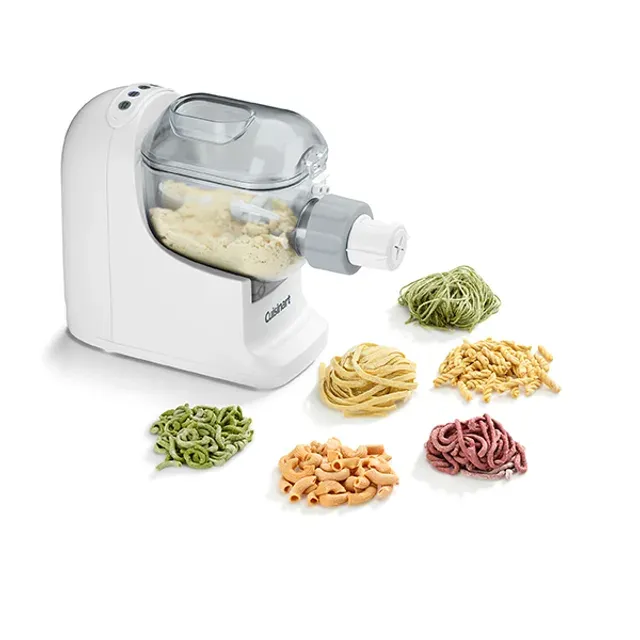
The automatic extruder - dump flour and egg, get fresh pasta in 20 minutes, 6 shapes - $260.
Best for: The weeknight pasta lover - fresh shaped pasta with zero technique; not for the sheet-pasta purist.
- Fully automatic: it mixes, kneads and extrudes - fresh pasta in about 20 minutes with no cranking.
- 6 shaping discs: spaghetti, rigatoni, fusilli, small macaroni, fettuccine, bucatini - extrusion variety rollers can't match.
- Doubles as a bread-dough kneader - the second function justifies the counter space.
- Compact footprint - the automatic pasta machine that doesn't eat the kitchen.
- $260 for extruded pasta - and extruded texture is different: denser, chewier, not the silky rolled sheet.
- No lasagna sheets or ravioli - extrusion makes shapes, not sheets.
- Discs and parts need cleaning - more fiddly than a brushed-down roller.
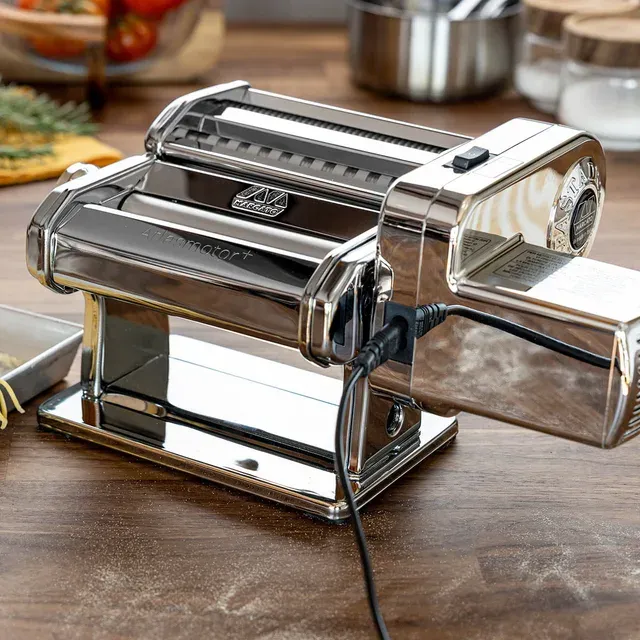
The Atlas with the Pastadrive motor bolted on - same rollers, hands-free, no clamp needed - $231.
Best for: The serious home pasta-maker with hand issues or big batches - the motor makes volume real; everyone else buys the $120 Atlas.
- Same Atlas roller quality - anodized alloy, 9 thicknesses - with a motor doing the cranking.
- Both hands free to feed and catch dough - the real advantage; solo pasta gets much easier.
- No clamp needed - sits stable on any flat surface.
- Compatible with the full Atlas accessory range - all the same cutters.
- $231 to motorize a $120 machine - double the price for the same sheets.
- The motor is the value, not the pasta - purists prefer the feel of the crank.
- Another corded appliance - a manual Atlas needs no outlet.
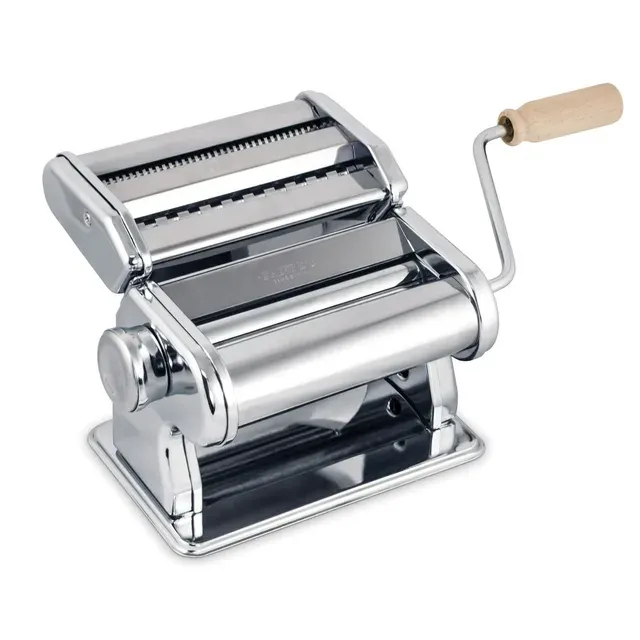
The $50 Atlas lookalike - same silhouette, same 150mm width, but the clone economics show in the rollers.
Best for: A one-time curiosity buy. For anyone who'll make pasta more than twice, the Atlas 150 is worth the difference.
- $50 for a roller plus double cutter - the shape of the original for less than half.
- 9 thickness settings across 150mm rollers - the same adjustment range on paper.
- Includes a spaghetti/fettuccine cutter attachment - cutters come in the box.
- The clone compromise is inside the machine - the Atlas uses anodized alloy rollers; budget clones use cheaper plated steel that can shed and corrode.
- Alignment and tolerances are the unverifiable gamble - wobbly rollers make ragged sheets no matter the dial.
- No accessory ecosystem - the Atlas's decades of cutters don't fit the clone.
- $70 saved on a machine you'll use for years is the definition of false economy.
| Criteria | Marcato Atlas 150 Pasta Machine Top pick | Cuisinart Pastafecto Pasta & Bread Dough Maker | Marcato Atlasmotor+ | Aunt Gina's Pasta Maker |
|---|---|---|---|---|
| Verdict | Buy it | Buy it | It depends | Skip it |
| Best for | The definitive pasta-maker gift - the machine Nonna energy comes from, for anyone who'll actually make pasta. | The weeknight pasta lover - fresh shaped pasta with zero technique; not for the sheet-pasta purist. | The serious home pasta-maker with hand issues or big batches - the motor makes volume real; everyone else buys the $120 Atlas. | A one-time curiosity buy. For anyone who'll make pasta more than twice, the Atlas 150 is worth the difference. |
| Price tier | $$$ · premium | $$$$ · flagship | $$$$ · flagship | $ · budget |
| Type | Manual roller + cutters | Automatic extruder | Motorized roller | Manual roller clone |
| Roller width | 150mm | Extrusion discs | 150mm | 150mm |
| Thickness range | 9 settings, 0.3-2.5mm | Discs fixed shapes | 9 settings, 0.3-2.5mm | 9 settings, 0.5-3mm |
| Pasta shapes | Sheets + interchangeable cutters | 6 extruded shapes | Sheets + full accessory range | Sheets + double cutter |
| Effort | Hand crank | Fully automatic | Motor drive | Hand crank |
| Price class | $120 | $260 | $231 | $50 |
Which one is right for you?
- The definitive pasta-maker gift - the machine Nonna energy comes from, for anyone who'll actually make pasta. Buy it Marcato Atlas 150 Pasta Machine
- The weeknight pasta lover - fresh shaped pasta with zero technique; not for the sheet-pasta purist. Buy it Cuisinart Pastafecto Pasta & Bread Dough Maker
- The serious home pasta-maker with hand issues or big batches - the motor makes volume real; everyone else buys the $120 Atlas. It depends Marcato Atlasmotor+
- A one-time curiosity buy. For anyone who'll make pasta more than twice, the Atlas 150 is worth the difference. Skip it Aunt Gina's Pasta Maker
How we judged the field
A pasta maker should roll smooth sheets at consistent thickness - and survive being a gift. The benchmark is Marcato’s Atlas 150, hand-cranked Italian steel since the 1960s. The alternatives split into motorization, automation and imitation. We compared the Atlas 150, its motorized twin, Cuisinart’s extruder and a $50 clone on roller quality, thickness control and the honesty of the price gap.
The Atlas 150 is the machine: made entirely in Italy, 150mm rollers with 9 thickness settings down to 0.3mm, anodized aluminum-alloy rollers that don’t shed oxides into dough. $120.
It’s the pasta maker for life - the crank is simple, the sheets are silky, and every accessory Marcato makes fits. The hand crank is the only real friction: one hand cranks, one feeds, and a table clamp is mandatory. For anyone who’ll actually make pasta, this is the gift.
The Pastafecto is the automatic answer: dump in flour, egg and oil and it mixes, kneads and extrudes fresh pasta in about 20 minutes through 6 shaping discs. It kneads bread dough too. $260.
Different product, different buyer. Extruded pasta is denser and chewier than rolled sheets - rigatoni and fusilli, yes; lasagna sheets and ravioli, no. For the weeknight pasta lover who wants fresh shapes with zero technique, it delivers; the purist will notice the texture gap.
The Atlasmotor+ is an Atlas with the Pastadrive motor attached: same anodized rollers, same 9 thicknesses, both hands free to feed and catch dough, no clamp needed. $231.
Whether it’s right depends on output. The motor nearly doubles the price for the same sheets - but for big batches, mobility issues or someone making pasta weekly, hands-free changes the experience. For occasional use it’s a $110 convenience; for a serious pasta-maker it’s the tool.
Aunt Gina’s is the clone: the Atlas silhouette, 150mm width, 9 settings, a double cutter in the box - for $50.
The savings come from where you can’t see: the Atlas’s food-safe anodized rollers versus the clone’s cheaper steel, and tolerances that decide whether sheets come out even or ragged. No accessory ecosystem, no decades of service. Saving $70 on a decades-long tool is false economy - buy the original or don’t buy the category.
Atlas 150 vs Atlasmotor: which should you buy?
Same rollers, same sheets - the $110 difference is the Pastadrive motor that frees both hands.
Buy the Atlas 150 for almost everyone - the crank is part of the ritual and the savings are real. Buy the Atlasmotor when volume or hand strength justifies it - for weekly pasta or mobility limits, it’s the upgrade.
What to look for
- Roller material matters: anodized food-safe alloy doesn’t shed into dough - cheap plated steel is the clone compromise.
- 150mm is the useful width: narrower machines exist; 150mm covers lasagna sheets properly.
- Extrusion isn’t rolling: extruders make shapes, not sheets - different texture, different buyer.
- The motor is about hands, not speed: it frees the feeding hand - worth it for volume, not for weekly dinners.
- A pasta maker is a cook’s gift: it’s spectacular for someone who cooks; a drawer item for someone who doesn’t.
Our final take
The Marcato Atlas 150 is the pasta maker to gift - Italian-made, 0.3mm sheets, built for decades at $120. The Cuisinart Pastafecto is the $260 no-technique extruder for shaped pasta. The Atlasmotor+ motorizes the same rollers for hands-free batches at $231. Skip Aunt Gina’s - the clone copies the silhouette and cuts corners inside. Buy the Atlas; add cutters later.
Questions, answered
Is a manual pasta maker worth it?
Yes if the recipient will use it - fresh pasta is genuinely better than dried, and a hand-crank Atlas has no learning curve beyond dough hydration. The catch is usage: a pasta maker is a great gift for someone who already cooks, a drawer-sitter for someone who doesn't.
Roller machine vs extruder - what's the difference?
Rollers make sheets - lasagna, fettuccine, ravioli - with the silky texture fresh pasta is famous for. Extruders push dough through dies for shaped pasta (rigatoni, fusilli) - automatic but denser. Purists want rollers; convenience buyers want extruders.
Is the Marcato Atlas really better than the clones?
Yes - and the difference is inside. The Atlas uses anodized aluminum-alloy rollers that don't shed metal into dough; budget clones use cheaper steel with looser tolerances. A wobbly roller makes ragged sheets no setting can fix.
Do I need the motorized version?
Only for volume or mobility issues. The motor frees both hands for feeding dough - real for big batches or anyone who finds cranking awkward. For a few servings a week, the hand crank is half the price and honestly more fun.
What's the best pasta maker gift for a beginner?
The Atlas 150 - it's the machine every tutorial assumes, the accessories fit forever, and it won't die. The Pastafecto is the no-skill option: flour in, pasta out. Gift rollers to cooks, extruders to convenience-seekers.
Deciding between the top two? See our head-to-head: Marcato Atlas 150 Pasta Machine vs Cuisinart Pastafecto Pasta & Bread Dough Maker.
More Home & Kitchen reviews
 The Best Patio Heaters: 4 Compared (and One to Skip)
  The Best Pellet Grills: 4 Compared (and One to Skip)
  The Best Outdoor Pizza Ovens: 4 Compared (and One to Skip)
  The Best Popcorn Machines: 4 Compared (and One to Skip)
  The Best Portable Air Conditioners: 4 Compared (and One to Skip)
  The Best Portable Blenders: 4 Compared (and One to Skip)