

Health & Wellness
The Best LED Face Masks: 4 Compared (and One to Skip)
We compared four LED light therapy face masks on published wavelengths, LED count, irradiance, treatment time, FDA clearance and warranty, and worked out which ones let you calculate a dose.
The short version
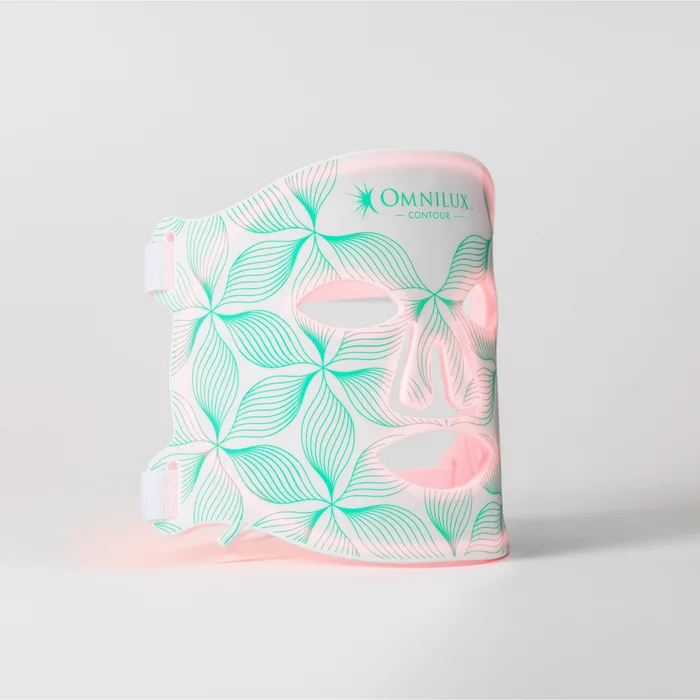
The Omnilux Contour Face is the one to buy: 132 LEDs arranged as 66 dual-chip bulbs that emit 633nm red and 830nm near-infrared from the same point at the same time, an energy output Omnilux publishes as about 30 mW per square centimetre, a 10 minute session and a stated regimen of three to five treatments a week for four to six weeks, FDA cleared and backed by a technology Omnilux says appears in over 40 peer-reviewed studies. The CurrentBody Skin Series 3 is the most capable, with six wavelengths including a deep near-infrared 1072nm and a MyDose system that controls every LED individually. The Therabody TheraFace Mask has the most lights at 648 and adds vibration, full material and battery disclosure and a 576 gram weight, though the rigid shell does not contour like silicone. The Solawave Wrinkle Retreat Pro is the one to skip: it offers a three minute treatment, the shortest here by a factor of three, and publishes no irradiance figure at all, so there is no way to know what dose three minutes delivers. Best for: anyone considering an in-clinic LED course who wants to know what they are actually buying.
Our picks at a glance
- Omnilux Contour Face - Buy. The only mask here that tells you its output, which is the only way to know what you are getting.
- CurrentBody Skin LED Red Light Therapy Face Mask: Series 3 - Buy. Six wavelengths and individual control of every LED, which is more capability than anything else here.
- Therabody TheraFace Mask - It depends. The most lights, the most disclosed hardware, and a rigid shell that sits on your face rather than against it.
- Solawave Wrinkle Retreat Pro LED Face Mask - Skip. A three minute treatment from a maker that will not tell you how bright the lights are.
The verdict in 30 seconds
What mattered most
- Wavelengths
- LED count
- Irradiance published
- Session length
- Regimen published
- Construction
LED face masks are sold on before and after photographs and bought on hope, which is a shame because the physics here is unusually legible. A light therapy device delivers a dose, and dose is irradiance multiplied by time. If a maker publishes how much light per square centimetre the mask puts out and how long a session lasts, you can work out what your skin is actually receiving and compare it against the published research. Exactly one of these four publishes an irradiance figure. The others ask you to accept a treatment time without telling you the intensity behind it, which is like being told how long to cook something without being told the temperature.
The only mask here that tells you its output, which is the only way to know what you are getting.
Best for: Fine lines, wrinkles and skin firmness, for someone who wants a dose they can verify.
- Omnilux publishes an energy output of about 30 mW per square centimetre, and a 10 minute session, which together are enough to calculate the dose delivered.
- 132 LEDs arranged as 66 dual-chip bulbs, each containing both a 633nm red and an 830nm near-infrared emitter, so both wavelengths reach the same point at the same time rather than from separate bulbs.
- FDA cleared, flexible and portable, with a published regimen of three to five treatments per week for four to six weeks and maintenance afterwards, on a technology Omnilux says features in more than 40 peer-reviewed clinical studies.
- Red and near-infrared only, with no blue, and Omnilux states plainly that the Contour line will not clear acne breakouts and should not be used on inflammatory acne.
- No app, no preset modes and no adjustable intensity.
- No battery life, weight or warranty terms are published on the product page.
- It is the most expensive of the four on a like-for-like basis and Omnilux sells separate devices for the neck and the hands.
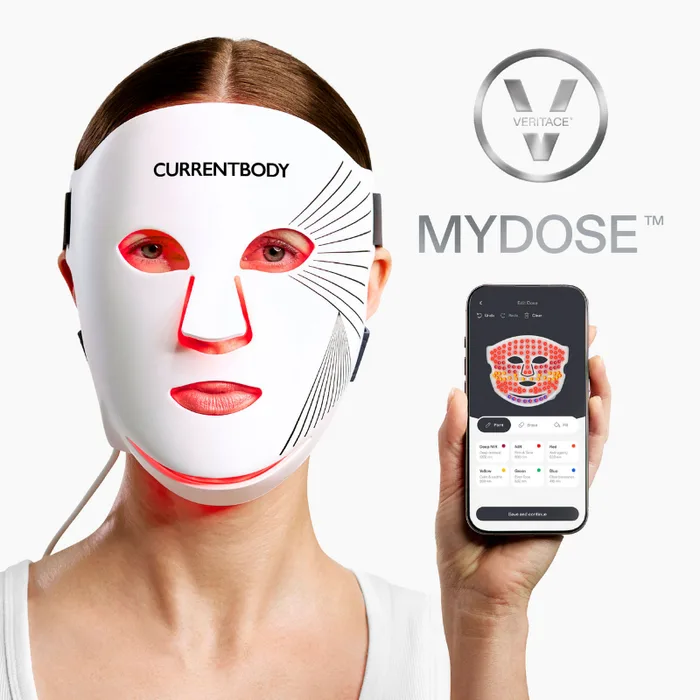
Six wavelengths and individual control of every LED, which is more capability than anything else here.
Best for: Someone treating more than one concern, particularly acne and pigmentation alongside ageing.
- Six wavelengths: red at 633nm, near-infrared at 830nm, deep near-infrared at 1072nm, blue at 415nm, green at 532nm and yellow at 590nm, so lines, acne and pigmentation are all addressed by one device.
- The MyDose system gives control over every individual LED, letting you choose the wavelengths and calculating the dose automatically, alongside four clinician-approved preset modes.
- A flexible silicone shape with a chin strap for coverage, and an app for building and saving personalised treatments.
- No irradiance figure is published, so the automatic dose calculation cannot be checked against anything.
- No LED count, weight, battery life or warranty terms appear on the product page.
- The headline results, 37 percent fewer wrinkles and 57 percent more plumpness in eight weeks, are asterisked brand claims rather than independent findings.
- Six wavelengths and per-LED control is more complexity than most people will use, and the best of it requires the app.
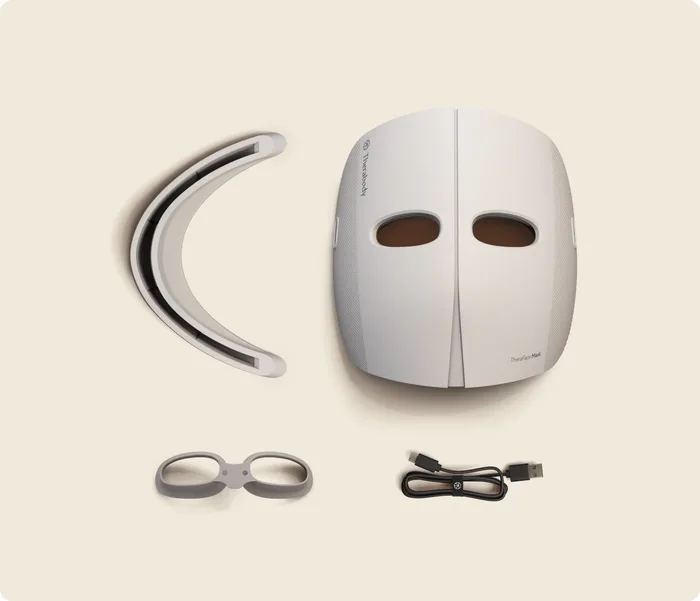
The most lights, the most disclosed hardware, and a rigid shell that sits on your face rather than against it.
Best for: Someone who wants blue, red and infrared in one device and likes the idea of the vibration massage.
- 648 lights delivering red at 633nm, red plus infrared at 830nm and blue at 415nm, the highest LED count in this comparison.
- Therabody publishes more hardware detail than anyone here: 576 grams, roughly 120 minutes of battery in LED mode and 60 minutes with vibration, a full materials list, and a 1-year limited warranty.
- FDA cleared, cordless and hands-free, with treatments from 3 to 9 minutes and a vibration mode for facial and scalp massage.
- The shell is polycarbonate and ABS rather than flexible silicone, so it holds its shape rather than contouring to your face.
- 576 grams is substantial to wear, and noticeably more than a silicone mask.
- No irradiance is published, so the 3 to 9 minute treatment range cannot be converted into a dose.
- The supporting clinical study is 31 subjects over 12 weeks using the 9 minute programme once a day, which is a demanding protocol to sustain.
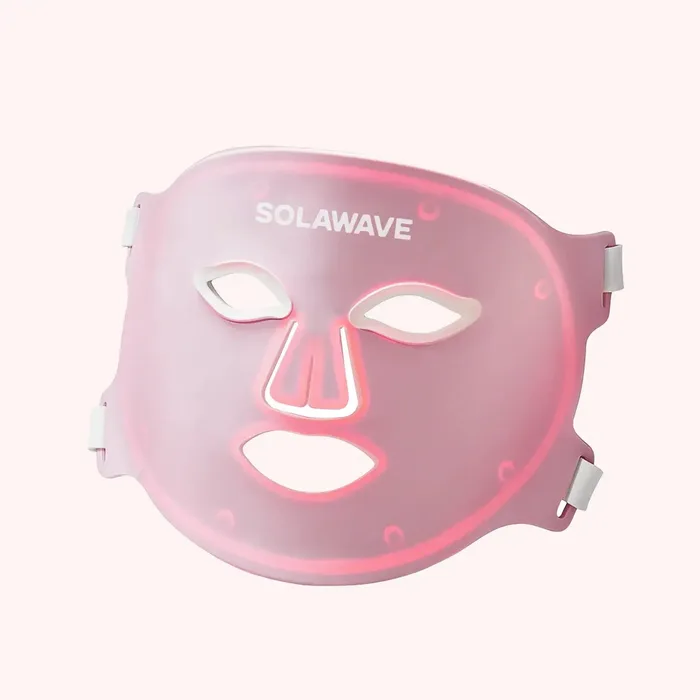
A three minute treatment from a maker that will not tell you how bright the lights are.
Best for: Someone who wants a flexible silicone mask at the lowest price and will not miss the numbers.
- Four wavelengths, amber at 605nm, red at 630nm, deep red at 660nm and near-infrared at 830nm, which is more than the Omnilux or the Therabody.
- Soft flexible medical-grade silicone that contours to the face, with detachable adjustable head straps and a digital countdown and battery display.
- FDA cleared, HSA and FSA eligible, and the least expensive mask in this comparison.
- A three minute treatment is a third of the Omnilux session, and with no irradiance published there is no way to know whether the dose is comparable.
- 320 LEDs is the lowest count here, roughly half the Therabody's.
- Up to 20 treatments per charge is a short battery, meaning a recharge roughly every three weeks at daily use.
- No warranty terms and no clinical study of its own are cited on the product page.
| Criteria | Contour Face Top pick | Skin LED Red Light Therapy Face Mask: Series 3 | TheraFace Mask | Wrinkle Retreat Pro LED Face Mask |
|---|---|---|---|---|
| Verdict | Buy it | Buy it | It depends | Skip it |
| Best for | Fine lines, wrinkles and skin firmness, for someone who wants a dose they can verify. | Someone treating more than one concern, particularly acne and pigmentation alongside ageing. | Someone who wants blue, red and infrared in one device and likes the idea of the vibration massage. | Someone who wants a flexible silicone mask at the lowest price and will not miss the numbers. |
| Price tier | $$$ · premium | $$$ · premium | $$$ · premium | $$ · mid-range |
| Wavelengths | 633, 830 nm | 415, 532, 590, 633, 830, 1072 nm | 415, 633, 830 nm | 605, 630, 660, 830 nm |
| LED count | 132 in 66 dual-chip bulbs | Not published | 648 | 320 |
| Irradiance published | About 30 mW/cm2 | No | No | No |
| Session length | 10 minutes | Varies by programme | 3 to 9 minutes | 3 minutes |
| Regimen published | 3 to 5 times a week for 4 to 6 weeks | Not published | Study used once daily | Daily |
| Construction | Flexible | Flexible silicone with chin strap | Polycarbonate and ABS shell | Flexible medical-grade silicone |
| FDA cleared | Yes | Not stated on page | Yes | Yes |
| Weight | Not published | Not published | 576 g | Not published |
| Battery | Not published | Not published | About 120 min LED | Up to 20 treatments per charge |
| Warranty | Not published | Not published | 1 year limited | Not published |
| App control | No | Yes | No | No |
Which one is right for you?
- Fine lines, wrinkles and skin firmness, for someone who wants a dose they can verify. Buy it Omnilux Contour Face
- Someone treating more than one concern, particularly acne and pigmentation alongside ageing. Buy it CurrentBody Skin LED Red Light Therapy Face Mask: Series 3
- Someone who wants blue, red and infrared in one device and likes the idea of the vibration massage. It depends Therabody TheraFace Mask
- Someone who wants a flexible silicone mask at the lowest price and will not miss the numbers. Skip it Solawave Wrinkle Retreat Pro LED Face Mask
How we judged the field
Light therapy is a dose-response treatment, so the first thing we looked for was whether a dose can be calculated at all. That needs two numbers, an irradiance in milliwatts per square centimetre and a session length in minutes, and only one of these four publishes both. Where a maker gives a treatment time and nothing else, the time on its own is meaningless: a three minute session at high intensity and a three minute session at low intensity are completely different treatments, and you are not told which you are buying.
After that we looked at wavelengths, because they determine what the device can address. Red around 630nm and near-infrared around 830nm are the pairing for lines and firmness; blue around 415nm is for acne and does nothing for wrinkles; amber, green and yellow are aimed at tone and redness. Then LED count and how the emitters are arranged, since two wavelengths from the same dual-chip bulb behave differently from two wavelengths from bulbs an inch apart. Then fit and weight, because a mask that does not sit against the skin loses intensity to the air gap, and one that is heavy does not get worn. Finally we looked at regulatory status, the clinical evidence each maker actually cites, and the mundane disclosures, weight, battery, warranty, which in this category turn out to separate the companies as sharply as anything technical.
The Omnilux Contour Face is the only mask in this comparison that lets you work out what your skin is receiving. Omnilux states an energy output of about 30 milliwatts per square centimetre, describes it as calculated to be optimal for cell stimulation based on its own clinical data, and specifies a 10 minute treatment, three to five times a week for four to six weeks, with maintenance afterwards. Multiply those together and a session is roughly 18 joules per square centimetre, which is a figure you can take to the literature. The hardware is unusual too: 132 LEDs arranged as 66 dual-chip bulbs, each containing both a 633nm red and an 830nm near-infrared emitter, so both wavelengths arrive at the same spot simultaneously rather than from separate bulbs at slightly different angles. It is FDA cleared, flexible and portable, and Omnilux points to more than 40 peer-reviewed studies on its technology and over 20 years of use. The limits are clear and Omnilux states them: there is no blue light, and the Contour line will not clear acne breakouts and should not be used on inflammatory acne vulgaris. There is also no app, no intensity control, and no published weight, battery life or warranty.
The CurrentBody Skin Series 3 is the most technically ambitious mask here. It carries six wavelengths, red at 633nm, near-infrared at 830nm, deep near-infrared at 1072nm, blue at 415nm, green at 532nm and yellow at 590nm, which covers ageing, acne and pigmentation in a single device, and the 1072nm deep near-infrared is unusual outside clinical equipment. The control system is the differentiator: MyDose gives command of every individual LED, so you choose the wavelengths and the system calculates the dose, alongside four clinician-approved presets for people who would rather not. The mask is flexible silicone with a chin strap for coverage, and pairs with an app. The problem is the same one that runs through this category. CurrentBody talks about calculating an optimal dose without publishing the irradiance that would let anyone verify it, and gives no LED count, no weight, no battery life and no warranty terms on the page. The headline results, 37 percent fewer wrinkles and 57 percent more plumpness in eight weeks, carry an asterisk and are the company’s own. Take it as the most capable device here, and take the numbers as claims.
The Therabody TheraFace Mask is the most transparent about its hardware and the least conventional in construction. It has 648 lights, the most in this group, delivering red at 633nm, red plus infrared at 830nm and blue at 415nm, so it covers both the anti-ageing and the acne cases. It is FDA cleared, cordless, offers treatments from 3 to 9 minutes, and adds a vibration mode for facial and scalp massage, which is a Therabody idea and either appealing or irrelevant depending on your view. What is genuinely refreshing is the disclosure: 576 grams, roughly 120 minutes of battery in LED mode and 60 with vibration, a full materials breakdown of polycarbonate, ABS and TPU for the mask with medical-grade silicone eye shields, and a 1 year limited warranty. Two things hold it back. The shell is rigid plastic rather than flexible silicone, so it holds its own shape rather than following your face, which matters because distance from the skin reduces the light actually delivered. And the supporting evidence is a 12 week study on 31 subjects using the 9 minute programme once every day, which is both a small study and a demanding routine.
The Solawave Wrinkle Retreat Pro is the one to skip, and the reason is the three minute treatment. Every other mask here asks for between three and ten minutes, with Omnilux at a flat ten, and the only way a three minute session delivers a comparable dose is if the light is substantially more intense. Solawave publishes no irradiance figure, so there is no way to know whether that is the case, and the LED count of 320 is the lowest here, roughly half the Therabody’s. The rest of the product is reasonable and in places good: four wavelengths at 605nm amber, 630nm red, 660nm deep red and 830nm near-infrared, soft medical-grade silicone that contours properly, detachable adjustable head straps, a digital countdown and battery display, FDA clearance, HSA and FSA eligibility, and the lowest price in this comparison. But battery life is quoted as up to 20 treatments per charge, which at daily use is a recharge every three weeks, no warranty terms appear on the page, and no clinical study of the device itself is cited. If it were priced as a first step into light therapy that would be a fair trade. As a product promising visible anti-ageing results, three minutes with no stated intensity is asking for faith.
Omnilux Contour Face vs CurrentBody Skin LED Red Light Therapy Face Mask: Series 3: which should you buy?
Omnilux against CurrentBody is a choice between a verifiable treatment and a flexible one. Omnilux does two wavelengths and does them in a way you can check: 633nm and 830nm from the same dual-chip bulb, about 30 milliwatts per square centimetre, ten minutes a session, three to five times a week for four to six weeks. That is a protocol, and every number in it is published. If your concern is fine lines and firmness, it is the most defensible purchase in this category.
CurrentBody does six wavelengths, including a 1072nm deep near-infrared rarely seen outside clinics and a 415nm blue that Omnilux deliberately does not offer, and gives you control over every individual LED with automatic dose calculation on top. If you are treating acne or pigmentation as well as ageing, that breadth is worth a great deal, and one device replaces two. What you accept is that the dose calculation is a black box, because the irradiance behind it is not published. Buy the Omnilux if you want ageing treated on a protocol you can audit. Buy the CurrentBody if you have more than one concern and want one mask for all of them.
What to look for
- An irradiance figure in mW/cm2: without it, a treatment time is not a dose and two devices cannot be compared.
- Wavelengths in nanometres, not colours: 633nm red and 830nm near-infrared for lines and firmness, 415nm blue for acne, and be sceptical of colours with no number.
- How the emitters are arranged: dual-chip bulbs put two wavelengths at the same point, which is not the same as separate bulbs alternating across the mask.
- Flexible silicone over a rigid shell: contact matters, because an air gap between the LEDs and your skin reduces the light that actually arrives.
- A published regimen: sessions per week and total weeks, because consistency is what produces results and a maker that will not commit to a schedule has not tested one.
- Weight, battery and warranty: mundane, frequently missing, and the difference between a device you use and one that lives in a drawer.
Our final take
This category runs on photographs and it should run on arithmetic. The Omnilux Contour Face is the one to buy because it is the only mask here that publishes both an output, about 30 milliwatts per square centimetre, and a session length, ten minutes, which together let you calculate what your skin receives and compare it with the research. The CurrentBody Series 3 is the most capable device and the right choice if you are treating acne or pigmentation as well as lines, as long as you accept that its dose calculation cannot be checked. The Therabody TheraFace Mask discloses more about its hardware than anyone and wraps it in a rigid shell that does not follow your face. And a mask offering a three minute treatment while declining to say how bright it is has told you the one thing you needed to know.
Questions, answered
Do LED face masks actually work?
Red and near-infrared light therapy for skin has a real research base, and the mechanism, stimulating fibroblasts to produce collagen and elastin, is well established. What is much less certain is whether any particular home device delivers enough light to reproduce those results, because home masks run at a fraction of clinic intensity. That is why irradiance matters: without it you cannot tell whether a device is a weaker version of a clinical treatment or a light show. Expect gradual changes over weeks of consistent use rather than a visible difference after a session, and treat any dramatic before and after image with scepticism.
What is irradiance and why does nobody publish it?
Irradiance is the light power reaching your skin, measured in milliwatts per square centimetre, and together with session length it determines the dose in joules per square centimetre. Omnilux publishes about 30 mW per square centimetre and a 10 minute session, which works out at roughly 18 joules per square centimetre per treatment. The other three publish a treatment time and no intensity, which means the dose cannot be calculated. It is not published because it is the one number that would let you compare devices directly, and most of them would not compare well.
What does FDA cleared mean here?
Cleared is not the same as approved. FDA clearance for these devices generally comes through the 510(k) route, where a manufacturer shows the device is substantially equivalent to one already on the market and meets safety requirements for that class. It is a meaningful signal that the device has been through a regulatory process and is considered safe for home use, and it is not a finding that it works as well as the marketing suggests. Three of these four state clearance; CurrentBody's Series 3 page does not.
Red, blue or near-infrared?
Red light around 630 to 660nm is the workhorse for fine lines, tone and radiance, absorbed at the level of the upper skin. Near-infrared around 830nm penetrates deeper to reach fibroblasts, which is where collagen and elastin come from, so masks aimed at firmness pair the two. Blue at around 415nm targets the bacteria involved in acne and does nothing for wrinkles. If acne is the concern, you need blue, which rules out the Omnilux Contour line, and Omnilux says so and points you at its Clear device instead.
Are there risks or side effects?
LED light therapy is generally well tolerated and none of these devices use ultraviolet. The common cautions are eye exposure, which is why masks include eye shields or cutouts and why you should not stare into the LEDs, and photosensitivity: if you take medication that increases light sensitivity, have a photosensitive condition, or have recently had certain skin procedures, ask a clinician before starting. People with melasma should be particularly careful, since heat and light can aggravate pigmentation. Stop if you get persistent redness, irritation or headaches.
Deciding between the top two? See our head-to-head: Omnilux Contour Face vs CurrentBody Skin LED Red Light Therapy Face Mask: Series 3.
More Health & Wellness reviews
 The Best Light Therapy Lamps: 4 Compared (and One to Skip)
  The Best Massage Chairs for Home: 4 Compared (and One to Skip)
  Best Massage Guns: Percussion Power vs Marketing Hype
  The Best Mattress Toppers: 4 Compared (and One to Skip)
  The Best Nebulizers: 4 Compared (and One to Skip)
  The Best Neck & Shoulder Massagers: 4 Compared (and One to Skip)