

Tech & Gadgets
Kids Drones: Which to Buy and Which to Skip
We compared six small beginner drones for kids and teens on flight time, battery count, camera setup, protection and the age or supervision guidance each maker publishes.
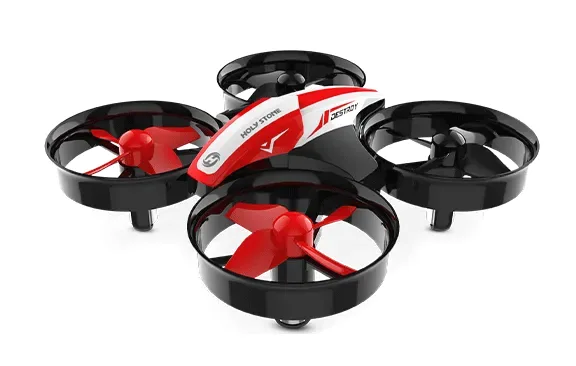
The short version
The Holy Stone HS210 is the pick for a first drone: its maker lists three batteries in the box, 9 minutes per battery, propeller guards and plain-spoken limits on outdoor use. The Contixo F15 Astro is the runner-up for kids who want a camera, because the remote has its own 2.4 inch screen and no phone is needed. The Snaptain K30 lists up to 18 minutes with two batteries and full propeller guards, but video runs through a phone app. The Force1 Scoot suits ages 8 and up who want a hand-guided flyer with no controller, and the Potensic ATOM SE is a step up for a teen ready for GPS, with guards sold separately. Skip the Sharper Image Pocket Video Drone: its listing gives no flight time and a 30 m range. Best for: parents buying a child's first drone.
Our picks at a glance
- Holy Stone HS210 - Buy. A 24.8 g indoor trainer with three batteries in the box and no camera to distract a beginner.
- Contixo F15 Astro Mini Drone - Buy. A 68 g mini with a 720p camera and a remote that has its own 2.4 inch screen, so no phone is needed.
- Snaptain K30 Mini Drone - Buy. An indoor kids drone that lists up to 18 minutes of flying with two batteries and full propeller guards.
- Force1 Scoot - It depends. A hand-guided flying ball with a webbed shell, made for ages 8 and up and flown with no controller.
- Potensic ATOM SE - It depends. A foldable GPS drone with a 4K-capable camera and up to 31 minutes per battery, aimed at a teen who has outgrown toys.
- Sharper Image Pocket Video Drone - Skip. A folding phone-controlled mini whose listing leaves out flight time and the beginner aids found on rivals.
The verdict in 30 seconds
What mattered most
- Camera
- Flight time (maker)
- Batteries listed
- How it is flown
- Weight (maker)
- Propeller protection
Kids' drones are a different shopping problem from camera drones. The first flights end in walls, furniture and ceilings, so battery count, protected rotors and a short learning curve matter more than sensor size. We compared six models from six brands using only what each maker or retailer page states: a no-camera indoor trainer, two camera minis, a hand-guided flying ball, a GPS drone for teens and one listing to pass on. For adult camera flying see our best camera drones review, and for ground toys our best RC cars review.
A 24.8 g indoor trainer with three batteries in the box and no camera to distract a beginner.
Best for: Parents buying a first drone for a younger child who will fly indoors and crash often.
- Holy Stone lists three batteries in the box, each rated up to 9 minutes in a windless room, so a session can run through several flights before a recharge.
- The maker lists altitude hold, headless mode, 3 speed modes and 360 degree flips, plus propeller guards and spare propellers with a screwdriver.
- Holy Stone's FAQ is plain about limits: indoor first, outdoors only in calm, windless conditions, and close adult supervision for children under 10.
- There is no camera and no GPS, so it cannot record anything or return home on its own.
- The transmitter takes AAA batteries that are not included, and the maker puts transmitter range at 50 m outdoors with a clear line of sight.
- The guards do not remove all risk, per Holy Stone itself, and the maker says suitability depends on the child's coordination and the age guidance on the packaging.
Own the Holy Stone HS210? Tell us how it held up.
Thanks. Counted, and shown once enough owners have weighed in.
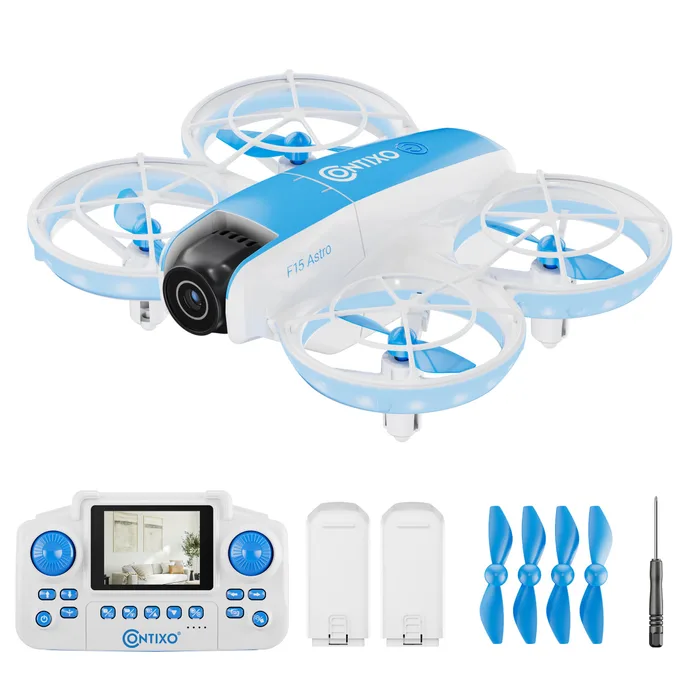
A 68 g mini with a 720p camera and a remote that has its own 2.4 inch screen, so no phone is needed.
Best for: Kids who want a camera and a screen on the remote, with no phone involved.
- Contixo's page says the 2.4 inch screen remote shows live video with no phone or app required, which suits a child without a device.
- The listing gives a 720p camera at 30 fps with a lens that tilts from -90 to 90 degrees, one-click takeoff and landing, and optical flow hover.
- Two rechargeable batteries are in the box, a 40 minute charge time is listed, and the flight weight is stated as 68 g.
- Flight time is listed at up to 6 minutes per battery, the shortest per-battery figure among the camera models that publish one.
- Video transmission is listed at up to 150 ft, with control range up to 350 ft.
- The listing text does not describe propeller guards or an age grade, so check the box and manual before buying for a young child.
Own the Contixo F15 Astro Mini Drone? Tell us how it held up.
Thanks. Counted, and shown once enough owners have weighed in.
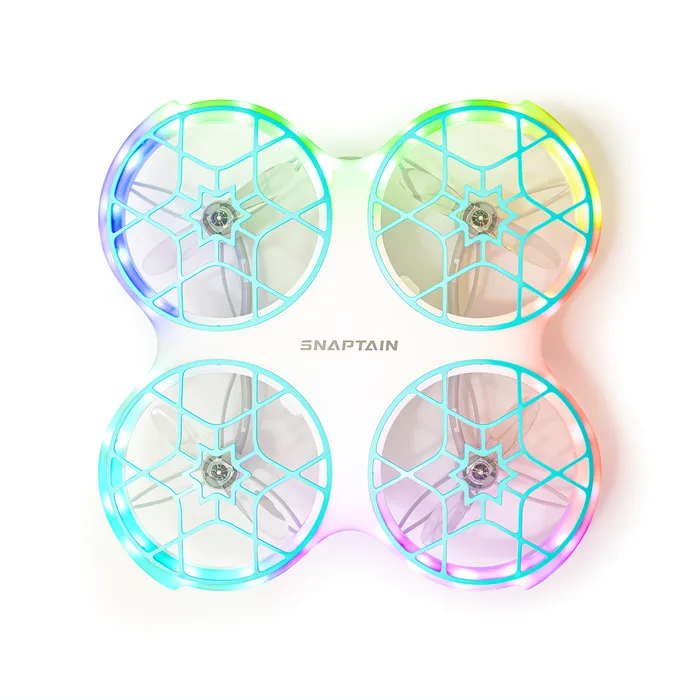
An indoor kids drone that lists up to 18 minutes of flying with two batteries and full propeller guards.
Best for: Families with a spare phone or tablet who want a camera drone with guards and longer sessions.
- Snaptain lists up to 18 minutes of flight time with the two included batteries, the longest listed total among the indoor camera drones here.
- The page highlights full propeller guards, altitude hold, headless mode, one-key takeoff and landing, and 3D flips.
- It has a 720P Wi-Fi camera with an 80 degree manually adjustable angle, 32 RGB lights and a buzzer button to help find a lost drone.
- Live video runs through a phone app over Wi-Fi, so the child needs a compatible phone or tablet to see the camera view.
- Weight, control range and any age grade are not published on the product page.
- The listing calls it an indoor drone and gives two speeds, so it is built for living-room practice rather than outdoor flying.
Own the Snaptain K30 Mini Drone? Tell us how it held up.
Thanks. Counted, and shown once enough owners have weighed in.
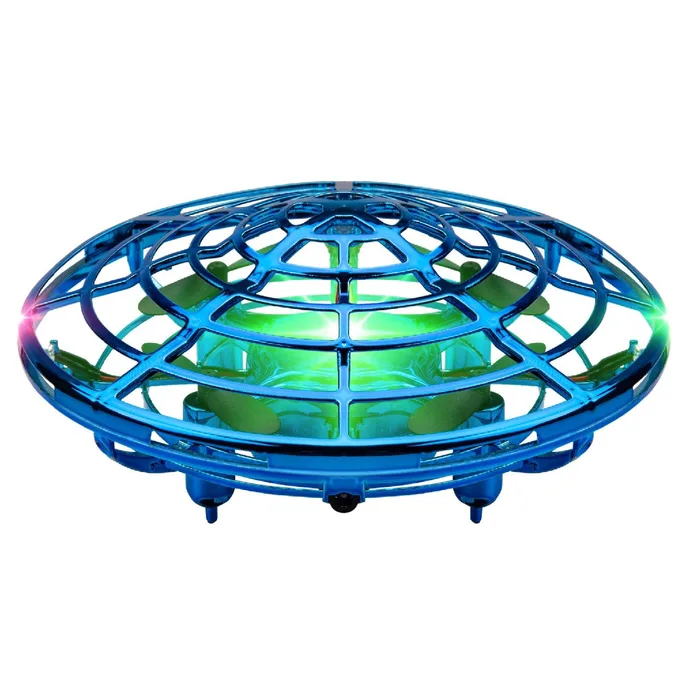
A hand-guided flying ball with a webbed shell, made for ages 8 and up and flown with no controller.
Best for: Kids aged 8 and up who want a catch-style flying toy and no controller.
- Force1 lists it for ages 8 and up, which makes it one of the few models here with a maker-stated age.
- It is flown by hand: toss it to launch, and its motion sensors react to your hand, so there is no remote to learn.
- The webbed shell is described by the maker as protecting hands, walls and furniture from the propellers.
- Force1 lists about 8 minutes of flight per charge and about 50 minutes to recharge.
- It has no camera and is not a learn-to-fly trainer, because it is steered by hand rather than with sticks.
- The page describes it as an indoor hover drone, and weight and range are not published.
Own the Force1 Scoot? Tell us how it held up.
Thanks. Counted, and shown once enough owners have weighed in.
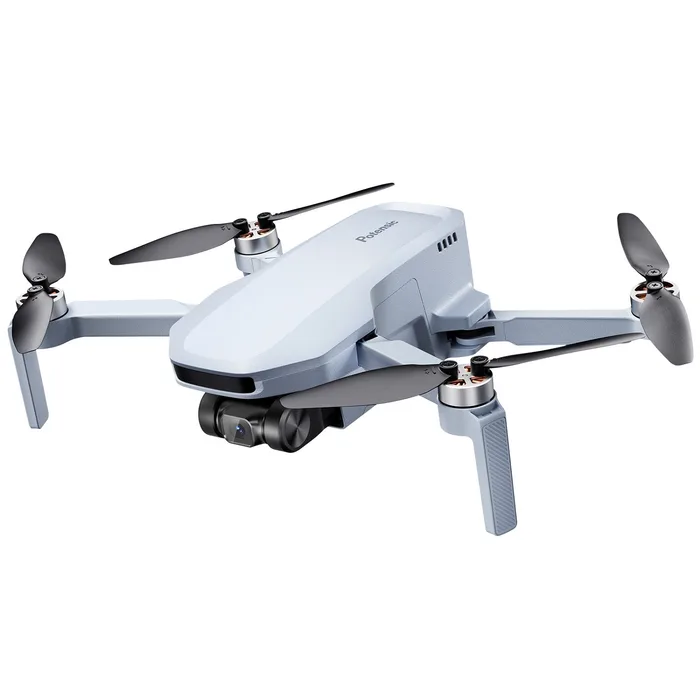
A foldable GPS drone with a 4K-capable camera and up to 31 minutes per battery, aimed at a teen who has outgrown toys.
Best for: A responsible teen who is ready for GPS flying outdoors and whose family has read the FAA registration rules.
- Potensic lists a takeoff weight under 249 g, a 12 MP camera, 4K video up to 30 fps and a 4 km transmission range.
- It has a dedicated return-to-home button, GPS-assisted modes such as Follow Me and Circle Flight, and three flight modes: Video, Normal and Sport.
- Each battery is rated up to 31 minutes, and the store sells dual and triple battery kits.
- It has a downward vision system with a 0.3 to 5 m hover range, but no obstacle sensing is listed, so crashes are still on the pilot.
- Propeller guards are a separate accessory: Potensic says a 30 g set takes takeoff weight over 250 g, limits the drone to Beginner Mode, and asks owners to follow local laws.
- It is flown with a phone through the PotensicPro app, connected by a USB OTG cable, and no age grade is stated.
Own the Potensic ATOM SE? Tell us how it held up.
Thanks. Counted, and shown once enough owners have weighed in.
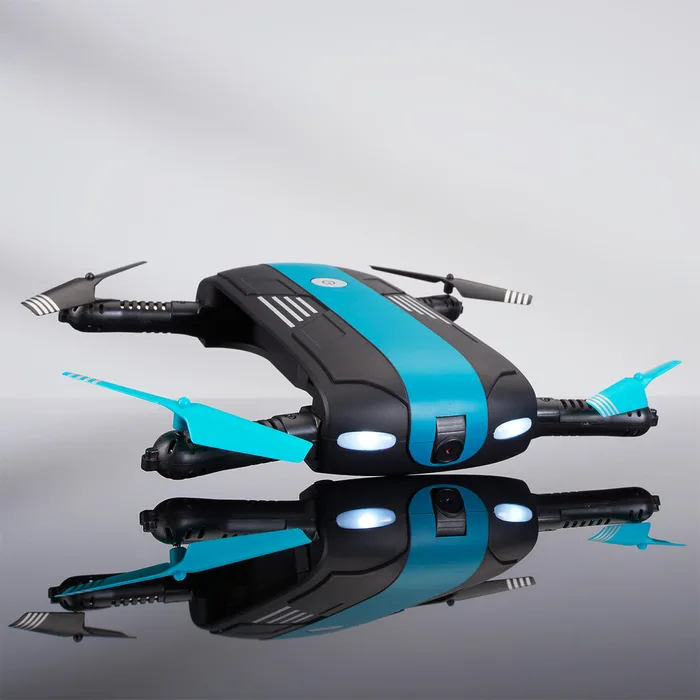
A folding phone-controlled mini whose listing leaves out flight time and the beginner aids found on rivals.
Best for: Buyers who want a folding gift-style drone and accept an unlisted flight time.
- The listing says it folds for transport and includes a travel pouch, extra blades and a USB charger.
- It lists a 720p camera, three speeds, 360 degree flips, one-key takeoff and landing, and an emergency stop.
- The retailer lists a 1-year limited replacement warranty and an age grade of 10+.
- The product page publishes a charge time of 75 minutes but no flight time, so you cannot compare it with the other drones here.
- Control range is listed at 30 m (98.4 ft), and altitude hold, headless mode and propeller guards are not listed.
- It is controlled only through a phone app, and the compatibility list names old versions, iPhone/iPad 5.1.1+ and Android OS 2.2+.
Own the Sharper Image Pocket Video Drone? Tell us how it held up.
Thanks. Counted, and shown once enough owners have weighed in.
| Criteria | Holy Stone HS210 Top pick Buy it Buy | Contixo F15 Astro Mini Drone Buy it Buy | Snaptain K30 Mini Drone Buy it Buy | Force1 Scoot It depends Buy | Potensic ATOM SE It depends Buy | Sharper Image Pocket Video Drone Skip it Buy |
|---|---|---|---|---|---|---|
| Best for | Parents buying a first drone for a younger child who will fly indoors and crash often. | Kids who want a camera and a screen on the remote, with no phone involved. | Families with a spare phone or tablet who want a camera drone with guards and longer sessions. | Kids aged 8 and up who want a catch-style flying toy and no controller. | A responsible teen who is ready for GPS flying outdoors and whose family has read the FAA registration rules. | Buyers who want a folding gift-style drone and accept an unlisted flight time. |
| Price tier | $ · budget | $$ · mid-range | $$ · mid-range | $ · budget | $$$ · premium | $$ · mid-range |
| Camera | None | 720p at 30 fps, 2.4 inch remote screen | 720P Wi-Fi camera, viewed in the app | None | 12 MP, 4K video up to 30 fps | 720p, viewed on a phone |
| Flight time (maker) | Up to 9 min per battery | Up to 6 min per battery | Up to 18 min with 2 batteries | About 8 min per charge | Up to 31 min per battery | Not stated |
| Batteries listed | 3 in the box | 2 in the box | 2 in the box | USB charging cable, count not stated | Dual or triple battery kits | One rechargeable battery |
| How it is flown | Transmitter, AAA batteries not included | Remote with built-in screen | Remote plus phone app for video | Hand motion, no controller | Controller with phone over USB OTG cable | Smartphone app |
| Weight (maker) | 24.8 g | 68 g flight weight | Not published | Not published | Under 249 g | 0.4 lbs on retailer page |
| Propeller protection | Guards, which Holy Stone says do not remove all risk | Not described in listing text | Full propeller guards | Webbed shell | Guards sold separately (30 g per set) | Not listed |
| Age or supervision note | Close adult supervision under 10 | Not stated | Not stated | Ages 8 and up | Not stated | Ages 10+ |
| Range (maker) | 50 m transmitter, outdoors, clear line of sight | Up to 350 ft control, 150 ft video | Not published | Not published | Up to 4 km transmission | 30 m (98.4 ft) |
Which one is right for you?
- Parents buying a first drone for a younger child who will fly indoors and crash often. Buy it Holy Stone HS210
- Kids who want a camera and a screen on the remote, with no phone involved. Buy it Contixo F15 Astro Mini Drone
- Families with a spare phone or tablet who want a camera drone with guards and longer sessions. Buy it Snaptain K30 Mini Drone
- Kids aged 8 and up who want a catch-style flying toy and no controller. It depends Force1 Scoot
- A responsible teen who is ready for GPS flying outdoors and whose family has read the FAA registration rules. It depends Potensic ATOM SE
- Buyers who want a folding gift-style drone and accept an unlisted flight time. Skip it Sharper Image Pocket Video Drone
How we judged the field
Five things matter in a kids’ drone. Battery count and flight time per battery decide how long a session lasts. Protection, meaning propeller guards or a shell, matters because crashes are expected. Beginner aids such as altitude hold and headless mode shorten the learning curve. The camera setup, whether a screen on the remote or a phone app, decides what else a child needs. Age or supervision guidance comes only from the maker or retailer.
The field splits into indoor mini drones with controllers, hand-guided flyers, and GPS camera drones for teens. We picked one trainer, two camera minis, a hand-guided ball, a GPS teen drone and one listing to skip, from six brands. The DJI drones in our best camera drones review are not repeated here. Every figure comes from a product page we loaded, and where a page is silent we say not stated.
Holy Stone HS210
Buy itThe HS210 is the drone we would hand a younger child first. Holy Stone’s own page calls it an indoor mini drone for kids and beginners, and it is upfront that it is not a camera drone or an outdoor GPS drone. The box lists three batteries, each rated up to 9 minutes in a windless room, plus four spare propellers and a screwdriver. It weighs 24.8 g, has altitude hold, headless mode and three speed modes, and Holy Stone says its propeller guards reduce contact with the blades but do not remove all risk. The FAQ asks for close adult supervision for children under 10 and tells you to fly in an open room away from people, pets, fans and fragile items. Outdoors it is for calm, windless days only, and the transmitter needs AAA batteries that are not included. Because it has no camera, there is nothing to learn but the flying. It is for parents who want a cheap, forgiving first drone for a child.
Contixo F15 Astro Mini Drone
Buy itThe F15 Astro answers the question many parents have: can my child see what the drone sees without a phone? Contixo’s page says the 2.4 inch screen remote shows the 720p, 30 fps camera feed with no phone or app, and the lens tilts from -90 to 90 degrees. It lists one-click takeoff and landing, optical flow hover and 360 degree rolls, and puts the flight weight at 68 g. The trade-off is time in the air: up to 6 minutes per battery, with two in the box and a 40 minute charge time, so a session means swapping packs and waiting. Control range is listed at up to 350 ft and video transmission at up to 150 ft. The listing text does not mention propeller guards or give an age grade, so check the packaging if the flyer is young. It suits a child who wants a camera and a self-contained kit, and who will fly short, frequent flights.
Snaptain K30 Mini Drone
Buy itThe K30 is the longer-flying camera option among the small indoor drones. Snaptain lists up to 18 minutes with the two included batteries, an 80 degree manually adjustable 720P Wi-Fi camera, and a heading on the page for full propeller guards. It also lists altitude hold, headless mode, one-key takeoff and landing, 3D flips, 32 RGB lights with six modes and a buzzer to help locate a lost drone. Two speeds are offered, and the title calls it an indoor drone. The catch is that video appears in a phone app, so a child needs a compatible phone or tablet nearby. The product page does not publish weight, range or an age grade, and the 18 minute figure is the combined total of two batteries, not one flight. If you already have a spare device and want longer sessions than the F15 offers, the K30 is the better fit.
Force1 Scoot
It dependsThe Scoot is a different kind of kids drone: there is no remote at all. Force1’s page says you toss it to launch, motion sensors let your hand guide it, and you can play catch with it. The maker lists it for ages 8 and up, calls the webbed shell protection for hands, walls and furniture, and gives its diameter as 4.7 inches. Flight is about 8 minutes per charge, and about 50 minutes to recharge, so it is a play-in-bursts toy. It has no camera and teaches no stick skills, so it is not a stepping stone to a hobby drone. Weight and range are not published, and the page describes it as an indoor hover drone. That makes it a good gift for a child who will enjoy it for what it is, and a poor choice for a child who wants to learn to fly a real quadcopter with sticks.
Potensic ATOM SE
It dependsThe ATOM SE is the step up for a teen, not a toy for a young child. Potensic lists a takeoff weight under 249 g, a 12 MP sensor, 4K video up to 30 fps, GPS-assisted modes, a dedicated return-to-home button and up to 31 minutes per battery, with a 4 km transmission range. It flies with a phone through the PotensicPro app over a USB OTG cable. Be clear about the gaps: the spec table lists a downward vision system but no obstacle sensing, and propeller guards are a separate accessory. Potensic says a 30 g guard set takes takeoff weight over 250 g, limits the drone to Beginner Mode, and asks owners to follow local laws. No age grade is stated. The FAA’s registration rules turn on the 250 g line, so read its page before buying for any teen. It is for a responsible teen with an adult involved.
Sharper Image Pocket Video Drone
Skip itThe Pocket Video Drone is the one we would pass on. Sharper Image lists a folding body, a 720p camera, three speeds, 360 degree flips, one-key takeoff and landing, an emergency stop and a 30 m (98.4 ft) range. Those are fine basics, but the page gives a 75 minute charge time and never states a flight time, which is the number a parent most needs. Altitude hold, headless mode and propeller guards, the aids that make first flights easier on rivals, are not listed. Control is through a phone app, and the compatibility line names iPhone/iPad 5.1.1+ and Android OS 2.2+, which reads as dated. On the plus side, the retailer lists ages 10+ and a 1-year limited replacement warranty. Buyers who want a folding gift-style drone and accept the missing flight time could be content, but the Holy Stone HS210 and Contixo F15 publish more and give a beginner more help.
Sources
Specs in this review come from these pages.
- Holy Stone, HS210 product page and specs (holystone.com)
- Contixo, F15 Astro Mini Drone product page (contixo.com)
- Snaptain, K30 Mini Drone product page (snaptain.com)
- Force1, Scoot product page (force1rc.com)
- Potensic, ATOM SE product page (store.potensic.com)
- Sharper Image, Pocket Video Drone product page (sharperimage.com)
- FAA, How to Register Your Drone (faa.gov)
Holy Stone HS210 vs Contixo F15 Astro Mini Drone: which should you buy?
The two top picks solve different problems. The Holy Stone HS210 is a no-camera trainer: three batteries in the box, 9 minutes each, guards, and a maker that tells you to keep it indoors and supervise under-10s. It is the one to buy when the goal is learning to fly and surviving crashes. The Contixo F15 Astro adds a camera and a remote screen, but trades away flight time, at up to 6 minutes per battery with two in the box, and its listing text says nothing about guards.
Choose the HS210 for a younger child, or for any child who just wants to fly. Choose the F15 if the camera is the point and no phone is available. If a phone is available and longer sessions matter, look at the Snaptain K30, which lists up to 18 minutes with two batteries and full propeller guards. All three are indoor-first drones, and the makers’ own wording on outdoor use is more cautious than most listing titles.
Who should buy which
- Parents buying a first drone for a younger child: the Holy Stone HS210. Three batteries, guards and plain guidance on indoor use and supervision.
- Kids who want a camera without a phone: the Contixo F15 Astro Mini Drone. The remote has a 2.4 inch screen that shows the 720p feed, though flights are up to 6 minutes per battery.
- Families with a spare phone who want longer flights: the Snaptain K30 Mini Drone. It lists up to 18 minutes with two batteries and full propeller guards, with video in a phone app.
- Children ages 8 and up who want a no-controller toy: the Force1 Scoot. It is flown by hand and Force1 lists it for ages 8 and up, with about 8 minutes per charge.
- A responsible teen ready for GPS flying: the Potensic ATOM SE. It lists up to 31 minutes per battery and a 4K camera, with guards sold separately.
What to look for
- Batteries in the box: Per-battery flight time is short on small drones, so a model with three batteries gives a much longer session than one with a single pack.
- Propeller protection: Look for guards or a shell on the maker’s page, and read what the maker says about their limits. Holy Stone says its guards do not remove all risk.
- Age and supervision wording: Use only what the maker states. Force1 says ages 8 and up, Sharper Image says 10+, and Holy Stone points to the packaging and asks for close supervision under 10.
- Screen or phone for video: A screen on the remote avoids needing a device, while a phone-app camera needs a compatible phone or tablet within reach.
- Weight and registration: The FAA says drones under 250 grams flown under the recreational exception are exempt from registration, and accessories can change the weight, as Potensic notes for its guards.
- Indoor or outdoor wording: Small, light drones are affected by wind, so follow the maker’s guidance on where to fly. Holy Stone limits the HS210 outdoors to calm, windless days.
Our final take
For most families the Holy Stone HS210 is the right first drone: three batteries, guards, clear limits and no camera to complicate a first week. Move to the Contixo F15 Astro if a camera on a self-contained remote is the draw, or the Snaptain K30 if you want longer sessions and have a spare phone. The Force1 Scoot is a gift for ages 8 and up who want a hand-guided toy, and the Potensic ATOM SE is for a teen with an adult involved. Skip the Sharper Image Pocket Video Drone until its flight time is published. For ground toys instead, see our best RC cars review.
Questions, answered
What age is a kids drone suitable for?
Only a few makers state an age. Force1 lists the Scoot for ages 8 and up, and the Sharper Image Pocket Video Drone page says ages 10+. Holy Stone does not give a number for the HS210. Its FAQ says suitability depends on the child's coordination and the age guidance on the current packaging, and that children under 10 should fly only with close adult supervision. The Contixo, Snaptain and Potensic pages we read give no age grade, so read the box before you buy.
Do I need to register a child's drone?
The FAA says all drones must be registered, except those that weigh 0.55 pounds or less (less than 250 grams) and are flown under the Exception for Limited Recreational Operations. It also says an owner under 13 needs a person 13 or older to register the drone. Holy Stone lists the HS210 at 24.8 g, Contixo lists the F15 at 68 g, and Potensic says the ATOM SE is under 249 g, but Potensic also says its guards take takeoff weight over 250 g. Check the FAA page for your own situation.
Can these drones fly outdoors?
It depends on the model and the maker's wording. Holy Stone says the HS210 is designed mainly for indoor flying and can be flown outdoors only in calm, windless conditions, because it is very small and light. Force1 describes the Scoot as an indoor hover drone, and Snaptain titles the K30 an indoor drone. The Potensic ATOM SE is the one built for outdoor GPS flying, with a level 5 wind resistance listing. Contixo describes the F15 as suited to indoor or outdoor use, and Sharper Image says its drone can fly indoors or outdoors.
How long will a kids drone fly per charge?
Short flights are normal at this size, so battery count matters. Holy Stone lists up to 9 minutes per battery with three in the box, Contixo up to 6 minutes per battery with two, and Snaptain up to 18 minutes with two batteries. Force1 lists about 8 minutes per charge, and Potensic lists up to 31 minutes per battery on the ATOM SE. The Sharper Image page gives a charge time but no flight time. Maker figures are best-case numbers, so expect less.
Is a camera worth having on a first drone?
It depends on the child. Holy Stone argues that a no-camera drone keeps a beginner focused on stick control, and its FAQ suggests moving to a camera model once the basics feel natural. The Contixo F15 shows live video on the remote's own screen, which avoids needing a phone, while the Snaptain K30 needs a phone app for the camera view. If your child mostly wants to crash and retry indoors, the cheapest no-camera trainer is the safer purchase.
Deciding between the top two? See our head-to-head: Holy Stone HS210 vs Contixo F15 Astro Mini Drone.
More in Tech & Gadgets
Kids Drones, Explained Plain-English guide → Holy Stone HS210 vs Contixo F15 Astro Mini Drone Head-to-head →  Kids Telescopes: Which to Buy and Which to Skip
 The Best Label Makers: 4 Compared (and One to Skip)
 Which Laptop Sleeve Should You Buy? 6 Compared
 The Best Smart LED Strip Lights: 4 Compared (and One to Skip)