

Automotive
The Best Iron Removers: 4 Compared (and One to Skip)
We compared four iron and fallout removers on pH claims, sizes and stated dwell behaviour, and all four lean on a pH claim that none of them puts a number to.
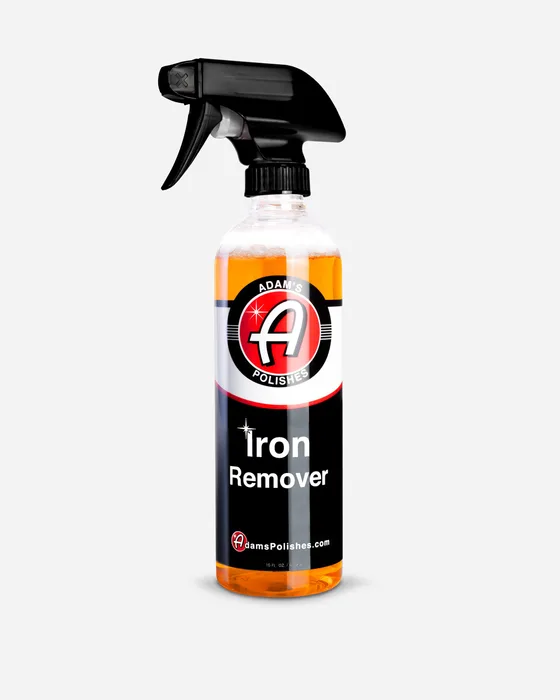
The short version
Adam's Iron Remover is the pick because it is the most specific: acid-free, pH balanced, ready to use with no dilution, and the brand tells you to use its thicker wheel cleaner on wheels instead, which is a rare piece of honest steering away from a sale. P&S Iron Buster is the value buy and the one to get if you have more than one car, sold in pint, gallon and five gallon sizes as a pH balanced cleaner for both wheels and paint. Turtle Wax Rapid-Decon is the depends pick, a pH-neutral 23 ounce bottle that is plenty for one car and nothing more. Skip Chemical Guys Decon Pro. It is sold as both an iron remover and a wheel cleaner in a single 16 ounce size, with a pH balanced claim but no dwell time and no guidance on which job needs what. Best for: anyone whose paint still feels gritty after a clay bar, or whose wheels will not come clean with soap.
Our picks at a glance
- Adam's Polishes Iron Remover - Buy. The most specific label in the category, and it points you at a different product for wheels.
- P&S Detail Products Iron Buster Wheel & Paint Decon Remover - Buy. One pH balanced product for wheels and paint, in sizes that assume you decontaminate more than one car.
- Turtle Wax Hybrid Solutions Rapid-Decon Iron Remover, 23 fl oz - It depends. A pH-neutral bottle sized for exactly one car, which is either the right amount or not enough.
- Chemical Guys Decon Pro Iron & Fallout Remover - Skip. Sold as an iron remover and a wheel cleaner in one 16 ounce bottle, with a pH balanced claim but no dwell time or guidance on either job.
The verdict in 30 seconds
What mattered most
- pH claim
- pH figure
- Active ingredient named
- Dwell time stated
- Dilution
- Surfaces claimed
An iron remover dissolves the embedded ferrous particles that a wash cannot lift: brake dust welded into wheel faces and the rail dust that lands on paint and rusts in place. The chemistry turns purple as it works, which makes it the most satisfying product in detailing and one of the least specified. Every product here leans on a pH claim. None publishes a pH figure, none names the active ingredient, and only one states a dwell time.
The most specific label in the category, and it points you at a different product for wheels.
Best for: Decontaminating paint before polishing or coating, where being told the product is acid-free and safe on single stage matters.
- Stated as acid-free and pH balanced, and specifically described as safe on clear coat and single stage paint.
- Ready to use with no dilution needed, which removes the main way people get this product wrong.
- Low-odour formula, which matters because this chemistry is genuinely unpleasant in a closed garage.
- Sizes from 16 ounces up to five gallons, so it scales from one car to a fleet.
- No pH figure published, only the phrase pH balanced.
- The active chemistry is not named anywhere on the page.
- No dwell time given, so how long to leave it on is left to you.
- Adam's states its own wheel cleaner is the better choice on wheels, which means one product does not cover both jobs.
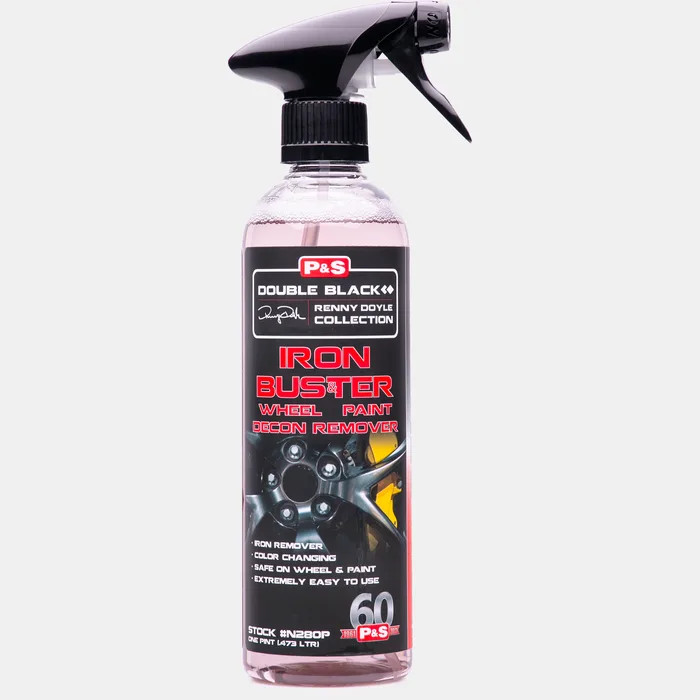
One pH balanced product for wheels and paint, in sizes that assume you decontaminate more than one car.
Best for: Anyone decontaminating several vehicles, or doing wheels and paint in the same session without switching bottles.
- pH balanced and described as safely dissolving ferrous particulate from both wheels and painted surfaces.
- Colour changing and fast acting, so you can see the reaction and judge when it has finished.
- Pint, gallon and five gallon sizes, the widest practical range here for regular use.
- Sold as a single product for both jobs, so you are not buying two chemicals.
- No pH figure, same as everything else in this comparison.
- No dwell time or coverage figure published.
- The active ingredient is not named.
- The smallest size is a pint, which is more than a one-car owner needs to buy at once.
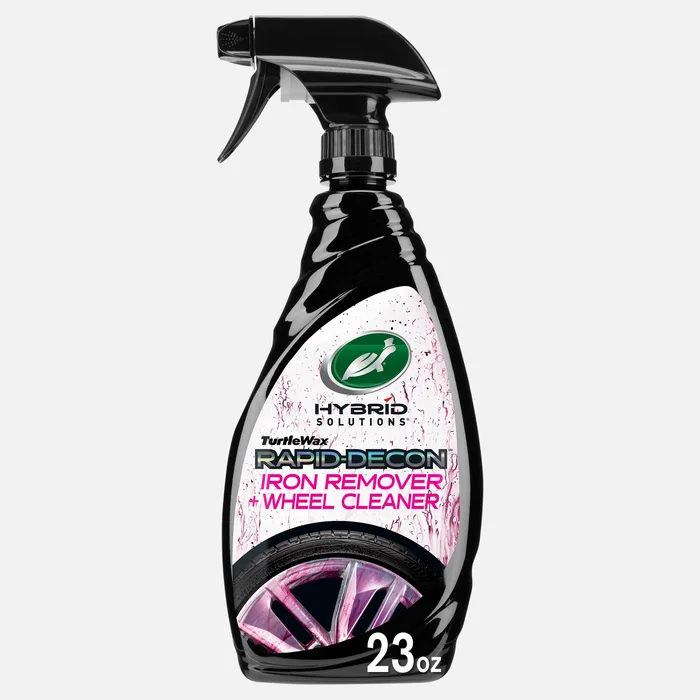
A pH-neutral bottle sized for exactly one car, which is either the right amount or not enough.
Best for: A one-car owner doing a decontamination once or twice a year, where the small bottle is the right size rather than a limitation.
- Uses the phrase pH-neutral rather than pH balanced, which is the narrower and more useful claim.
- Stated as safe on painted surfaces, not just wheels and tires.
- 23 fluid ounces at the budget tier, so trying it costs very little.
- States a dwell time of 2 to 4 minutes with the surface kept wet, the only one here that does.
- Single size only, so there is no way to scale up if you like it.
- The safety claim is framed against unnamed other cleaners for wheels and tires, which is a comparison you cannot check.
- No pH figure and no active ingredient named.
- 23 ounces will do one car's wheels and paint once, and then you are buying another bottle.
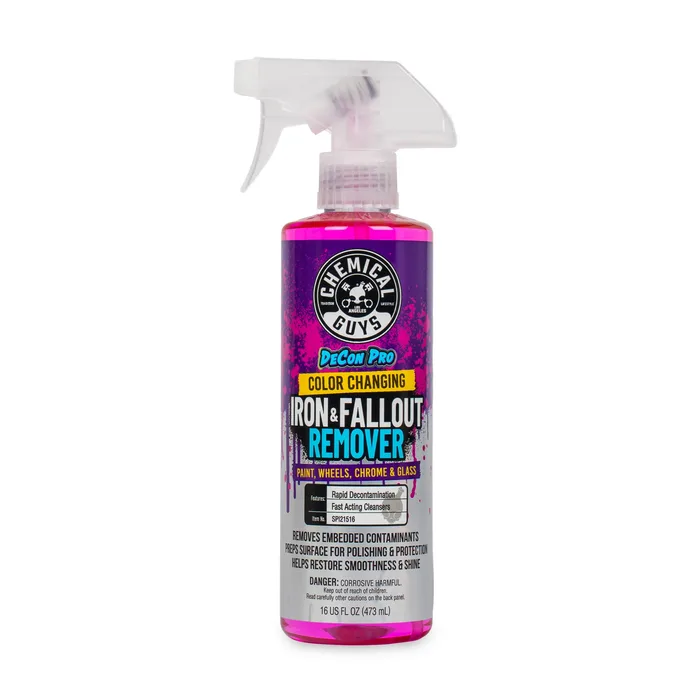
Sold as an iron remover and a wheel cleaner in one 16 ounce bottle, with a pH balanced claim but no dwell time or guidance on either job.
Best for: Almost nobody as a first purchase. The chemistry may well be fine, and the page gives you little to check it against.
- Stated as working on paintwork, chrome, glass and wheels, which is the widest surface list here.
- Colour changing so the reaction is visible.
- Spray-on application with no mixing required.
- No pH figure and no active ingredient named, the same gap as the rest of the field.
- One 16 ounce size only, the smallest in this comparison, on a product also sold as a wheel cleaner.
- No dwell time and no coverage figure, so you cannot plan a car around a bottle.
- Marketed for two jobs with very different contamination loads without saying whether the strength suits both.
| Criteria | Iron Remover Top pick Buy it Buy | Iron Buster Wheel & Paint Decon Remover Buy it Buy | Hybrid Solutions Rapid-Decon Iron Remover, 23 fl oz It depends Buy | Decon Pro Iron & Fallout Remover Skip it Buy |
|---|---|---|---|---|
| Best for | Decontaminating paint before polishing or coating, where being told the product is acid-free and safe on single stage matters. | Anyone decontaminating several vehicles, or doing wheels and paint in the same session without switching bottles. | A one-car owner doing a decontamination once or twice a year, where the small bottle is the right size rather than a limitation. | Almost nobody as a first purchase. The chemistry may well be fine, and the page gives you little to check it against. |
| Price tier | $$ · mid-range | $$ · mid-range | $ · budget | $$ · mid-range |
| pH claim | pH balanced, acid-free | pH balanced | pH-neutral | pH balanced |
| pH figure | Not published | Not published | Not published | Not published |
| Active ingredient named | No | No | No | No |
| Dwell time stated | No | No | Yes, 2 to 4 minutes | No |
| Dilution | Ready to use, stated | Not stated | Not stated | Not stated |
| Surfaces claimed | Clear coat and single stage paint, wheels | Wheels and paint | Wheels, brake components, painted surfaces | Paint, chrome, glass, wheels |
| Sizes | 16 oz to 5 gallon | Pint, gallon, 5 gallon | 23 fl oz | 16 oz |
| Steers you elsewhere for wheels | Yes, to its own wheel cleaner | No | No | No |
Which one is right for you?
- Decontaminating paint before polishing or coating, where being told the product is acid-free and safe on single stage matters. Buy it Adam's Polishes Iron Remover
- Anyone decontaminating several vehicles, or doing wheels and paint in the same session without switching bottles. Buy it P&S Detail Products Iron Buster Wheel & Paint Decon Remover
- A one-car owner doing a decontamination once or twice a year, where the small bottle is the right size rather than a limitation. It depends Turtle Wax Hybrid Solutions Rapid-Decon Iron Remover, 23 fl oz
- Almost nobody as a first purchase. The chemistry may well be fine, and the page gives you little to check it against. Skip it Chemical Guys Decon Pro Iron & Fallout Remover
How we judged the field
Five things decide an iron remover. The pH claim comes first, because the entire reason this chemistry replaced acidic wheel cleaners is that it removes iron without attacking coatings, polished alloy or bare metal, and the label wording is the only evidence you get. Second is whether the product is ready to use or a concentrate, since diluting a decontamination chemical wrongly is the common way to waste an afternoon. Third is the surface list, because a product cleared for wheels is not automatically cleared for single stage paint. Fourth is size range, since decontamination uses far more product than people expect. Fifth is what the brand tells you about dwell, which in this comparison is nothing from three of the four.
The category splits by intent more than by chemistry. Some products are sold primarily as wheel cleaners with iron removal included, which usually means a thicker, more aggressive formulation. Others are sold as paint decontamination products and are thinner, milder and applied over a whole car. A few claim both jobs in one bottle. We took two paint-first products, one that claims both, and one budget bottle sized for a single car, which is how most people actually meet this category.
Adam’s Polishes Iron Remover
Buy itAdam’s Iron Remover is the one that tells you the most, and the detail that stands out is where it points you away from itself. The page states the formula is acid-free and pH balanced, safe on clear coat and single stage paint, ready to use with no diluting, and low odour. Then it adds that while the product can be used on wheels, the brand recommends its own wheel cleaner because that is thicker and more concentrated. That is a brand telling you its product is the wrong choice for a job you were about to use it for, and it is the most useful sentence on any page in this comparison. Single stage paint is worth flagging too: older cars without a clear coat are exactly where aggressive chemistry causes trouble, and this is the only page here that mentions them. The omissions are the category’s omissions. No pH figure, no named active, no dwell time. Sizes run from 16 ounces to five gallons.
P&S Detail Products Iron Buster Wheel & Paint Decon Remover
Buy itIron Buster is the same job for someone doing it more often. P&S describes a colour changing, fast acting, pH balanced cleaner formulated to safely dissolve ferrous particulate from wheels and painted surfaces, and the point of difference is that it genuinely intends to cover both. That saves buying two chemicals, and it means a single pass around the car with one bottle. The sizes reinforce who it is for: pint, gallon and five gallon, with no small consumer bottle, which is the professional supply pattern and the reason it works out cheaper for anyone decontaminating regularly. Fast acting is worth something in a category where the failure mode is letting product dry on a surface, since a quicker reaction means less standing time in the sun. What is missing is everything the category leaves out: no pH figure, no dwell guidance, no coverage estimate, and the active is not named. Buy it if a pint is not more than you will use.
Turtle Wax Hybrid Solutions Rapid-Decon Iron Remover, 23 fl oz
It dependsRapid-Decon is the one to weigh up rather than dismiss, and the deciding factor is the bottle. Turtle Wax uses the phrase pH-neutral rather than pH balanced, and that is the narrower and more meaningful of the two claims, so on wording alone this is arguably the most reassuring product here. It is stated as safe on painted surfaces as well as wheels and brake components, and it is the only page here that gives a dwell time, 2 to 4 minutes with the surface kept wet. Twenty-three fluid ounces at the budget tier means you can try the category for very little, and for a single car decontaminated once or twice a year that is close to the right amount. The limits are structural. There is only one size, so there is nowhere to go if you like it. The safety claim is framed as being unlike other cleaners for wheels and tires, which is a comparison against unnamed products that you cannot evaluate. And 23 ounces disappears quickly across four wheels and a full car, so the bottle that looked cheap becomes a repeat purchase.
Chemical Guys Decon Pro Iron & Fallout Remover
Skip itDecon Pro is the one we would leave, and the reasoning is what is absent rather than what is wrong. Chemical Guys describes an advanced contamination cleaner that removes embedded iron deposits and industrial fallout from paintwork, chrome, glass and wheels, which is the broadest surface list in this comparison, and it changes colour as it works. What the page does carry is a pH balanced claim, the same wording as Adam’s and P&S, with no figure behind it. There is no dwell time and no coverage figure. And it is sold in a single 16 ounce size while also being marketed as a wheel cleaner, which is a job with a much heavier contamination load than paint. Wheels and paint want different strengths, and the page picks one bottle for both without saying which it favours. The chemistry may be perfectly good. There is nothing here to check it with.
Sources
Specs in this review come from these pages.
Adam’s Polishes Iron Remover vs P&S Detail Products Iron Buster Wheel & Paint Decon Remover: which should you buy?
Adam’s Iron Remover and P&S Iron Buster make almost the same chemical claim and are aimed at different people. Adam’s is the more careful page: acid-free stated as well as pH balanced, single stage paint mentioned by name, ready to use spelled out, and an explicit pointer to a different product for wheels. If you are decontaminating paint before a polish or a coating, that specificity is worth having, and the 16 ounce bottle means you can buy exactly what you need.
Iron Buster is built to do the whole car in one pass and to keep doing it. It claims wheels and paint on one label, comes in pint, gallon and five gallon sizes, and is described as fast acting, which is the property that keeps you ahead of the product drying. The trade is that the smallest size is a pint and there is no advice about which surfaces want more care. Buy Adam’s if this is a once-a-year job on one car and you want the more cautious label. Buy Iron Buster if you have more than one vehicle, or you do wheels and paint in the same session and would rather carry one bottle.
What to look for
- The specific pH wording: neutral is a narrower claim than balanced, and none of the four gives a pH figure.
- Acid-free stated explicitly: it is the property that separates modern iron removers from the acidic wheel cleaners they replaced.
- Single stage paint mentioned: older cars without a clear coat are where aggressive chemistry does damage, and most pages do not address them.
- Ready to use versus concentrate: a product that says ready to use removes the most common way people get this wrong.
- A size that matches the job: decontamination uses more product than people expect, and a small bottle rarely covers wheels and a full car.
- Any dwell guidance at all: only Turtle Wax gives one, 2 to 4 minutes, so plan to work panel by panel and rinse before anything dries.
Our final take
This is a category built on a chemistry claim that nobody quantifies. All four products lean on pH, none prints a figure, none names the active, and only Turtle Wax tells you how long to leave it on, which is the one variable you control. Adam’s Iron Remover is the pick because its page is the most specific about surfaces and about dilution, and because it steers you to a different product for wheels rather than overselling. P&S Iron Buster covers wheels and paint in one bottle at trade sizes and is the better buy if you do this often. Turtle Wax uses the strongest pH wording of the four in a bottle sized for one car. Chemical Guys sells one product for two jobs in the smallest bottle here, with a pH balanced claim and nothing else to check it against, which is the one place a chemistry purchase should not leave you guessing.
Questions, answered
What is the purple actually showing me?
The active chemistry reacts with iron particles and forms a coloured complex, so the purple bleeding out of the paint or wheel is dissolved iron. It is a genuine indicator rather than a dye trick, and it is why the category feels so satisfying. What it does not tell you is how much iron is left, since the colour saturates. A second application that comes up much fainter is the usual sign the surface is clean.
Why does none of these publish a pH number?
There is no requirement to, and the words do more selling than a figure would. Every product here uses pH language because buyers have learned that acidic wheel cleaners damage bare metal, coatings and polished alloy, so the claim reassures. A number would be checkable and would also invite comparison, since pH balanced can cover a range while pH neutral means near 7. Three products here say balanced and one says neutral, and all four leave you taking the wording on trust.
How long should I leave it on the paint?
Only Turtle Wax states a dwell time, 2 to 4 minutes with the surface kept wet. The other three give none, which is a real omission because it is the main variable you control. The general practice is a few minutes on a cool surface in shade, watching for the colour change to stop developing, then rinsing thoroughly before it dries. Letting any of this chemistry dry on paint or wheels is where staining and etching happen. Work panel by panel rather than doing a whole car at once.
Do I still need a clay bar if I use an iron remover?
Usually yes, because they remove different things. Iron removers dissolve ferrous particles chemically and do nothing to the non-metallic contamination, which includes overspray, tree sap residue, industrial fallout that is not iron, and road tar. Clay lifts that mechanically. The efficient order is to wash, chemically decontaminate with an iron remover, then clay whatever still feels rough, which usually means far less claying and therefore less marring.
Is it safe on wheels with a coating or on polished alloy?
An acid-free, pH neutral product is far safer on both than a traditional acidic wheel cleaner, which is the whole reason this chemistry took over. Adam's states acid-free explicitly and Turtle Wax states pH-neutral. Even so, polished and bare alloy, anodised finishes and older aftermarket wheels are the surfaces where problems appear, so test a small area and never let the product dry. If the wheel finish is unknown, that test is worth the two minutes.
Deciding between the top two? See our head-to-head: Adam's Polishes Iron Remover vs P&S Detail Products Iron Buster Wheel & Paint Decon Remover.
More in Automotive
Iron Removers, Explained Plain-English guide → Adam's Polishes Iron Remover vs P&S Detail Products Iron Buster Wheel & Paint Decon Remover Head-to-head →  The Best Jack Stands: 4 Compared (and One to Skip)
  The Best Portable Jump Starters: 4 Compared (and One to Skip)
  The Best Leather Conditioners: 4 Compared (and One to Skip)
  The Best LED Headlight Bulbs: 4 Compared (and One to Skip)