

Outdoors & Fitness
The Best Handheld GPS Units: 4 Compared (and One to Skip)
We compared four current Garmin handhelds on satellite support, battery type and life, screen, preloaded maps, water rating and phone pairing.
The short version
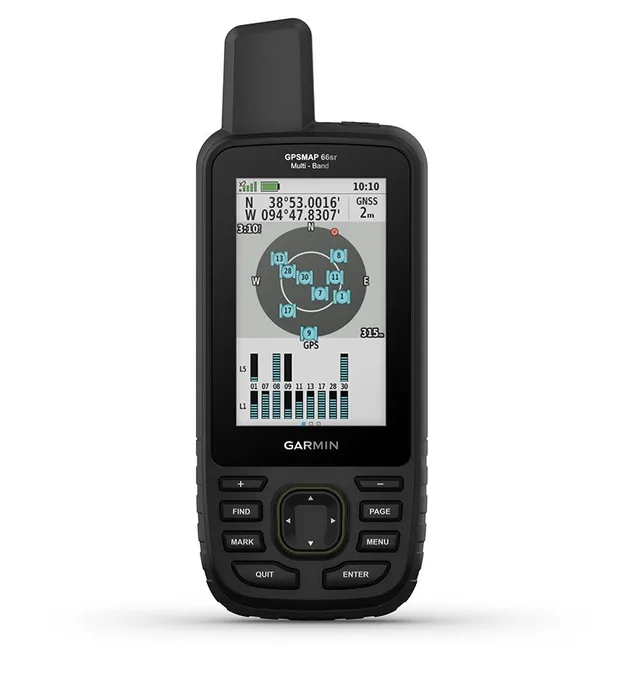
The Garmin GPSMAP 66sr is the pick for most serious hikers: multi-band support, a rechargeable battery rated up to 36 hours, and a 3-inch screen. The GPSMAP 65 is the value pick because it lists the same multi-band support and satellite systems and runs on swappable AA batteries, rated up to 16 hours. The Montana 700 depends: its 5-inch touchscreen is excellent for reading maps from a vehicle or camp, but it is heavy and Garmin lists no multi-band support for it. The eTrex 22x is the skip for most buyers, because it lists GPS and GLONASS only and has no Bluetooth to pair with a phone. If your trips are short and the terrain is open, a phone with offline maps may do, and our GPS running watches comparison covers wrist-worn options. Best for: the 66sr if you hike often and want the longest battery, the 65 if you want multi-band accuracy and spare AAs for less.
Our picks at a glance
- Garmin GPSMAP 66sr - Buy. A multi-band handheld with a 3-inch screen and a rechargeable battery rated up to 36 hours.
- Garmin GPSMAP 65 - Buy. The same multi-band satellite tech as the 66sr in a cheaper, AA-powered body with a 2.6-inch screen.
- Garmin Montana 700 - It depends. A 5-inch touchscreen navigator that suits vehicles, groups and big-map planning more than a light pack.
- Garmin eTrex 22x - Skip. A small, light, 25-hour AA handheld that is easy to carry but is a generation behind on satellites and phone pairing.
The verdict in 30 seconds
What mattered most
- Satellite systems
- Multi-band support
- Battery type
- Rated battery life
- Screen
- Water rating
A dedicated handheld GPS still earns a place in a pack because it runs for a day or more, reads in sun, takes a drop and does not depend on a phone battery or signal. The big change in the last few years is multi-band satellite support, which Garmin says improves position accuracy where signals reflect or are weak. We compared four current Garmin handhelds across the range: the GPSMAP 66sr, the GPSMAP 65, the Montana 700 and the eTrex 22x. Two earn a clear buy, one suits a specific buyer, and one entry-level model is hard to recommend over its siblings.
A multi-band handheld with a 3-inch screen and a rechargeable battery rated up to 36 hours.
Best for: A frequent hiker who wants the best satellite lock and the longest battery without carrying spare cells.
- Multi-band frequency support plus GPS, GLONASS, Galileo and QZSS is the strongest position-fix hardware in this group, aimed at canyons, dense trees and ridgelines where signals bounce.
- The internal lithium-ion battery is rated up to 36 hours, and Garmin lists up to 450 hours in expedition mode for multi-day trips.
- It pairs over Bluetooth and Wi-Fi with Garmin's phone app for smart notifications, and it has a barometric altimeter, a 3-axis compass and a MIL-STD-810 rating.
- The battery is built in, so you cannot swap in fresh AAs on a long trip and need a power bank or wall charger to refill it.
- It is the second-heaviest unit here at 8.1 oz (230 g), and the buttons-only design means no touchscreen shortcuts.
- It sits at the top of this group on cost, and Garmin's own page listed a longer lead time at the time of writing.
- The 3-inch screen is sharper than the 65 but still small next to a phone for planning routes.
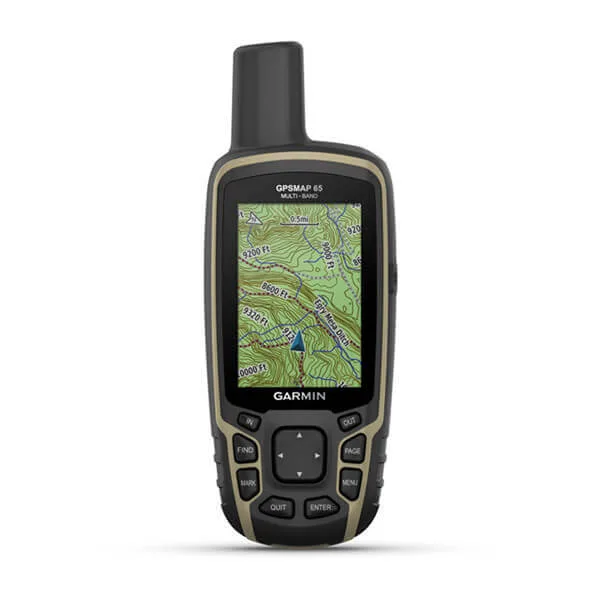
The same multi-band satellite tech as the 66sr in a cheaper, AA-powered body with a 2.6-inch screen.
Best for: A hiker who wants multi-band accuracy and swappable AAs without paying for the top model.
- It lists multi-band frequency support and the same four satellite systems as the 66sr, so the position-fix hardware is not what you give up to save money.
- Two AA batteries (NiMH or lithium recommended) are rated up to 16 hours, and you can carry spares and swap them in the field.
- Preloaded routable TopoActive maps, Bluetooth and ANT+, smart notifications and Garmin Explore support come in the box, with microSD up to 32 GB for more maps.
- The screen is 2.6 inches at 160 x 240 pixels, noticeably smaller and coarser than the 66sr.
- Garmin's spec list for this model shows no barometric altimeter or tilt-compensated compass, only a GPS compass while moving, so elevation comes from satellites.
- There is no Wi-Fi and no expedition mode listed, so battery life is 16 hours per set of AAs.
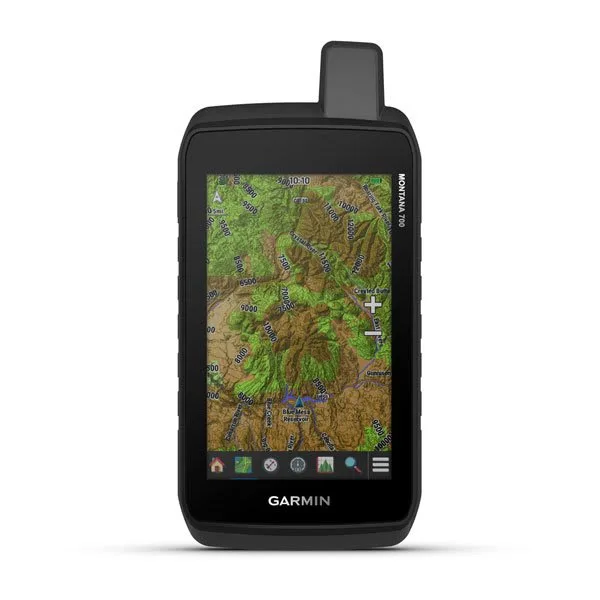
A 5-inch touchscreen navigator that suits vehicles, groups and big-map planning more than a light pack.
Best for: Someone who navigates from a vehicle, boat or camp as much as on foot, or who needs a big screen to read maps.
- The 5-inch, 480 x 800 touchscreen is far larger than any other screen here, which makes reading topo maps and planning routes easy.
- It takes either the included rechargeable lithium-ion pack or three AA batteries, so you can recharge or carry spares.
- Garmin lists dog tracking when paired to a compatible dog tracking system, plus Wi-Fi, Bluetooth and ANT+, a barometric altimeter and a 3-axis compass.
- At 14.0 oz (397 g) with the battery pack it is much heavier than the 66sr at 8.1 oz, which you feel on a long day hike.
- Garmin lists GPS, GLONASS and Galileo but no multi-band support, so it does not match the 66sr or 65 for signal-challenged terrain.
- Battery life in GPS mode is up to 18 hours, which is short for the size of the unit.
- The size and weight make more sense mounted on a vehicle or handlebar than carried by hand.
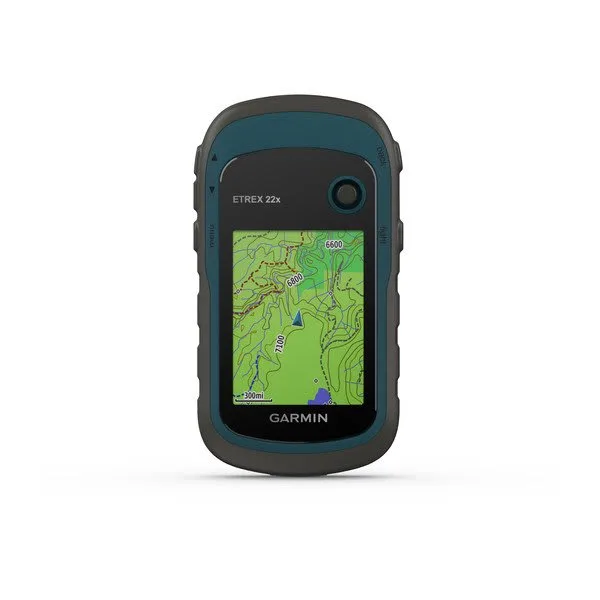
A small, light, 25-hour AA handheld that is easy to carry but is a generation behind on satellites and phone pairing.
Best for: A casual hiker on a tight budget who only needs a backup that works on clear, open trails.
- It is the lightest unit here at 5 oz (141.7 g) with batteries, and two AAs are rated at 25 hours.
- Routable TopoActive maps are preloaded, and a microSD slot takes up to 32 GB more.
- It carries an IPX7 rating, the same water rating as the other three.
- Garmin lists GPS and GLONASS only, with no Galileo and no multi-band support, so it is the weakest here in canyons and under heavy canopy.
- The only wireless listed is ANT+, with no Bluetooth or Wi-Fi, so it cannot pair with a phone for notifications, and Garmin Explore compatibility is not listed.
- The 2.2-inch, 240 x 320 screen is the smallest here, and the spec list shows no barometric altimeter or tilt-compensated compass.
- Storage is 8 GB, versus 16 GB on the other three, and data moves over an older mini USB port.
| Criteria | Garmin GPSMAP 66sr Top pick | Garmin GPSMAP 65 | Garmin Montana 700 | Garmin eTrex 22x |
|---|---|---|---|---|
| Verdict | Buy it | Buy it | It depends | Skip it |
| Best for | A frequent hiker who wants the best satellite lock and the longest battery without carrying spare cells. | A hiker who wants multi-band accuracy and swappable AAs without paying for the top model. | Someone who navigates from a vehicle, boat or camp as much as on foot, or who needs a big screen to read maps. | A casual hiker on a tight budget who only needs a backup that works on clear, open trails. |
| Price tier | $$$ · premium | $$ · mid-range | $$$ · premium | $ · budget |
| Satellite systems | GPS, GLONASS, Galileo, QZSS | GPS, GLONASS, Galileo, QZSS | GPS, GLONASS, Galileo | GPS, GLONASS |
| Multi-band support | Yes | Yes | Not listed | Not listed |
| Battery type | Rechargeable internal lithium-ion | 2 AA (NiMH or lithium recommended) | Rechargeable pack or 3 AA | 2 AA (NiMH or lithium recommended) |
| Rated battery life | Up to 36 hours; up to 450 hours expedition | Up to 16 hours | Up to 18 hours in GPS mode | 25 hours |
| Screen | 3 in, 240 x 400, buttons | 2.6 in, 160 x 240, buttons | 5 in, 480 x 800, touchscreen | 2.2 in, 240 x 320, buttons |
| Water rating | IPX7 | IPX7 | IPX7 | IPX7 |
| Phone pairing | Bluetooth, Wi-Fi, ANT+ | Bluetooth, ANT+ | Bluetooth, Wi-Fi, ANT+ | ANT+ only listed |
| Weight with batteries | 8.1 oz (230 g) | 7.7 oz (217 g) | 14.0 oz (397 g) | 5 oz (141.7 g) |
Which one is right for you?
- A frequent hiker who wants the best satellite lock and the longest battery without carrying spare cells. Buy it Garmin GPSMAP 66sr
- A hiker who wants multi-band accuracy and swappable AAs without paying for the top model. Buy it Garmin GPSMAP 65
- Someone who navigates from a vehicle, boat or camp as much as on foot, or who needs a big screen to read maps. It depends Garmin Montana 700
- A casual hiker on a tight budget who only needs a backup that works on clear, open trails. Skip it Garmin eTrex 22x
How we judged the field
Five things matter most in a handheld GPS. Satellite support decides how reliably it holds a fix in poor conditions, and multi-band support is the newest difference between models. Battery type and rated life decide how long you can go and whether you can carry spares. Screen size and type affect how easily you read maps in sun. Preloaded maps decide whether it works out of the box. Water rating and phone pairing round out the list, since most buyers want to know if it survives rain and whether it can send tracks to a phone.
The field splits into compact AA models, mid-size multi-band models and large touchscreens. We picked one of each from Garmin’s current outdoor range, so the comparison shows what each tier gives and costs. Garmin was the maker whose current handhelds we could confirm on its own product pages for this review, so every unit here is a Garmin. The 66sr and 65 earn the buys, the Montana 700 is a conditional pick, and the eTrex 22x is the skip.
The GPSMAP 66sr is the most complete hiking handheld in this group. Garmin lists multi-band frequency support alongside GPS, GLONASS, Galileo and QZSS, which is the hardware to look for if you hike in canyons, forest or steep terrain. The 3-inch, 240 x 400 transflective screen is the clearest of the button-operated units, and the barometric altimeter and 3-axis compass add elevation and heading data. The big practical change from older Garmins is the battery: a rechargeable internal lithium-ion cell rated up to 36 hours, with up to 450 hours in expedition mode. It carries IPX7 and MIL-STD-810 ratings, pairs over Bluetooth and Wi-Fi, and has 16 GB of storage plus a microSD slot. The trade-off is that you cannot swap in spare AAs, so a long trip needs a power bank. Pick it if you hike often and want the best fix and longest battery.
The GPSMAP 65 is the value pick because it keeps the part that matters most. Garmin lists multi-band frequency support and the same four satellite systems as the 66sr, so signal performance in tough terrain should be in the same class. The savings come from the body: a 2.6-inch, 160 x 240 screen, a run on two AA batteries rated up to 16 hours, and no Wi-Fi. The AAs are also a feature, since you can carry spares and swap them in the field, and Garmin recommends NiMH or lithium cells. Preloaded routable TopoActive maps, Bluetooth, ANT+, smart notifications and Garmin Explore support all come standard, and a microSD slot takes up to 32 GB. Garmin’s spec list shows no barometric altimeter or tilt-compensated compass, so elevation relies on satellites. Pick it if you want multi-band accuracy and spare AAs without paying for the top model.
The Montana 700 is a different kind of handheld, and it only makes sense for some buyers. Its 5-inch, 480 x 800 touchscreen is far larger than anything else here, which makes reading topo maps, planning routes and sharing a screen with a group much easier. It takes either the included rechargeable pack or three AAs, rated up to 18 hours in GPS mode, and Garmin lists dog tracking when paired to a compatible system, plus Wi-Fi, Bluetooth and ANT+. The costs are real. It weighs 14.0 oz (397 g) with the battery pack, well above the 66sr’s 8.1 oz, and Garmin lists GPS, GLONASS and Galileo but no multi-band support, so it gives up the signal hardware in the two buys. It suits a vehicle, boat or camp base far better than a day hike. Pick it if screen size matters more than weight, and skip it if you carry everything on your back.
The eTrex 22x is the entry-level skip. It is genuinely easy to carry at 5 oz (141.7 g), two AAs are rated at 25 hours, and it has routable TopoActive maps and an IPX7 rating. The problem is what Garmin’s own spec list leaves out. It lists GPS and GLONASS only, with no Galileo and no multi-band support, so it is the weakest here where signals are poor. The only wireless listed is ANT+, so there is no Bluetooth pairing for notifications and no Garmin Explore compatibility listed. The 2.2-inch, 240 x 320 screen is the smallest here, and there is no barometric altimeter or tilt-compensated compass, only a GPS compass while moving. It works as a simple backup on clear, open trails, but for a purchase that lasts years the 65 is a much better deal. Skip it unless budget is the hard limit.
Garmin GPSMAP 66sr vs Garmin GPSMAP 65: which should you buy?
The 66sr and 65 share the hardware that matters most: multi-band frequency support and the same four satellite systems, both listed on Garmin’s pages. The difference is comfort and power. The 66sr has a 3-inch screen, a rechargeable battery rated up to 36 hours, expedition mode, Wi-Fi, a barometric altimeter and a 3-axis compass. The 65 has a 2.6-inch screen, AA batteries rated up to 16 hours and a lower tier.
Choose the 66sr if you hike often, want the longest rated battery and read your screen a lot. Choose the 65 if you want the multi-band signal at a lower tier and like carrying spare AAs. If you do multi-day trips with no way to charge, the 65’s swappable cells may suit you better, and for most day hikers either unit will do the job.
What to look for
- Multi-band support: Look for it on the spec sheet by name, since it is separate from the list of satellite systems and helps most in canyons, steep terrain and dense trees.
- Satellite systems: More systems such as GPS, GLONASS, Galileo and QZSS can help in difficult places, but a long list is not the same as multi-band.
- Battery type: Rechargeable cells give longer rated life, while AAs let you carry spares, so pick based on how long your trips are and whether you can recharge.
- Rated battery life: Compare the GPS-mode figure, not expedition mode, because expedition mode trades track detail for battery life.
- Screen and controls: Transflective screens read well in sun, and buttons work with gloves, while touchscreens give more map area but add weight.
- Phone pairing and maps: Check for Bluetooth and preloaded maps by name, since some units list only ANT+ and some need extra maps for the region you hike.
Our final take
For most hikers, the Garmin GPSMAP 66sr is the one to buy, because multi-band support, a battery rated up to 36 hours and a 3-inch screen are the three things you notice on the trail. The GPSMAP 65 is the smarter buy if you want the same multi-band hardware, like AA batteries and would rather spend less. The Montana 700 is a good tool for vehicle-based or group navigation, but it is heavy and lists no multi-band support. The eTrex 22x is hard to justify now that the 65 exists. If you hike in open terrain only and carry a phone, a phone with offline maps may be enough, but a handheld still wins on battery and toughness.
Questions, answered
Do I need multi-band support on a handheld GPS?
It helps most where satellite signals are weak or bounce, such as deep canyons, steep valleys and dense tree cover. Garmin describes multi-band as receiving multiple frequencies from navigation satellites for better accuracy in those areas. On open trails and ridgelines, a multi-GNSS unit without multi-band is usually fine. If you hike in tough terrain often, the extra hardware in the 66sr or 65 is worth having.
Is a built-in rechargeable battery or AA batteries better?
It depends on trip length and access to power. A rechargeable pack like the one in the 66sr gives longer rated life, up to 36 hours, but you must recharge it from a wall charger or power bank. AA batteries rated for 16 to 25 hours in these units can be swapped in seconds, so spares extend a multi-day trip without a charging source. Garmin recommends NiMH or lithium AAs for these models.
Can I use these without a phone?
Yes. All four have preloaded maps and run their own navigation, so a phone is optional. The 66sr, 65 and Montana 700 can pair with a phone for notifications and the Garmin Explore app. The eTrex 22x lists only ANT+ for wireless, so it has no Bluetooth pairing. Phone pairing is a convenience in this group, not a requirement. If you want it, check the wireless line for Bluetooth by name.
What does IPX7 mean for a handheld GPS?
Garmin defines IPX7 as withstanding incidental exposure to water of up to 1 meter for up to 30 minutes. That covers rain, splashes and a short dunk. It is not a rating for long submersion or for use as a dive instrument. All four units here carry the same IPX7 rating, so water resistance is not what separates them.
Should I buy a handheld or a GPS watch?
A handheld offers a bigger screen, AA or large rechargeable batteries and detailed maps, while a watch is lighter and always on your wrist. For long, remote hikes, a handheld is easier to read and carry spare power for. For runs and shorter outings, our GPS running watches comparison is the better place to start.
Deciding between the top two? See our head-to-head: Garmin GPSMAP 66sr vs Garmin GPSMAP 65.
More Outdoors & Fitness reviews
 The Best Headlamps of 2026: Honest Picks for Trail, Camp, and Everyday
  The Best Heart Rate Monitors: 4 Compared (and One to Skip)
  The Best Heated Gloves: 4 Compared (and One to Skip)
  The Best Heated Insoles: 4 Compared (and One to Skip)
  The Best Heated Jackets: 4 Compared (and One to Skip)
  The Best Heated Socks: 4 Compared (and One to Skip)