

Home Gym
The Best Elliptical Trainers: 4 Compared (and One to Skip)
We compared four current home ellipticals on stride feel, resistance, incline, build quality, tech, and long-term value.
The short version
For most people the Sole E35 is the elliptical to buy - a heavy, quiet, durable machine with a generous stride, a lifetime frame warranty, and no monthly fee. The Schwinn 490 is the value pick, adding motorized incline and decline and program variety at a mid-range price. The NordicTrack X16 is the most capable machine here thanks to its auto-adjustable stride and 16-inch touchscreen, but its best features assume you'll keep paying for iFIT, so it only makes sense for committed users. The Horizon EX-59 is stable and fairly priced but its short stride and light flywheel mean most people will outgrow it. Best for: buy the Sole E35 if you want one machine to keep for years, and the Schwinn 490 if you want most of that value for less.
Our picks at a glance
- Sole E35 Elliptical - Buy. A heavy, quiet, subscription-free elliptical that just works - our top pick for most homes.
- Schwinn 490 Elliptical - Buy. The value sweet spot: power incline, plenty of resistance, and an optional app that isn't forced on you.
- NordicTrack X16 Elliptical - It depends. A 3-in-1 elliptical, stepper and treadmill-style trainer - if you'll actually pay for and use the iFIT ecosystem it's built around.
- Horizon Fitness EX-59 Elliptical - Skip. A stable, honest budget machine you're likely to outgrow - fine as a first elliptical, limiting as a keeper.
The verdict in 30 seconds
What mattered most
- Stride length & feel
- Resistance & flywheel
- Incline
- Console & tech
- Build & max user weight
- Subscription needed?
A good elliptical gives you low-impact cardio that spares your knees, but the gap between models is wider than the showroom photos suggest - it comes down to stride length, flywheel weight, incline, and whether the good features hide behind a subscription. We pulled together independent testing and owner reports on four machines buyable in 2026. Two are easy recommendations, one is genuinely excellent but only if you'll use its ecosystem, and one is best left on the shelf unless price is the only thing that matters.
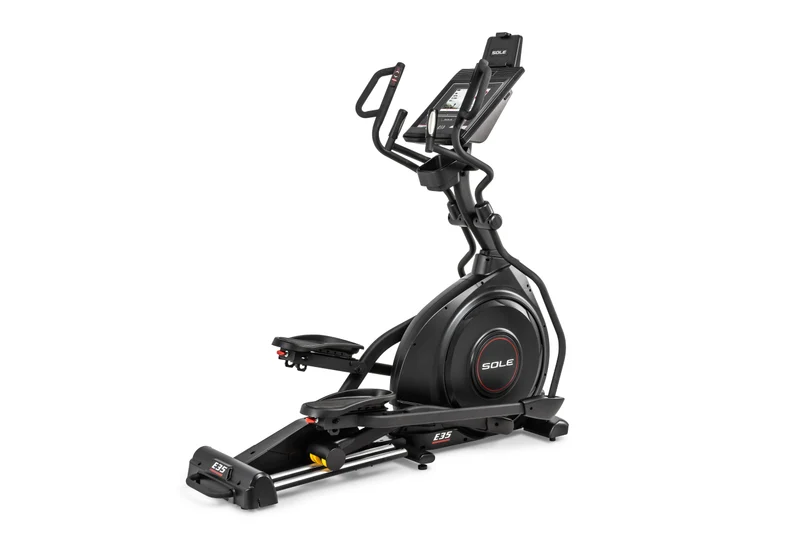
A heavy, quiet, subscription-free elliptical that just works - our top pick for most homes.
Best for: Anyone who wants a durable, no-nonsense machine they'll keep for years without paying a monthly fee.
- Heavy flywheel and roomy 20-inch stride give a smooth, natural glide reviewers consistently praise
- Whisper-quiet magnetic resistance and a high 350-lb user capacity suit almost anyone
- Standout lifetime frame warranty and free companion app with no mandatory subscription
- Large, heavy footprint that's a chore to move once assembled
- Touchscreen and software feel less polished than the interactive-fitness brands
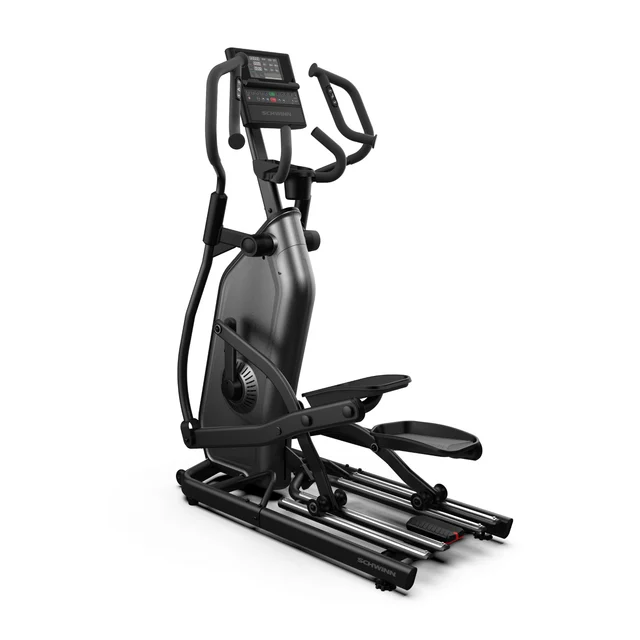
The value sweet spot: power incline, plenty of resistance, and an optional app that isn't forced on you.
Best for: Budget-conscious buyers who still want incline and program variety without a premium price.
- Motorized incline and decline (-5% to 15%) plus 25 resistance levels give real workout variety for the money
- 20-inch stride and 13 built-in programs cover most fitness levels
- Works fully offline; the JRNY app is optional, not required
- 7-inch color LCD rather than a touchscreen
- Owners occasionally report missing assembly hardware and fiddly setup
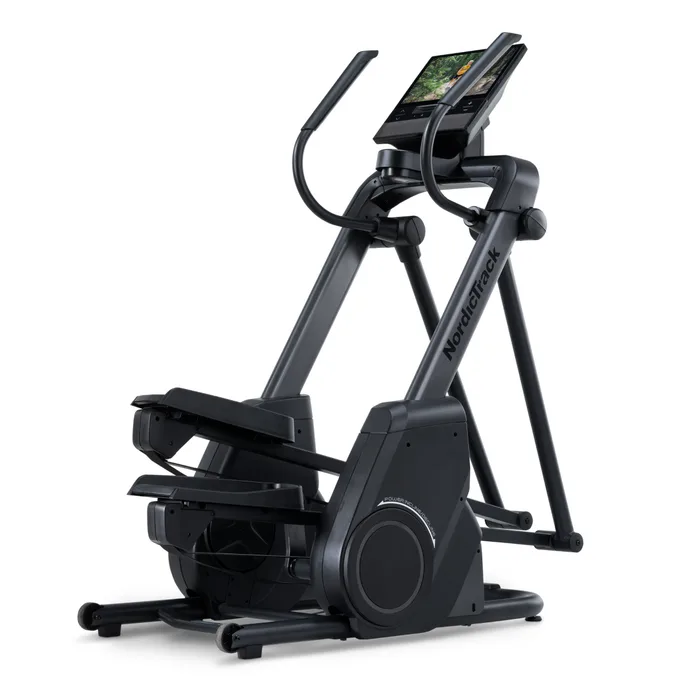
A 3-in-1 elliptical, stepper and treadmill-style trainer - if you'll actually pay for and use the iFIT ecosystem it's built around.
Best for: Enthusiasts who want variable stride and guided classes and are happy to commit to the subscription.
- Auto-adjustable stride up to a stated 32 inches, switching between elliptical, stepper and treadmill-style motion
- 16-inch tilting HD touchscreen, 26 resistance levels and a -10% to 10% incline range
- Stated 375 lb user capacity, the highest here
- The trainer-led classes and SmartAdjust auto-adjustment run through iFIT, an ongoing membership; value drops sharply without it
- A 58.5 by 29.5 inch footprint, 74 inches tall, and a stated 289 lb in-box weight
- Priciest option here by a wide margin
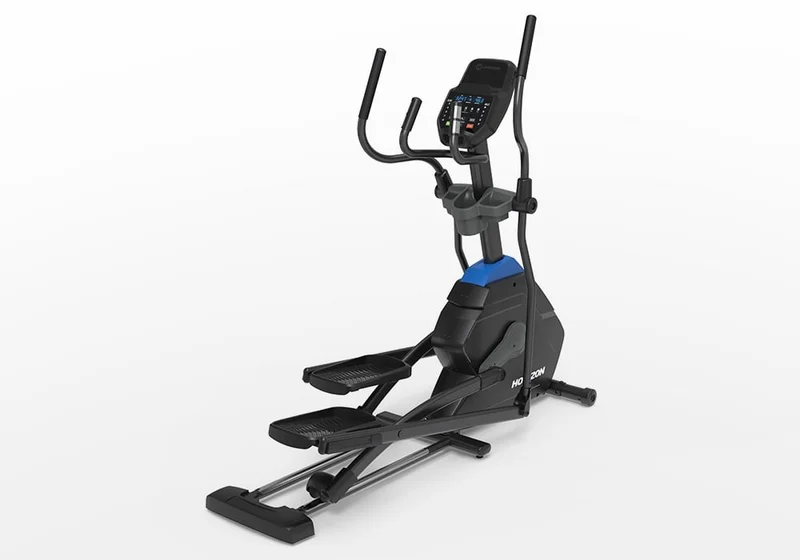
A stable, honest budget machine you're likely to outgrow - fine as a first elliptical, limiting as a keeper.
Best for: Tight budgets and light, occasional use - or a compact first machine you don't mind replacing later.
- Genuinely stable for the price, with a reassuring lifetime frame warranty
- Simple, reliable operation and quiet magnetic resistance
- Bluetooth speakers are a nice extra at this tier
- Short 18-inch stride can feel cramped for taller users
- Light flywheel and only a handful of resistance levels and programs limit long-term challenge
- No incline and a basic LED display
| Criteria | Sole E35 Elliptical Top pick Buy it Buy | Schwinn 490 Elliptical Buy it Buy | NordicTrack X16 Elliptical It depends Buy | Horizon Fitness EX-59 Elliptical Skip it Buy |
|---|---|---|---|---|
| Best for | Anyone who wants a durable, no-nonsense machine they'll keep for years without paying a monthly fee. | Budget-conscious buyers who still want incline and program variety without a premium price. | Enthusiasts who want variable stride and guided classes and are happy to commit to the subscription. | Tight budgets and light, occasional use - or a compact first machine you don't mind replacing later. |
| Price tier | $$$ · premium | $$ · mid-range | $$$$ · flagship | $ · budget |
| Stride length & feel | 20 in - smooth, natural glide | 20 in - comfortable, steady | Auto-adjustable, up to 32 in | 18 in - can feel cramped |
| Resistance & flywheel | Heavy flywheel, wide range | Ample range for most | 26 levels, iFIT auto-adjust | Light flywheel, limited levels |
| Incline | Power incline | Motorized incline and decline | -10% to 10% incline | None |
| Console & tech | 10-inch touchscreen + app | 7-inch color LCD + optional app | 16-inch tilting HD touchscreen | LED windows + Bluetooth speakers |
| Build & max user weight | Very sturdy, 350 lb | Sturdy, 330 lb | 289 lb in box, 375 lb | Stable, 300 lb |
| Subscription needed? | No - free app | No - app optional | Best features need iFIT | No - minimal tech |
| Warranty | Lifetime frame, 2-yr parts | 10-yr frame, 2-yr parts | 10-yr frame, 2-yr parts, 1-yr labor | Lifetime frame, 1-yr parts |
| Price tier | $$$ · premium | $$ · mid-range | $$$$ · flagship | $ · budget |
Which one is right for you?
- Anyone who wants a durable, no-nonsense machine they'll keep for years without paying a monthly fee. Buy it Sole E35 Elliptical
- Budget-conscious buyers who still want incline and program variety without a premium price. Buy it Schwinn 490 Elliptical
- Enthusiasts who want variable stride and guided classes and are happy to commit to the subscription. It depends NordicTrack X16 Elliptical
- Tight budgets and light, occasional use - or a compact first machine you don't mind replacing later. Skip it Horizon Fitness EX-59 Elliptical
How we judged the field
We don’t run our own lab. Instead we synthesize independent testing, expert hands-on reviews, and aggregated owner reports to find where the consensus lands - and where it splits. For ellipticals, a handful of things separate a machine you’ll keep from one you’ll resent: stride length and how natural the motion feels, flywheel weight and the smoothness it buys, whether there’s motorized incline for variety, the honesty of the console and any app, build quality and stability under load, warranty, and - increasingly - whether the good features are locked behind a subscription. We weighed all four machines on those criteria and, just as importantly, on value at their actual price tier. A budget machine isn’t judged against a flagship; it’s judged on whether it’s the right buy for the person shopping at that price.
Sole E35 Elliptical
Buy itThe E35 is the one we’d steer most people toward. Its heavy flywheel and 20-inch stride produce the kind of smooth, planted glide reviewers keep coming back to, and the magnetic resistance is quiet enough to use without waking the house. A 350-pound user capacity and a lifetime frame warranty signal a machine built to last, and crucially the companion app is free - there’s no monthly fee gating the basics. It’s large and heavy, and the touchscreen software isn’t as slick as the interactive-fitness brands, but as a durable, subscription-free workhorse it’s hard to beat.
Schwinn 490 Elliptical
Buy itThe 490 is the value play. It brings motorized incline and decline (-5% to 15%) and 25 resistance levels, the ingredients for genuine workout variety, at a mid-range price that undercuts the premium field. The 20-inch stride suits most body types, and the 13 built-in programs mean you’re not dependent on an app, though the optional JRNY software is there if you want it. You give up a touchscreen for a 7-inch color LCD, and some owners report missing assembly hardware, so check the parts bag first. For the money, it delivers most of what the pricier machines do.
NordicTrack X16 Elliptical
It dependsOn paper the X16 is the most capable machine here. NordicTrack describes it as a 3-in-1 trainer that switches between elliptical, stepper and treadmill-style motion, with an auto-adjustable stride up to a stated 32 inches, 26 resistance levels and a -10% to 10% incline range, all run from a 16-inch tilting HD touchscreen. It also carries the highest stated user capacity here, 375 lb, and a 10-year frame, 2-year parts and 1-year labor warranty. The catch is that the experience is built around iFIT: the trainer-led classes and the SmartAdjust feature that changes resistance and incline for you run through an ongoing membership, so skip it and you’re paying flagship money for a fraction of what makes it special. It is also a big machine, with a 58.5 by 29.5 inch footprint, a 74-inch height and a stated 289 lb in-box weight. If you’ll commit to the ecosystem and use the classes, it’s superb - if you won’t, buy something cheaper.
Horizon Fitness EX-59 Elliptical
Skip itThe EX-59 isn’t a bad machine; it’s a budget one, and it’s honest about it. Stability is a real strength at this price, the magnetic resistance is quiet, the Bluetooth speakers are a pleasant extra, and the lifetime frame warranty is reassuring. But the shorter 18-inch stride can feel cramped for taller users, the lighter flywheel and limited resistance levels cap how far you can push, and there’s no incline. Owner reports and independent testing both frame it as a solid first elliptical rather than a long-term keeper. Buy it only if price is the hard constraint - otherwise the Schwinn 490 is worth the step up.
Sole E35 vs Schwinn 490: which should you buy?
This is the decision most shoppers actually face. The Sole E35 is the more substantial machine: a 25 lb flywheel, a higher 350 lb user-weight capacity, a 10.1-inch touchscreen, and a lifetime frame warranty give it a premium, built-for-the-long-haul feel. The Schwinn 490 answers with motorized incline, plenty of resistance and program variety, and a meaningfully lower price. If you want the sturdiest, quietest machine you can keep for a decade and the premium price doesn’t scare you, get the Sole. If you want most of that experience, including motorized incline and decline, for noticeably less, the Schwinn is the smarter spend. Neither locks its core features behind a subscription, which is why they take our top two spots.
What to look for
- Stride length: aim for around 20 inches unless you’re short; 18 inches can feel cramped, and adjustable stride is a bonus for shared households.
- Flywheel weight: heavier generally means smoother; a light flywheel feels choppy and caps intensity.
- Incline: motorized incline adds real variety and targets different muscles - worth prioritizing over flashy screens.
- Subscription honesty: check whether the machine is fully usable offline, or whether its best features need an ongoing fee.
- Build and capacity: a high user-weight rating and a strong frame warranty are good proxies for durability.
- Footprint: measure your space; these are large and heavy, and the good ones don’t move easily once built.
Our final take
Buy the Sole E35 if you want one elliptical to keep for years - it’s the heavy, quiet, well-warrantied, subscription-free pick that satisfies the widest range of people. Choose the Schwinn 490 if you want most of that value, including incline, for a mid-range price. Consider the NordicTrack X16 only if you’re genuinely going to use iFIT, because that’s what you’re really paying for. And skip the Horizon EX-59 unless budget is the deciding factor and you’re comfortable outgrowing it. Match the machine to how you’ll actually use it, and any of the top three will serve you well.
Questions, answered
Does a longer stride length actually matter?
Yes, especially for taller users. A short stride around 18 inches can force a choppy, cramped motion, while 20 inches feels closer to a natural walk or run. The NordicTrack X16's auto-adjustable stride goes further, up to a stated 32 inches, and switches between stepper, elliptical and treadmill-style motion, which is useful if multiple people of different heights share the machine.
Do I need to pay a monthly subscription to use these?
Only if you want to. The Sole E35, Schwinn 490 and Horizon EX-59 all work fully on their own - Sole and Schwinn offer companion apps you can use or ignore. The NordicTrack X16 technically runs without a subscription, but most of its value is the iFIT trainer-led content, so owners who skip iFIT are paying flagship money for a fraction of the experience.
Why is the Horizon EX-59 a 'skip' if it's well built?
It's a fine machine for the price and stability is a real strength, but it's built to a budget: a shorter stride, a lighter flywheel, fewer resistance levels, no incline, and a basic display. Independent testing and owner reports frame it as a solid entry point rather than a machine you'll be happy with for years. If your budget allows, stepping up to the Schwinn 490 buys noticeably more room to grow.
Are ellipticals really easier on the joints than a treadmill?
For most people, yes. Because your feet never leave the pedals, an elliptical removes the repeated impact of running, which owners with sensitive knees, hips or ankles frequently cite as the reason they switched. The trade-off is that the fixed motion can feel less 'natural' than running, and it works slightly different muscles.
How much space and effort does assembly take?
All four have a sizable footprint - roughly the length of a small sofa - and the premium models are heavy, so plan the final location before you build. Front-drive designs like the Sole tend to be more compact front-to-back. Owners report assembly generally takes a couple of hours; several Schwinn buyers mention double-checking the hardware bag first, since missing screws are an occasional complaint.
Deciding between the top two? See our head-to-head: Sole E35 Elliptical vs Schwinn 490 Elliptical.
More in Home Gym
Elliptical Trainers, Explained Plain-English guide → Sole E35 Elliptical vs Schwinn 490 Elliptical Head-to-head →  The Best Exercise Bikes: 4 Compared (and One to Skip)
  The Best Foam Rollers: Textured, Vibrating, and Soft Compared
  The Best Gym Chalk: 4 Compared (and One to Skip)
  The Best Home Gym Flooring: 4 Compared (and One to Skip)