

Outdoors & Fitness
Which Camping Lantern Should You Buy? 6 Compared
Three of these six lanterns put their lumen figure in the product name. Of the three that do not, two are among the brightest here, and one lists a 75 lumen maximum on its specs page, which is the reason to skip it.

The short version
The Goal Zero Lighthouse 600 is the pick, because it states runtime at four settings in plain text and adds a hand crank, so it still works when the battery is flat and there is no sun. The Black Diamond Orbiter 650 is the everyday choice where power is available, charging over USB-C with a 240 hour low setting and an IPX4 rating. The Fenix CL26R PRO is the buy for anyone who wants a swappable battery: a removable 21700 cell, USB-C, a 408 hour down light and a red mode, though its 500 lumen High steps down within the first couple of hours. The Ledlenser ML6 Warm Light is the brightest here at 750 lumens with IP66 and CRI 80 warm light, but it lasts 3.5 hours at its 550 lumen setting and ships with a micro USB cable. The BioLite AlpenGlow 500 has the highest colour rendering at CRI 90 and still charges over micro USB. Skip the LuminAID PackLite Nova for camp use: 75 lumens max and a 10 to 12 hour solar recharge make it a glove box light. Best for: anyone comparing lanterns on more than the number in the name.
Our picks at a glance
- Goal Zero Lighthouse 600 Lantern & USB Power Hub - Buy. The most completely documented lantern here, and the only one that works with no power source at all.
- Black Diamond Orbiter 650 Lantern - Buy. Second brightest here after the Ledlenser ML6, charges over USB-C, and states its runtime at both ends of the dial.
- Fenix CL26R PRO Rechargeable Lantern - Buy. A USB-C lantern built around a removable 21700 cell, with nine modes on a rotary dial and a 408 hour down light.
- BioLite AlpenGlow 500 - It depends. The largest battery and the highest stated colour rendering figure, still charging over micro USB.
- Ledlenser ML6 Warm Light Lantern - It depends. The brightest lantern here at 750 lumens, with IP66 sealing and CRI 80 warm light, and a short 3.5 hour run at its 550 lumen setting.
- LuminAID PackLite Nova Solar Lantern - Skip. Packs flat and runs on sun, but LuminAID's own specs page puts it at 75 lumens max, a fraction of the other five, with a 10 to 12 hour solar recharge.
The verdict in 30 seconds
What mattered most
- Stated output
- Runtime, high
- Runtime, low
- Battery
- Weight
- Charge input
A camp lantern is a battery, an LED and a diffuser, and the only two numbers that describe it are how bright it goes and how long it lasts there. Those two trade against each other directly, so a brightness figure on its own tells you almost nothing. We compared six, and found that the industry has quietly moved the brightness number into the product name, which works until a brand leaves it out and you have to go and find the number yourself.
The most completely documented lantern here, and the only one that works with no power source at all.
Best for: Camping where recharging is uncertain, and emergency kit at home where a dead battery is the whole problem.
- Publishes runtime at multiple settings, including 320 hours on one side at low and 5 hours on one side at high, which is the disclosure the category usually skips.
- Built-in hand crank means it still produces light when the battery is flat and there is no sun and no socket.
- Battery stated properly as 5200 mAh and 18.98 Wh at 3.65 V, so you can actually compare it to a power bank.
- Directional design lets you light one side only, which roughly doubles runtime and stops the lantern blinding everyone at the table.
- 600 lumens is the middle of this group rather than the top.
- Six hour charge time from a USB source, which is slow next to a modern USB-C device.
- At 498 grams it is among the heavier options for what it produces.
- The hand crank is an emergency feature and produces very little light per minute of cranking.
Own the Goal Zero Lighthouse 600 Lantern & USB Power Hub? Tell us how it held up.
Thanks. Counted, and shown once enough owners have weighed in.
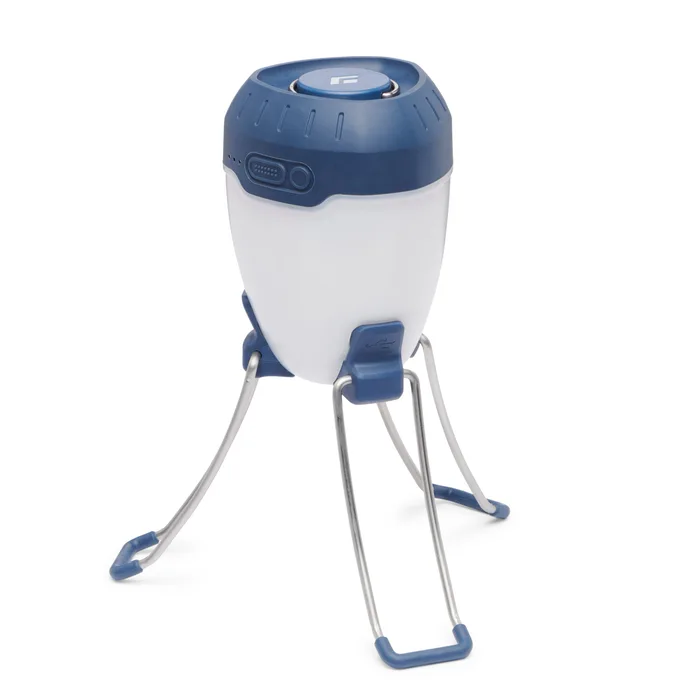
Second brightest here after the Ledlenser ML6, charges over USB-C, and states its runtime at both ends of the dial.
Best for: General camp lighting where brightness matters and everything else charges over USB-C.
- 650 lumens is behind only the Ledlenser ML6's 750 here, and the page gives max distance at three settings rather than just the headline figure.
- USB-C charge in, which by now is the connector everything else in the bag already uses.
- 240 hours on low is a genuinely long tail, and 4 hours on high is stated plainly rather than implied.
- IPX4 rating stated explicitly, plus folding legs and a collapsible double-hook loop so it hangs or stands.
- 4 hours on high is shorter than every other high-setting runtime here except the Ledlenser ML6's 3.5 hours at 550 lumens.
- At 508 grams it is the heaviest lantern here.
- Charging small electronics from it will eat the runtime you were relying on for light.
- No colour rendering figure, so you are trusting a generic white LED for tasks where colour matters.
Own the Black Diamond Orbiter 650 Lantern? Tell us how it held up.
Thanks. Counted, and shown once enough owners have weighed in.
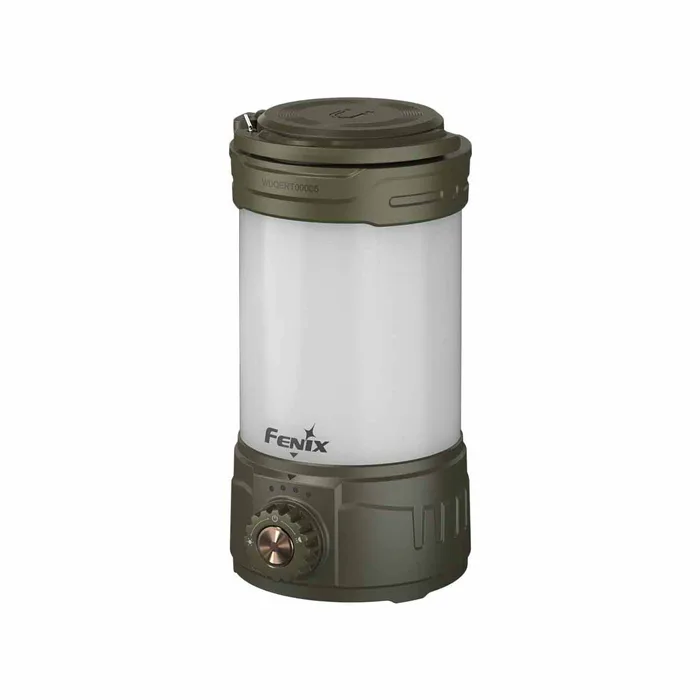
A USB-C lantern built around a removable 21700 cell, with nine modes on a rotary dial and a 408 hour down light.
Best for: Campers who carry spare cells or want a lantern that is not dead when its battery wears out.
- The included 5000 mAh 21700 battery is removable, so a charged spare restores full runtime in seconds, which no other lantern here allows.
- USB-C charging in about 3.5 hours, a USB-A output for use as a power bank, and a red light mode that keeps night vision.
- Fenix publishes a runtime chart for all nine modes, including 408 hours on the 5 lumen down light, and backs it with 5 years of free repair.
- The chart shows the 500 lumen High dropping to around 40 percent within the first two hours, and the 650 lumen maximum is only reached by combining High with a down light.
- No IP rating is stated; Fenix only says it is waterproof as long as the battery port cover is in place.
- No colour rendering figure is published.
- The 199 gram weight excludes the battery, and no total weight is given.
Own the Fenix CL26R PRO Rechargeable Lantern? Tell us how it held up.
Thanks. Counted, and shown once enough owners have weighed in.
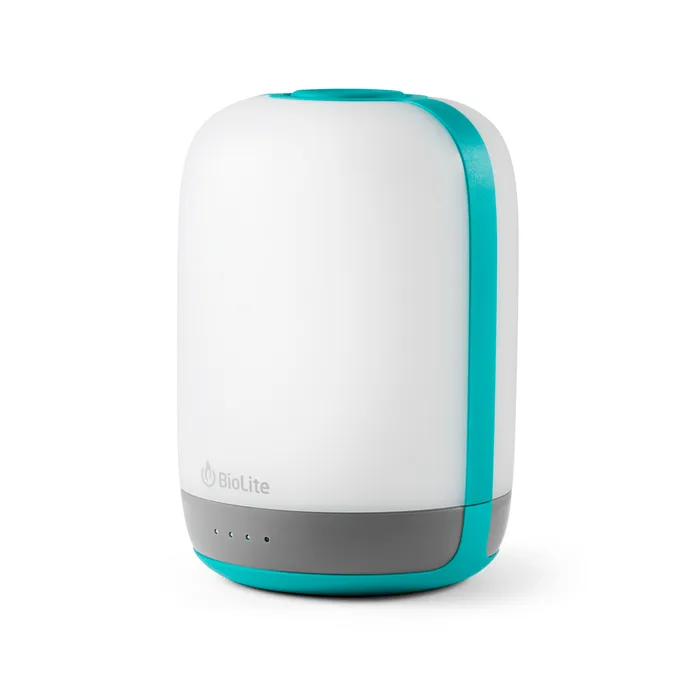
The largest battery and the highest stated colour rendering figure, still charging over micro USB.
Best for: Cooking and close work where colour accuracy matters, if you can live with a micro USB cable.
- 6400 mAh and 23.6 Wh is the biggest stated battery in the group, and it is stated in both units.
- CRI 90 ChromaReal LED is the highest colour rendering claim here, ahead of the Ledlenser's CRI 80, which matters for cooking, first aid and reading a map properly.
- 5 hours on high and up to 200 hours on low, plus a stated 1 hour reserve, which no other lantern in this comparison mentions.
- Lighter than the Goal Zero and Black Diamond at 380 grams, with a lock mode so it does not switch on in a pack.
- Charges by 5V/2A micro USB, which means carrying a cable you otherwise stopped carrying years ago.
- 500 lumens ties the Fenix CL26R PRO's 360 degree High for the lowest stated output among the hard-bodied lanterns.
- The colour and multicolour modes are the marketing focus and are not why anyone needs a lantern.
- Three hour charge time, and no solar or crank fallback if you cannot reach a socket.
Own the BioLite AlpenGlow 500? Tell us how it held up.
Thanks. Counted, and shown once enough owners have weighed in.
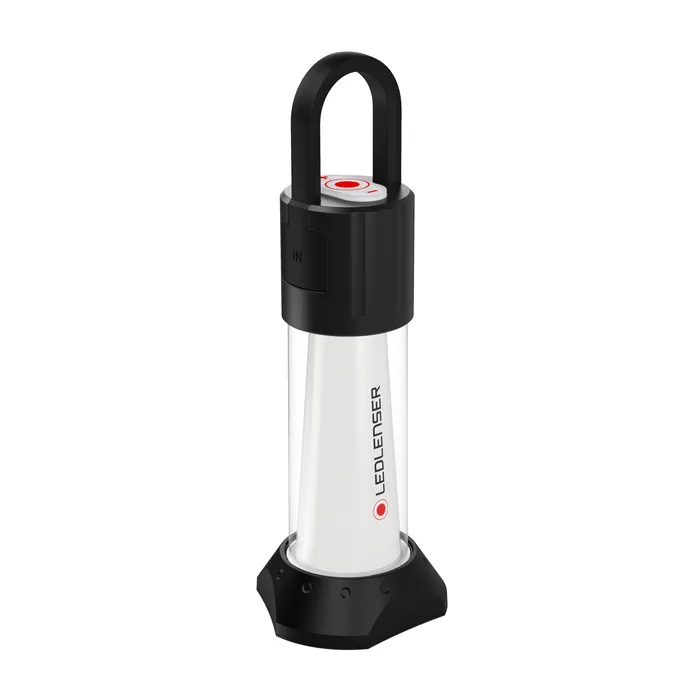
The brightest lantern here at 750 lumens, with IP66 sealing and CRI 80 warm light, and a short 3.5 hour run at its 550 lumen setting.
Best for: A wet or windy camp where a sealed, bright, warm light matters more than a long high setting.
- 750 lumens on Boost and 550 on Power is the highest stated output in this comparison, dimmable down to 5 lumens.
- IP66 is the strongest stated water protection here, with a 1.5 metre drop rating and a 7 year warranty.
- Warm white light at CRI 80, plus a magnet, two hooks and a removable stand for mounting.
- Ledlenser lists 3.5 hours at the 550 lumen Power setting and no runtime at all for Boost.
- The page states the battery as 3000 mAh and 10.8 Wh in one table and 3200 mAh in another.
- The included cable is USB-A to micro USB, and the stated charge time is 300 minutes.
- There is no lumen figure in the name, so the output has to be read off the spec table.
Own the Ledlenser ML6 Warm Light Lantern? Tell us how it held up.
Thanks. Counted, and shown once enough owners have weighed in.
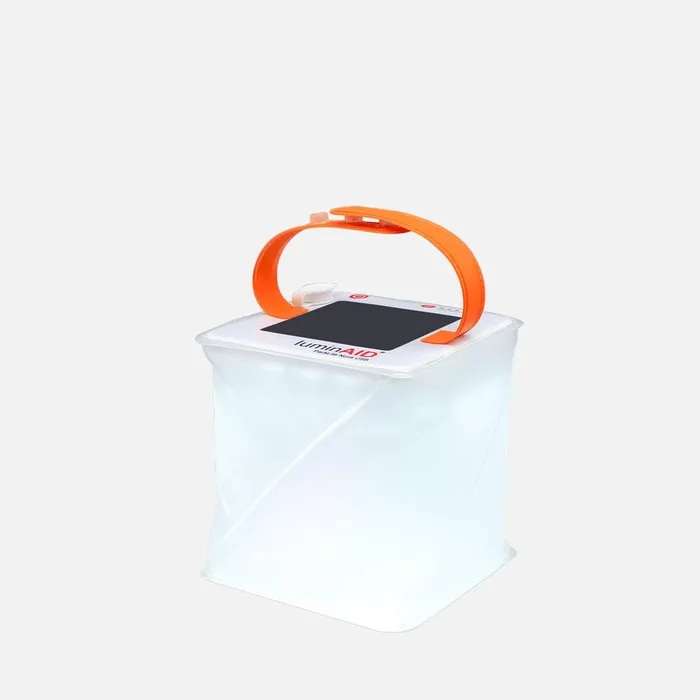
Packs flat and runs on sun, but LuminAID's own specs page puts it at 75 lumens max, a fraction of the other five, with a 10 to 12 hour solar recharge.
Best for: An emergency bag or glove box where packing flat matters more than brightness.
- At 142 grams it is by a wide margin the lightest option here and packs flat enough for a glove compartment.
- Solar charging with no cable requirement, which suits a lantern kept in a car or an emergency kit.
- Inflatable body diffuses the LED evenly, and the Colors version adds eight colour modes.
- LuminAID's specs page lists 75 lumens max, well under half the output of any other lantern here.
- The specs page gives a 24 hour maximum runtime with no per-setting figures, and LuminAID quotes 10 to 12 hours of sun for a solar recharge.
- No battery capacity published, and the USB backup is micro USB.
- The figures sit on a separate specs page rather than the product page, so they are easy to miss when ordering.
Own the LuminAID PackLite Nova Solar Lantern? Tell us how it held up.
Thanks. Counted, and shown once enough owners have weighed in.
| Criteria | Lighthouse 600 Lantern & USB Power Hub Top pick Buy it Buy | Orbiter 650 Lantern Buy it Buy | CL26R PRO Rechargeable Lantern Buy it Buy | AlpenGlow 500 It depends Buy | ML6 Warm Light Lantern It depends Buy | PackLite Nova Solar Lantern Skip it Buy |
|---|---|---|---|---|---|---|
| Best for | Camping where recharging is uncertain, and emergency kit at home where a dead battery is the whole problem. | General camp lighting where brightness matters and everything else charges over USB-C. | Campers who carry spare cells or want a lantern that is not dead when its battery wears out. | Cooking and close work where colour accuracy matters, if you can live with a micro USB cable. | A wet or windy camp where a sealed, bright, warm light matters more than a long high setting. | An emergency bag or glove box where packing flat matters more than brightness. |
| Price tier | $$ · mid-range | $$ · mid-range | $$ · mid-range | $$ · mid-range | $$ · mid-range | $ · budget |
| Stated output | 600 lumens | 650 lumens | 650 lm combined, 500 lm 360 degree High | 500 lm high, 5 lm low | 750 lm Boost, 550 lm Power, 5 lm min | 75 lm max (specs page) |
| Runtime, high | 5 hrs, one side lit | 4 hrs | About 10 hrs total, steps down early (chart) | 5 hrs | 3.5 hrs at 550 lm, Boost not published | Not published per setting |
| Runtime, low | 320 hrs, one side lit | 240 hrs | 408 hrs, 5 lm down light | Up to 200 hrs | Up to 200 hrs | Up to 24 hrs max (specs page) |
| Battery | 5200 mAh / 18.98 Wh | 5200 mAh | Removable 21700, 5000 mAh | 6400 mAh / 23.6 Wh | 18650, 3000 mAh / 10.8 Wh (3200 mAh elsewhere) | Not published |
| Weight | 498 g / 1.1 lb | 508 g | 199 g excluding battery | 380 g / 13.4 oz | 280 g | 142 g |
| Charge input | USB, 6 hrs, plus solar and hand crank | USB-C | USB-C, about 3.5 hrs | Micro USB 5V/2A, 3 hrs | Micro USB cable included, 300 min | Solar (10 to 12 hrs) or micro USB |
| Water resistance | Not stated | IPX4 | Waterproof claim with cover closed, no IP rating | IPX4 | IP66 | Waterproof claim, no IP rating |
| Colour rendering | Not stated | Not stated | Not stated | CRI 90 ChromaReal | CRI 80, warm white | Not stated |
| Lumen figure in the product name | Yes, 600 | Yes, 650 | No, 650 lm on the spec list | Yes, 500 | No, 750 lm on the spec table | No, 75 lm on the specs page |
Which one is right for you?
- Camping where recharging is uncertain, and emergency kit at home where a dead battery is the whole problem. Buy it Goal Zero Lighthouse 600 Lantern & USB Power Hub
- General camp lighting where brightness matters and everything else charges over USB-C. Buy it Black Diamond Orbiter 650 Lantern
- Campers who carry spare cells or want a lantern that is not dead when its battery wears out. Buy it Fenix CL26R PRO Rechargeable Lantern
- Cooking and close work where colour accuracy matters, if you can live with a micro USB cable. It depends BioLite AlpenGlow 500
- A wet or windy camp where a sealed, bright, warm light matters more than a long high setting. It depends Ledlenser ML6 Warm Light Lantern
- An emergency bag or glove box where packing flat matters more than brightness. Skip it LuminAID PackLite Nova Solar Lantern
How we judged the field
Five things decide a camp lantern, and brightness is the one that decides least. Maximum output matters only until you have enough, which for lighting a table or a tent is somewhere around 200 lumens, and five of the six lanterns here clear that comfortably. What actually separates them is runtime, because output and duration trade directly against each other and the useful question is how long the thing lasts at the setting you will really use. Third is the battery, stated in mAh and ideally in watt hours, because that is the hardware underneath both figures. Fourth is how it charges, which in 2026 means whether it uses USB-C or asks you to carry an obsolete cable, and whether it has any fallback when there is no socket. Fifth is light quality, meaning colour rendering, which almost nobody publishes and which matters for cooking and first aid.
The pattern we did not expect was in the names. Three of these six lanterns are named after their lumen rating: AlpenGlow 500, Lighthouse 600, Orbiter 650. That is a genuinely helpful convention, and it has quietly become the category’s substitute for a specification. The Fenix CL26R PRO and the Ledlenser ML6 Warm Light carry model codes instead and turn out to be among the brightest here. The PackLite Nova has no number in its name either, and its figures live on a separate specs page, which lists 75 lumens and up to 24 hours but no battery capacity. We picked these six because they cover every charging method in the category, from USB-C to micro USB to solar to a hand crank, plus a removable battery, and because they span the full range of output from 750 lumens down to 75.
Goal Zero Lighthouse 600 Lantern & USB Power Hub
Buy itThe Goal Zero Lighthouse 600 wins on the strength of its own documentation and one unusual feature. It states runtime at four settings in plain text, telling you it manages 320 hours with one side lit at low and 5 hours with one side lit at high. That framing matters, because the Lighthouse is directional and lighting one side only is both a practical choice at a table and a way of roughly doubling endurance. The battery is stated properly at 5200 mAh and 18.98 Wh at 3.65 volts, which is enough to compare it against a power bank rather than against marketing. Then there is the hand crank, which is the reason to choose it over the Black Diamond. It produces very little light per minute of effort, and it is the only mechanism in this comparison that works when the battery is flat, the sun is down and there is no socket within a day’s drive. Six hour charging is slow and 498 grams is not light. For anywhere recharging is uncertain, it is the sensible pick.
Black Diamond Orbiter 650 Lantern
Buy itThe Black Diamond Orbiter 650 is one of the brightest lanterns here and the one that fits a modern kit best. Its 650 lumens is second only to the Ledlenser ML6 Warm Light, and Black Diamond does something useful with it by publishing maximum distance at three settings, 17 metres on high down to 5 on low, which describes the light far better than a single lumen number does. It charges over USB-C, which by now is what everything else in the bag uses, and it carries a stated IPX4 rating so an unexpected shower is not a problem. The 240 hour low setting is a long tail, and the folding legs and collapsible double-hook loop mean it works standing on a table or hanging from a tarp. The costs are the mirror of the brightness. Four hours on high is the shortest high-setting runtime in this comparison, which is what 650 lumens from a 5200 mAh battery buys you. At 508 grams it is also the heaviest. And using its USB-A and USB-C ports to charge a phone will consume the runtime you were counting on for light.
Fenix CL26R PRO Rechargeable Lantern
Buy itThe Fenix CL26R PRO is the lantern for people who think about batteries. Its 5000 mAh 21700 cell unscrews from the top, so a charged spare puts you back to full in seconds and a worn cell does not retire the lantern, which no other model here offers. It charges over USB-C in about 3.5 hours, can feed a phone from a USB-A port, and a rotary dial picks between nine modes: three 360 degree levels, a forward light, three down lights, red and red flash. Fenix publishes a runtime chart for every mode, with 408 hours on the 5 lumen down light. Read that chart closely, though. The 500 lumen High drops to around 40 percent within the first two hours, and the 650 lumen headline is High and a down light combined. Water protection is a waterproof claim with the port cover closed rather than an IP rating, and no CRI is given. For a camper who carries spare cells, it is the one to buy.
BioLite AlpenGlow 500
It dependsThe BioLite AlpenGlow 500 is the most interesting lantern here and the hardest to place. It has the biggest stated battery in the group at 6400 mAh and 23.6 watt hours, stated in both units, and at 380 grams it is lighter than the Goal Zero and the Black Diamond. Most significantly it publishes the highest colour rendering figure in this comparison, CRI 90 from what BioLite calls a ChromaReal broad spectrum LED, where the only other stated figure is the Ledlenser’s CRI 80. That is a real advantage and an underrated one: at CRI 90 you can tell whether chicken is cooked through, see what a cut actually looks like, and read colour on a map, none of which a generic low-CRI white LED does well. It also states a 1 hour reserve below the main runtime figures, which nothing else here bothers to mention. What holds it back is the connector. It charges by 5V/2A micro USB, which in 2026 means packing a cable you have otherwise stopped carrying. Its 500 lumens also ties the Fenix CL26R PRO’s 360 degree High for the lowest stated output among the hard-bodied lanterns, and the colour modes are marketing rather than reason.
Ledlenser ML6 Warm Light Lantern
It dependsThe Ledlenser ML6 Warm Light has the biggest numbers in this comparison and the shortest stamina at the top. Ledlenser lists 750 lumens on Boost and 550 on Power, dimmable down to 5, from 18 LEDs behind a micro prism lens meant to cut glare. It is the only lantern here rated IP66, with a 1.5 metre drop rating, a 7 year warranty and CRI 80 warm white light, which is better colour than a generic LED and below the BioLite’s CRI 90. Mounting is flexible: a rubber hook, a magnet and a removable stand with its own fold-out hook. The costs show up in the spec table. Power runs 3.5 hours and Boost has no runtime figure, the battery is given as 3000 mAh and 10.8 Wh in one place and 3200 mAh in another, and the cable in the box is USB-A to micro USB with a 300 minute charge. Buy it for a wet camp where sealing and warm light matter more than a long high setting.
LuminAID PackLite Nova Solar Lantern
Skip itThe LuminAID PackLite Nova does two things well and then runs out of light. At 142 grams it is a quarter the weight of the Black Diamond, it packs genuinely flat, and its inflatable body diffuses the LED more evenly than a hard-bodied lantern manages. Solar charging, with micro USB as a backup, suits exactly the use case it is built for, which is a light that lives in a glove box or an emergency bag and tops itself up passively. The problem is output. LuminAID’s specs page lists five levels of white light at 5900 to 6500K, a maximum of 75 lumens and a maximum runtime of 24 hours, and 75 lumens is well short of the roughly 200 that comfortably lights a camp table and under half of the 500 the dimmest lantern here manages. The same page quotes 10 to 12 hours of sun for a solar recharge, which on a short or cloudy day means it may not refill in one go, and there are no per-setting runtimes and no battery capacity to plan around. The backup cable is micro USB. As a flat emergency light it does its job. As the main light for a camp, it is the wrong tool.
Sources
Specs in this review come from these pages.
- Goal Zero Lighthouse 600 product page (goalzero.com)
- Black Diamond Orbiter 650 Lantern product page (blackdiamondequipment.com)
- BioLite AlpenGlow 500 product page (bioliteenergy.com)
- LuminAID PackLite Nova product page (luminaid.com)
- IEC 60529 ingress protection ratings, overview (iec.ch)
- US Department of Energy, lumens and lighting basics (energy.gov)
- Fenix, CL26R PRO Rechargeable Lantern product page (fenixlighting.com)
- Ledlenser, ML6 Warm Light Lantern product page (ledlenserusa.com)
Who should buy which
- Off-grid trips and home emergency kits: the Goal Zero Lighthouse 600 Lantern & USB Power Hub. Runtime at four stated settings and a hand crank that works when the battery and the sun are both gone.
- Everyday camping with USB-C gear: the Black Diamond Orbiter 650 Lantern. 650 lumens, USB-C charging, IPX4 and a 240 hour low setting.
- Campers who carry spare cells: the Fenix CL26R PRO Rechargeable Lantern. A removable 21700 battery, USB-C and a 408 hour down light, with a published runtime chart for every mode.
- Wet camps that want warm light: the Ledlenser ML6 Warm Light Lantern. IP66, CRI 80 warm white and 750 lumens, as long as you can live with 3.5 hours at 550 lumens.
- Cooking and first aid by lantern light: the BioLite AlpenGlow 500. CRI 90 is the highest colour rendering figure here, if a micro USB cable is acceptable.
- Glove box or flat-packed emergency light: the LuminAID PackLite Nova Solar Lantern. 142 grams and solar charging, with 75 lumens that rule it out as a main camp light.
Goal Zero Lighthouse 600 Lantern & USB Power Hub vs Black Diamond Orbiter 650 Lantern: which should you buy?
The Goal Zero and the Black Diamond are the two worth choosing between, and the question is what happens when the battery runs out. If you camp where you can recharge, from a car, a socket or a power bank, buy the Orbiter 650. It is brighter at 650 lumens, it charges over USB-C so it shares cables with everything else you own, it carries a stated IPX4 rating, and its 240 hour low setting will outlast any trip you would take it on.
If recharging is uncertain, the Lighthouse 600 is the better tool, and the hand crank is the whole argument. It is a poor way to make light, generating very little for the effort, and it is the only mechanism here that works with a flat battery and no sun. The Lighthouse also publishes runtime at more settings than anything else in the comparison, and being directional means lighting one side at low gets you 320 hours, which is among the longest usable figures in the group. It is slightly dimmer, only 10 grams lighter, and its six hour USB charge is slow. For a week off-grid, or for a kit that sits in a cupboard until the power goes out, those are the right compromises.
What to look for
- Runtime before brightness: the lanterns that state low-setting runtimes range from 200 to 408 hours there, which is where the real gap sits.
- A battery figure in watt hours: mAh alone is meaningless without voltage, and a page giving both is a page maintaining its product data properly.
- The charging connector: USB-C means one cable for everything, micro USB means a dedicated cable you will eventually forget, and solar alone means planning around sunlight.
- A stated IP rating: IPX4 is the sensible minimum for something left out overnight, and a lantern that does not state one has not been tested to say so.
- Colour rendering if you cook by it: CRI is published by almost nobody, and the difference between 70 and 90 is the difference between guessing and seeing.
- A number in the name is not a specification: it usually is the lumen rating, but confirm it on the page, and treat a product with no output figure on its page as unmeasured until you find one.
Our final take
Camp lanterns have quietly standardised on naming themselves after their lumen rating, which is helpful right up to the point where it replaces a specification. The Goal Zero Lighthouse 600 takes the pick for publishing runtime at four settings and for carrying a crank that works when nothing else does. The Black Diamond Orbiter 650 is brighter, charges over USB-C and is the better everyday choice where power is available. The BioLite AlpenGlow 500 is the one to buy if you cook by your lantern, since CRI 90 is a real advantage nobody else here claims, provided you can tolerate micro USB. The LuminAID packs flattest and is the dimmest by far, at 75 lumens on its own specs page.
Questions, answered
Why do camp lanterns have numbers in their names?
Because the number is the lumen rating, and putting it in the name makes the product self-describing on a shelf. AlpenGlow 500, Orbiter 650 and Lighthouse 600 all name themselves after their maximum output. It is genuinely useful shorthand, and it has a side effect worth noticing: it trains buyers to compare on brightness alone, which is the specification that matters least once you are above roughly 200 lumens. It also means a lantern with no number in its name is worth checking, and of the three here without one, two are among the brightest and the PackLite Nova turned out to be the dimmest by a wide margin.
Is a brighter lantern better?
Rarely, past a point. A camp lantern lights a table, a tent or a cooking area at a range of a couple of metres, and 200 lumens does that comfortably. Running at maximum is also how you flatten the battery, since the lanterns that publish both figures mostly manage three and a half to five hours on high and 200 to 408 hours on low. The brightness figure sells the product and the runtime figure describes how you will actually use it, which is why we rank on the second.
What does CRI mean and should I care?
Colour Rendering Index describes how accurately a light source shows colour compared to daylight, on a scale to 100. Cheap white LEDs often sit around 70 and make everything look slightly grey and flat. The BioLite here states CRI 90, which is high, and the practical difference shows up when you are checking whether meat is cooked, looking at a cut or a splinter, or reading a contour map. For lighting a tent so nobody trips, it does not matter at all.
Is solar charging worth having?
As a supplement, yes. As a primary charging method, it depends on patience and latitude. A small solar panel on a lantern body generates very little current, so a full charge typically means a full day of direct sun in good conditions, and considerably longer in cloud or winter light. It suits a lantern that lives in a car or an emergency kit and is topped up passively over weeks. It does not suit a lantern you need bright tonight, which is why a crank or a USB port alongside it matters.
Can I use a lantern as a power bank?
Five of these have USB output ports, and it works, with a caveat worth thinking about. Every bit of charge you send to a phone comes out of the lantern's runtime, and using it that way can leave you with a lantern that will not light your camp. If you expect to charge devices, carry a separate power bank and let the lantern do its job. The output port is best treated as an emergency option rather than as a feature you plan around.
Is a lantern with a removable battery worth it?
It is if you camp for more than a couple of nights or keep the lantern for years. The Fenix CL26R PRO uses a standard 21700 cell that unscrews from the top, so a charged spare restores full runtime in seconds and a worn cell can be replaced instead of the lantern. Sealed lanterns like the Goal Zero, Black Diamond and BioLite need a cable and a power source to recover. The trade is that a removable cell needs a cover that seals properly, and Fenix only claims waterproofing with that cover closed.
Deciding between the top two? See our head-to-head: Goal Zero Lighthouse 600 Lantern & USB Power Hub vs Black Diamond Orbiter 650 Lantern.
More in Outdoors & Fitness
Camping Lanterns, Explained Plain-English guide → Goal Zero Lighthouse 600 Lantern & USB Power Hub vs Black Diamond Orbiter 650 Lantern Head-to-head →  The Best Camping Quilts: 4 Compared (and One to Skip)
  The Best Camping Stoves: 4 Compared (and One to Skip)
  The Best Camping Tables: 4 Compared (and One to Skip)
  The Best Camping Tarps: 4 Compared (and One to Skip)