

Analysis
Two Numbers, One Page
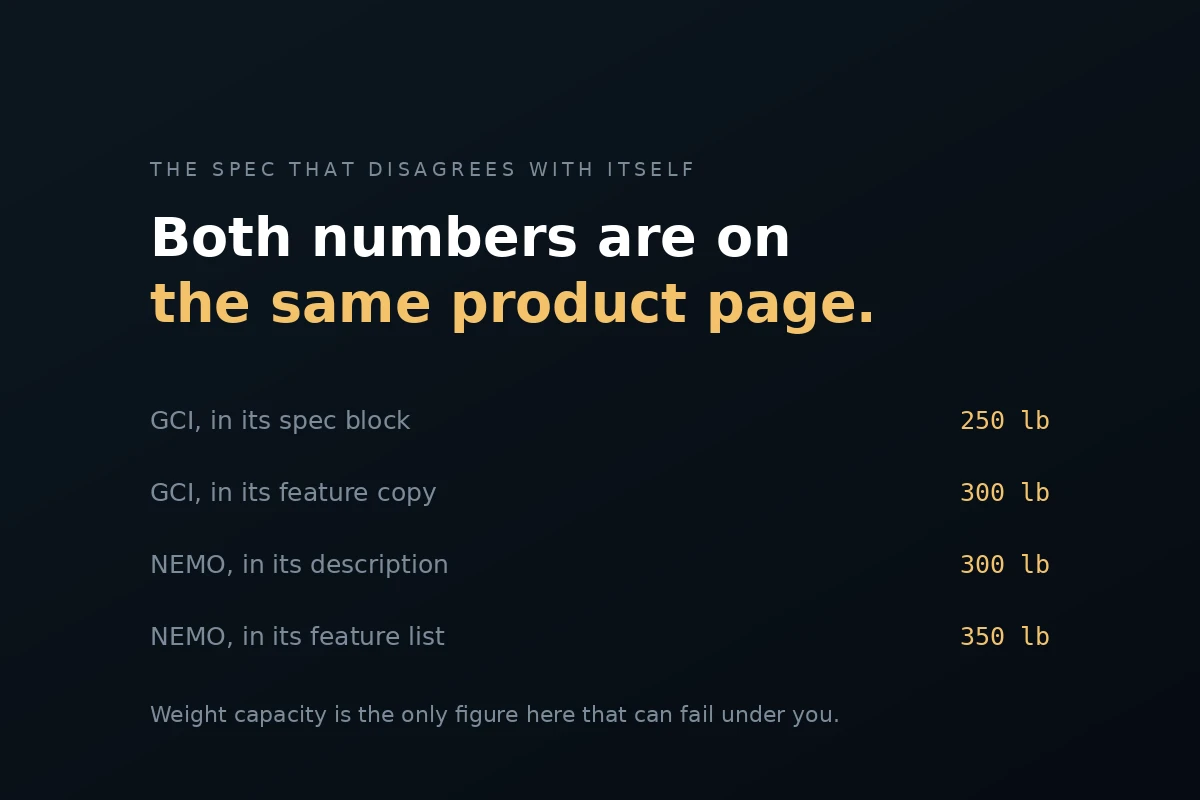
Two of four camp chairs state their weight capacity twice on their own product page, and give a different figure each time.
We were comparing camp chairs, which are about as simple as consumer products get. Four legs, some fabric, two numbers that matter. Seat height decides whether you can get out of the thing. Weight capacity decides whether it holds you.
On the GCI Outdoor Comfort Quad Chair page, the specification block reads:
Weight Capacity: 250 lb (113.4 kg)
Scroll down the same page, past the dimensions and the carry bag, and there is a section heading in capitals:
300-LB WEIGHT CAPACITY. Reinforced to support up to 300 lbs., the sturdy steel frame offers dependable strength and comfort for a wide range of users.
Same chair. Same page. Fifty pounds apart.
Then it happened again
Having found one, we went back through the others. The NEMO Stargaze EVO-X product page describes the chair like this:
EVO-X supports a 300-pound weight capacity and includes a luxury seat design with enhanced cushioning at pressure points.
And in the feature list further down, under a heading reading Sturdy Steel Frame:
Sturdy steel frame can reliably support a 350-pound weight capacity.
Two chairs out of four, from two established brands, each contradicting itself about the only specification in the category with a physical consequence. Neither is a cheap product. The NEMO is the most expensive chair in our comparison.
Why it happens
The mechanism is boring, which is what makes it common. A specification block is usually rendered from a product information system, the same database that feeds retailers and packaging. Feature copy is written by a marketing team at launch and edited afterwards for tone. The two live in different places and are updated on different schedules.
So a frame gets revised, or a supplier retests it, or a legal review pushes the rated figure down. The database gets corrected. The paragraph three screens further down the page does not, because nobody thinks of body copy as containing specifications. Which it does, in capitals, with a heading.
Neither company is trying to mislead anyone. But nobody owns the answer either, and that is the part that should bother a buyer.
Why this one matters more than most
We write fairly often about numbers manufacturers leave out, and usually the stakes are convenience. A missing dilution ratio wastes product. A missing durability figure makes two sealants hard to rank.
Weight capacity is different in kind. It is the figure that describes whether a load-bearing object holds a load, and the failure mode is a person hitting the ground. It is also the figure a buyer near the limit will specifically go looking for, which means the people most affected by the contradiction are exactly the people who bothered to check.
There is a second-order problem too. A rated capacity carries a safety margin, so the practical difference between 250 and 300 pounds is smaller than it sounds. But you cannot reason about a margin you cannot locate. If the tested figure was 250 and the copy says 300, someone at 290 is inside the marketing claim and outside the specification.
What we do about it
We have added a step to how we read a product page: find each number that matters, then search the rest of the page for that number appearing again. It takes seconds and it is now the only reason we caught either of these. Both were invisible from the specification table alone, because the specification table was internally consistent. The disagreement only exists between the table and the prose.
In the camping chair comparison this changed the outcome. The Kelty Lowdown won it, not for being the most comfortable chair, but for publishing seven figures that each appear once and agree with themselves. That is a low bar. It was enough to win.
For anyone buying something rated to hold weight, the version worth keeping is short. Find the number. Then find it again. If the page gives you two answers, plan around the smaller one, and treat the disagreement as information about everything else on that page.
Real Buyer Experiences is reader-supported and independent. We synthesize independent testing and owner reports into one honest verdict - we never trade a recommendation for payment. How we review →