Explained
Facial Steamers, Explained
After reading, you'll understand what each facial steamer spec means, which ones matter, and which claims to ignore.
In this guide
Facial steamer listings are full of big multipliers and spa language, and short on the numbers that decide whether you will enjoy using one. First-time buyers often pick on looks or a 10x claim, then find the tank lasts a few minutes or the unit has no shut-off. Many makers do not publish tank capacity or wattage at all. This guide explains the terms you will see and the few specs worth checking.
The 30-second version
- Tank size and run time matter most, because they decide whether one fill covers a full session.
- Auto shut-off is the key safety feature, so look for a stated trigger such as a timer or an empty-tank sensor.
- Nano-ionic is a real design difference, but the 10x and 15x penetration figures on listings come without published tests.
- Cool mist only comes on multi-mode units, so single-setting steamers give warm mist alone.
- Ozone on a home steamer needs a published output, because the EPA says inhaled ozone can irritate and damage the lungs.
The products this guide is about
Our verdict on each, with the full reasoning on the companion review.
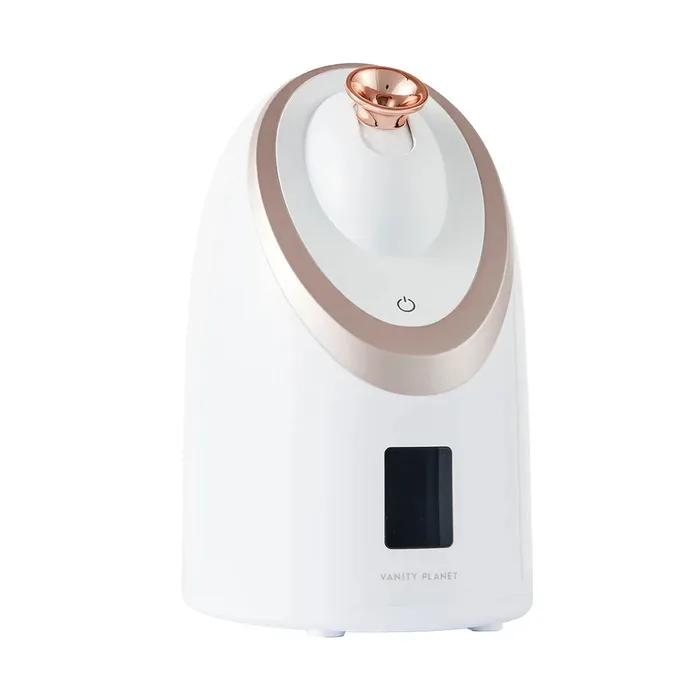
- Buy Vanity Planet SENIA A hot and cold nano-ionic steamer with 6 modes, a 180ml tank, a 20-minute auto shut-off and a five-year device warranty. Amazon
- Buy EZBASICS Nano Ionic Facial Steamer A budget nano-ionic steamer that mists within 30 seconds, runs about 10 minutes and powers off when the water runs out. Amazon
- Buy Pure Daily Care NanoSteamer Clinical A 6-mode ionic steamer with an LCD screen, two interchangeable nozzles and the largest stated run time here. Amazon
- It depends Dr. Dennis Gross Skincare Dr. Dennis Gross Pro Facial Steamer A compact premium steamer built around a 9-minute session, with a wide nozzle and an automatic safety shut-off. Amazon
- It depends Project E Beauty Sensa A compact nano-ionic steamer with an 85ml tank, a 15-minute auto power-down and a two-year warranty. Amazon
- Skip Kingsteam Facial Steamer with Extendable Arm A tabletop steamer with an extendable pipe that advertises built-in ozone but publishes almost no specs. Amazon
What actually matters
- Tank capacity - the volume of water the steamer holds, usually in milliliters. It sets how long you can steam before refilling, and a missing figure is a warning sign.
- Run time - how long one fill produces steam. Compare it with the session length the maker recommends so you are not refilling halfway through.
- Auto shut-off - the feature that turns the heater off on a timer or when the tank runs dry. It protects the element and saves you from forgetting the unit is on.
- Steam type - whether the unit boils water only or adds an ultrasonic plate for finer, ionic mist. The difference affects how fine the mist feels more than any proven skin result.
- Modes - preset combinations of warm and cool mist. Useful if you want variety, unnecessary if you only want a quick warm session.
- Nozzle design - fixed, tilting, rotating or extendable. It decides whether you lean over the unit or can steam sitting back or lying down.
- Warranty - the maker's repair or replacement term. Steamers are heaters that see mineral buildup, so a stated term is worth checking.
The specs, in plain English
Green flags vs red flags
Green flags
- A stated tank capacity in milliliters
- A specific auto shut-off trigger, such as a timer or empty-tank sensor
- A stated session length that matches the maker's usage advice
- A published warranty term on the product page
- Clear voltage information for your country
Red flags
- Ozone advertised with no output figure
- No tank size, wattage or shut-off on the listing
- Penetration multipliers like 10x or 15x with no test behind them
- Conflicting return or warranty terms on the same page
- Instructions that allow oils or additives in the water tank
Who's who: the brands
- Vanity Planet - A beauty-device brand known for at-home steamers and cleansing brushes, with a five-year device warranty.
- Pure Daily Care - Best known for its NanoSteamer line, from the entry 3-in-1 to the multi-mode Clinical.
- EZBASICS - A budget home and beauty brand selling simple nano-ionic steamers with skin kits.
- Dr. Dennis Gross Skincare - A dermatologist-founded skincare brand known for peels, which also sells a premium steamer and LED devices.
- Project E Beauty - A beauty-device brand selling LED masks, other skincare devices and the Sensa steamer in multiple plug versions.
How to read a listing without getting fooled
Start with the numbers and ignore the multipliers. Find the tank capacity, the stated session or run time, and the auto shut-off trigger; if any of the three is missing, ask why. Next, check whether the unit offers cool mist or modes, and whether the nozzle tilts, rotates or extends to suit how you want to sit. Look for the voltage and plug type if you live outside the US. Then read the warranty and returns section, and make sure the terms are stated once and do not contradict each other. Treat penetration claims like 10x or 15x as marketing unless the maker links to the test behind them, and pass on any steamer that advertises ozone without an output figure.
How much should you spend?
Budget steamers cover the basics: warm nano-ionic mist, a short run time and often a dry-run shut-off, but their spec sheets tend to be thin. Mid-range units add stated tank sizes, timers, cool mist and multiple modes, and this is where the longest warranties sit. Premium steamers from skincare brands often pay for the name and finish rather than features, and may publish fewer specs than mid-range ones. For most people the mid-range tier offers the best balance of features, documentation and coverage.
Questions, answered
Is a nano-ionic steamer better than a plain one?
It produces finer mist, which many people find more comfortable. Makers claim it penetrates skin several times better, but the pages we read do not publish the testing. Tank size, run time and shut-off will affect your experience more than the steam label.
Can I put essential oils in the water tank?
No. Makers provide an aroma basket or pad for oils, and EZBASICS warns that oils or other liquids in the tank can cause it to rupture. Keep the tank to distilled or purified water only.
Why do some salon-style steamers have ozone?
Salon steamers have long offered ozone as an extra, and some home units copy it. The EPA notes that inhaled ozone can damage the lungs even at relatively low amounts. If a home steamer advertises ozone without stating its output, choose a different model.
How do I stop mineral buildup?
Use distilled water, as every maker here instructs, and empty the tank after each session. Wipe the unit dry and follow the maker's cleaning steps, which on Pure Daily Care's 3-in-1 page include a white vinegar and distilled water mix. Let the unit cool first; Vanity Planet asks for 3 minutes on the SENIA.
Or jump to the head-to-head: Vanity Planet SENIA vs EZBASICS Nano Ionic Facial Steamer.