

Tools & DIY · Head-to-head
DEWALT DW618 2-1/4 HP Electronic Variable Speed Fixed Base Router vs Makita RT0701C Compact Router
Which should you buy? Our verdict on both, pulled from our full The Best Wood Routers: 4 Compared (and One to Skip) comparison.
The DEWALT is the only router here with a half inch collet, which opens up large-diameter bits and cannot be added later. The Makita is the best of the compacts, with the widest speed range and the lightest body.
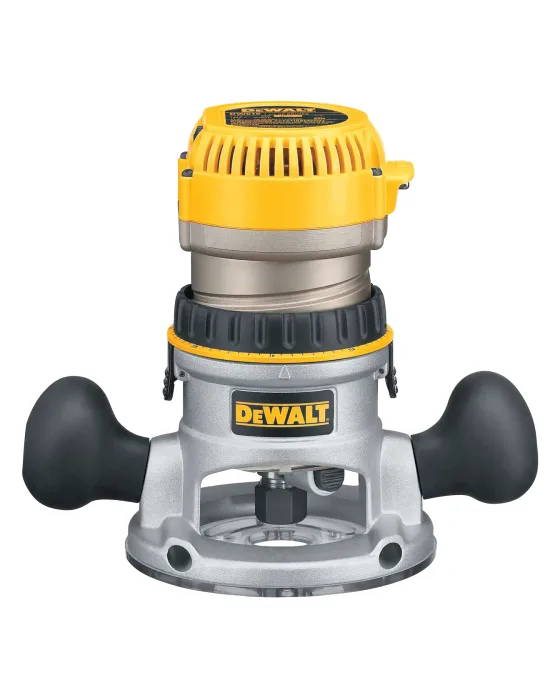
DEWALT DW618 2-1/4 HP Electronic Variable Speed Fixed Base Router
Buy itThe only router here that takes half inch shanks, which is the difference between some of the bit catalogue and all of it.
- Ships with both 1/4 in. and 1/2 in. collets, so large-diameter bits made only in half inch shank will fit.
- A half inch shank grips over a much larger area, so it deflects and chatters less than the same profile in quarter inch.
- 2-1/4 HP (DEWALT labels it maximum motor HP) from a 12 amp motor with electronic variable speed from 8,000 to 24,000 RPM and soft start.
- The low 8,000 RPM end is what large bits need, since big cutters must be run slower to keep rim speed sane.
- Considerably larger and heavier than the compact routers here, and awkward for one-handed edge work.
- The fixed base version needs a separate plunge base for mortising, which is a further purchase.
- DEWALT quotes 2-1/4 HP as maximum motor HP rather than a continuous output figure.
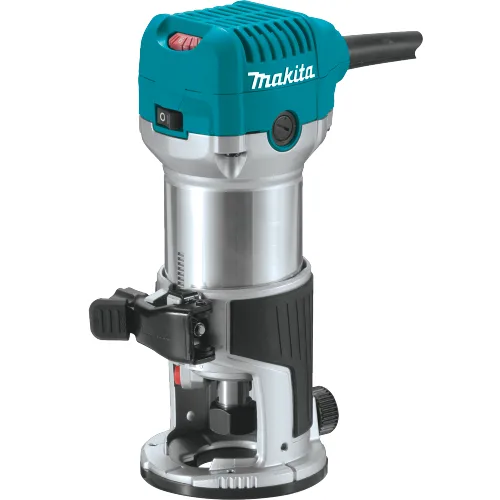
Makita RT0701C Compact Router
Buy itThe best of the compact routers here on speed range and weight, and one that labels its horsepower figure as a maximum.
- A 10,000 to 30,000 RPM variable range, the widest here, so small bits get the speed they need and larger ones can be slowed.
- At 3.9 lb it is the lightest tool in this comparison, which matters for one-handed edge work.
- Makita publishes the collet size, speed range, amps and weight plainly in one spec table.
- Owners report a range of aftermarket bases and jigs are available for it.
- 1/4 in. collet only, so large-diameter bits are permanently out of reach.
- Makita lists Maximum Horsepower 1-1/4 HP on a 6.5 amp motor, which is a peak figure rather than continuous output.
- Fixed base as supplied, so plunge work needs a separate base.
Side by side
The 7 criteria below are the ones our full comparison judged every product on, narrowed to these two.
| DEWALT DW618 2-1/4 HP Electronic Variable Speed Fixed Base Router Our pick | Makita RT0701C Compact Router | |
|---|---|---|
| Our verdict | Buy | Buy |
| Best for | Anyone who will ever want a raised panel cutter, a large roundover or a router table, where half inch shanks are not optional. | Edge profiling, laminate trimming, hinge mortises and jig work, which is the large majority of what routers are used for. |
| Price tier | $$$ · premium | $$ · mid-range |
| Collet sizes | 1/4 in. and 1/2 in. | 1/4 in. only |
| Speed range | 8,000 to 24,000 RPM | 10,000 to 30,000 RPM |
| Power | 12 amp, 2-1/4 HP | 6.5 amp, 1-1/4 HP maximum |
| Weight | Full size | 3.9 lb |
| Base as supplied | Fixed | Fixed |
| Plunge capacity published | Not for fixed base | Not published |
| Horsepower figure type | Labelled maximum motor HP | Labelled maximum |
Which one is right for you?
Pick the DEWALT DW618 2-1/4 HP Electronic Variable Speed Fixed Base Router if
anyone who will ever want a raised panel cutter, a large roundover or a router table, where half inch shanks are not optional.
Know before buying: considerably larger and heavier than the compact routers here, and awkward for one-handed edge work.
Pick the Makita RT0701C Compact Router if
edge profiling, laminate trimming, hinge mortises and jig work, which is the large majority of what routers are used for.
Know before buying: 1/4 in. collet only, so large-diameter bits are permanently out of reach.
The bottom line
Our overall pick is the DEWALT DW618 2-1/4 HP Electronic Variable Speed Fixed Base Router - The only router here that takes half inch shanks, which is the difference between some of the bit catalogue and all of it. Choose the Makita RT0701C Compact Router instead if edge profiling, laminate trimming, hinge mortises and jig work, which is the large majority of what routers are used for.
Want the full picture, including the other options we compared and the popular one we'd skip? Read the complete The Best Wood Routers: 4 Compared (and One to Skip).