

Home & Kitchen
The Best Sergers: 6 Compared (and One to Skip)
We compared six home sergers from six makers on thread count, speed, differential feed, threading and what each maker actually publishes.
The short version
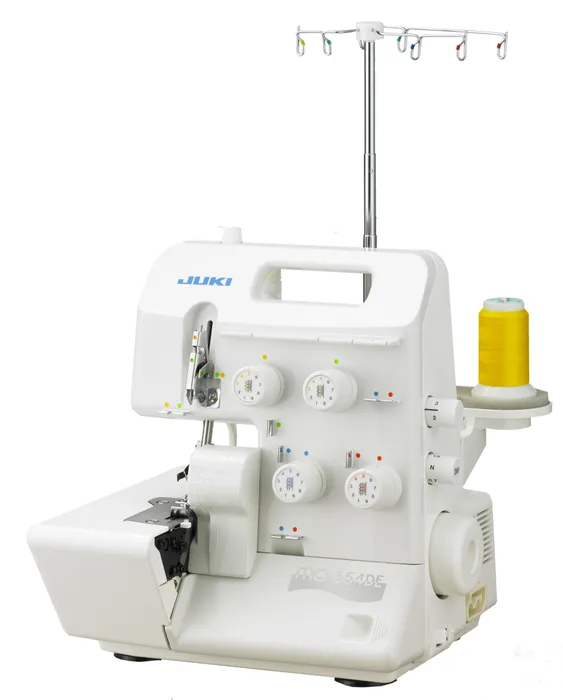
The Juki MO-654DE is our best overall, with 2, 3 or 4 threads, a 0.7 to 2.0 differential feed ratio and the fastest listed speed here at 1,500 stitches per minute. The Brother Pacesetter PS3734T is the value pick, with 3/4 thread sewing, 1,300 stitches per minute and three feet included at the budget tier. The bernette b44 FUNLOCK is the step-up buy for 15 stitches and a tidy, compact setup. The Elna eXtend 664PRO suits sewists who like a settings panel on the machine, and the Singer Professional 5 suits anyone who wants a fifth thread and coverstitch hems. The American Home AH100 is the one to skip, because its maker page publishes no differential feed, speed or stitch count. Best for: most home sewists - Juki MO-654DE.
Our picks at a glance
- Juki MO-654DE - Buy. A 2/3/4 thread overlock with differential feed and a 1,500 stitch per minute top speed from a maker that also builds industrial machines.
- Brother Pacesetter PS3734T - Buy. A 3/4 thread serger with differential feed, 1,300 stitches per minute and three feet included, from the most familiar name in home sewing.
- bernette b44 FUNLOCK - Buy. A compact Swiss-designed overlocker with 15 stitches, 2/3/4 thread sewing and a manual needle threader.
- Elna eXtend 664PRO - It depends. A mechanical overlocker with 12 stitch programs, a program display panel and a 0.5 to 2.25 differential feed range.
- Singer Professional 5 14T968DC - It depends. A 2/3/4/5 thread serger that also sews coverstitch hems, with 14 built-in stitches and a self-adjusting tension system.
- American Home AH100 - Skip. A 4-thread beginner serger whose maker page names color-coded threading and adjustable stitch settings but little else.
The verdict in 30 seconds
What mattered most
- Threads
- Max speed (stitches per minute)
- Differential feed
- Threading
- Stitch count
- Weight
A serger, or overlock machine, trims a seam, stitches it and wraps the raw edge in thread in one pass, which is why knit garments and finished seams look professional. We compared six machines sold to US sewists from six unrelated makers, using only each maker's own product page or data sheet. Brands that share an owner are counted once, so Singer, Husqvarna Viking and Pfaff are one family here, and so are Baby Lock and Brother, and bernette and Bernina. Three are clear buys, two suit particular sewists, and one has a page that leaves out the specs you need. For the machine you sew on before you serge, see our review of the best sewing machines for beginners, and for stitching designs into fabric, the best embroidery machines.
A 2/3/4 thread overlock with differential feed and a 1,500 stitch per minute top speed from a maker that also builds industrial machines.
Best for: Home sewists who want the quickest, sturdiest-feeling machine in the field and are happy to thread by hand.
- Top speed is listed at 1,500 stitches per minute, the fastest of the six, with 2, 3 or 4 threads and a 0.7 to 2.0 differential feed ratio.
- The knife has its own dedicated drive, which the page says keeps cutting consistent on light and heavyweight fabrics, and the cutting width adjusts with a dial.
- Color-coded thread paths, a lower looper threader that disengages, and one-rotation tension dials with the normal settings highlighted keep setup simple.
- Threading is manual, with no air threading on this model.
- The page does not list a stitch count or a voltage, so confirm the US model with a dealer.
- Maximum overlock width is 6 mm and maximum stitch length 4 mm, which is typical rather than generous.
- The page sends buyers to dealers and lists no free arm.
Own the Juki MO-654DE? Tell us how it held up.
Thanks. Counted, and shown once enough owners have weighed in.
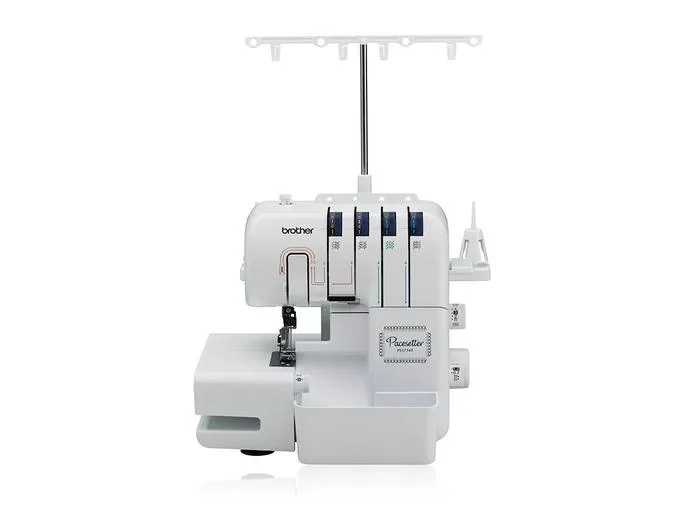
A 3/4 thread serger with differential feed, 1,300 stitches per minute and three feet included, from the most familiar name in home sewing.
Best for: First-time serger buyers who want the core features and a recognizable brand at the lower end of the field.
- The page lists 3/4 thread sewing with one or two needles, a 0.7 to 2.0 differential feed ratio and a 1,300 stitch per minute top speed.
- A blind stitch foot, gathering foot and standard foot come with it, plus a wide table for larger projects and four mini spools of thread.
- Color-coded thread guides, an LED-lit work area and a 1/5/25 year limited warranty round out a short, practical feature list.
- It sews with 3 or 4 threads only, so there is no 2-thread overlock.
- Thread tension is manual, and there is no air threading.
- The page gives a weight of 12.6 with no unit label and does not state a stitch count.
Own the Brother Pacesetter PS3734T? Tell us how it held up.
Thanks. Counted, and shown once enough owners have weighed in.
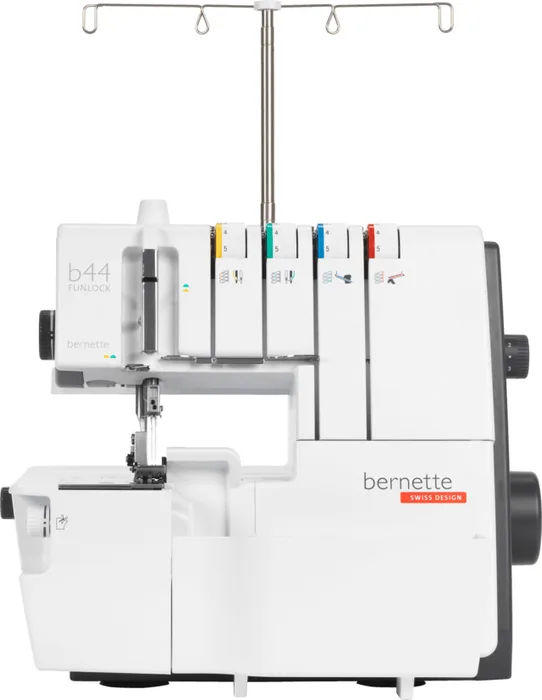
A compact Swiss-designed overlocker with 15 stitches, 2/3/4 thread sewing and a manual needle threader.
Best for: Sewists who want a wider stitch menu and a tidy workspace than a basic serger offers.
- The page lists 15 stitches including a 3-thread super stretch stitch, flatlock, narrow seam, rolled hem and wrapped overlock.
- Differential feed adjusts from 0.6 to 2.0, overlock width runs 3 to 7 mm and the maximum speed is 1,300 stitches per minute.
- A color-coded one-path thread guide, a separate needle threader and lower looper threading help, and a cut-offs bin is included.
- The needle threader is manual and there is no air threading.
- Machine weight and voltage are not given on the page.
- The page does not state a free arm or an included foot count beyond the standard overlock foot.
Own the bernette b44 FUNLOCK? Tell us how it held up.
Thanks. Counted, and shown once enough owners have weighed in.
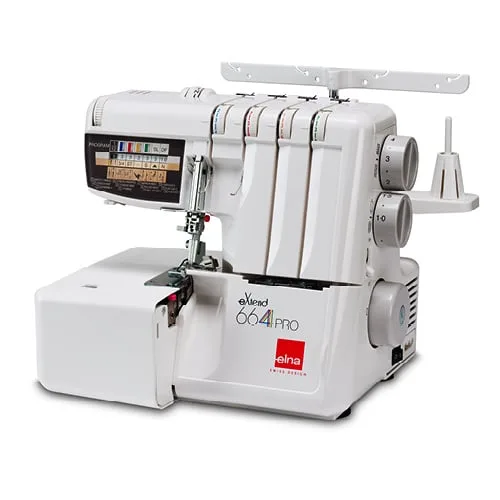
A mechanical overlocker with 12 stitch programs, a program display panel and a 0.5 to 2.25 differential feed range.
Best for: Sewists who like seeing the right settings on the machine and want the widest differential feed range in this group.
- The data sheet lists 12 stitch programs with 2, 3 or 4 thread sewing and 1 or 2 needles, and a reference panel shows the settings for the selected program.
- Differential feed adjusts from 0.5 to 2.25, stitch length from 1 to 5 mm, and cutting width from 3 to 7 mm.
- A tilting needle clamp, a thread tension release, a built-in accessory compartment, a waste tray and an instant rolled hem device are listed.
- Threading uses a lower looper device rather than air, and the needle is threaded with a hand tool.
- The data sheet is dated February 2022 and notes that specifications can change without notice.
- At a listed 6.3 kg it is heavier than the Brother, and the sheet gives no voltage.
Own the Elna eXtend 664PRO? Tell us how it held up.
Thanks. Counted, and shown once enough owners have weighed in.
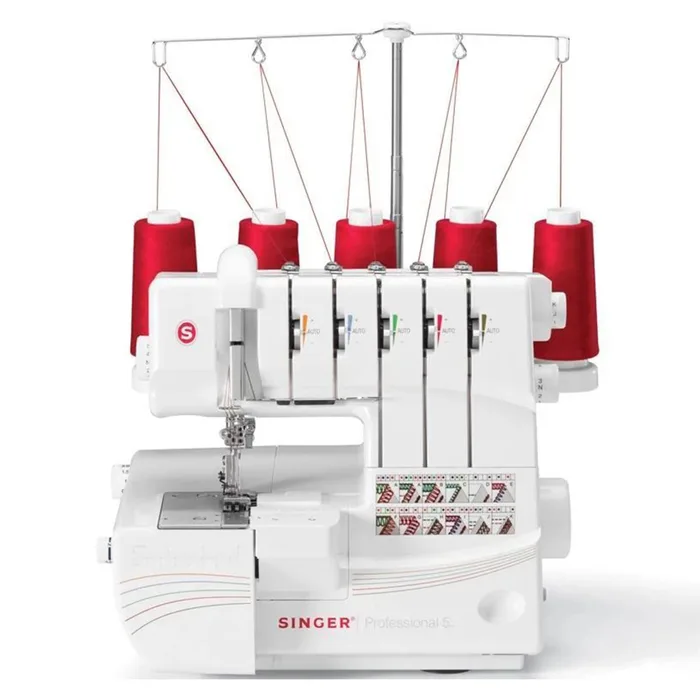
A 2/3/4/5 thread serger that also sews coverstitch hems, with 14 built-in stitches and a self-adjusting tension system.
Best for: Sewists who sew knits and want coverstitch hems and a fifth thread without buying a second machine.
- The page lists 2, 3, 4 or 5 thread stitches and says it comes with coverstitch, so it can sew store-style knit hems.
- It has 14 built-in stitches, a self-adjusting tension system, a rolled hem lever and a metal interior frame with a stainless steel bed plate.
- The page lists 120 volts, 1,300 stitches per minute and a 90 day, 2 year and 25 year warranty structure.
- It is heavier and larger than the Brother, with a listed weight of 18.6 and no unit label.
- The page does not publish a differential feed range, only that it is adjustable.
- Five threads mean more to thread and more to learn than a 3/4 thread machine.
Own the Singer Professional 5 14T968DC? Tell us how it held up.
Thanks. Counted, and shown once enough owners have weighed in.
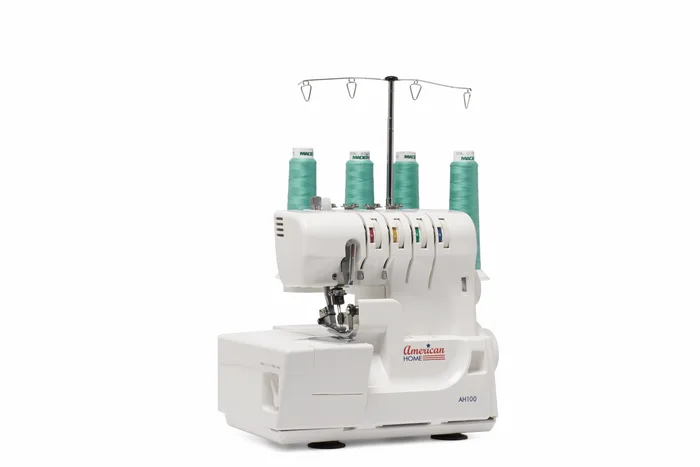
A 4-thread beginner serger whose maker page names color-coded threading and adjustable stitch settings but little else.
Best for: A buyer who is willing to confirm the missing specs from the manual or the box before buying.
- The maker describes it as a 4-thread serger for beginners who want finished edges.
- It has a color-coded threading system and adjustable stitch length and width.
- It comes from Tacony, which offers a warranty registration form for American Home machines.
- The page does not mention differential feed, the control that keeps knits from stretching or sheers from puckering.
- No top speed, stitch count, weight, voltage or included feet are published, so you cannot compare it with the others.
- It is listed as 4-thread only, and the page states no rolled hem, 2-thread or 3-thread capability.
- The page shows no warranty terms, only a registration form.
Own the American Home AH100? Tell us how it held up.
Thanks. Counted, and shown once enough owners have weighed in.
| Criteria | Juki MO-654DE Top pick Buy it Buy | Brother Pacesetter PS3734T Buy it Buy | bernette b44 FUNLOCK Buy it Buy | Elna eXtend 664PRO It depends Buy | Singer Professional 5 14T968DC It depends Buy | American Home AH100 Skip it Buy |
|---|---|---|---|---|---|---|
| Best for | Home sewists who want the quickest, sturdiest-feeling machine in the field and are happy to thread by hand. | First-time serger buyers who want the core features and a recognizable brand at the lower end of the field. | Sewists who want a wider stitch menu and a tidy workspace than a basic serger offers. | Sewists who like seeing the right settings on the machine and want the widest differential feed range in this group. | Sewists who sew knits and want coverstitch hems and a fifth thread without buying a second machine. | A buyer who is willing to confirm the missing specs from the manual or the box before buying. |
| Price tier | $$ · mid-range | $ · budget | $$ · mid-range | $$ · mid-range | $$ · mid-range | $ · budget |
| Threads | 2/3/4 | 3/4 | 2/3/4 | 2/3/4 | 2/3/4/5 with coverstitch | 4-thread |
| Max speed (stitches per minute) | 1,500 | 1,300 | 1,300 | 1,300 | 1,300 | Not published |
| Differential feed | 0.7 to 2.0 ratio | 0.7 to 2.0 mm | 0.6 to 2.0 | 0.5 to 2.25 | Adjustable, range not published | Not mentioned |
| Threading | Manual, color-coded paths, lower looper threader | Manual, color-coded guides | Manual, color-coded path, needle threader | Manual, color-coded guide, lower looper device | Manual, color-coded system | Manual, color-coded system |
| Stitch count | Not published | Not published | 15 | 12 programs | 14 | Not published |
| Weight | 15.5 lb | 12.6 (no unit given) | Not published | 6.3 kg | 18.6 (no unit given) | Not published |
| Rolled hem | Built in | Change for rolled hem listed | 2- and 3-thread rolled hem | Instant rolled hem device | Built-in rolled hem lever | Not published |
| Brand family | Juki | Brother | Bernina | Janome | Singer / Husqvarna Viking / Pfaff | Tacony |
Which one is right for you?
- Home sewists who want the quickest, sturdiest-feeling machine in the field and are happy to thread by hand. Buy it Juki MO-654DE
- First-time serger buyers who want the core features and a recognizable brand at the lower end of the field. Buy it Brother Pacesetter PS3734T
- Sewists who want a wider stitch menu and a tidy workspace than a basic serger offers. Buy it bernette b44 FUNLOCK
- Sewists who like seeing the right settings on the machine and want the widest differential feed range in this group. It depends Elna eXtend 664PRO
- Sewists who sew knits and want coverstitch hems and a fifth thread without buying a second machine. It depends Singer Professional 5 14T968DC
- A buyer who is willing to confirm the missing specs from the manual or the box before buying. Skip it American Home AH100
How we judged the field
Five things separate one home serger from another. Thread count decides which stitches you can sew, since 2, 3 and 4 thread machines cover most seam finishes and rolled hems while 5-thread machines add a safety or coverstitch option. Differential feed range decides how well it handles knits and sheers. Top speed matters less than control, but the figure is a useful tie-breaker. Threading is the biggest annoyance on any serger, so color-coded paths, looper threaders and needle threaders count. Finally, what the maker publishes matters, because a spec that is not printed cannot be checked.
The field splits into entry machines at the budget tier, mid-range machines with more stitches and conveniences, and air-threading models that cost more. We chose six makers that are not related, which meant folding Elna into Janome’s family, Baby Lock into Brother and bernette into Bernina, and leaving Husqvarna Viking and Pfaff to the Singer family. Every number comes from a maker page or data sheet loaded for this review; where a page was silent we say so.
Juki MO-654DE
Buy itThe Juki MO-654DE is the fastest machine on the list, with a listed top speed of 1,500 stitches per minute. It sews with 2, 3 or 4 threads, offers a 0.7 to 2.0 differential feed ratio, and has built-in rolled hemming plus the usual overlock and flatlock variations. The page puts weight on the knife: it has a dedicated drive, which Juki says keeps cutting consistent on both light and heavyweight fabrics, and the cutting width adjusts with a dial. Color-coded thread paths, a lower looper threader that disengages and one-rotation tension dials with normal settings highlighted help with setup. The trade-offs are real. Threading is manual, the page prints no stitch count or voltage, and maximum overlock width is 6 mm. It is a strong all-rounder for sewists who value speed and sturdy cutting over extras, and it is our pick.
Brother Pacesetter PS3734T
Buy itThe Brother Pacesetter PS3734T is the machine to buy if you want a serger without a large outlay. Brother’s page lists 3/4 thread sewing with one or two needles, a 1,300 stitch per minute top speed, a 0.7 to 2.0 differential feed ratio and a stitch length of 1.0 to 4.0 mm. A blind stitch foot, gathering foot and standard foot are included, along with a wide table and four mini spools of thread, and there is an LED-lit work area. The page lists color-coded thread guides for both loopers and a 1/5/25 year limited warranty. What it leaves out matters too: there is no 2-thread overlock, tension is manual and the page does not state a stitch count. The weight is given as 12.6 with no unit label. It suits first-time serger buyers and people who want a familiar brand behind a simple machine.
bernette b44 FUNLOCK
Buy itThe bernette b44 FUNLOCK is a compact overlocker for sewists who want more stitch choices without moving to air threading. The page lists 15 stitches, including a 3-thread super stretch stitch, flatlock, narrow seam, 2- and 3-thread rolled hem and a 2-thread wrapped overlock, plus 2, 3 and 4 thread sewing. Differential feed runs from 0.6 to 2.0, overlock width from 3 to 7 mm, and the maximum speed is 1,300 stitches per minute. A color-coded one-path thread guide, a separate needle threader and a lower looper threading aid help with setup, and a cut-offs bin and looper-cover accessory storage come with it. Weight and voltage are not published on the page, and the needle threader is manual. It is a good mid-range buy for someone who sews many seam types and wants everything in one tidy machine.
Elna eXtend 664PRO
It dependsThe Elna eXtend 664PRO is a mechanical overlocker built around a program display panel that shows the settings for the stitch you choose, which takes guesswork out of dial settings. Elna’s data sheet lists 12 stitch programs, 2, 3 or 4 thread sewing, 1 or 2 needles, stitch length from 1 to 5 mm, cutting width from 3 to 7 mm and a differential feed ratio from 0.5 to 2.25, the widest range in this group. It adds a tilting needle clamp, thread tension release device, built-in accessory storage, a waste tray and a 2-thread converter. The downsides: the sheet is dated February 2022, lists 6.3 kg for the machine, and gives no voltage. The brand is owned by Janome, so this represents that family here. It suits sewists who want help choosing settings and a wide differential feed range.
Singer Professional 5 14T968DC
It dependsThe Singer Professional 5 14T968DC is the one to consider if you want coverstitch hems and a fifth thread from the same machine. Singer’s page lists 2, 3, 4 or 5 thread stitches, 14 built-in stitches, a self-adjusting tension system that sets tensions for the stitch you select, a built-in rolled hem lever and a top speed of 1,300 stitches per minute. The interior frame is metal and the bed plate is stainless steel, and the specs list 120 volts. A cone adapter set, extra knife and dust cover are included. The page says differential feed is adjustable but does not print a range. It is also the largest machine in the group, with a listed weight of 18.6 and no unit label. It suits sewists who make knit tops and want coverstitch hems without buying a second machine.
American Home AH100
Skip itThe American Home AH100 is a 4-thread beginner serger from Tacony, and the problem is how little its maker page tells you. The page says it has a color-coded threading system and adjustable stitch length and width, and that it is ideal for beginners wanting finished edges. It does not mention differential feed, the control that keeps knits from waving and sheers from puckering, and there is no top speed, stitch count, weight, voltage or list of included feet. It is described as 4-thread, with no word on 3-thread, 2-thread or rolled hem. Warranty terms are not printed either, only a registration form. A beginner can get a good result on a machine like this, but with nothing to compare, you are guessing. Skip it unless you can confirm the missing specs from the box or the manual.
Sources
Specs in this review come from these pages.
- Juki America - MO-654DE product page (jukihome.com)
- Brother USA - PS3734T product page (brother-usa.com)
- bernette - b44 FUNLOCK product page (bernette.com)
- Elna - eXtend 664PRO product page (global.elna.com)
- Elna - eXtend 664 and 664PRO data sheet (global.elna.com)
- SINGER - Professional 5 14T968DC product page (singer.com)
- Tacony - American Home product page (tacony.com)
Juki MO-654DE vs Brother Pacesetter PS3734T: which should you buy?
The Juki MO-654DE and the Brother PS3734T are both listed with a differential feed ratio of 0.7 to 2.0, color-coded threading and manual tension. The Juki adds 2-thread sewing, a 1,500 stitch per minute top speed against 1,300, a dedicated knife drive and a heavier build at 15.5 lb listed against Brother’s 12.6, while the Brother adds three included feet, a wide table and a lower tier.
Choose the Juki if you sew often, work with a range of fabric weights or want the widest stitch set of the two. Choose the Brother if this is your first serger, you mostly finish edges and sew knits, and you want to keep costs down. Both thread by hand, so if air threading matters, look at the makers’ air models rather than either of these.
Who should buy which
- Most home sewists: the Juki MO-654DE. It combines 1,500 stitches per minute, a 0.7 to 2.0 differential feed ratio and a dedicated knife drive.
- First-time serger buyer on a budget: the Brother Pacesetter PS3734T. It lists 3/4 thread sewing, differential feed and three feet at the budget tier.
- Sewists who want more stitches: the bernette b44 FUNLOCK. It lists 15 stitches, 2/3/4 thread sewing and a 3 to 7 mm overlock width.
- Sewists who like settings on the machine: the Elna eXtend 664PRO. Its program display panel shows the settings for the selected stitch.
- Knit sewists who want coverstitch: the Singer Professional 5 14T968DC. It lists 5-thread stitches and comes with coverstitch.
What to look for
- Thread count: 2/3/4 thread machines cover most seam finishes and rolled hems, 3/4 thread machines drop the 2-thread option, and 5-thread machines add coverstitch or a safety stitch.
- Differential feed: the dial that stops knits from waving and sheers from puckering. Check that the page lists a range, because one of these six does not mention it.
- Threading system: color-coded paths are the baseline, and air threading is the step up. Neither a looper threader nor a needle threader replaces the learning curve of a first serger.
- Stitch menu: some makers publish a stitch count and some do not. A higher number helps if you want flatlock, wrapped overlock and narrow seams from one machine.
- Speed versus control: a higher top speed is nice, but you will rarely run it flat out. A speed limiter or foot control matters more when learning.
- What the page publishes: weight, voltage, included feet and warranty are all things a maker should print. A page that omits them is a reason to be cautious.
Our final take
The Juki MO-654DE is the best serger of the six for most home sewists, thanks to its 1,500 stitch per minute speed, dedicated knife drive and a flexible 2/3/4 thread range. The Brother PS3734T is the easier first buy, and the bernette b44 FUNLOCK adds a bigger stitch menu. The Elna 664PRO and Singer Professional 5 each suit a particular sewist, one who wants a panel of settings and one who wants coverstitch. None of the six uses air threading, so if effortless looper threading matters, shop the makers’ air models. Skip the American Home AH100 until its maker publishes the specs that count.
Questions, answered
Do I need a serger if I already have a sewing machine?
No, a serger is an add-on rather than a replacement. A serger trims and wraps the raw edge in one pass, which suits knits and clean seam finishes, but most models do not sew buttonholes or zippers the way a sewing machine does. If you only sew woven fabric occasionally, a zigzag stitch on a regular machine can finish edges. A serger earns its place when you sew stretch fabric often or want seams that look store-bought.
What does differential feed do?
Differential feed changes how far the front and back feed dogs move the fabric. Makers describe it as the control that prevents wavy seams on stretchy knits and puckering on sheers, and it can also be set to ruffle a fabric on purpose. A serger without it makes knit work much harder. Ranges are stated differently across brands, as a ratio or as millimeters, so compare what the page prints.
What is the difference between 3-thread and 4-thread?
A 3-thread overlock uses one needle and two loopers and is common for finishing edges and rolled hems. A 4-thread overlock adds a second needle, which makes a stronger seam that suits garments. Machines such as the Juki, bernette and Elna here are listed for 2, 3 and 4 threads, while the Brother is listed for 3 or 4. The Singer Professional 5 adds a fifth thread and coverstitch.
Is air threading worth it?
Air threading uses a puff of air to carry thread through the loopers, which removes the hardest part of setting up a serger. Juki, Brother and Husqvarna Viking each list air-threading models. None of the six machines here uses it, so every one is threaded by hand with color-coded guides. If you change thread colors often, check the makers' air models before you buy.
Are these machines safe for US outlets?
The Singer page lists 120 volts, but the Juki, Brother PS3734T, bernette, Elna and American Home pages we loaded do not print a voltage. Machines sold by US dealers are made for US power, but check the label or ask the dealer before buying a machine from an overseas listing. Elna's data sheet is an international document, so buy from a US dealer.
Deciding between the top two? See our head-to-head: Juki MO-654DE vs Brother Pacesetter PS3734T.
More in Home & Kitchen
Sergers, Explained Plain-English guide → Juki MO-654DE vs Brother Pacesetter PS3734T Head-to-head →  The Best Sewing Machines for Beginners: 4 Compared (and One to Skip)
 The Best Sheet Pans: 4 Compared (and One to Skip)
 The Best Shower Filters: 4 Compared (and One to Skip)
 The Best Shower Heads: 4 Compared (and One to Skip)