

Tech & Gadgets
The Best Portable Power Stations: 4 Compared (and One to Skip)
We compared four current LiFePO4 power stations on capacity, output, recharge speed, expandability, and real-world value.
The short version
After weighing independent testing and owner reports, the Anker SOLIX C1000 is the best portable power station for most people, pairing a roughly one-hour full recharge and long-life LiFePO4 cells with the lowest price of the serious contenders. Step up to the EcoFlow Delta 3 Plus if you want the most polished app and room to expand into a bigger system. Choose the Bluetti Elite 200 V2 only if you genuinely need about double the capacity and will accept its considerable weight. The Jackery Explorer 1000 v2 is a pleasant, lightweight unit, but it is outpriced and out-featured by the Anker, so we would pass on it today. All four use LiFePO4 chemistry, so any of them should last many years. Best for: buyers who want dependable off-grid and backup power without overpaying, with the Anker SOLIX C1000 the safest all-round bet.
Our picks at a glance
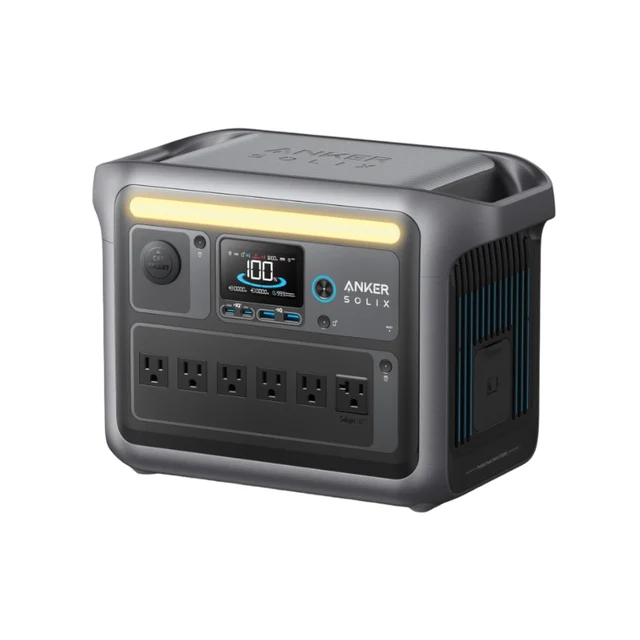
- Anker SOLIX C1000 - Buy. The value benchmark: fastest full recharge, long-life cells, and a compact, quiet build for the money.
- EcoFlow Delta 3 Plus - Buy. The smart pick when you want the best app, fast charging, and room to grow into a bigger system.
- Bluetti Elite 200 V2 - It depends. Roughly double the capacity and the highest output here, if you can live with the weight.
- Jackery Explorer 1000 v2 - Skip. A likeable, lightweight unit that is simply outclassed on value and features by the Anker.
The verdict in 30 seconds
What mattered most
- Battery capacity
- Output (continuous / surge)
- Chemistry & rated cycles
- AC recharge speed
- Expandability
- Weight / portability
Portable power stations have quietly become the default backup for camping, RVs, job sites, and short outages, and the 2026 field is dominated by four names: Anker SOLIX, EcoFlow, Bluetti, and Jackery. These are full-size battery boxes with wall outlets, not pocket power banks. We synthesized independent testing and owner reports to sort a value champion, a smart-ecosystem pick, a big-capacity workhorse, and one popular unit we would pass on today.
The value benchmark: fastest full recharge, long-life cells, and a compact, quiet build for the money.
Best for: Most buyers who want the best blend of price, recharge speed, and longevity in a grab-and-go 1kWh unit.
- Independent testing clocks a full recharge in roughly under an hour, among the quickest at this size
- LiFePO4 cells rated for thousands of cycles, so it should outlast the devices it powers
- Compact and light for 1,000Wh, with six AC outlets and a bright info display
- Optional single expansion battery roughly doubles capacity when you need it
- Peak output trails the larger Bluetti, so very high-draw tools can trip it
- Ecosystem is narrower than EcoFlow's for whole-home or smart-panel ambitions
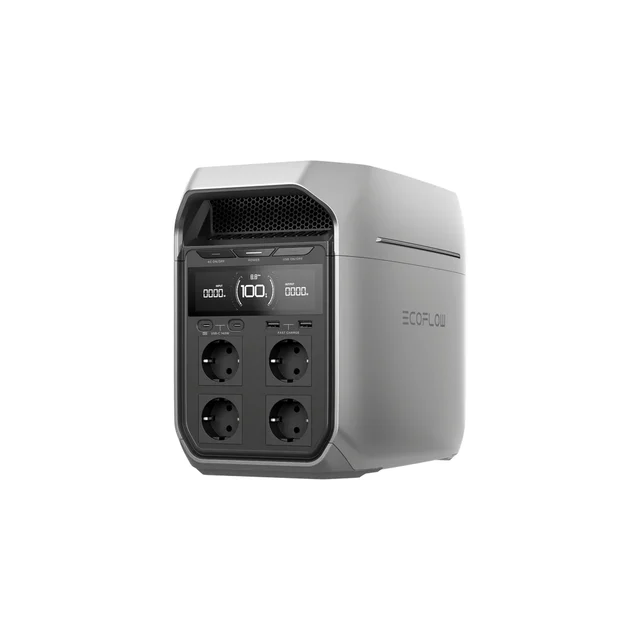
The smart pick when you want the best app, fast charging, and room to grow into a bigger system.
Best for: Buyers who value software polish and want a platform they can scale up later.
- Reviewers consistently rate the app and software the most polished in the category
- Very fast AC recharge plus flexible solar and car-charging inputs
- Expandable with add-on batteries into a multi-kWh system, unlike most rivals here
- Fits into a broader ecosystem of extra batteries, panels, and smart-home gear
- Costs meaningfully more than the Anker for similar base capacity
- You pay for expandability and ecosystem features many casual users never touch
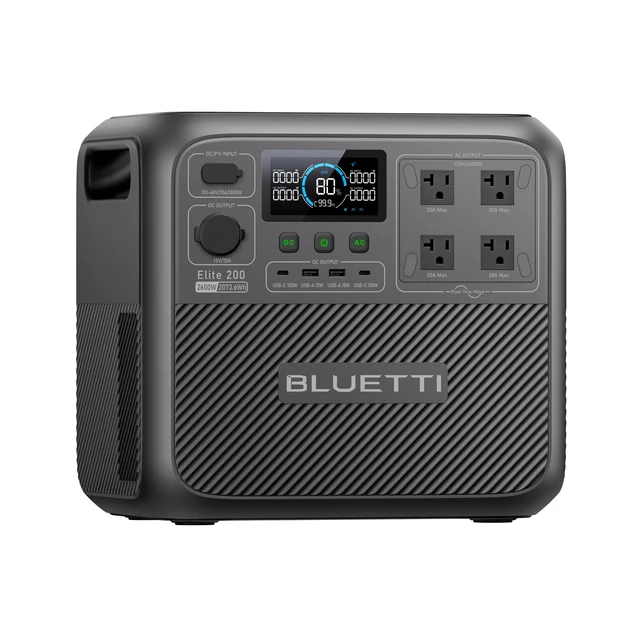
Roughly double the capacity and the highest output here, if you can live with the weight.
Best for: RVers, van-lifers, and outage planners who genuinely need ~2kWh and will accept the extra bulk.
- Around 2,000Wh capacity comfortably covers a long weekend or a fridge through an outage
- Highest continuous output in this group, plus a 3,900W Power Lifting mode for resistive loads
- Strong cost-per-watt-hour that owners repeatedly call out as its best trait
- TurboBoost recharge reaches 80% in about 1.1 hours, fast for a unit this large
- Substantially heavier than the 1kWh units, so it is not truly grab-and-go
- Bluetti's page does not make expansion support clear, so check before planning to add batteries
- Overkill and over-budget if your loads are just phones, lights, and a laptop
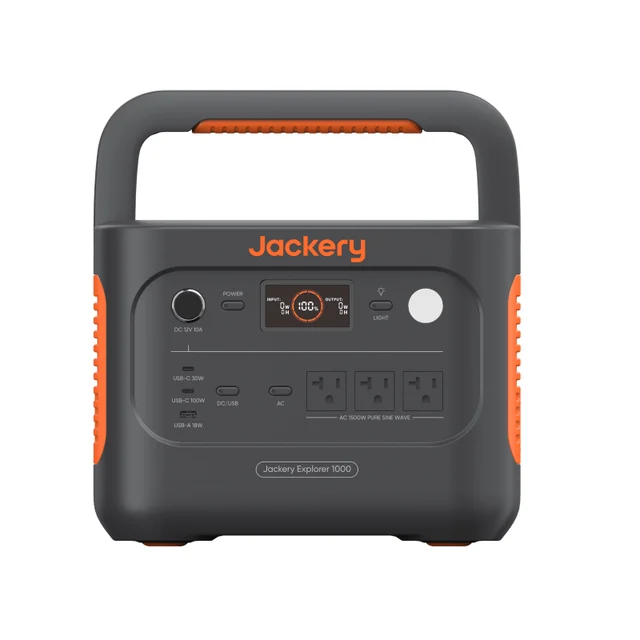
A likeable, lightweight unit that is simply outclassed on value and features by the Anker.
Best for: Brand-loyal Jackery owners who prize light weight above value, though the Anker beats it for most people.
- Lightest 1kWh unit in this group and easy to carry one-handed
- Now uses long-life LiFePO4 cells rated for thousands of cycles
- Simple, approachable layout that first-time owners find easy to live with
- The one-hour recharge needs Emergency Charge mode; Jackery lists standard AC charging at 1.58 hours
- No capacity expansion listed and a thinner software feature set than EcoFlow
- Typically priced above the faster, longer-lived Anker for similar capacity
| Criteria | Anker SOLIX C1000 Top pick Buy it Buy | EcoFlow Delta 3 Plus Buy it Buy | Bluetti Elite 200 V2 It depends Buy | Jackery Explorer 1000 v2 Skip it Buy |
|---|---|---|---|---|
| Best for | Most buyers who want the best blend of price, recharge speed, and longevity in a grab-and-go 1kWh unit. | Buyers who value software polish and want a platform they can scale up later. | RVers, van-lifers, and outage planners who genuinely need ~2kWh and will accept the extra bulk. | Brand-loyal Jackery owners who prize light weight above value, though the Anker beats it for most people. |
| Price tier | $$ · mid-range | $$$ · premium | $$$ · premium | $$ · mid-range |
| Battery capacity | ~1,056Wh | ~1,024Wh (expandable) | ~2,073Wh | ~1,070Wh |
| Output (continuous / surge) | 1,800W / 2,400W | 1,800W / 3,600W | 2,600W / 3,900W (resistive loads only, Power Lifting mode) | 1,500W / 3,000W |
| Chemistry & rated cycles | LiFePO4, ~3,000 cycles | LiFePO4, ~4,000 cycles | LiFePO4, rating not verified | LiFePO4, ~4,000 cycles |
| AC recharge speed | Full in ~1 hr | Full in ~1 hr | 80% in ~1.1 hr | 1 hr (Emergency Charge mode) |
| Expandability | To ~2,100Wh (1 add-on) | To multi-kWh (add-ons) | Not confirmed | None listed |
| Weight / portability | Compact, ~28 lb | Compact, ~28 lb | Heavy, ~53 lb | Lightest, ~24 lb |
| App & ecosystem | Capable app | Best-in-class app | Capable app | Basic app |
| Price tier | $$ · mid-range | $$$ · premium | $$$ · premium | $$ · mid-range |
Which one is right for you?
- Most buyers who want the best blend of price, recharge speed, and longevity in a grab-and-go 1kWh unit. Buy it Anker SOLIX C1000
- Buyers who value software polish and want a platform they can scale up later. Buy it EcoFlow Delta 3 Plus
- RVers, van-lifers, and outage planners who genuinely need ~2kWh and will accept the extra bulk. It depends Bluetti Elite 200 V2
- Brand-loyal Jackery owners who prize light weight above value, though the Anker beats it for most people. Skip it Jackery Explorer 1000 v2
How we judged the field
We do not run our own lab. Instead, we synthesize independent testing and a large volume of owner reports, then weigh the criteria that matter once the unit is actually in your hands: usable capacity, continuous and surge output, battery chemistry and rated cycle life, how fast it recharges from the wall, whether it can expand, weight, and the quality of the companion app. Because all four leading brands have now moved to LiFePO4 cells, longevity is less of a differentiator than it was a couple of years ago, which pushes recharge speed, output, expandability, and price to the front. We deliberately compared like-for-like where possible, anchoring on ~1kWh units and noting where a model steps up in size.
Anker SOLIX C1000
Buy itThe C1000 is the unit we would hand most people. Independent testing repeatedly highlights its near-fastest-in-class full recharge and its long-life LiFePO4 cells, and it does this in a compact, relatively quiet body with six AC outlets and a clear display. Owners consistently praise the price-to-capacity ratio, and a single optional expansion battery roughly doubles capacity if your needs grow. Its surge ceiling is lower than the big Bluetti and its ecosystem is narrower than EcoFlow’s, but for the classic camping, backup, and job-site use case it is the smart-money choice.
EcoFlow Delta 3 Plus
Buy itEcoFlow’s advantage is software and scale. Reviewers regularly call its app the most polished in the segment, and the Delta 3 Plus charges quickly from wall, solar, or a vehicle. Crucially, it expands with add-on batteries into a multi-kWh system and slots into a wider ecosystem of panels and smart-home hardware. You pay a premium over the Anker for similar base capacity, and many buyers never use the expandability, but if you want the best app or a platform you can build on, it earns its price.
Bluetti Elite 200 V2
It dependsThis is the workhorse. At roughly double the capacity of the 1kWh units and with the highest continuous output here (and a 3,900W Power Lifting mode for resistive loads), it comfortably runs a fridge, power tools, or a long off-grid weekend, and owners single out its cost-per-watt-hour as excellent. The catches are real: it is markedly heavier, so it is more of a set-it-down unit than a grab-and-go one, and Bluetti’s page does not make expansion support clear. If you genuinely need about 2kWh it is a strong buy; if your loads are light, it is bulk and money you do not need.
Jackery Explorer 1000 v2
Skip itThe Explorer 1000 v2 is genuinely likeable. It is the lightest unit here, its move to LiFePO4 gives it a long rated lifespan, and its layout is friendly for first-time owners. The problem is competitive position: its headline one-hour charge needs Emergency Charge mode and the standard AC time is listed at 1.58 hours, its software is thinner than EcoFlow’s, and it typically costs more than the faster, longer-lived Anker. Nothing here is broken; it is simply outclassed on value, which is why we would pass.
Anker SOLIX C1000 vs EcoFlow Delta 3 Plus: which should you buy?
This is the real decision for most shoppers, because both are excellent. The Anker wins on the fundamentals that everyone feels: it costs less, recharges about as fast, uses long-life cells, and stays compact. Buy it if you want the most power station for your money in a unit you will carry often. The EcoFlow costs more but answers a different question: it has the better app, and it is the one to buy if you expect to expand into a larger system or want to plug into a broader ecosystem later. Put simply, choose the Anker for value and portability, and the EcoFlow for software and future growth.
What to look for
- Capacity (Wh) matched to your loads: estimate the watt-hours you burn in a day before buying; most people over- or under-shoot.
- LiFePO4 chemistry: insist on it for the multi-thousand-cycle lifespan; all four here qualify.
- Continuous and surge output (W): the surge figure matters for motors and tools that spike at startup.
- Recharge speed and inputs: check AC time, solar input, and whether fast charging is on by default or needs a special mode.
- Expandability: only some units add batteries; decide up front whether you want that headroom.
- Weight and outlet count: a heavy unit is fine at home but a burden on the trail; count the outlets you actually need.
Our final take
This is a strong field with no truly bad option, but the value leader is clear. The Anker SOLIX C1000 gives most buyers the best mix of fast recharging, long life, compact size, and price, making it our overall pick. Step up to the EcoFlow Delta 3 Plus for the best app and a system you can expand, and reach for the Bluetti Elite 200 V2 only when you genuinely need its larger capacity and can handle the weight. The Jackery Explorer 1000 v2 is pleasant but outpriced by the Anker, so we would spend elsewhere. Whichever you choose, LiFePO4 chemistry means it should serve you well for years.
Questions, answered
How is a portable power station different from a power bank?
A power bank is a small battery that tops up phones and tablets over USB. A portable power station is a much larger battery, typically 1,000Wh or more, with an inverter and standard wall outlets so it can run appliances, tools, and medical or camping gear. All four units here sit firmly in the power-station class, not the pocket power-bank class.
Why does everyone recommend LiFePO4 batteries now?
Lithium iron phosphate (LiFePO4) cells are rated for several thousand charge cycles, versus a few hundred to about a thousand for older lithium chemistries, and they tolerate heat better. Reviewers note this can mean a decade or more of regular use. All four models in this comparison have moved to LiFePO4, which is a big reason they are worth considering over older stock.
What size do I actually need?
For phones, laptops, lights, and a small cooler on weekend trips, a ~1,000Wh unit like the Anker, EcoFlow, or Jackery is plenty. If you want to run a full-size fridge, power tools, or bridge a longer outage, the ~2,000Wh Bluetti Elite 200 V2 or an expandable model makes more sense. Owners frequently report buying too small, so estimate your watt-hours per day before choosing.
Can these run a refrigerator or CPAP during a power outage?
Yes for most household fridges and CPAP machines, which draw modestly, though run time depends on capacity and the appliance's surge draw at startup. The higher-output Bluetti handles heavy startups most comfortably. This is general product information and not medical advice; if you rely on a device such as a CPAP or oxygen concentrator, confirm its exact power requirements and backup needs with a qualified professional.
Are the advertised fast-charge times realistic?
Independent testing broadly confirms the sub-one-hour AC recharge claims for the Anker and EcoFlow. Note that the Jackery's one-hour figure requires its Emergency Charge mode, and its listed standard AC charge time is 1.58 hours.
Deciding between the top two? See our head-to-head: Anker SOLIX C1000 vs EcoFlow Delta 3 Plus.
More in Tech & Gadgets
Portable Power Stations, Explained Plain-English guide → Anker SOLIX C1000 vs EcoFlow Delta 3 Plus Head-to-head →  The Best Portable Projectors: 4 Compared (and One to Skip)
  The Best Portable SSDs: Fast, Rugged, and Which One to Skip
  The Best PC Power Supplies: 4 Compared (and One to Skip)
  The Best RC Cars for Gifts: 4 Compared (and One to Skip)