

Cycling
The Best Entry & Mid-Level Mountain Bikes: 4 Compared (and One to Skip)
We compared four current hardtail trail bikes on frame quality, fork, drivetrain, brakes, fit range and real trail value.
The short version
For most people getting into or back into mountain biking, the Trek Roscoe 7 Gen 4 is the standout: it ships with a 150mm air fork, a dropper post and hydraulic brakes, so it stays fun as your riding improves. The Specialized Rockhopper Sport is the runner-up, built on an excellent, well-fitting, upgrade-friendly frame that rewards patient owners. The Giant Talon 1 is a lot of dependable bike for less money, but its lack of a dropper and a trail-length fork make it a stepping stone rather than a long-term keeper. Avoid the Schwinn Axum Comp if you actually intend to ride trails: it is the only bike here on mechanical disc brakes, with a 1x8 drivetrain and a quick-release 100 mm fork. Best for: new and intermediate riders who want a real trail hardtail that will not need replacing after one season.
Our picks at a glance
- Trek Roscoe 7 Gen 4 - Buy. A trail hardtail that ships with both an air fork and a dropper post, so it grows with your skills instead of holding them back.
- Specialized Rockhopper Sport - Buy. A superbly sorted alloy frame with a genuinely thoughtful size-specific fit that punches well above its modest price.
- Giant Talon 1 - It depends. A lot of dependable, well-built hardtail for the money, as long as you accept no dropper post at this price.
- Schwinn Axum Comp 29in - Skip. A cheap trail-styled hardtail with mechanical disc brakes and an 8-speed drivetrain, the only bike here without hydraulic brakes.
The verdict in 30 seconds
What mattered most
- Frame & geometry
- Fork
- Drivetrain
- Brakes
- Dropper post
- Trail capability
Entry and mid-level mountain biking has never offered more real bike for the money, but the gap between a proper trail hardtail and a heavy lookalike is wider than the price tags suggest. We weighed four current-generation models on the things that actually decide whether you keep riding: fork quality, drivetrain reliability, geometry, brakes and long-term upgrade room. Two are easy recommendations, one is a solid choice only for the right rider, and one looks like a bargain until you take it on anything steeper than a bike path.
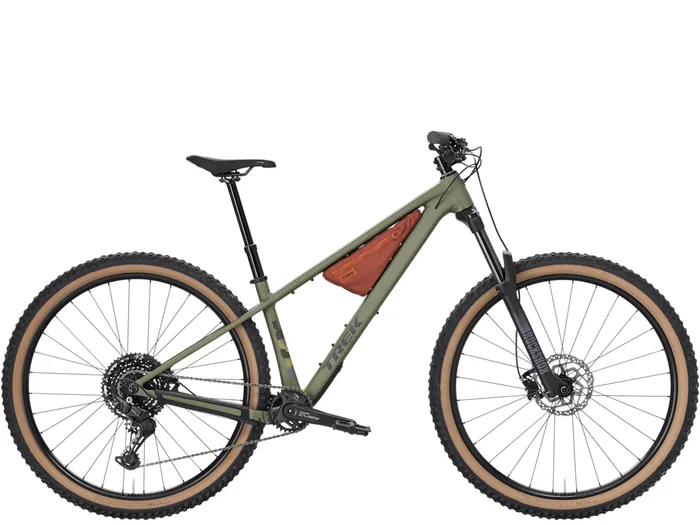
A trail hardtail that ships with both an air fork and a dropper post, so it grows with your skills instead of holding them back.
Best for: The beginner or returning rider who wants one bike that stays capable as they get faster and start tackling real singletrack.
- RockShox Recon Silver RL Solo Air fork with 150mm of travel and a lockout, tunable to rider weight unlike the coil fork on the Rockhopper Sport
- Comes stock with a TranzX dropper post, 170mm of travel in sizes M and ML, plus a 1x10 Shimano CUES drivetrain and Shimano MT200 hydraulic brakes
- Alpha Platinum Aluminum frame with internal routing, a threaded bottom bracket and room for 29x2.60 tires
- The priciest bike here, so it is not the cheapest way onto the trail
- Trek lists a size M at 32.04 lbs and 2-piston brakes, which keen riders often upgrade
Own the Trek Roscoe 7 Gen 4? Tell us how it held up.
Thanks. Counted, and shown once enough owners have weighed in.
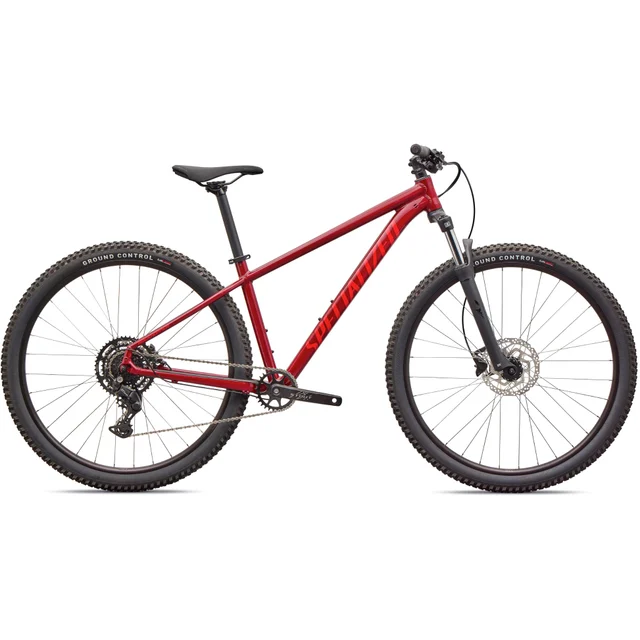
A superbly sorted alloy frame with a genuinely thoughtful size-specific fit that punches well above its modest price.
Best for: Riders who prioritize a great-fitting, upgrade-friendly frame they can improve piece by piece over time.
- Butted alloy frame with hydroformed tubes and size-specific geometry and fork travel for a balanced fit across body sizes
- 1x9 microSHIFT Advent drivetrain with a clutch derailleur (some builds use Shimano CUES), hydraulic disc brakes and dropper-post-ready routing
- Huge range of frame sizes and wheel sizes makes it one of the easiest bikes to actually fit
- Sport trim uses a basic coil-sprung fork that owners often upgrade before long
- No dropper post fitted as standard at this trim level
Own the Specialized Rockhopper Sport? Tell us how it held up.
Thanks. Counted, and shown once enough owners have weighed in.
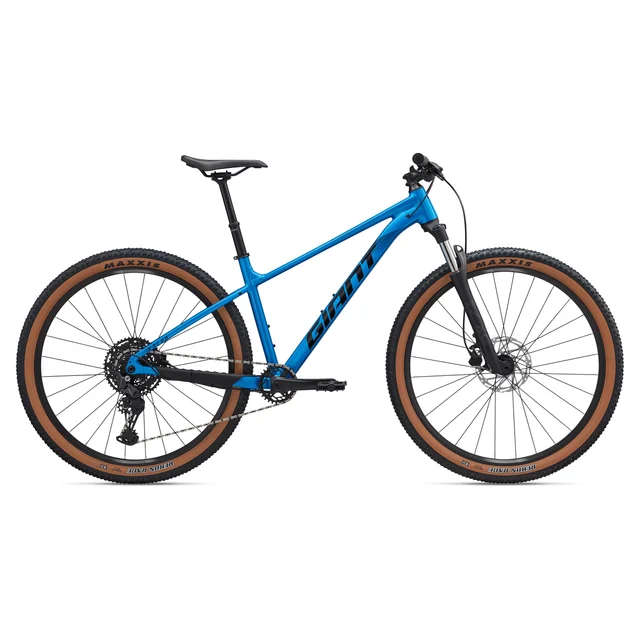
A lot of dependable, well-built hardtail for the money, as long as you accept no dropper post at this price.
Best for: Value-focused newcomers who want a solid, low-maintenance first hardtail and are happy to upgrade later, or not at all.
- Butted ALUXX-grade alloy frame with internal routing, including for a dropper post
- Air-sprung Giant SXC32 fork, plus a clutch-equipped 1x11 drivetrain, thru-axle hubs and hydraulic brakes
- Grippy Maxxis tires and trail-oriented geometry make it fun on flow trails and mellow singletrack
- It is built as a cross-country hardtail, without the 150mm trail fork and stock dropper that set the Roscoe apart
- No dropper post as standard, and adding one narrows the gap to pricier bikes
Own the Giant Talon 1? Tell us how it held up.
Thanks. Counted, and shown once enough owners have weighed in.
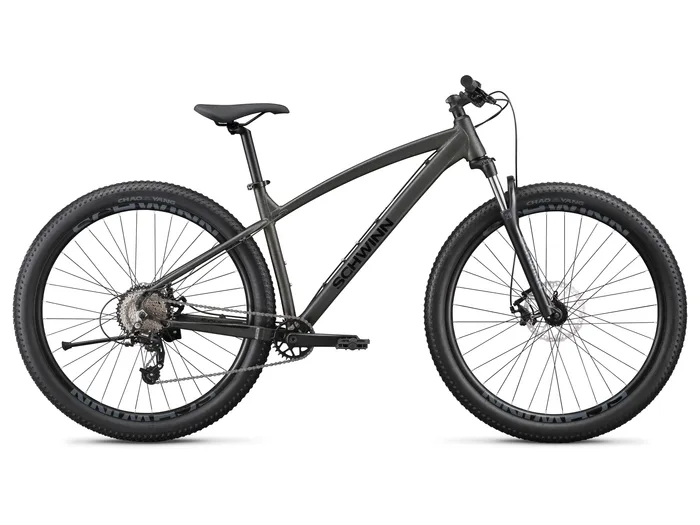
A cheap trail-styled hardtail with mechanical disc brakes and an 8-speed drivetrain, the only bike here without hydraulic brakes.
Best for: Casual riders who stick to paths and gravel and specifically do not plan to ride technical trails.
- Lowest price here, with 29 x 2.6 in tires on wide rims
- Tapered head tube and dropper post routing leave room to upgrade
- Schwinn backs the frame with a limited lifetime warranty
- Mechanical disc brakes, where the other three all use hydraulic discs
- 1x8 AXE drivetrain, a 100 mm fork with a steel steerer and quick-release axle, and a steel rear hub, with no spring type or weight published
- Sold for home assembly, so there is no shop setup unless you pay for one
Own the Schwinn Axum Comp 29in? Tell us how it held up.
Thanks. Counted, and shown once enough owners have weighed in.
| Criteria | Trek Roscoe 7 Gen 4 Top pick Buy it Buy | Specialized Rockhopper Sport Buy it Buy | Giant Talon 1 It depends Buy | Schwinn Axum Comp 29in Skip it Buy |
|---|---|---|---|---|
| Best for | The beginner or returning rider who wants one bike that stays capable as they get faster and start tackling real singletrack. | Riders who prioritize a great-fitting, upgrade-friendly frame they can improve piece by piece over time. | Value-focused newcomers who want a solid, low-maintenance first hardtail and are happy to upgrade later, or not at all. | Casual riders who stick to paths and gravel and specifically do not plan to ride technical trails. |
| Price tier | $$$ · premium | $$ · mid-range | $ · budget | $ · budget |
| Frame & geometry | Alpha Platinum alloy, internal routing | Excellent alloy, size-specific fit | Butted ALUXX-grade alloy, internal routing | Aluminum hardtail, weight not published |
| Fork | Solo Air, 150mm, lockout (tunable) | Coil, size-specific travel (upgradeable) | Air-sprung (tunable) | 100 mm, lockout, QR axle, spring type not published |
| Drivetrain | 1x10 Shimano CUES | 1x9 microSHIFT Advent with clutch | 1x11 microSHIFT Advent with clutch | 1x8 AXE, trigger |
| Brakes | Hydraulic disc | Hydraulic disc | Hydraulic disc | Mechanical disc |
| Dropper post | Yes, stock | No (routing ready) | No (routing ready) | No (routing ready) |
| Trail capability | High for the class | High for the class | Good | Low / paths and gravel |
| Upgrade headroom | Strong | Excellent | Good | Limited |
| Price tier | $$$ · premium | $$ · mid-range | $ · budget | $ · budget |
Which one is right for you?
- The beginner or returning rider who wants one bike that stays capable as they get faster and start tackling real singletrack. Buy it Trek Roscoe 7 Gen 4
- Riders who prioritize a great-fitting, upgrade-friendly frame they can improve piece by piece over time. Buy it Specialized Rockhopper Sport
- Value-focused newcomers who want a solid, low-maintenance first hardtail and are happy to upgrade later, or not at all. It depends Giant Talon 1
- Casual riders who stick to paths and gravel and specifically do not plan to ride technical trails. Skip it Schwinn Axum Comp 29in
How we judged the field
We are not a lab, so instead of pretending to run our own controlled tests we synthesize what independent testing and long-term owner reports consistently say about each bike, then weigh it against what actually matters on an entry or mid-level hardtail. Four things carried the most weight. First, the fork: an air-sprung fork you can tune to your weight is worth far more on a trail than an extra sprocket or a flashy paint job. Second, the drivetrain and brakes: modern 1x gearing with a clutch derailleur and hydraulic discs is the reliability baseline we expect now. Third, frame and geometry, including how well the bike fits a range of body sizes. And fourth, upgrade headroom and honest value, because the cheapest sticker price is not the cheapest bike if you immediately have to replace half of it.
We deliberately included one bike that many shoppers cross-shop against real hardtails but that is not built for the same job, because the most useful thing a comparison can do is tell you what to avoid.
Trek Roscoe 7 Gen 4
Buy itThe Roscoe 7 Gen 4 is the pick because it removes the two upgrades a new rider almost always ends up wanting. It ships with a RockShox Recon Silver RL Solo Air fork with 150mm of travel and a lockout, which you can set to your body weight for a fork that works with you rather than against you, and a TranzX dropper post, 170mm of travel in sizes M and ML, which transforms confidence on descents. Add a 1x10 Shimano CUES drivetrain, Shimano MT200 hydraulic brakes and an Alpha Platinum Aluminum frame with internal routing, a threaded bottom bracket and room for 29x2.60 tires, and you have a bike that is ready for real singletrack out of the box and stays capable as you get faster. It is the priciest bike here, Trek lists a size M at 32.04 lbs, and the 2-piston brakes are solid rather than special, but nothing here will hold you back for a long time.
Specialized Rockhopper Sport
Buy itThe Rockhopper Sport earns its recommendation on the strength of its frame and fit. The butted alloy frame uses hydroformed top and down tubes, and the size-specific approach, which tailors geometry and fork travel to different body sizes, means more riders get a bike that genuinely fits rather than a stretched or shrunk version of one size. It comes with a sensible 1x9 microSHIFT Advent drivetrain with a clutch derailleur, hydraulic disc brakes and internal routing that is ready for a dropper post. The compromises are trim-level ones: the Sport uses a basic coil fork and does not include a dropper as standard, both of which keen riders tend to upgrade. But because the frame is so good and the platform so upgrade-friendly, it rewards the kind of owner who improves a bike over several seasons.
Giant Talon 1
It dependsThe Talon 1 is a lot of dependable bike for noticeably less money, which is exactly why the verdict is nuanced rather than negative. Giant’s butted alloy frame carries an air-sprung fork you can tune to your weight, the clutch-equipped 1x11 drivetrain and hydraulic brakes are reliable, the thru-axle hubs are a nice touch at the price, and grippy Maxxis tires make it genuinely fun on flow trails and mellow singletrack. The catch is that it comes without a dropper and it lacks the 150mm trail fork that sets the Roscoe apart, and once you add a dropper you have spent your way toward the pricier bikes above. So it depends on your plan: as an affordable, low-fuss first hardtail you will enjoy as-is, it is excellent value; as a long-term platform you intend to heavily upgrade, the more expensive bikes start ahead.
Schwinn Axum Comp 29in
Skip itThe Axum Comp is the bike in this group to skip if you actually want to ride trails. It is not a bad path bike: Schwinn gives it a lightweight aluminum hardtail frame, 29 x 2.6 inch tires on wide rims, a 100 mm fork with lockout, a tapered head tube and dropper routing for later, and a limited lifetime warranty, all at the lowest price here.
The problem is the spec sheet. It is the only bike in this comparison on mechanical disc brakes, where the Roscoe, Rockhopper and Talon all use hydraulic discs. The drivetrain is a 1x8 AXE setup, the fork has a steel steerer and a quick-release axle with no spring type published, the rear hub is steel, and Schwinn does not publish a weight. It also ships for home assembly, so there is no shop setup unless you arrange one. If your riding is paths and gravel, it will do the job for little money. If you are cross-shopping it against the bikes above because you want singletrack, the Talon 1 is the cheapest bike here with hydraulic brakes and an air fork.
Sources
Specs in this review come from these pages.
Trek Roscoe 7 Gen 4 vs Specialized Rockhopper Sport: which should you buy?
These two are the class of the field, and the choice comes down to what you value. The Roscoe 7 wins on stock capability: the 150mm air fork and dropper post mean it is ready for real trails the day you collect it, with no immediate shopping list. That makes it the safer pick for someone who wants to buy once and just ride. The Rockhopper Sport wins on foundation: its frame and size-specific fit are arguably the best here, and the platform is a joy to upgrade over time, so it suits the rider who enjoys steadily improving a bike and wants the fit dialed from day one. If you want the most complete bike out of the box, take the Roscoe 7. If you want the best frame to build on, and especially if the size-specific fit lands for you, take the Rockhopper Sport.
What to look for
- An air-sprung fork if you can get one. It tunes to your weight and outperforms a fixed coil fork on the trail; it is the upgrade owners most often chase later.
- 1x drivetrain with a clutch derailleur. Simpler shifting, a quieter ride and less chain drop than old triple setups.
- Hydraulic disc brakes. Stronger, more consistent stopping with less effort than mechanical discs, especially on descents.
- Dropper post, or at least dropper-ready routing. One of the biggest confidence upgrades on steep ground; getting it stock, or being able to add it cleanly, matters.
- Honest weight and a real trail geometry. A bike that is much heavier than its rivals will feel slow and clumsy; be wary of trail looks on a path-bike build.
- A proper shop build and fit. Professional assembly and sizing affect safety and comfort far more than a marginal spec difference on paper.
Our final take
Entry and mid-level hardtails are a genuinely great value right now, but only if you buy the right kind. The Trek Roscoe 7 Gen 4 is the standout because it gives a new rider a trail-ready bike with the air fork and dropper post they would otherwise upgrade to, so it keeps up as their skills grow. The Specialized Rockhopper Sport is the runner-up and the smarter pick for riders who prize fit and a frame worth building on. The Giant Talon 1 is a lot of reliable bike for less, best seen as a strong-value starter rather than a long-term platform. And the Schwinn Axum Comp is a fine path bike but the wrong tool for real trails, with mechanical brakes and an 8-speed drivetrain, so cross it off if singletrack is the goal. Match the bike to how you will actually ride, get it built by a shop, and any of the top three will serve you well for years.
Questions, answered
Is a hardtail or a full-suspension bike better for a beginner?
For most people starting out on a mid-level budget, a hardtail like these is the better buy. Putting the money into one good fork, frame and drivetrain instead of splitting it across two suspension units means lighter weight, less maintenance and a more reliable bike, and hardtails also teach cleaner line choice and technique. Full suspension makes more sense once you are regularly riding rough, steep terrain and can spend considerably more.
Why does an air fork matter so much on the Trek Roscoe 7?
An air-sprung fork lets you set the spring pressure to your exact body weight, so it uses its travel properly whether you are light or heavy. Many coil forks at this price come with a fixed spring rate, so they often feel too soft or too harsh and cannot be fine-tuned. It is one of the upgrades owners most commonly pay for later, which is why getting it stock is a real advantage.
What is wrong with a bike like the Schwinn Axum Comp for trail riding?
Nothing, if you keep it on paths and gravel. The problem is the parts that matter on a descent: Schwinn fits mechanical disc brakes, where the other three use hydraulic discs, plus a 1x8 drivetrain and a 100 mm fork with a quick-release axle and no published spring type. Brakes and fork are the first things real singletrack exposes, so buying it for trail riding usually leads to an upgrade bill or frustration.
Do I need a dropper post, and can I add one later?
A dropper post lets you lower the saddle out of the way for descents at the push of a lever, which noticeably boosts control and confidence on anything steep. It is not essential for gentle trails, but it is one of the best upgrades you can make. The Roscoe 7 includes one; the Rockhopper Sport, Talon 1 and Schwinn Axum Comp have routing to add one later.
How important is professional assembly and sizing?
Very. Bikes bought and built by a bike shop are checked over, adjusted and fitted to you, which affects both comfort and safety. Bikes that ship boxed for self-assembly are a common source of poorly adjusted brakes and gears if you are not experienced, so factor a professional build and basic fit into your plans. This is general product information to help you shop, not a substitute for hands-on advice from a qualified mechanic or fitter.
Deciding between the top two? See our head-to-head: Trek Roscoe 7 Gen 4 vs Specialized Rockhopper Sport.
More in Cycling
Mountain Bikes, Explained Plain-English guide → Trek Roscoe 7 Gen 4 vs Specialized Rockhopper Sport Head-to-head →  The Best Mountain Bike Grips: 4 Compared (and One to Skip)
  The Best Road Bikes for Beginners: 4 Compared (and One to Skip)
  The Best Spoke Wrenches: 4 Compared (and One to Skip)
  The Best Suspension Seatposts: 4 Compared (and One to Skip)