

Office & WFH
The Best Conference Speakerphones: 4 Compared (and One to Skip)
We compared four USB/Bluetooth conference speakerphones on voice pickup, full-duplex clarity, room size, portability, and battery.
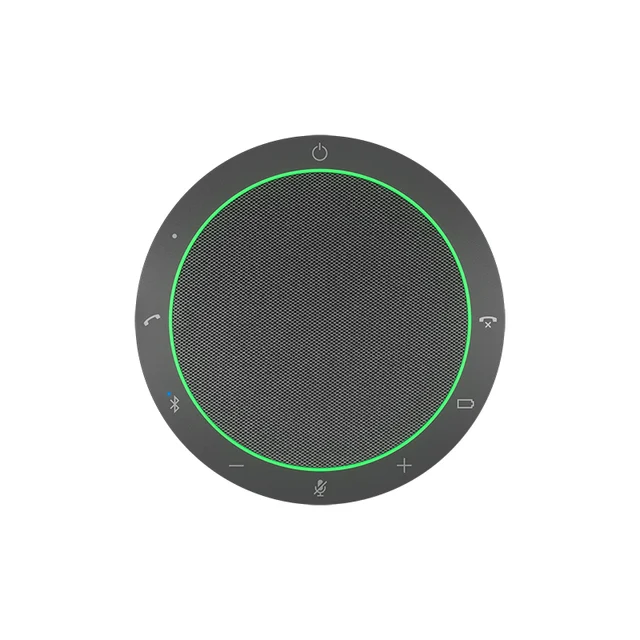
The short version
For the best-sounding hybrid calls in a shared space, the Jabra Speak2 55 is the pick: four beamforming mics, true full-duplex, and voice leveling that keeps everyone intelligible. If you move between a laptop and a phone, the Yealink CP900 connects to three devices at once and backs six beamforming mics with full-duplex audio. The Poly Sync 20 is a lovely, portable personal speakerphone but its ~2m mic range makes it a one-or-two-person tool. The eMeet OfficeCore M2 Max looks the part but trails on echo handling and full-duplex, so it's the one to skip at full price. Best for: hybrid workers who want laptop-mic misery gone with minimal fuss.
Our picks at a glance
- Jabra Speak2 55 - Buy. The one to get if you take calls in real rooms with other people talking.
- Yealink CP900 - Buy. Six beamforming mics and three-device pairing in a portable puck built around Microsoft Teams.
- Poly Sync 20 - It depends. A polished personal speakerphone that's great for one or two people and no more.
- EMEET OfficeCore M2 Max - Skip. Big-room ambitions and a nice ring light, but the call smarts trail the leaders.
The verdict in 30 seconds
What mattered most
- Mic pickup
- Full-duplex clarity
- Best room size
- Connectivity
- Battery (reported)
- Portability
A good speakerphone is the cheapest upgrade you can make to a hybrid meeting: it fixes the echo, the talk-over, and the 'you're breaking up' that a laptop mic causes. We looked at four USB-C/Bluetooth models that owners actually keep on their desks. Two earn a clear buy, one is a genuine 'it depends' on how you work, and one we'd pass on unless it's discounted hard.
The one to get if you take calls in real rooms with other people talking.
Best for: Hybrid workers and small teams who want the cleanest, most natural call audio in a shared space.
- Four-microphone beamforming array with genuine full-duplex, so people can talk over each other without dropouts
- Voice Level Normalization evens out loud and quiet talkers automatically
- 50mm full-range driver plays voices clearly and loudly enough for a mid-size room
- USB-C and Bluetooth, with roughly 12 hours of battery and IP64 dust/splash rating
- Priced well above the value picks
- Coverage still tops out around a small-to-mid room, not a large boardroom
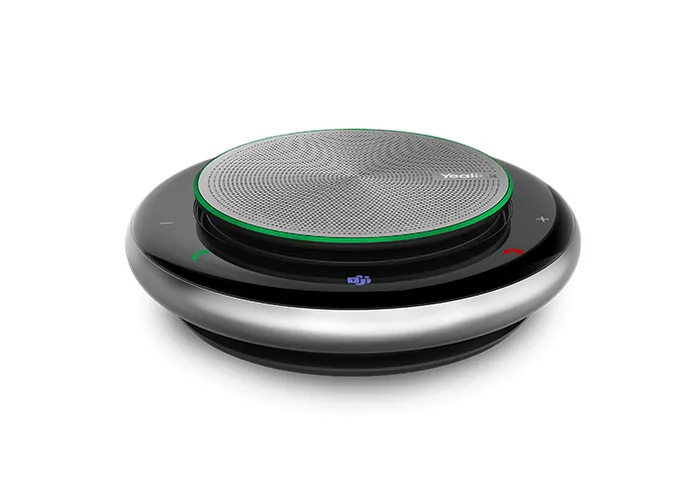
Six beamforming mics and three-device pairing in a portable puck built around Microsoft Teams.
Best for: Hybrid workers on Microsoft Teams who switch between a laptop and a phone during the day.
- Six-microphone beamforming with full-duplex audio, plus echo cancellation, noise suppression and DSP, per Yealink
- Pairs with three devices at once and can merge a call on a USB-connected computer with one on a Bluetooth-connected phone
- Certified for Microsoft Teams, with a dedicated Teams button and call-control buttons
- Yealink's product page does not state a battery life
- At a stated 320g it is a portable puck, not a pocketable bar
- Yealink says it is intended for business customers and sold through B2B partners, so retail stock varies

A polished personal speakerphone that's great for one or two people and no more.
Best for: Solo remote workers and travelers who mostly take one-on-one calls and want something portable.
- Three-mic steerable array and a speaker that sounds punchy for the size
- Up to 20 hours of battery talk time per Poly, an IP64 rating, and a slim, bag-friendly bar shape
- USB-A or USB-C plus Bluetooth, in standard and Microsoft Teams certified versions
- Mic pickup range is only about 2 meters, so it struggles past two or three people
- An older platform than the top picks

Big-room ambitions and a nice ring light, but the call smarts trail the leaders.
Best for: Buyers set on eMeet who want room coverage on a budget and don't mind the trade-offs.
- Four directional mics with 360-degree pickup, rated by eMeet for rooms of up to 15 people
- Dedicated mute, volume and VoiceIA buttons plus a voice-direction ring light
- USB, Bluetooth, and AUX connectivity with a bundled dongle
- Echo cancellation and full-duplex handling lag behind the Jabra in independent listening
- Owners report it's a middling standalone Bluetooth music speaker
- At this price the value picks simply do the core job better
| Criteria | Jabra Speak2 55 Top pick Buy it Buy | Yealink CP900 Buy it Buy | Poly Sync 20 It depends Buy | EMEET OfficeCore M2 Max Skip it Buy |
|---|---|---|---|---|
| Best for | Hybrid workers and small teams who want the cleanest, most natural call audio in a shared space. | Hybrid workers on Microsoft Teams who switch between a laptop and a phone during the day. | Solo remote workers and travelers who mostly take one-on-one calls and want something portable. | Buyers set on eMeet who want room coverage on a budget and don't mind the trade-offs. |
| Price tier | $$$ · premium | $$$ · premium | $ · budget | $$ · mid-range |
| Mic pickup | 4-mic beamforming, ~2.3m | 6-mic beamforming | 3-mic steerable, ~2m | 4 directional mics, up to 5m |
| Full-duplex clarity | Excellent | Full-duplex per Yealink | Good | Fair |
| Best room size | Small-to-mid room | Huddle room, per Yealink | 1-2 people | Medium room, up to 15 per eMeet |
| Connectivity | USB-C + Bluetooth | USB + Bluetooth, pairs 3 devices | USB-A/C + Bluetooth | USB + BT + AUX + dongle |
| Battery (reported) | Up to 12 hours | Not on product page | Up to 20 hours | Not published |
| Portability | Compact puck, IP64 | Portable puck, 320g | Slim bar, IP64 | Larger puck |
| Certifications | Teams variant, works with major platforms | Certified for Microsoft Teams | Standard and Teams versions | Platform compatible |
| Price tier | $$$ · premium | $$$ · premium | $ · budget | $$ · mid-range |
Which one is right for you?
- Hybrid workers and small teams who want the cleanest, most natural call audio in a shared space. Buy it Jabra Speak2 55
- Hybrid workers on Microsoft Teams who switch between a laptop and a phone during the day. Buy it Yealink CP900
- Solo remote workers and travelers who mostly take one-on-one calls and want something portable. It depends Poly Sync 20
- Buyers set on eMeet who want room coverage on a budget and don't mind the trade-offs. Skip it EMEET OfficeCore M2 Max
How we judged the field
We don’t run our own audio lab. Instead, we synthesize independent testing, expert hands-on reviews, and aggregated owner reports, then weight them toward the things that actually make or break a call. For speakerphones that comes down to a few criteria: microphone pickup (how far and how many voices it hears cleanly), full-duplex clarity (can both ends talk at once without clipping), echo and noise cancellation, the room size it realistically covers, connectivity flexibility, portability, and battery life. We also read the low-star reviews closely, because that’s where recurring problems like flaky Bluetooth pairing show up. Poly now sits under a new brand umbrella and is sold through HP.
Jabra Speak2 55
Buy itThis is the one reviewers keep coming back to when they want a call to just sound right. Its four-microphone beamforming array picks up voices from around the table, and it’s genuinely full-duplex, so two people talking over each other doesn’t collapse into clipping the way it does on cheaper units. Voice Level Normalization is the underrated feature: it quietly evens out the loud in-room talker and the soft one two seats away so remote participants hear everyone at a consistent level. The 50mm driver is loud and clear enough for a small-to-mid room, and you get USB-C, Bluetooth, roughly 12 hours of battery, and an IP64 dust/splash rating in a compact puck. The only real knock is price and the fact that, like every unit here, it isn’t a boardroom system. For most hybrid setups it’s the safe default.
Yealink CP900
Buy itThe CP900 is the speakerphone for people who live in Microsoft Teams and switch devices through the day. Yealink specifies six-microphone beamforming with full-duplex audio, backed by echo cancellation, noise suppression and DSP, and pitches it at huddle rooms and private spaces. Its most useful trick is connection handling: it pairs with three devices at once, and it can merge a call on a USB-connected laptop with one on a Bluetooth-connected phone into a single call. It is certified for Microsoft Teams and has a dedicated Teams button alongside the call controls. The limits are on the spec sheet: Yealink’s product page does not state a battery life, the stated 320g makes it a portable puck rather than a pocketable bar, and Yealink says it is intended for business customers through B2B partners, so retail stock varies.
Poly Sync 20
It dependsThe Sync 20 is a polished, genuinely portable personal speakerphone, and whether it’s right for you hinges entirely on how many people share your calls. Its three-mic steerable array sounds punchy for the size, Poly rates the battery at up to 20 hours of talk time, it carries an IP64 rating, and the slim bar shape slides into a bag easily. It comes in USB-A and USB-C versions, in standard and Microsoft Teams certified editions. The catch is a mic pickup range of only about 2 meters, so it’s really a one-or-two-person tool. Buy it as a personal travel speakerphone, not as a shared-room device, and you’ll be happy.
EMEET OfficeCore M2 Max
Skip itThe M2 Max makes a strong first impression: four directional mics with 360-degree pickup that eMeet rates for rooms of up to 15 people, dedicated buttons, a distinctive ring light that shows the speaker’s direction, and USB, Bluetooth, and AUX connectivity with a bundled dongle. But when you get past the feature list, the fundamentals trail the leaders. In independent listening its echo cancellation and full-duplex handling don’t keep up with the Jabra, and owner reports flag it as only a middling standalone Bluetooth music speaker. At its mid-range price the value picks simply do the core job of a speakerphone better, which is why it’s the one we’d pass on unless it’s heavily discounted.
Jabra Speak2 55 vs Yealink CP900: which should you buy?
These are the two to weigh against each other, because they do the same job well with different strengths. The Jabra wins on call polish: its full-duplex is the most natural here, Voice Level Normalization is a real advantage when your in-room voices vary in loudness, and it publishes an IP64 rating and a battery figure. The Yealink counters with connection handling: six beamforming mics, pairing with three devices, the ability to merge a USB call with a Bluetooth one, and a dedicated Teams button. Decide like this: if you’re outfitting a shared room where audio quality is the whole point, get the Jabra Speak2 55. If you work in Teams and bounce between a laptop and a phone, the Yealink CP900 fits that day better.
What to look for
- Microphone range vs your table: a ~2m personal unit is perfect solo and hopeless for a group. Match pickup to how many people join your calls.
- True full-duplex: it’s what lets both ends talk at once without clipping. It’s the single biggest driver of whether a call feels natural.
- Wired option, not just Bluetooth: USB-C or a bundled dongle is more reliable for long meetings than Bluetooth alone.
- Battery life: matters if you carry it between rooms or travel; less so if it lives plugged in at your desk.
- Certifications: Teams, Zoom, or Meet certification means the mute button and controls are guaranteed to work in your platform.
- Read the one-star reviews: pairing drops and mute-sync bugs are the complaints that actually ruin daily use.
Our final take
Buy the Jabra Speak2 55 if you want the cleanest hybrid-call audio in a shared space with no fuss; its full-duplex and voice leveling are worth the premium for teams that meet often. Buy the Yealink CP900 if you live in Microsoft Teams and juggle a laptop and a phone, because it pairs with three devices and can merge calls across USB and Bluetooth. Choose the Poly Sync 20 only as a portable personal speakerphone for one-on-one calls, where its range limit doesn’t matter. And skip the eMeet OfficeCore M2 Max at full price: it looks the part but the core call performance doesn’t justify the money when the Jabra and the Yealink are right there.
Questions, answered
Do I need USB or is Bluetooth enough?
All four offer a wired connection plus wireless. Bluetooth is convenient for phones and quick laptop pairing, but a USB-C (or bundled dongle) connection is more reliable for long meetings and avoids pairing drops. The nice thing is you don't have to choose: plug in at your desk, go wireless when you travel.
How many people can one speakerphone actually cover?
Match the mic range to your table. The Poly Sync 20's roughly 2-meter pickup suits one or two people. The Jabra Speak2 55 handles a small-to-mid meeting room of a few participants, and Yealink pitches the CP900 at huddle rooms. None of these replace a ceiling-mic system in a large boardroom.
What does 'full-duplex' mean and why should I care?
Full-duplex lets both ends talk and be heard at the same time, the way a normal phone call works. Cheaper speakerphones are half-duplex and clip or mute one side during crosstalk, which is what makes calls feel stilted. The Jabra leads here, and Yealink also specifies full-duplex for the CP900.
Can I use these as a regular Bluetooth music speaker?
You can, but manage expectations. These are tuned for voice, not bass-heavy music. Owner reports specifically note the eMeet is only mediocre for music. If music matters, treat that as a bonus, not a buying reason.
Are these models still current and buyable in 2026?
The Jabra Speak2 55, Yealink CP900, Poly Sync 20, and eMeet OfficeCore M2 Max are current listings on their makers' sites. Poly speakerphones are now sold under HP, and Yealink sells the CP900 through business partners, so retail stock can vary.
Deciding between the top two? See our head-to-head: Jabra Speak2 55 vs Yealink CP900.
More in Office & WFH
Conference Speakerphones, Explained Plain-English guide → Jabra Speak2 55 vs Yealink CP900 Head-to-head →  The Best Copyholders: 4 Compared (and One to Skip)
 The Best Desk Fans: 4 Compared (and One to Skip)
 The Best Desk Mats: 4 Compared (and One to Skip)
 The Best Desk Organizers: 4 Compared (and One to Skip)