Baby & Family
The Best Breast Pumps: 4 Compared (and One to Skip)
We compared four current breast pumps on suction, portability, noise, cleaning, and discretion, spanning wearable and traditional double-electric styles.
The short version
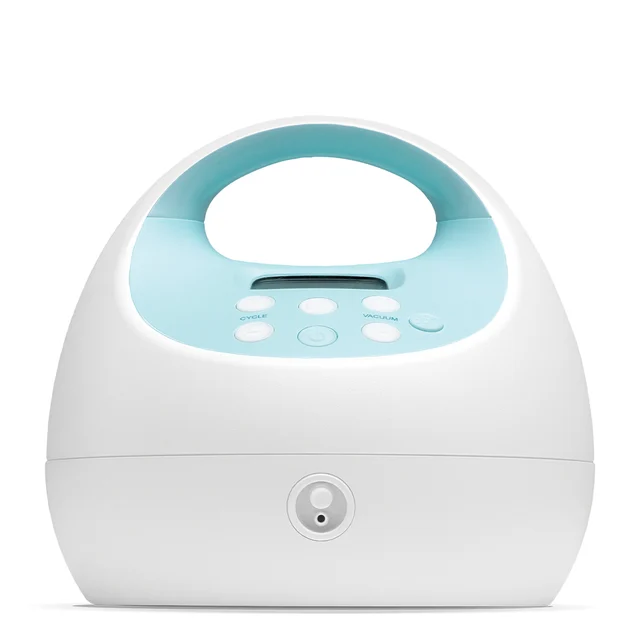
After weighing independent testing and owner reports across wearable and traditional pumps, the Spectra S1 Plus is the pick: strong hospital-strength suction, a hygienic closed system, quiet operation, and broad insurance coverage. If you must go hands-free, the Willow Go is the wearable that sacrifices the least on suction and comfort. The Momcozy M5 Smart is an excellent budget wearable, but questions about long-term supply maintenance make it a conditional pick rather than a first pump for exclusive pumpers. The once-groundbreaking Elvie Pump is now hard to recommend: weaker suction, fussy assembly, and flagship pricing. Best for: parents who want proven output at home should buy the Spectra S1 Plus, while those who need to pump on the move should choose the Willow Go.
Our picks at a glance
- Spectra S1 Plus - Buy. The reliable, strong-suction closed-system double-electric for home pumping.
- Willow Go - Buy. The wearable that finally makes hands-free pumping feel like a real pump, not a compromise.
- Momcozy M5 Smart - It depends. A remarkably cheap, comfortable wearable with one caveat worth taking seriously.
- Elvie Pump - Skip. The pioneering flagship wearable that newer, cheaper, stronger rivals have quietly overtaken.
The verdict in 30 seconds
What mattered most
- Suction strength
- Portability / hands-free
- Noise
- Cleaning
- Discretion
- App & smart features
The breast-pump market in 2026 splits neatly into two camps: traditional double-electric workhorses that prioritize suction and reliability, and slim wearable pumps you tuck into a bra and forget about. We synthesized independent testing and a large body of owner reports across both camps. The short version: a proven double-electric still wins on pure output, a premium wearable is the best truly hands-free option, a budget wearable is a genuine bargain with one real caveat, and the original flagship wearable is now hard to justify.
The reliable, strong-suction closed-system double-electric for home pumping.
Best for: Anyone who wants dependable output and value, especially for daily or exclusive pumping at home.
- Hospital-strength suction (up to 270 mmHg per Spectra) with separate massage and expression modes
- Hygienic closed system keeps milk out of the tubing, simplifying cleaning and reuse
- Built-in rechargeable battery frees you from the wall; Spectra calls it quiet and it has a night light
- Commonly offered through insurance plans; check your own coverage
- Not hands-free or in-bra; you are tethered to flanges and bottles and generally seated while pumping
- The unit itself is a bulky tabletop device, so it is not discreet away from home
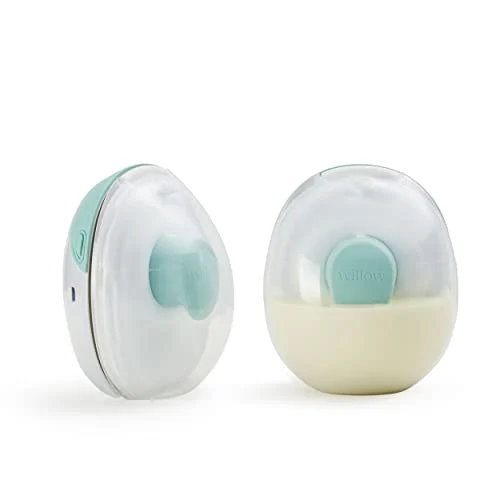
The wearable that finally makes hands-free pumping feel like a real pump, not a compromise.
Best for: Return-to-work parents and multitaskers who want to pump discreetly while moving through the day.
- Strong suction that owners say rivals traditional pumps
- Fully in-bra and cord-free, with a flange design tuned for comfort and output
- Among the quietest wearables, with app-based volume tracking and controls
- Roomy collection cups suit higher-output sessions
- Costs several times more than budget wearables
- Has lean-angle limits for leak resistance, so check the maker's guidance before pumping reclined, and it has several small parts to wash
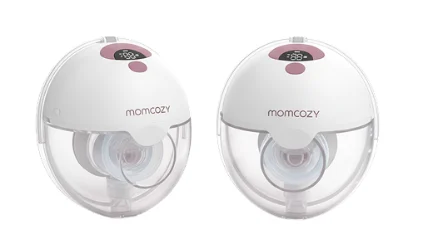
A remarkably cheap, comfortable wearable with one caveat worth taking seriously.
Best for: Occasional pumpers, backups, or budget-conscious parents whose supply is already well established.
- A fraction of the price of premium wearables while delivering most of the everyday convenience
- Comfortable fit, roomy 5.4 oz cups, and only four parts to wash
- Quiet operation (Momcozy lists under 48 dB) with a companion app for tracking and control
- Fully in-bra and cord-free for genuine hands-free pumping
- Some lactation consultants question whether its suction pattern sustains milk supply over the long term for exclusive pumpers
- The maker has not published independent suction testing, and build quality trails the premium options
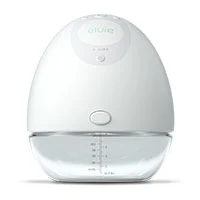
The pioneering flagship wearable that newer, cheaper, stronger rivals have quietly overtaken.
Best for: Someone who prizes silence and discretion above suction and price, and does not mind a careful assembly routine.
- The slimmest and most discreet pump in this group, and arguably the quietest
- Completely tube-free and in-bra, with polished app control and real-time volume tracking
- Elvie publishes no maximum suction figure, and owners report it can feel weaker than a traditional pump
- Fiddly assembly: a misaligned valve or seal is a common cause of lost suction
- Flagship pricing that is hard to justify when budget wearables cover most of the same ground
| Criteria | Spectra S1 Plus Top pick | Willow Go | Momcozy M5 Smart | Elvie Pump |
|---|---|---|---|---|
| Verdict | Buy it | Buy it | It depends | Skip it |
| Best for | Anyone who wants dependable output and value, especially for daily or exclusive pumping at home. | Return-to-work parents and multitaskers who want to pump discreetly while moving through the day. | Occasional pumpers, backups, or budget-conscious parents whose supply is already well established. | Someone who prizes silence and discretion above suction and price, and does not mind a careful assembly routine. |
| Price tier | $$ · mid-range | $$$ · premium | $ · budget | $$$$ · flagship |
| Suction strength | Hospital-strength, up to 270 mmHg, closed system | Strong; owners say it rivals traditional pumps | 285 mmHg claimed by the maker, not independently verified | Not published by the maker; owners report it feels weaker than a traditional pump |
| Portability / hands-free | Not hands-free; seated pumping, though the battery lets you roam | Fully in-bra and cord-free | Fully in-bra and cord-free | Fully in-bra, cord-free and tube-free |
| Noise | Quiet for a traditional pump | Among the quietest wearables | Quiet (maker lists under 48 dB), louder than Elvie's 32 dB | The quietest in this group (maker lists 32 dB) |
| Cleaning | Closed system keeps tubing dry; several flange and bottle parts | Multiple in-bra parts; a moderate routine | Only about four washable parts; the simplest | Several parts, with finicky valve and seal alignment |
| Discretion | Bulky tabletop unit; not discreet away from home | Slim in-bra profile, discreet under clothing | In-bra, but a slightly more visible bulge | The slimmest and most discreet |
| App & smart features | None; manual dial controls | App with volume tracking and controls | M5 Smart app with tracking and control | App with real-time volume tracking |
| Price tier | $$ · mid-range | $$$ · premium | $ · budget | $$$$ · flagship |
Which one is right for you?
- Anyone who wants dependable output and value, especially for daily or exclusive pumping at home. Buy it Spectra S1 Plus
- Return-to-work parents and multitaskers who want to pump discreetly while moving through the day. Buy it Willow Go
- Occasional pumpers, backups, or budget-conscious parents whose supply is already well established. It depends Momcozy M5 Smart
- Someone who prizes silence and discretion above suction and price, and does not mind a careful assembly routine. Skip it Elvie Pump
How we judged the field
We do not run our own lab. Instead, we synthesize published independent testing, expert commentary from lactation professionals, and a large volume of owner reports to find where the consensus lands and where it splits. For breast pumps, five things separated the field: measured or reported suction strength and how well the pump actually empties, portability and whether it is truly hands-free, noise, the cleaning burden, and discretion under clothing. We also weighed price honestly, because insurance coverage and steep premium pricing change the calculus more here than in almost any other category. Our aim is one clear recommendation for each type of user, not a spec sheet.
Spectra S1 Plus
Buy itThe Spectra S1 Plus is a long-standing favorite, and the reasons are unglamorous but decisive. Spectra specifies hospital-strength suction (up to 270 mmHg) with separate massage and expression modes, and owners report reliable, complete emptying session after session. Its closed system keeps milk out of the tubing, which makes cleaning simpler. A built-in rechargeable battery lets you move around the house, Spectra calls it quiet and gives it a night light, and it is commonly offered through insurance plans. The trade-off is obvious: it is not hands-free or in-bra, so you are tethered to flanges and bottles and usually seated. If that fits your routine, it is the most pump for the money.
Willow Go
Buy itIf you need your hands free, the Willow Go is the wearable that gives up the least. Owner reports credit it with genuinely strong suction and a flange design tuned for both comfort and output, and many owners say they get as much milk as they did from a traditional pump. It sits entirely in the bra with no cords or tubes, runs among the quietest of the wearables, and pairs with an app for volume tracking and control. The compromises are real but manageable: it costs several times more than budget wearables, it has lean-angle limits for leak resistance, and it has several small parts to wash. For return-to-work parents and multitaskers, it is worth it.
Momcozy M5 Smart
It dependsThe Momcozy M5 Smart is the value story of the category. It is a fraction of the price of the premium wearables yet delivers most of the day-to-day convenience: comfortable fit, roomy cups, only about four parts to clean, quiet operation (under 48 dB per Momcozy), and an app for tracking. For occasional pumping, for a travel or car backup, or for a parent whose supply is already well established, it is genuinely hard to beat on value. The caveat is why this is a conditional pick rather than an outright buy: some lactation consultants have publicly questioned whether its suction pattern sustains milk supply over the long term, and the company has not published independent suction testing. For exclusive pumpers relying on a single pump, that uncertainty matters.
Elvie Pump
Skip itThe Elvie Pump deserves credit as the product that proved fully wearable pumping was possible, and it is still the slimmest, most discreet, and arguably quietest option here. But the field has moved. Elvie publishes no maximum suction figure, and owners regularly say it feels weaker than a traditional pump. Assembly is finicky, and a slightly misaligned valve or seal is a frequent cause of mysteriously lost suction. Layer flagship pricing on top of that and it becomes difficult to recommend when a budget wearable covers most of the same ground and a mid-priced traditional pump outperforms it outright.
Spectra S1 Plus vs Willow Go: which should you buy?
This is really a question about your day, not about which pump is better. The Spectra S1 Plus wins on the fundamentals: stronger consensus on complete emptying, a simpler closed-system cleanup, lower cost, and common insurance coverage. It is the better single pump if most of your pumping happens at home and you can sit for a session. The Willow Go wins the moment you need to keep working, driving, or caring for other children while you pump, because it disappears into your bra and still delivers output that owners are happy with. Many parents end up owning both, but if you can only choose one, decide by where and how you will pump most: home and reliability point to the Spectra, mobility and discretion point to the Willow Go.
What to look for
- Suction and emptying, not just a big number: a high advertised figure means little if the pump does not empty you comfortably and completely. Favor pumps with independent testing or a deep track record of owner reports.
- Flange fit: the single biggest driver of comfort and output. Confirm the sizes included and whether the sizes you need are available.
- Hands-free versus tethered: be honest about whether you truly need in-bra freedom or whether a seated session at home is fine.
- Cleaning burden: count the parts and check whether it is a closed system; this adds up fast over a day of sessions.
- Noise and discretion: these matter most for pumping at work or near a sleeping baby.
- Total cost after insurance: a covered traditional pump plus a smaller upgrade fee for a wearable is often the smartest overall spend.
Our final take
Buy the Spectra S1 Plus if you want the most dependable output for the money; it is the pick, and insurance can make it nearly free. Choose the Willow Go as your runner-up and your best option when you truly need to pump hands-free. Treat the Momcozy M5 Smart as a smart budget or backup buy rather than a sole pump for exclusive pumping, and given weaker suction, fussy assembly, and flagship pricing, skip the Elvie Pump. Whichever you pick, fit and technique matter as much as the hardware, so it is worth getting personalized guidance before you settle in.
Questions, answered
Are wearable pumps as effective as traditional double-electric pumps?
For most people the strongest wearables now come close, and the Willow Go in particular earns praise for output. That said, owner reports and independent testing still give traditional pumps like the Spectra S1 Plus an edge in consistent, complete emptying, which matters most for exclusive pumping or building a supply. Many parents keep a traditional pump for home and a wearable for convenience.
Is a more expensive pump always better?
No. Owners report the mid-priced Spectra S1 Plus out-suctions the flagship Elvie Pump, and the budget Momcozy M5 Smart covers most everyday needs at a fraction of the cost. Price mostly buys discretion, quietness, and a slimmer wearable form factor rather than raw pumping power.
Will my insurance help pay for one of these?
Often, yes. Traditional pumps such as the Spectra are commonly covered, while premium wearables like the Willow Go and Elvie are frequently offered with an upgrade fee on top of a covered base pump. Coverage varies by plan, so check your specific benefits and any in-network supplier requirements before ordering.
How much cleaning does each style require?
Traditional closed-system pumps keep milk out of the tubing, so you mainly wash the flanges and bottles. Wearables have several small in-bra parts that must be taken apart and washed after sessions; the Momcozy M5 Smart lists only four washable parts, while the Elvie Pump has more and a fussier assembly. Whichever you choose, follow the manufacturer's cleaning and sterilizing guidance closely.
Which pump is right for my body and my supply?
This article is general product information, not medical advice. Flange fit, suction tolerance, and supply concerns are individual, and using the wrong setup can cause pain or affect output. Consult a lactation consultant (IBCLC) or your healthcare provider for guidance tailored to you, especially if you are exclusively pumping, notice a drop in supply, or experience discomfort.
Deciding between the top two? See our head-to-head: Spectra S1 Plus vs Willow Go.