

Baby & Family
The Best Baby Walkers: 4 Compared (and One to Skip)
We compared push walkers, stationary activity centers, and a sit-in walker on safety guidance, stability, play value, and how long each stays useful.
The short version
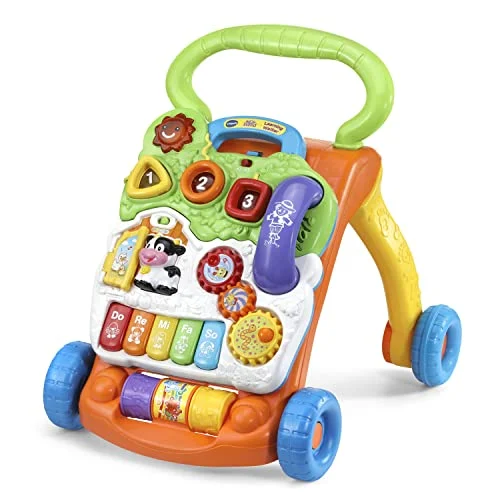
Buy the VTech Sit-to-Stand Learning Walker. It sits in the budget tier, the two-speed wheel brake stops it skating away on hardwood, and the detachable panel means it gets used before and long after your baby walks. If your baby is not cruising yet, the Bright Starts Around We Go 2-in-1 Walk-Around Activity Center & Table is the better first purchase, since it holds them upright on their own feet and later becomes a toddler table. The Radio Flyer Classic Push Walker Wagon is beautiful and built to last, but it moves quickly on hard floors and suits a confident cruiser rather than a beginner. Skip the Joovy Spoon Walker Activity Center and every other sit-in wheeled walker: they are recommended against by the American Academy of Pediatrics, banned in Canada, and there is no evidence they help a baby walk any sooner. Best for: parents who want the safest, longest-lasting support for a baby learning to walk without buying a product pediatricians have been warning about for decades.
Our picks at a glance
- VTech Sit-to-Stand Learning Walker - Buy. The default push walker for good reason: a two-speed wheel brake, a detachable play panel, and a price in the budget tier.
- Bright Starts Around We Go 2-in-1 Walk-Around Activity Center & Table - Buy. A stationary center that turns cruising practice into play, then converts into a toddler activity table when the seat comes off.
- Radio Flyer Classic Push Walker Wagon - It depends. A heavy wooden push wagon that looks great and hauls toys for years, but still rolls quicker than a brand-new walker wants on hard floors.
- Joovy Spoon Walker Activity Center - Skip. A well-made sit-in walker from a product category pediatricians have spent thirty years asking parents to avoid.
The verdict in 30 seconds
What mattered most
- Type
- Safety stance
- Best age window
- Speed control on hard floors
- Learning play value
- Second life after walking
Three completely different products get sold as "baby walkers," and only two of them are a good idea. Push walkers and stationary activity centers keep a baby's weight on their own feet, while sit-in wheeled walkers put a pre-walking infant on castors, which is why the American Academy of Pediatrics recommends against them and Canada banned them outright. We looked at four current models through that lens: two clear buys, one that depends entirely on your floors and your child's stage, and one very well-made product from a category we would still avoid.
The default push walker for good reason: a two-speed wheel brake, a detachable play panel, and a price in the budget tier.
Best for: Babies already pulling to stand and cruising who need something sturdy to push, and parents who want the most use per dollar.
- Two-speed wheel switch adds real drag on hardwood so beginners can lean in without it shooting away
- Activity panel detaches for floor play months before baby can stand, then clips on as a walker
- Lowest price tier here and owners report it survives multiple children
- Keeps toddlers busy long after walking is sorted thanks to shape sorter, piano, and gears
- Loud, with only a simple volume switch
- Bright plastic styling that will not blend into a living room
- Light enough that a toddler climbing the handle can tip it
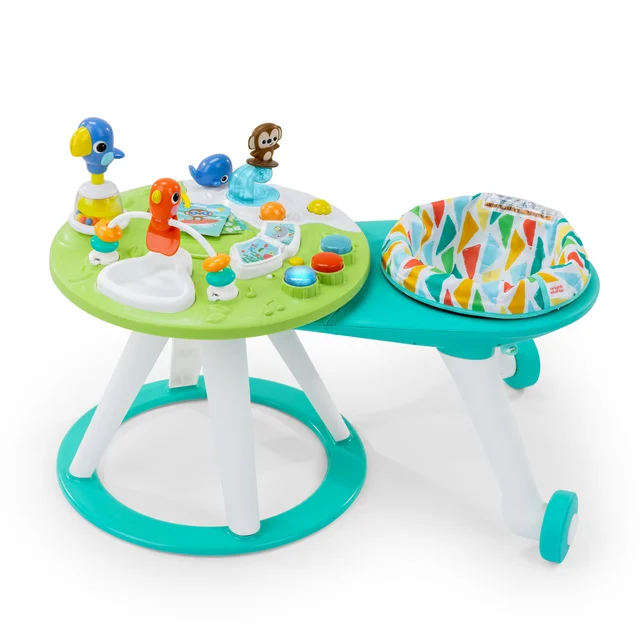
A stationary center that turns cruising practice into play, then converts into a toddler activity table when the seat comes off.
Best for: Pre-cruising babies from around six months, and parents who need a safe place to set the baby down for short stints.
- Rotating seat lets baby side-step a full 360 degrees on their own feet, which is genuine cruising practice
- No wheels under the seat, so it goes where you put it and stays there
- Converts to a toddler activity table when the seat comes off, so it keeps being useful as baby grows
- Designed so baby stands on their own feet, which is the posture to look for
- Large footprint and it does not fold, so it claims a permanent corner
- Fixed toy panel gets explored fast with no way to swap in new activities
- First assembly is fiddly
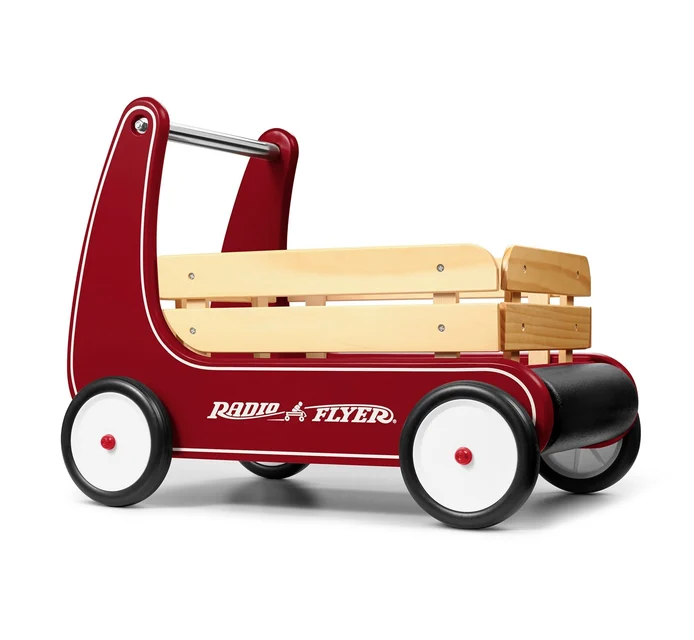
A heavy wooden push wagon that looks great and hauls toys for years, but still rolls quicker than a brand-new walker wants on hard floors.
Best for: Confident cruisers in carpeted homes, and parents who want one good-looking toy that lasts into the preschool years.
- Solid wood build with real weight behind it, which gives confident cruisers something stable to lean on
- Safety Resist Clickers add drag, and a bumper strip protects baseboards
- Open sides invite endless loading and unloading, so it stays a toy long after the walking phase
- Looks like furniture rather than a toy store display
- Owners report it still moves fast on hardwood and tile compared with carpet
- No lock to make it stationary and no learning panel of any kind
- Requires assembly and it is heavy to carry between rooms
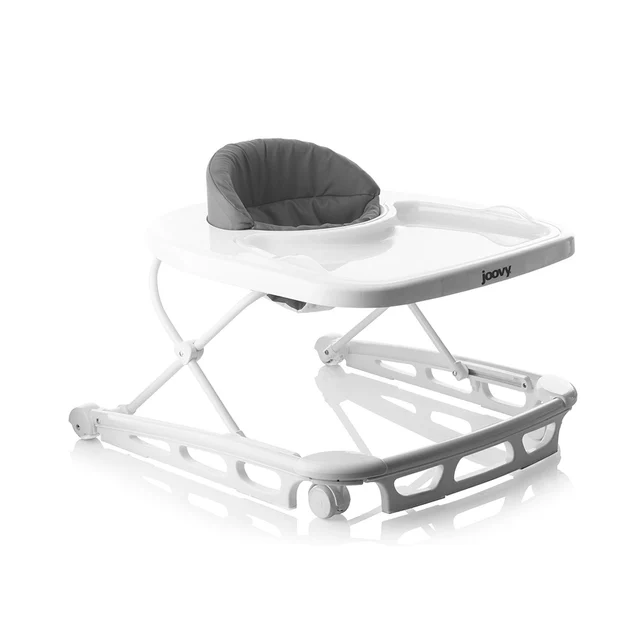
A well-made sit-in walker from a product category pediatricians have spent thirty years asking parents to avoid.
Best for: Nobody, in our view. If the tray-and-toys concept appeals, buy a stationary activity center instead.
- Sturdy build with a super-sized removable tray
- Removable, dishwasher-safe tray, padded seat with adjustable height settings, and a frame that folds flat
- Sit-in wheeled walkers are recommended against by the AAP and banned outright in Canada
- Gives a pre-walking baby speed they cannot control and reach they should not have, with stair falls the biggest risk
- Independent research finds no evidence walkers speed up walking, and some evidence they delay motor milestones
- Costs more than either of our picks
| Criteria | VTech Sit-to-Stand Learning Walker Top pick | Bright Starts Around We Go 2-in-1 Walk-Around Activity Center & Table | Radio Flyer Classic Push Walker Wagon | Joovy Spoon Walker Activity Center |
|---|---|---|---|---|
| Verdict | Buy it | Buy it | It depends | Skip it |
| Best for | Babies already pulling to stand and cruising who need something sturdy to push, and parents who want the most use per dollar. | Pre-cruising babies from around six months, and parents who need a safe place to set the baby down for short stints. | Confident cruisers in carpeted homes, and parents who want one good-looking toy that lasts into the preschool years. | Nobody, in our view. If the tray-and-toys concept appeals, buy a stationary activity center instead. |
| Price tier | $ · budget | $ · mid-range | $ · mid-range | $$ · premium |
| Type | Push walker with detachable play panel | Stationary walk-around activity center | Wooden push wagon | Sit-in wheeled walker |
| Safety stance | Recommended alternative to sit-in walkers | Recommended alternative to sit-in walkers | Recommended alternative to sit-in walkers | Advised against by the AAP, banned in Canada |
| Best age window | From pulling to stand onward (panel usable earlier) | From about 6 months, then table mode | About 12 months and up | Marketed from about 6 months |
| Speed control on hard floors | Two-speed wheel brake | Not applicable, it stays put | Resistance clickers help, still quick on tile | Rolls freely, which is the core problem |
| Learning play value | High: shapes, colors, piano, gears | High: 360 degrees of activities plus table mode | None built in, all open-ended play | Moderate toy bar, undermined by the format |
| Second life after walking | Panel becomes a standalone floor toy | Converts to a toddler activity table | Becomes a toy-hauling wagon for years | Outgrown and out of use quickly |
| Storage footprint | Small, no folding needed | Large and does not fold | Medium, heavy, does not fold | Medium, folds flat |
| Price tier | $ · budget | $ · mid-range | $ · mid-range | $$ · premium |
Which one is right for you?
- Babies already pulling to stand and cruising who need something sturdy to push, and parents who want the most use per dollar. Buy it VTech Sit-to-Stand Learning Walker
- Pre-cruising babies from around six months, and parents who need a safe place to set the baby down for short stints. Buy it Bright Starts Around We Go 2-in-1 Walk-Around Activity Center & Table
- Confident cruisers in carpeted homes, and parents who want one good-looking toy that lasts into the preschool years. It depends Radio Flyer Classic Push Walker Wagon
- Nobody, in our view. If the tray-and-toys concept appeals, buy a stationary activity center instead. Skip it Joovy Spoon Walker Activity Center
How we judged the field
“Baby walker” covers three very different products, and the safety record splits cleanly along those lines. Sit-in wheeled walkers put a pre-walking baby in a seat on castors. Push walkers give a standing baby something sturdy to lean on and shove forward. Stationary activity centers hold baby upright in one place with toys within reach. We synthesized published independent testing, pediatric and regulatory guidance, and aggregated owner reports rather than running our own lab, and we weighted the safety evidence heavily because it is unusually one-sided here.
The core fact that shaped every verdict: the American Academy of Pediatrics recommends against sit-in wheeled walkers and has called for a ban since the 1990s, and Canada banned them outright in 2004, making it illegal there to sell, import, or even give one away secondhand. The reason is stairs. Independent injury surveillance has tied hundreds of thousands of US emergency visits to walkers, with the large majority being head and neck injuries. A seated baby in a walker can cover several feet per second, which is faster than a supervising adult can react from across a room. The US does regulate walkers (they must be too wide for a standard doorway and must brake at a stair edge), but those rules reduce risk rather than remove it, and they do nothing about the second problem: time in a walker is time not spent on the floor building the trunk and hip strength that actual walking requires.
So our criteria, in order: does the product keep a baby’s feet under their own center of gravity, does it stay put or move only when the child chooses to move it, how much genuine play value does it deliver during the short window it fits, how well does it store, and does it earn its shelf space. We also checked that every pick is still in production and buyable in 2026.
This is the default recommendation for a reason. The activity panel detaches so a younger baby can play with it flat on the floor, then clips onto the frame when baby starts pulling to stand, at which point the same toy becomes a push walker. Baby is upright, weight on their own feet, hands gripping a bar at roughly the right height. That is the posture a new walker actually needs to practice.
The detail that matters most is the two-speed wheel switch on the back. On the slow setting the wheels drag enough that a wobbly beginner can lean into the handle without the whole thing shooting away across a wood floor, which is the single most common complaint owners raise about lighter push toys. Flip it to fast once they are confident and it rolls freely for hallway laps. Owners consistently report the frame holds up through multiple children, and the panel content (shapes, colors, animals, piano) keeps toddlers coming back long after the walking is sorted.
Downsides are real but minor. The music is loud, and there is a volume switch but only two positions. It is unapologetically plastic and brightly colored, so it will not disappear into a living room. And it is light enough that a determined toddler can tip it if they climb on the handle, so it needs the same supervision any push toy does. For the money, nothing else in this category delivers as much across as long a window.
This is the stationary option done right, and it is the one to pair with (or substitute for) a push walker if you want a place to set baby down safely for ten minutes. A walk-around seat lets baby stand on their own feet and move around a 360 degree activity table. That is cruising practice, the exact skill that precedes independent walking, without wheels under the seat.
Two things separate it from an ordinary jumper. First, baby bears weight on their own feet in a walk-around seat rather than hanging from springs. Second, it converts: remove the seat and the top becomes a toddler activity table, which is unusual in a category where many products are outgrown in a few months. Owners describe assembly as fiddly the first time and easy afterward.
The limits: the footprint is large and it does not fold flat, so it lives in a corner of your main room. The toy panel is fixed, so once it is explored it is explored. And like every upright container, it should be a short-stint tool rather than a parking spot. Independent guidance and pediatric physical therapists both point the same direction: cap sessions at roughly fifteen to twenty minutes and keep most of the day on the floor.
The wooden wagon is the handsome one, and for some families it is genuinely the best buy. It is heavy, the handle is at a good height, the sides are open so a toddler can load and unload it endlessly, and it keeps working as a toy hauler long after the walking phase ends. Radio Flyer builds it with Safety Resist Clickers that add drag so it does not free-roll away from a beginner, plus a bumper strip that spares your baseboards.
The reason it lands on “it depends” rather than “buy” is surface and stage. Owners consistently report it still moves fast on hardwood and tile compared to carpet, and the resistance clickers take some getting used to. A baby who has only just pulled to stand will likely be safer with a heavier-braked plastic walker first. There is also no learning panel, no lock to make it stationary, and it needs assembly. If your child is already cruising confidently, if you have carpet or a yard, and if you want something that will not look like a toy store exploded in your living room, it is an easy recommendation. For a brand-new walker on slick floors, start elsewhere.
The Spoon is a well-made sit-in walker. Joovy describes a super-sized removable dishwasher-safe tray, a padded seat with adjustable height settings, a wide base, and a frame that folds flat for storage. If you have already decided you want a seated walker, this is the kind of build people look for.
We still would not buy it, and neither would the pediatric bodies that have looked at the category. A sit-in walker suspends a baby who cannot yet stand, puts them on castors, and gives them a speed they cannot control and a reach they should not have. The stair-fall risk is the headline, but scalds from pulled-down mugs, tipped-over furniture, and finger pinches all cluster around this product type too. It is banned outright in Canada, and the AAP position in the US is that it should be. The developmental case is no better: independent research has found no evidence that walkers help babies walk sooner, and some evidence they delay motor milestones by substituting for floor time.
That verdict is about the category, not about Joovy’s execution. If you love the tray-and-toys concept, buy a stationary activity center instead and you get most of the same benefit without the wheels.
VTech Sit-to-Stand Learning Walker vs Bright Starts Around We Go: which should you buy?
They solve different halves of the same problem, and the deciding question is what your baby can already do.
If your baby is roughly six to eight months and cannot pull to stand yet, the Around We Go is the one that will actually get used. It supports them upright, gives them 360 degrees of things to bat and spin, and buys you a safe ten minutes. The VTech at that age is a floor toy at best, because the walker frame needs a baby who can already hold themselves up on it.
If your baby is already pulling up on the coffee table and cruising along the sofa, flip it. The VTech is the tool for that moment: it gives them something to push, it slows down when you tell it to, and it converts the wobbly cruise into real forward steps. The Around We Go at that stage becomes a table, which is nice but not urgent.
Budget is the tiebreaker if the timing is ambiguous. The VTech sits in a lower price tier, takes up a fraction of the floor space, and stays interesting longer because the panel comes off and travels. The Around We Go costs more and claims a permanent corner, but it is the only one of the two that gives you somewhere to put the baby down. Families who buy both usually buy the activity center first and the push walker three months later, and that sequence works well.
What to look for
- No seat on wheels. This is the one hard rule. If the product suspends a baby in a seat over castors, skip it regardless of brand, price, or how good the tray looks.
- Speed control. A push walker that free-rolls on hardwood will dump a beginner on their face. Look for a two-speed wheel switch, resistance clickers on the wheels, or simply enough weight that the child has to work to move it.
- Handle height and grip width. Baby should be able to stand with elbows slightly bent and shoulders down, not reaching up or hunching over.
- Feet flat, not on tiptoe. In any upright activity center, adjust the height so the whole foot contacts the floor. Toe-standing is the posture that draws the most criticism from pediatric physical therapists.
- A second life. The walking window is about four months long. Products that convert into an activity table, a toy wagon, or a detachable floor panel are the ones that earn their price.
- Storage reality. Measure the corner it will live in. Stationary centers are big and most do not fold.
- Skip the extras you will not use. Remote controls, app pairing, and screens add cost and no developmental value at this age. Floor time does more for walking than any product on this list.
Our final take
The best thing you can buy for a baby learning to walk is an empty stretch of floor, socks off, with furniture at grab height. Everything on this page is a supplement to that, not a substitute.
Within that framing, the VTech Sit-to-Stand Learning Walker is the pick: it is inexpensive, it puts a baby’s weight on their own feet, the slow-wheel setting solves the one thing that goes wrong with push toys, and the detachable panel means it earns its keep before and after the walking phase. Pair it with the Bright Starts Around We Go if you want somewhere safe to set the baby down during the pre-cruising months and a toddler table afterward. The Radio Flyer Classic Push Walker Wagon is the right call for confident cruisers, carpeted homes, and anyone who wants a toy that will still look good in five years.
And the sit-in walker stays on the shelf. The Joovy Spoon is a well-built example of a product category that pediatricians have spent thirty years asking parents not to use and that Canada made illegal. Nothing about the build quality changes what the wheels do.
Questions, answered
Are baby walkers safe?
It depends entirely on which kind. Sit-in wheeled walkers, the ones with a seat over castors, are the ones with the bad record: the American Academy of Pediatrics recommends against them, Canada banned their sale in 2004, and injury surveillance ties hundreds of thousands of US emergency visits to them, mostly head and neck injuries from stair falls. Push walkers and stationary activity centers keep the child's feet under them and are widely treated as the safer alternatives, though both still need supervision, a gate at the top of any stairs, and short sessions. This is general product information, not medical advice. Talk to your pediatrician about what suits your child, especially if there are any questions about their development.
Do baby walkers help a baby learn to walk sooner?
No. Independent research has repeatedly failed to find any acceleration in walking from walker use, and several studies point the other way, suggesting that time spent supported in a walker replaces the floor time that builds trunk, hip, and core strength. The most useful thing you can offer a pre-walker is an open, padded stretch of floor with sturdy furniture at grab height, bare feet or grippy socks, and plenty of tummy time earlier on.
What is the difference between a push walker, a sit-in walker, and an activity center?
A push walker is a weighted toy on wheels that a standing baby leans on and shoves forward, so the baby supplies the balance and the steps. A sit-in walker suspends a baby in a fabric seat over a wheeled base, so the baby is carried rather than walking. A stationary activity center holds baby upright in one spot, either in a rotating seat or a spring-suspended one, with toys arranged around them and no wheels involved. The first and third are the ones worth buying.
How long should a baby spend in an activity center or jumper each day?
Keep it short. The common guidance from pediatric physical therapists is around fifteen to twenty minutes at a time and not much more than twice a day, with the height set so the whole foot rests flat on the floor rather than the child pushing up onto their toes. These products are a safe place to park a baby for a few minutes, not a place for them to spend the afternoon.
Can you still buy sit-in walkers in the United States?
Yes. They are legal to sell in the US and are regulated rather than banned: current federal rules require a walker to be too wide to fit through a standard doorway and to stop at the edge of a step. Those rules cut the worst of the stair risk but do not eliminate it, which is why the pediatric recommendation is still to avoid the category. Canada goes further and makes it illegal to sell, import, advertise, or even give away a baby walker, secondhand ones included, so a hand-me-down that crosses the border is not legal there.
Deciding between the top two? See our head-to-head: VTech Sit-to-Stand Learning Walker vs Bright Starts Around We Go 2-in-1 Walk-Around Activity Center & Table.
More Baby & Family reviews
 The Best Balance Bikes: 4 Compared (and One to Skip)
  The Best Bassinets: 4 Compared (and One to Skip)
  The Best Book Nook Kits: 4 Compared (and One to Skip)
  The Best Baby Bottle Drying Racks: 4 Compared (and One to Skip)
  The Best Baby Bottle Sterilizers: 4 Compared (and One to Skip)
  The Best Bottle Warmers: 4 Compared (and One to Skip)