

Tools & DIY · Head-to-head
Makita BO5041 5 in. Random Orbit Sander, variable speed vs Festool ETS 125 REQ-Plus Random Orbital Sander
Which should you buy? Our verdict on both, pulled from our full The Best Random Orbital Sanders: 4 Compared (and One to Skip) comparison.
The Makita publishes the largest orbit here at 2.8 mm and has the lowest speed floor, from 4,000 OPM up. The Festool is the finishing specialist, with the smallest 2 mm stroke and the highest top speed.
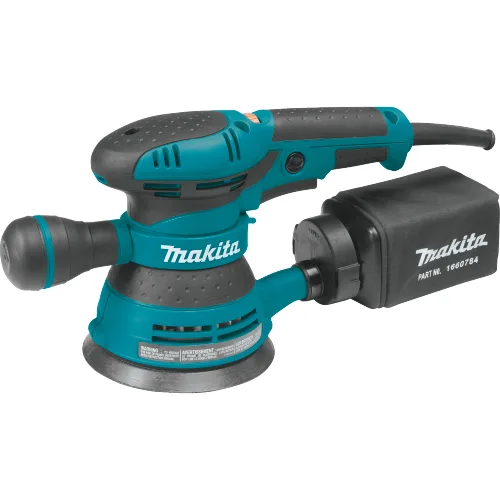
Makita BO5041 5 in. Random Orbit Sander, variable speed
Buy itPublishes the largest orbit here at 2.8 mm and the widest speed range, including a genuinely slow 4,000 OPM setting.
- Makita publishes a 2.8 mm sanding orbit diameter, the largest figure here.
- A 4,000 to 12,000 OPM range, meaning it will actually run slowly, which is what protects finish coats and edges.
- 300 W continuous input power, the highest figure here.
- A 123 mm pad, and Makita publishes pad diameter, orbit and a vibration figure.
- The 123 mm pad is slightly under the 125 mm standard, so pad and abrasive fit needs checking.
- 2.8 mm is still a fine-finish orbit, so this is not a material-removal tool despite being the most aggressive here.
- Makita's vibration figure of 3.5 m/s2 is for sanding a metal plate, so treat it as a guide rather than a wood sanding result.
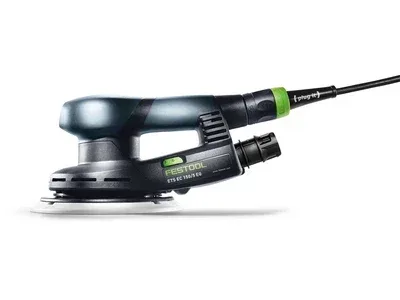
Festool ETS 125 REQ-Plus Random Orbital Sander
Buy itThe smallest stroke here at 2 mm and the highest top speed, which is the correct combination for a tool that refines rather than removes.
- A 2 mm sanding stroke, the finest in this comparison, producing the smallest scratch pattern before finishing.
- 6,000 to 14,000 OPM, the highest top speed here, which suits the small stroke by putting more passes over the same area.
- 250 W is deliberately modest, since a finishing sander that pushes hard leaves marks rather than removing them.
- Interchangeable 125 mm sanding pad, so worn pads are replaced rather than making the tool disposable.
- By far the most expensive tool here, and the abrasives and accessories continue that pricing.
- A 2 mm stroke removes material slowly, so stock preparation is genuinely tedious with it.
- The 6,000 OPM floor is higher than the Makita's 4,000, so it is less gentle at the bottom than the stroke suggests.
Side by side
| Makita BO5041 5 in. Random Orbit Sander, variable speed | Festool ETS 125 REQ-Plus Random Orbital Sander | |
|---|---|---|
| Our verdict | Buy | Buy |
| Best for | General woodworking that spans stock preparation and finish sanding, where one tool has to do both ends. | Finish work and between-coat sanding where scratch pattern matters more than how fast material comes off. |
| Price tier | $$ · mid-range | $$$$ · flagship |
The bottom line
Our overall pick is the Makita BO5041 5 in. Random Orbit Sander, variable speed - Publishes the largest orbit here at 2.8 mm and the widest speed range, including a genuinely slow 4,000 OPM setting. Choose the Festool ETS 125 REQ-Plus Random Orbital Sander instead if finish work and between-coat sanding where scratch pattern matters more than how fast material comes off.
Want the full picture, including the other options we compared and the popular one we'd skip? Read the complete The Best Random Orbital Sanders: 4 Compared (and One to Skip).