

Tech & Gadgets · Head-to-head
ASUS ZenScreen OLED MQ16AH vs Lenovo ThinkVision M14
Which should you buy? Our verdict on both, pulled from our full The Best Portable Monitors of 2026: Honest Picks for Travel and Work comparison.
The ZenScreen OLED wins on image quality for anyone doing photo, video or media work who can live with propping it on a cover. The lighter, sturdier-standing Lenovo M14 is the more practical pick for plug-and-go travel, as long as your laptop outputs video over USB-C.
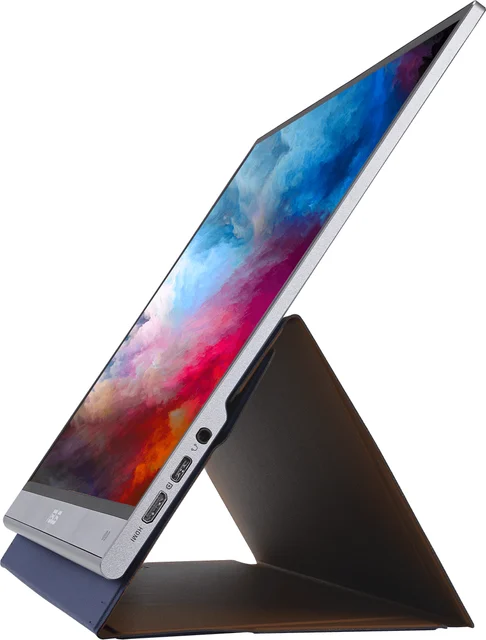
ASUS ZenScreen OLED MQ16AH
Buy itThe most convincing image in the group, held back by a fussy stand and a premium price.
- OLED panel covers the full DCI-P3 color space with rated color error under two, so blacks are truly black and color looks right untouched
- Metal chassis about five millimetres thin and near 650 grams, with a proximity sensor that dims the screen when you step away
- No integrated kickstand; you prop it on a folding cover, which blocks the mini-HDMI port in portrait orientation
- 1080p over 15.6 inches looks soft up close, and the glossy surface throws glare under overhead lighting
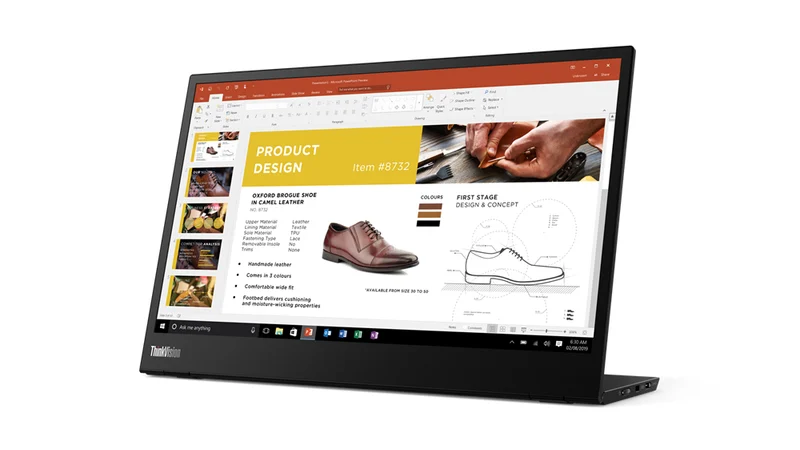
Lenovo ThinkVision M14
Buy itThe most practical travel panel here: light, stable and simple, if your laptop supports USB-C video.
- Built-in two-stage kickstand tilts and raises the panel, far steadier than the folding covers rivals ship
- Two USB-C ports with power pass-through run the screen and charge the laptop from one adapter, over a matte anti-glare coat
- Runs on USB-C DisplayPort Alt Mode only, with no HDMI and no DisplayLink, so hosts without USB-C video output cannot drive it
- Middling brightness, no touch and no speakers, and the bundled sleeve is thin enough that most owners buy a case
Side by side
The 6 criteria below are the ones our full comparison judged every product on, narrowed to these two.
| ASUS ZenScreen OLED MQ16AH Our pick | Lenovo ThinkVision M14 | |
|---|---|---|
| Our verdict | Buy | Buy |
| Best for | Photo, video and media work where color and contrast matter more than saving money | Business travelers who want the lightest, most stable single-cable second screen |
| Price tier | $$$ · premium | $$ · mid-range |
| Panel & image quality | OLED, full DCI-P3, true blacks | IPS, matte, accurate but average contrast |
| Brightness | Bright for the class, ~400-nit HDR peak | Around 300 nits, matte |
| Weight & thickness | ~650g, ~5mm metal | ~598g, lightest here |
| Stand | Folding cover only, no kickstand | Rigid built-in kickstand, tilt + height |
| Connections & touch | 2x USB-C + mini-HDMI, no touch | 2x USB-C only (Alt Mode), no touch |
| Best for | Color & media | Light travel |
Which one is right for you?
Pick the ASUS ZenScreen OLED MQ16AH if
photo, video and media work where color and contrast matter more than saving money.
Know before buying: no integrated kickstand; you prop it on a folding cover, which blocks the mini-HDMI port in portrait orientation.
Pick the Lenovo ThinkVision M14 if
business travelers who want the lightest, most stable single-cable second screen.
Know before buying: runs on USB-C DisplayPort Alt Mode only, with no HDMI and no DisplayLink, so hosts without USB-C video output cannot drive it.
The bottom line
Our overall pick is the ASUS ZenScreen OLED MQ16AH - The most convincing image in the group, held back by a fussy stand and a premium price. Choose the Lenovo ThinkVision M14 instead if business travelers who want the lightest, most stable single-cable second screen.
Want the full picture, including the other options we compared and the popular one we'd skip? Read the complete The Best Portable Monitors of 2026: Honest Picks for Travel and Work.