

Beauty & Grooming
The Best Safety Razors: 4 Compared (and One to Skip)
We compared four safety razors on blade geometry, adjustability, weight, blade type and cost per shave, return window and warranty, using each maker's published specs.
The short version
The Henson AL13 is the best overall: a 37g razor made in Canada that clamps a standard double-edge blade at a fixed 30° with blade exposure machined to tolerances as tight as 12.7um, backed by a lifetime warranty on defects and a 100-day return window. The Rockwell 6C is the value pick, a chromed zinc alloy razor with six settings from interchangeable plates and published blade gaps from 0.20 mm (R1) to 0.79 mm (R6). The Leaf Two Razor suits beginners and anyone shaving legs, head or body, with a pivoting head and two guarded half blades, but it costs more and uses two blades per load. Skip the Bevel Safety Razor: a fixed, non-adjustable razor with no published weight, gap or warranty and only a 30-day guarantee. Best for: Henson if you want a mild, precise daily shave, Rockwell if you want to tune the razor to your skin and spend less.
Our picks at a glance
- Henson Shaving Henson AL13 (Jet Black) - Buy. A 37g Canadian-made razor that clamps a standard double-edge blade at a fixed 30° to aerospace-style tolerances.
- Rockwell Razors Rockwell 6C Adjustable Safety Razor - Buy. A chromed zinc alloy razor with six settings from interchangeable base plates, with every blade gap published.
- Leaf Shave Leaf Two Razor - It depends. A pivoting all-metal razor that runs one or two guarded half double-edge blades, built for face, head and body.
- Bevel Safety Razor - Skip. A brass-weighted fixed razor sold on razor bumps, with no settings and few published specs.
The verdict in 30 seconds
What mattered most
- Head type
- Adjustability
- Published blade gap
- Blade type
- Weight
- Material
A safety razor swaps a pricey cartridge for a cheap steel blade held in a metal head, and the head design decides how close and how gentle the shave is. The details that matter are the blade gap, whether you can adjust it, how heavy the razor is and what blades it takes. Makers publish more of this than you might expect, and the ones that publish less tend to lean on marketing. We picked a precision-machined fixed razor, an adjustable value razor, a pivoting two-blade razor for beginners and body shaving, and a well-marketed razor to skip.
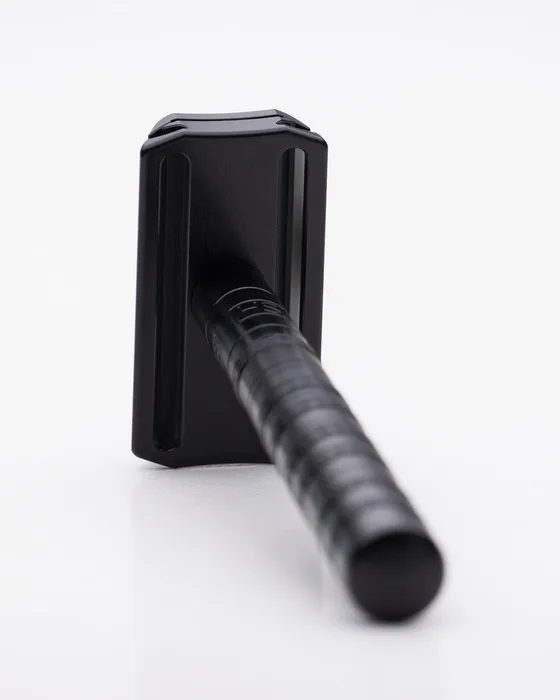
A 37g Canadian-made razor that clamps a standard double-edge blade at a fixed 30° to aerospace-style tolerances.
Best for: Daily shavers with irritation-prone skin who want a mild, consistent shave without fiddling with settings.
- Blade exposure and blade angle are machined to tolerances as tight as 12.7um, and the head holds the blade at 30° with no springs or moving parts.
- Takes standard double-edge blades sold almost anywhere, not proprietary refills.
- Lifetime warranty on manufacturing defects and a 100-day return window.
- Not adjustable, so you cannot dial it up for a heavy beard or down for sensitive spots.
- At 37g you guide it with your fingertips; people used to heavy razors may find it too light.
- The warranty excludes drops, dents and worn coatings, and Henson does not sell replacement parts.
- The 100-day return is limited to one razor per customer.
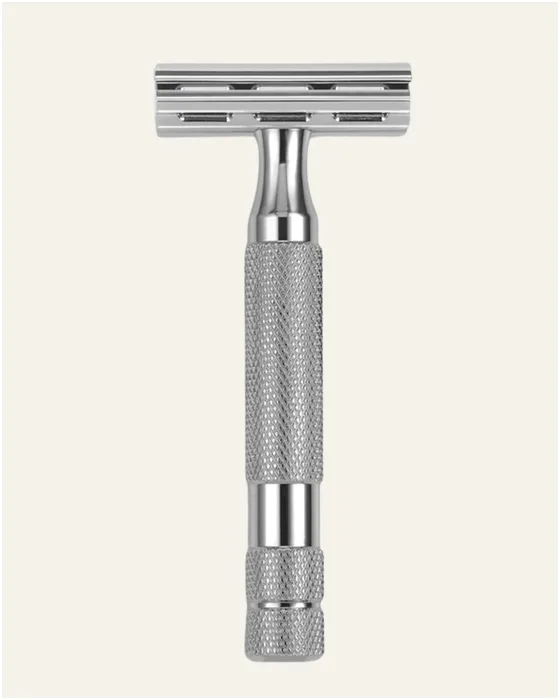
A chromed zinc alloy razor with six settings from interchangeable base plates, with every blade gap published.
Best for: First-time safety razor buyers who want to find their setting, and anyone shaving both sensitive areas and a coarse beard.
- Six settings with published gaps from 0.20 mm (R1) to 0.79 mm (R6), so you can start mild and step up.
- Rockwell says its razors weigh over 100g, enough that the razor's weight does the work instead of your pressure.
- 100-day no-questions-asked returns on direct orders, and it takes standard double-edge blades.
- Changing settings means unscrewing the handle and swapping plates, not turning a dial.
- The lifetime warranty is stated for the stainless 6S; for the 6C, accidental-damage parts are free but shipping may apply.
- Chrome over zinc alloy is less durable than the stainless 6S, by Rockwell's own description.
- The heavier head takes some adjusting to if you come from light cartridge razors.
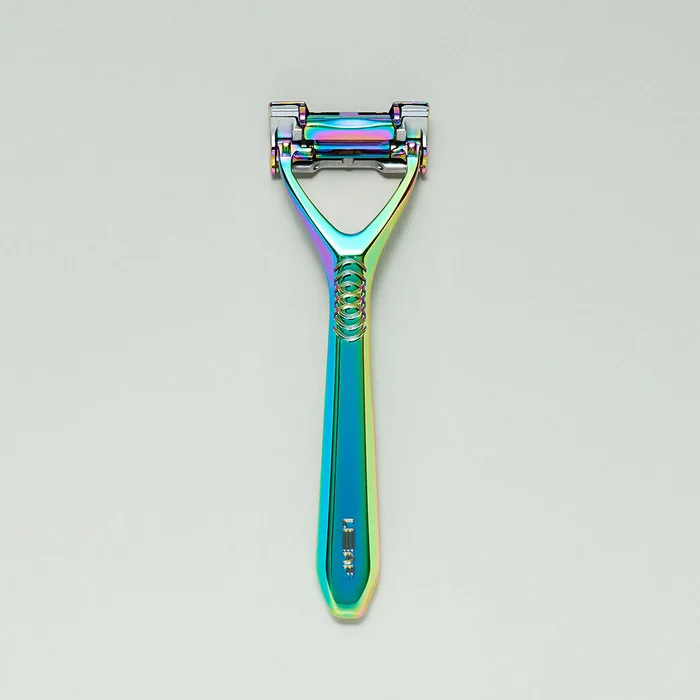
A pivoting all-metal razor that runs one or two guarded half double-edge blades, built for face, head and body.
Best for: Beginners switching from cartridges and anyone who shaves legs, head or body and wants a pivoting head.
- Pivoting head with the pivot behind the blades, which Leaf says guides the blade angle and reduces the learning curve.
- Each blade is individually guarded and you can load one or two, so you can make it milder for sensitive areas.
- Leaf designs it for full-body shaving, including legs, underarms and bikini line, as well as face and head.
- Uses half double-edge (single-edge) blades: buy Leaf blades or snap standard DE blades in half in their wrapper.
- Two blades per load, and Leaf says refills last 8 to 12 shaves, so cost per shave is higher than a single-blade DE razor.
- Loading takes several steps: unlock, load the bottom blade, flip, load the top blade, then latch.
- Costs more than the Rockwell, and Leaf publishes no weight.
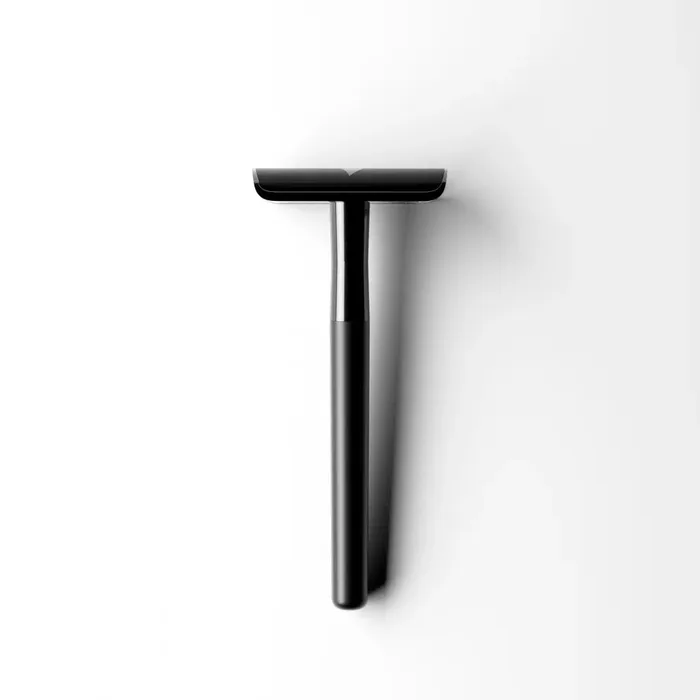
A brass-weighted fixed razor sold on razor bumps, with no settings and few published specs.
Best for: Few buyers; the Rockwell 6C on a low setting does the bump-prone job with more control for similar money.
- Single-blade double-edge design with ten blades included.
- Brass weighted, and Bevel's directions tell you to let the weight do the work.
- Comes in silver or black.
- Not adjustable, so the bump-prone buyers it targets cannot choose a milder gap the way they can on a Rockwell.
- Bevel publishes no weight, blade gap or warranty, only a 30-day money-back guarantee.
- Bevel's own instructions say to use a new blade each shave and that coarse hair may need several blade changes per shave.
- Costs about the same as the Rockwell 6C, which gives you six published settings and a 100-day return window.
| Criteria | Henson AL13 (Jet Black) Top pick | Rockwell 6C Adjustable Safety Razor | Leaf Two Razor | Bevel Safety Razor |
|---|---|---|---|---|
| Verdict | Buy it | Buy it | It depends | Skip it |
| Best for | Daily shavers with irritation-prone skin who want a mild, consistent shave without fiddling with settings. | First-time safety razor buyers who want to find their setting, and anyone shaving both sensitive areas and a coarse beard. | Beginners switching from cartridges and anyone who shaves legs, head or body and wants a pivoting head. | Few buyers; the Rockwell 6C on a low setting does the bump-prone job with more control for similar money. |
| Price tier | $$ · mid-range | $ · budget | $$ · mid-range | $ · budget |
| Head type | Fixed, rigid | Fixed, interchangeable plates | Pivoting | Fixed |
| Adjustability | None | 6 settings (R1 to R6) | 1 or 2 blades | None |
| Published blade gap | Not stated in mm; tolerances to 12.7um | 0.20 mm to 0.79 mm | Not published | Not published |
| Blade type | Standard double-edge | Standard double-edge | Half double-edge (single-edge) | Double-edge (10 included) |
| Weight | 37g | Over 100g (Rockwell, all razors) | Not published | Not published |
| Material | Type II anodized, machined in Canada | Chromed zinc alloy | All-metal handle | Brass weighted |
| Return window | 100 days, one per customer | 100 days on direct orders | 30 days, full refund | 30-day money-back |
| Warranty | Lifetime, manufacturing defects | Free parts for accidental damage; lifetime stated for 6S | Extended warranty with optional paid membership | Not published |
Which one is right for you?
- Daily shavers with irritation-prone skin who want a mild, consistent shave without fiddling with settings. Buy it Henson Shaving Henson AL13 (Jet Black)
- First-time safety razor buyers who want to find their setting, and anyone shaving both sensitive areas and a coarse beard. Buy it Rockwell Razors Rockwell 6C Adjustable Safety Razor
- Beginners switching from cartridges and anyone who shaves legs, head or body and wants a pivoting head. It depends Leaf Shave Leaf Two Razor
- Few buyers; the Rockwell 6C on a low setting does the bump-prone job with more control for similar money. Skip it Bevel Safety Razor
How we judged the field
Five things separate a good safety razor from a drawer ornament. Blade geometry comes first: the gap and exposure decide how much blade meets skin, and a razor that publishes them lets you compare. Adjustability matters because the setting that suits a coarse beard is too much for a neck or legs. Weight changes technique, since heavy razors shave under their own weight while light ones are steered by the fingers. Blade type decides running cost and availability. And the return window and warranty tell you how much the maker trusts its product while you learn.
The field splits into fixed double-edge razors, adjustable razors and newer pivoting designs that borrow the cartridge feel. We picked the most precisely specified fixed razor, the best-documented adjustable razor, a pivoting razor that suits beginners and body shaving, and a heavily marketed fixed razor that gives you less than its rivals for similar money. If you would rather not use a blade at all, our best electric shavers guide covers foil and rotary options, and the best beard trimmers guide covers keeping length.
The Henson AL13 is the razor to buy if you want a mild shave that does not change from one morning to the next. Henson machines it at an AS9100-certified aerospace facility in Ontario and holds blade exposure and angle to tolerances as tight as 12.7um. The head clamps a standard double-edge blade at a fixed 30° with no springs or moving parts, and Henson says the blade gap is similar to multi-blade razors, which is why it feels safe for newcomers. It weighs 37g, so you steer it with your fingertips rather than letting weight press the blade, and the Type II anodized finish resists scratches. Henson cites clinical testing showing 77% less razor burn than multi-blade razors. You get a lifetime warranty on manufacturing defects and a 100-day return, limited to one razor per customer. The trade-off is that it cannot be adjusted, and the warranty excludes drops and worn coatings. It suits daily shavers with sensitive skin who want one setting that works.
The Rockwell 6C is the value pick because it lets you find your shave instead of guessing. It is made from chromed zinc alloy and comes with interchangeable base plates that give six settings, and Rockwell publishes every gap: R1 at 0.20 mm, R2 at 0.35 mm, R3 at 0.48 mm, R4 at 0.61 mm, R5 at 0.69 mm and R6 at 0.79 mm. Rockwell suggests 1 to 3 for sensitive skin and 4 to 6 for coarse beards, and says its razors weigh over 100g, so the head does the work without extra pressure. Direct orders come with 100-day no-questions-asked returns. The compromises are practical. Changing settings means unscrewing the handle and swapping plates. Rockwell states a lifetime warranty for the stainless 6S, while 6C owners get free replacement parts for accidental damage with shipping possibly charged. It costs less than the Henson and suits anyone new to safety razors, or anyone shaving both a beard and sensitive areas.
The Leaf Two Razor is the safety razor for people who like how a cartridge feels. Its all-metal head pivots, with the pivot behind the blades and slightly below center, and each of its two blades sits in its own guarded position. You can load one blade for a milder pass or two for efficiency, and exfoliating Prep Fins sit ahead of the blades. Leaf designs it for face, head and body, including legs, underarms and bikini line, which makes it a better fit for body shaving than a rigid head. The costs show up over time. It uses half double-edge blades, either Leaf’s own or standard DE blades you snap in half inside the wrapper, and a full load uses two of them. Leaf says refills last 8 to 12 shaves on average, loading takes several steps, and no weight is published. It costs more than the Rockwell. Buy it if you are new to blades or shave more body than face.
The Bevel Safety Razor is sold hard on razor bumps, but the razor itself is a plain fixed double-edge design and its product page leaves out the numbers that would let you judge it. Bevel describes it as brass weighted, includes ten blades and tells you to hold it at about 30° and let the weight do the work. That is sound advice for any safety razor. What is missing is adjustability, a published weight, a blade gap and a warranty; the only stated protection is a 30-day money-back guarantee. Bevel’s own directions also say to use a new blade for every shave and that coarse hair may need several blade changes in one shave, which raises running cost. For about the same money, the Rockwell 6C gives you six published gaps, including a mild R1 plate for bump-prone skin, plus a 100-day return window. Unless you want this specific look, skip it.
Henson Shaving Henson AL13 (Jet Black) vs Rockwell Razors Rockwell 6C Adjustable Safety Razor: which should you buy?
The Henson AL13 and the Rockwell 6C solve the same problem in opposite ways. The Henson removes variables: one blade angle, machined tightly, in a 37g razor you steer by hand. The Rockwell hands you the variables: six plates with published gaps from 0.20 mm to 0.79 mm in a head that Rockwell puts at over 100g, so you can tune aggressiveness to your skin and hair. Both use standard double-edge blades and both give 100-day returns on direct orders, but the Henson’s lifetime defect warranty covers the AL13 itself, while Rockwell states its lifetime warranty for the stainless 6S.
Choose the Henson if you already know you want a mild, forgiving shave and prefer a light razor that behaves the same every day. Choose the Rockwell if you are not sure what your skin tolerates, if you shave both a heavy beard and sensitive areas, or if you want the lower price. Start the Rockwell on R1 and move up one plate at a time.
What to look for
- Published blade gap: a maker that lists the gap or exposure in millimeters lets you compare mildness instead of trusting adjectives.
- Adjustability: interchangeable plates or settings let one razor handle a coarse beard and sensitive skin.
- Weight you are comfortable with: heavy razors shave under their own weight, light ones need a steady hand; neither is wrong.
- Standard blades: razors that take standard double-edge blades let you buy from many brands and keep running costs low.
- A long return window: safety razors have a learning curve, so 100 days beats 30 when you are still learning the angle.
- Warranty terms in writing: check what is covered, since some warranties exclude drops, dents and worn finishes.
Our final take
For most people moving to a safety razor, the Rockwell 6C is the smartest first buy: six published settings, a mild R1 plate to learn on, standard blades and a 100-day return window at a budget price. If you want a mild, precise razor with nothing to adjust, the Henson AL13 is the best-made option here, with tight published tolerances and a lifetime defect warranty. The Leaf Two Razor makes sense for beginners and body shaving, as long as you accept half blades and higher running cost. Skip the Bevel Safety Razor, which offers no settings, few specs and a short guarantee for similar money.
Questions, answered
Is a safety razor better than a cartridge razor for razor bumps?
It can be, mainly because a single blade makes one cut per pass instead of several. Henson and Rockwell both pitch their razors at people who get irritation from multi-blade cartridges, and Henson cites clinical testing showing 77% less razor burn than multi-blade razors. Technique matters as much as the razor: short strokes, light pressure and shaving with the grain on the first pass. If you have persistent bumps, a dermatologist is the right person to ask.
Which Rockwell setting should I start on?
Rockwell recommends starting at R1, its mildest plate with a 0.008 inch (0.20 mm) gap, to learn the angle. It suggests settings 1 to 3 for sensitive skin and 4 to 6 for thick, coarse hair. Move up one plate at a time once you can shave without nicks. Many people settle in the middle range.
Are safety razor blades all the same?
Standard double-edge blades share a common shape, so the Henson, Rockwell and Bevel take blades from many brands. They differ in sharpness and coating, and the same blade can feel harsh in one razor and smooth in another, so trying a sampler pack is worth it. The Leaf Two is different: it takes half double-edge blades, which you can buy or make by snapping a standard blade in half inside its wrapper.
Can I use a safety razor on my legs or head?
Yes, with care. Rockwell suggests its lower settings for body shaving, Henson says the AL13 works on head and body, and Leaf designs the Leaf Two for legs, underarms, bikini line and head. A pivoting head like the Leaf's is easier on curves such as knees and the back of the skull. Go slowly over bony areas whichever razor you use.
How much do safety razor blades cost to run?
Far less than cartridges. Rockwell says a 100-pack of blades covers about 2 to 3 years of daily shaving, and Henson says the same for its 100-pack. Bevel's directions call for a fresh blade every shave, which raises the cost. The Leaf Two uses two half blades per load that last 8 to 12 shaves on average, by Leaf's figures.
Deciding between the top two? See our head-to-head: Henson Shaving Henson AL13 (Jet Black) vs Rockwell Razors Rockwell 6C Adjustable Safety Razor.
More Beauty & Grooming reviews
 The Best Scalp Massagers: 4 Compared (and One to Skip)
  The Best Silk Pillowcases: 4 Compared (and One to Skip)
  The Best Sneaker Cleaning Kits: 4 Compared (and One to Skip)
  The Best At-Home Teeth Whitening Kits: 4 Compared (and One to Skip)
  The Best Ultrasonic Jewelry Cleaners: 4 Compared (and One to Skip)
  The Best Water Flossers: What Actually Cleans Between Your Teeth