

Outdoors & Fitness
The Best Inflatable Paddle Boards: 4 Compared (and One to Skip)
We weighed four popular inflatable SUPs on rigidity, stability, weight, package value, and brand support to find the ones worth buying.
The short version
After weighing stiffness, stability, weight, package value, and warranty, two boards stand out. The Red Paddle Co 10'8" Ride MSL is the stiffest and most polished, worth its flagship price for frequent paddlers and bigger riders. The iROCKER All-Around 11' is the value champion: stable, versatile, and fully kitted for mid-range money. The Bluefin Cruise 10'8" packs in the most accessories and a 150 kg limit, but its paddle is basic aluminium and it runs at 15 to 18 PSI, so it depends on whether you prioritize an all-inclusive kit over refinement. We'd skip the Retrospec Weekender 10'6": it is light and complete, but its 15 PSI maximum and 2-year warranty are the weakest here. Best for: most people are best served by the iROCKER All-Around, stepping up to the Red Paddle Co Ride if budget allows.
Our picks at a glance
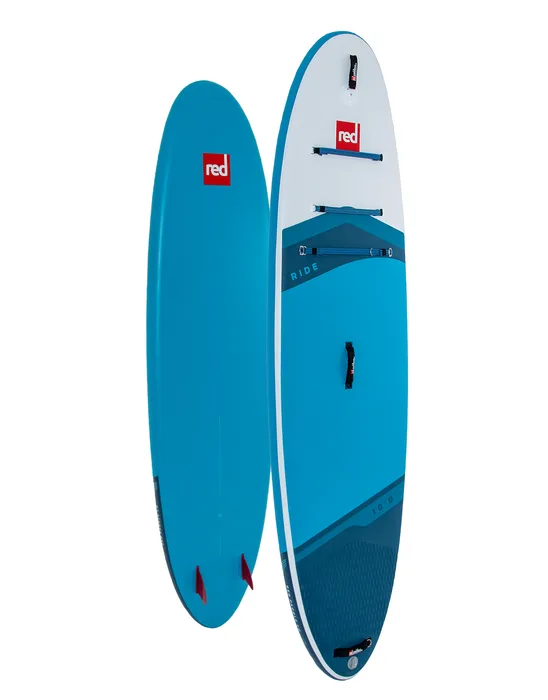
- Red Paddle Co 10'8" Ride MSL - Buy. The stiffest, most refined all-rounder here, sized for bigger riders - and priced like it.
- iROCKER All-Around 11' - Buy. The value sweet spot - stable, versatile, and shipped with everything you need.
- Bluefin Cruise 10'8" - It depends. The most complete package for the money, with a basic aluminium paddle and a thicker, lower-pressure build.
- Retrospec Weekender 10'6" - Skip. A light, fully kitted starter board with the lowest pressure ceiling and shortest warranty here.
The verdict in 30 seconds
What mattered most
- Stiffness / pressure
- Width
- Board weight
- Included package
- Warranty
- Best use
Inflatable stand-up paddle boards have quietly become good enough that most paddlers never need a hard board. But the gap between the best and the merely adequate is real - it shows up in how stiff the board feels underfoot, how heavy the pack is on the walk to the water, and whether the company is still around to honor a warranty. We synthesized independent testing and owner reports across four popular boards. Two are easy recommendations, one is a value pick with a catch, and one we'd steer most people away from.
The stiffest, most refined all-rounder here, sized for bigger riders - and priced like it.
Best for: Frequent paddlers and taller or heavier riders who want a stiff, confidence-inspiring board and will use it enough to justify the spend.
- MSL high-density drop-stitch rated to pressures above 22 PSI, which Red says makes a thinner, stiffer board that sits low and is easy to climb back onto
- 34-inch width and a 120 kg maximum rider weight, the largest board in Red's Ride range
- Package includes the All-Terrain Backpack, Titan II pump, coiled leash, phone case and service kit, backed by a 5-year warranty
- Easily the most expensive board in this group, and the paddle is a separate choice rather than part of the base package
- The premium price is hard to justify for casual, few-times-a-summer paddlers
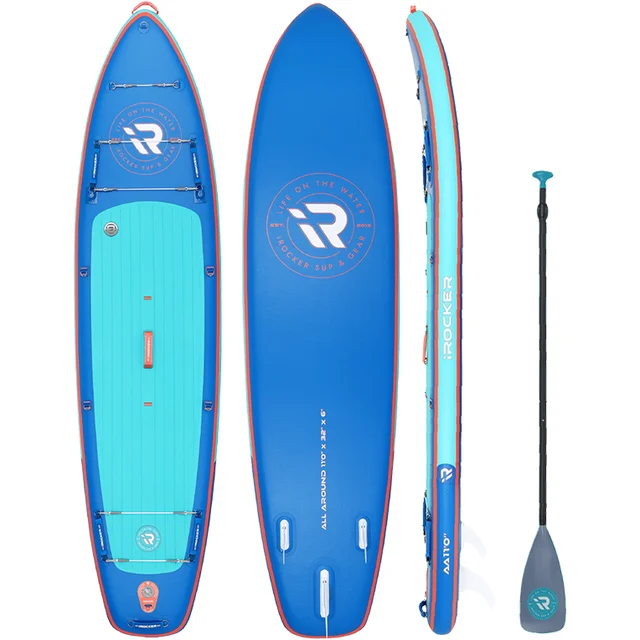
The value sweet spot - stable, versatile, and shipped with everything you need.
Best for: First-time buyers and families who want a do-everything board and a full kit without paying flagship money.
- Very stable 32-inch platform that owners describe as forgiving for beginners yet efficient enough to track well on longer paddles
- Complete package with one of the better pumps in its price class and clever touches like tethered fins
- Well-established brand with responsive support and a solid warranty
- Not the stiffest board here - it trails the premium option on rigidity
- Full-size pack is bulkier to store and carry than the compact-folding travel boards
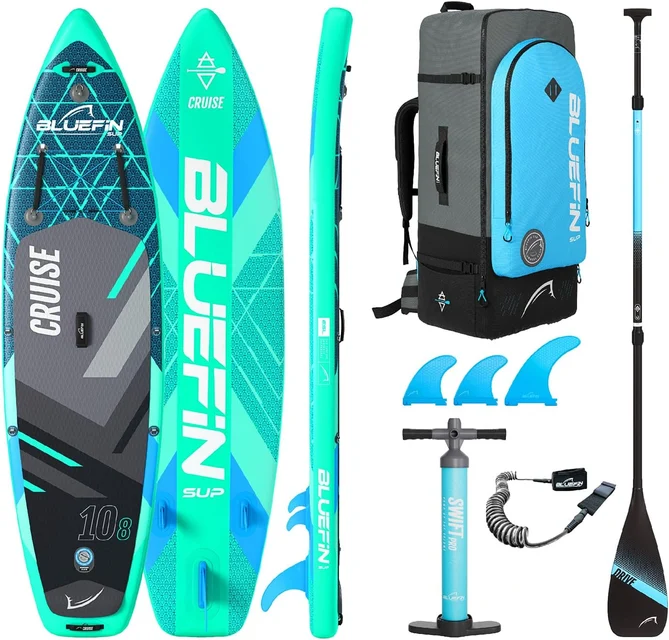
The most complete package for the money, with a basic aluminium paddle and a thicker, lower-pressure build.
Best for: Budget-minded families and casual paddlers who value an all-inclusive kit and a high weight limit over refinement.
- The most generous kit here - 3-piece paddle, Swift Pro pump, backpack, 10 ft leash, phone case, bottle dock and repair capsule, plus D-rings and a camera mount
- Light at 9.1 kg for the board, with a 150 kg maximum user weight
- ESL construction tested to 28 PSI and a 5-year warranty
- The included paddle is a 3-piece aluminium one, the most basic type
- Bluefin recommends 15 to 18 PSI, and at 6 inches thick it sits higher on the water than the 4.7-inch Red
- The kayak seat its D-rings are built for is sold separately
Amazon had no buyable listing for this when we last checked. The link still works if it returns.
Find it on Amazon Read our detailed assessment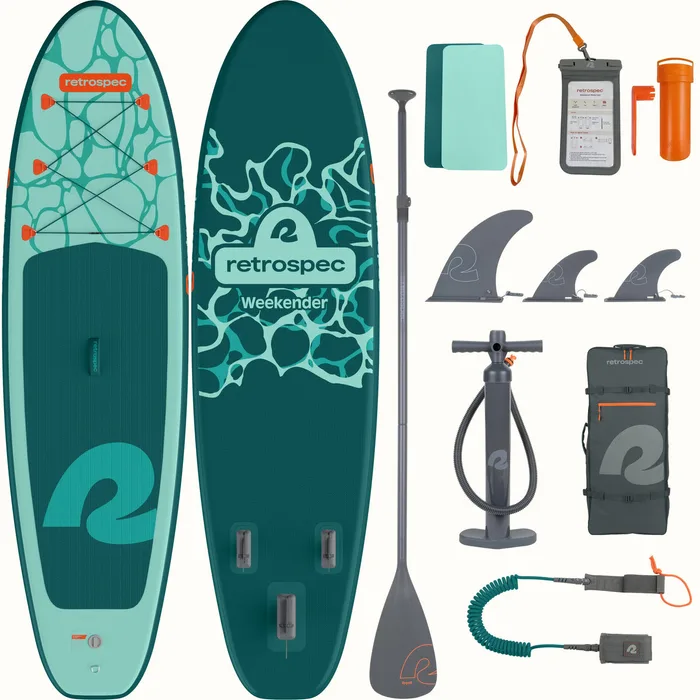
A light, fully kitted starter board with the lowest pressure ceiling and shortest warranty here.
Best for: Occasional flatwater paddlers who prize low weight and a low price over stiffness and long-term warranty cover.
- 17.5 lb, the lightest board in this comparison, rolling to 34 x 12.4 x 6 inches for storage
- Full kit with a 3-piece paddle, dual-action pump, backpack, three removable fins, coiled leash, repair kit and phone case
- Retrospec gives a maximum pressure of 15 PSI, against Red's MSL rated above 22 PSI and Bluefin's 28 PSI test, so expect more flex underfoot
- A 2-year warranty, against 5 years from Red and Bluefin
- Recommended rider weight tops out at 275 lb
| Criteria | Red Paddle Co 10'8" Ride MSL Top pick Buy it Buy | iROCKER All-Around 11' Buy it Buy | Bluefin Cruise 10'8" It depends | Retrospec Weekender 10'6" Skip it Buy |
|---|---|---|---|---|
| Best for | Frequent paddlers and taller or heavier riders who want a stiff, confidence-inspiring board and will use it enough to justify the spend. | First-time buyers and families who want a do-everything board and a full kit without paying flagship money. | Budget-minded families and casual paddlers who value an all-inclusive kit and a high weight limit over refinement. | Occasional flatwater paddlers who prize low weight and a low price over stiffness and long-term warranty cover. |
| Price tier | $$$$ · flagship | $$ · mid-range | $ · budget | $ · budget |
| Stiffness / pressure | MSL rated above 22 PSI | Very good | Tested to 28 PSI, 15 to 18 PSI recommended | 15 PSI maximum |
| Width | 34 in | 32 in | 32 in | 32 in |
| Board weight | 11.3 kg | Moderate | 9.1 kg | 17.5 lb |
| Included package | Backpack, Titan II pump, leash, phone case; paddle chosen separately | Complete, great pump | Most complete (adds phone case, bottle dock, camera mount) | Complete, with 3 fins and phone case |
| Warranty | 5 years | Strong, good support | 5 years | 2 years |
| Best use | Bigger riders, all-round | All-round & distance | Family & leisure | Calm-water weekends |
| Price tier | $$$$ · flagship | $$ · mid-range | $ · budget | $ · budget |
Which one is right for you?
- Frequent paddlers and taller or heavier riders who want a stiff, confidence-inspiring board and will use it enough to justify the spend. Buy it Red Paddle Co 10'8" Ride MSL
- First-time buyers and families who want a do-everything board and a full kit without paying flagship money. Buy it iROCKER All-Around 11'
- Budget-minded families and casual paddlers who value an all-inclusive kit and a high weight limit over refinement. It depends Bluefin Cruise 10'8"
- Occasional flatwater paddlers who prize low weight and a low price over stiffness and long-term warranty cover. Skip it Retrospec Weekender 10'6"
How we judged the field
We don’t run our own lab. Instead, we synthesize independent testing, expert reviews, and a broad read of owner and customer reports, then weigh the patterns that show up again and again, checked against what each maker publishes. For inflatable paddle boards, a handful of criteria separate the good from the forgettable.
Rigidity matters most: a board that flexes in the middle under your weight feels unstable and wastes effort, and the pressure a board is built to hold is the clearest published signal of how stiff it will be. Stability - driven mostly by width and shape - determines how quickly a beginner feels confident. Weight and pack size decide whether the board actually gets used or stays in the closet, because the walk from the car is where heavy boards lose people. We also looked at the included package (pump, paddle, leash, fins, bag) and durability and warranty, because a long warranty is the maker’s own bet on how long the board lasts.
Red Paddle Co 10’8” Ride MSL
Buy itRed’s Ride is the reference point for how stiff an inflatable can feel. Red says its MSL high-density drop-stitch is designed to withstand pressures above 22 PSI, producing a thinner yet more rigid board that sits low to the water, so it is easy to climb back onto. The 10’8” is the largest board in Red’s Ride range, 34 inches wide with a 120 kg maximum rider weight, and Red pitches it at novice, taller, heavier or less confident paddlers who want solid stability, or who want to carry a small passenger.
The package comes in Red’s All-Terrain Backpack with the Titan II pump, a coiled leash, a phone case and a service kit, and the board carries a 5-year warranty. The catch is simple: it’s the priciest board here by a clear margin, and the paddle is a separate choice rather than part of the base package. If you’ll paddle often, that quality earns its keep. If you’re a few-times-a-summer paddler, it’s more board than you need.
iROCKER All-Around 11’
Buy itThe iROCKER is the board we’d hand most people. Its wide, forgiving deck earns consistent praise for making beginners comfortable fast, yet owners report it still tracks well enough for longer outings, so you don’t outgrow it in a season. The package is complete and sensibly chosen, with a strong pump and thoughtful details, and iROCKER is an established brand with the support and warranty to match.
It gives up a little to the flagship: it isn’t the stiffest board, and the full-size pack is bulkier to store than a compact travel board. But for mid-range money you get most of the everyday experience of a premium board with none of the buyer’s remorse. That balance is exactly why it’s our value pick.
Bluefin Cruise 10’8”
It dependsThe Cruise is the package player. It ships with the most in the box - a 3-piece paddle, Swift Pro pump, backpack, 10 ft leash, phone case, bottle dock and repair capsule, with D-rings for an optional kayak seat and a camera mount. Bluefin lists the board at 9.1 kg with a 150 kg maximum user weight, and its ESL construction is tested to 28 PSI and backed by a 5-year warranty.
The trade-offs are in the details. The included paddle is a 3-piece aluminium one, the most basic type, so keen paddlers will want to upgrade it. Bluefin recommends running the board at 15 to 18 PSI, and at 6 inches thick it sits higher on the water than the 4.7-inch Red. The kayak seat the D-rings are built for is sold separately. If you want everything included and a high weight limit for the money, it’s a lot of board. If you want the most refined feel, look at the Red.
Retrospec Weekender 10’6”
Skip itThe Weekender is easy to like on paper. At 17.5 lb it is the lightest board here, it rolls to 34 x 12.4 x 6 inches, and the kit is complete: a 3-piece paddle, dual-action pump with a gauge, backpack, three removable fins, a coiled leash, a repair kit and a phone case.
The problem is what Retrospec publishes about the board itself. It lists a recommended range of 12 to 15 PSI and a maximum of 15 PSI, the lowest ceiling in this group by a wide margin, and pressure is what keeps an inflatable stiff underfoot. The warranty is 2 years, against 5 from Red and Bluefin, and the recommended rider weight tops out at 275 lb. For calm-water weekends it will float you, but the Bluefin gives you a more generous kit, a 5-year warranty and a higher pressure rating for budget money.
Red Paddle Co 10’8” Ride MSL vs iROCKER All-Around 11’: which should you buy?
These are our two recommendations, and the choice is really about how much you’ll paddle and what you value. The Red Paddle Co Ride wins on the things enthusiasts feel every time out: its MSL build is stiffer and more refined, and the 34-inch 10’8” gives bigger riders real stability. It is, however, a flagship-priced board, and the paddle is chosen separately.
The iROCKER All-Around counters with value. It’s stable, versatile, and arrives with a complete, well-chosen kit for a fraction of the premium board’s price, and it’s more than stiff enough for the recreational and fitness paddling most owners actually do. Buy the Red if you paddle often, want the best-feeling board, and the price doesn’t sting. Buy the iROCKER if you want the smartest money-for-experience ratio - which, for most people, is the right call.
What to look for
- Rigidity at pressure: the single biggest driver of how good an inflatable feels. Check the maximum or tested pressure the maker publishes.
- Width for your skill: 32” to 35” wide is stable and beginner-friendly; narrower is faster but tippier. Match it to your experience and balance.
- Total weight and pack size: the board you can carry easily is the board you’ll actually use. Heavier packages get left behind.
- What’s in the box: a good pump, paddle, leash, fins, and a comfortable backpack add real value - factor them in when comparing prices.
- Warranty length: a 5-year warranty is the maker’s own bet on how long the board lasts, and buy from makers with a track record of support.
- Weight capacity: leave headroom above your body weight for gear, kids, or a dog, especially if you want a stable ride.
Our final take
Inflatable paddle boards are good enough now that the real decision is about fit and value rather than raw capability. The Red Paddle Co 10’8” Ride MSL is the best board here - stiff and polished - and it’s the one to buy if you’ll paddle enough to justify the flagship price. For nearly everyone else, the iROCKER All-Around 11’ delivers most of that experience with a full kit for mid-range money, making it our overall recommendation. The Bluefin Cruise 10’8” is a strong value if you want the most gear in the box and a high weight limit, and can live with a basic paddle. And while the Retrospec Weekender is light and complete, its 15 PSI maximum and 2-year warranty make it the one we’d skip. Best for: start with the iROCKER, and step up to the Red if your budget and paddling frequency say so.
Questions, answered
What size inflatable paddle board should a beginner get?
For most first-timers, an all-around board around 10'6" to 11'6" long and 32" to 35" wide is the safe choice. The extra width buys stability while you find your balance, and that length keeps the board tracking straight without feeling unwieldy. Heavier or taller paddlers should lean toward the longer, wider end of that range for more float and a higher weight capacity.
Are inflatable paddle boards as good as hard boards now?
For recreation, touring, and general fitness paddling, modern inflatables are close enough that most people never miss a hard board - and they win easily on storage and transport since they pack into a backpack. Independent testing shows the best inflatables get impressively stiff at full pressure. Dedicated racers and hardcore surfers still favor rigid boards for the last few percent of performance, but that's a narrow use case.
How long does an inflatable SUP last?
A quality inflatable from a reputable maker typically lasts many seasons of regular use, and owners routinely report boards holding up for years. Longevity comes down to construction quality and care: rinse off salt and sand, avoid storing it fully inflated in direct sun for long stretches, and let it dry before rolling it away. This is where a solid warranty - and a company still around to honor it - matters.
Do I need an electric pump?
No, but it's a nice upgrade. All four packages include a hand pump, and reaching full pressure by hand takes a few focused minutes - more effort than most people expect but entirely manageable. An electric pump (built into or added to some packages) saves the sweat, especially if you paddle often or inflate more than one board at a time. It's a convenience, not a necessity.
Why skip the Retrospec when it is so light and complete?
Its kit and 17.5 lb weight are genuinely appealing, but Retrospec lists a maximum pressure of 15 PSI, well below the 22-plus PSI of Red's MSL and the 28 PSI Bluefin tests to, and pressure is what keeps an inflatable stiff underfoot. Its 2-year warranty is also the shortest here. For a board you hope to use for several seasons, the stiffer, longer-warranted options are the better spend.
Deciding between the top two? See our head-to-head: Red Paddle Co 10'8" Ride MSL vs iROCKER All-Around 11'.
More in Outdoors & Fitness
Inflatable Paddle Boards, Explained Plain-English guide → Red Paddle Co 10'8" Ride MSL vs iROCKER All-Around 11' Head-to-head →  The Best Insulated Food Jars: 4 Compared (and One to Skip)
  The Best Insulated Water Bottles: 4 Compared (and One to Skip)
  The Best Life Jackets (PFDs): 4 Compared (and One to Skip)
  The Best Merino Wool Base Layers: 4 Compared (and One to Skip)