

Beauty & Grooming
The Best Foot Files: 4 Compared (and One to Skip)
We compared a stainless micro-file rasp, a two-sided file, an electronic roller file and a razor-style callus shaver on how safely and effectively each smooths calluses.
The short version
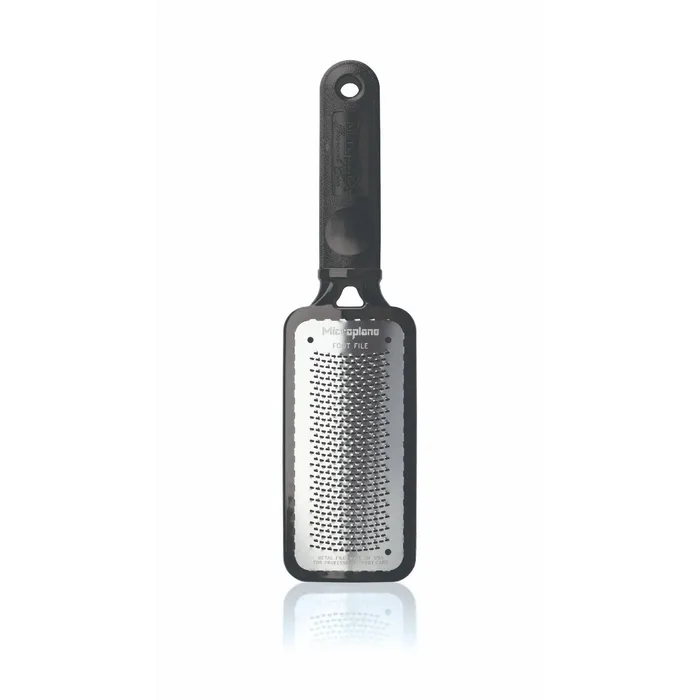
The Microplane Colossal Foot File is our pick: a large 5.25 x 2.25 inch stainless surface with over 400 tiny micro-files that removes thick callus quickly with gentle strokes, wet or dry. The Tweezerman Step-Two-It Foot File is the value pick, a washable two-sided file for regular smoothing. The Amopé Pedi Perfect Electronic Foot File suits people who find manual filing tiring, with a spinning roller and a safety stop, but you keep buying roller refills. Skip the Tweezerman Safety Slide Callus Shaver & Rasp: it uses a razor blade, the podiatry association advises against foot razors, and Tweezerman's own instructions warn not to cut live skin. Best for: anyone with rough heels who wants smooth feet without risking a cut.
Our picks at a glance
- Microplane Colossal Foot File - Buy. A large stainless micro-file that removes thick callus quickly with gentle strokes, no blade required.
- Tweezerman Step-Two-It Foot File - Buy. An inexpensive two-sided file for regular smoothing of dry skin and mild calluses.
- Amopé Pedi Perfect Electronic Foot File - It depends. A battery-powered roller file with a safety stop, easier on tired hands but tied to refills.
- Tweezerman Safety Slide Callus Shaver & Rasp - Skip. A razor-blade callus shaver that removes skin fast, which is exactly the risk.
The verdict in 30 seconds
What mattered most
- Type
- Blade
- Filing surface
- Wet or dry
- Power
- Ongoing cost
Rough heels and calluses are among the most common foot complaints, and the tools to fix them range from a simple file to motorized rollers and razor-blade shavers. The podiatrists' professional association recommends gentle filing after a soak, which rules some of these tools in and one of them out. We compared a stainless steel micro-file, an inexpensive two-sided file, a popular electronic file and a razor callus shaver.
A large stainless micro-file that removes thick callus quickly with gentle strokes, no blade required.
Best for: Anyone with thick heel calluses who wants fast results without a razor.
- Extra-large 5.25 x 2.25 inch filing surface with over 400 tiny bi-directional micro-files.
- Works in waterless pedicures or before bathing, with a soft-grip removable handle.
- Uses Microplane's etching process, from the company best known for its kitchen graters.
- It is sharp and effective, so light pressure matters to avoid overdoing it.
- Microplane warns against use if you are diabetic, have poor circulation, or have inflammation or open wounds.
- Costs more than a basic file.
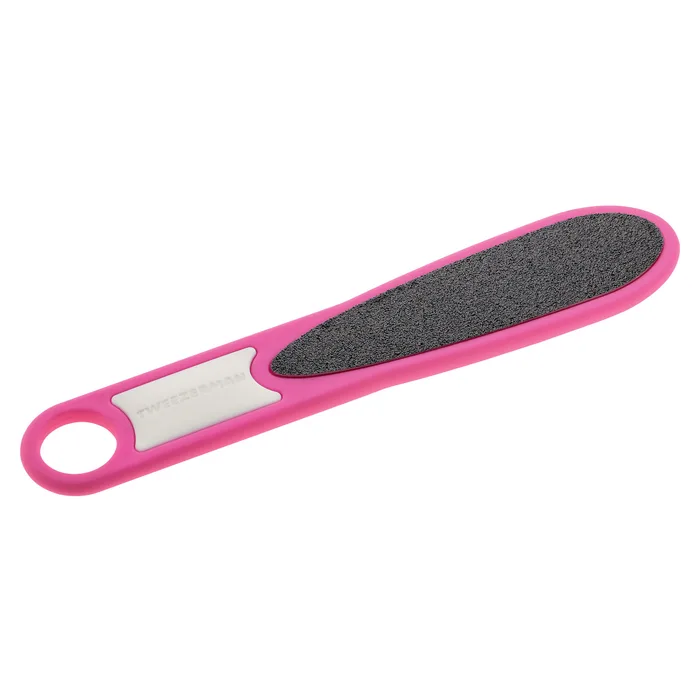
An inexpensive two-sided file for regular smoothing of dry skin and mild calluses.
Best for: People who want an easy weekly routine for mild dry skin and calluses.
- Two sides let you exfoliate and then smooth for a clean finish.
- Washable, reusable and long lasting, with an ergonomic soft-touch handle.
- Hang hook for drying and storage in the shower.
- Slower than a micro-file on very thick calluses.
- Tweezerman publishes little about the abrasive surfaces themselves.
- Best as a maintenance tool rather than a first attack on heavy buildup.
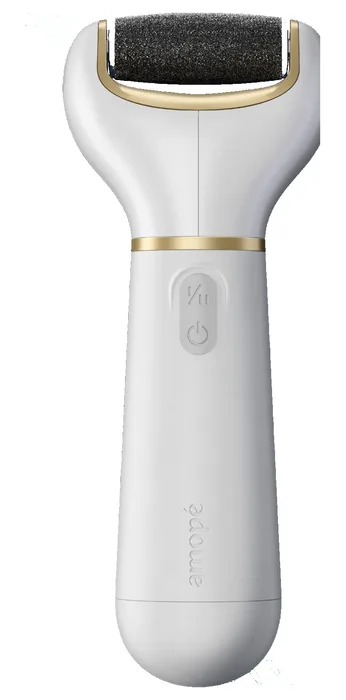
A battery-powered roller file with a safety stop, easier on tired hands but tied to refills.
Best for: People with limited hand strength or big calluses who prefer a powered tool.
- Extra coarse roller head with diamond crystals spins 360 degrees for quick results.
- No sharp blades, plus an integrated safety stop that limits how hard you can press.
- Two speeds, an ergonomic handle, and four AA batteries included.
- Roller heads wear out, so you keep buying refills.
- Amopé calls it splashproof but says it is intended for use in dry settings.
- Runs on AA batteries rather than a rechargeable battery in this version.
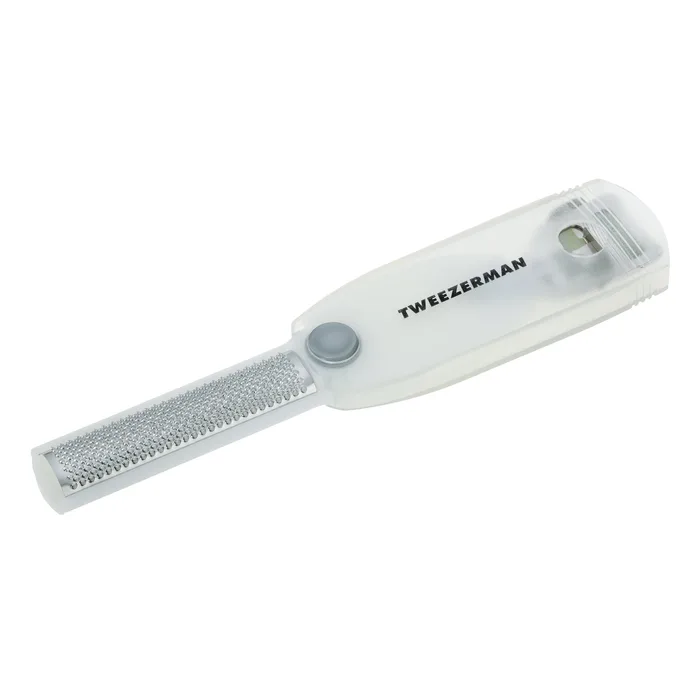
A razor-blade callus shaver that removes skin fast, which is exactly the risk.
Best for: Nobody at home; leave blade work on thick calluses to a podiatrist.
- A slide-and-lock mechanism hides the blade when not in use.
- Includes a rasp side for smoothing after shaving.
- Replacement blades are sold separately.
- It uses a razor blade; the podiatry association advises against foot razors because they can cause permanent damage if used incorrectly.
- Tweezerman's own instructions warn: handle with extreme care, blades are sharp, do not cut live skin.
- Not for anyone with diabetes, hemophilia, poor circulation or irritated skin, per Tweezerman.
- A file does the same job more slowly with far less chance of a cut.
| Criteria | Microplane Colossal Foot File Top pick | Tweezerman Step-Two-It Foot File | Amopé Pedi Perfect Electronic Foot File | Tweezerman Safety Slide Callus Shaver & Rasp |
|---|---|---|---|---|
| Verdict | Buy it | Buy it | It depends | Skip it |
| Best for | Anyone with thick heel calluses who wants fast results without a razor. | People who want an easy weekly routine for mild dry skin and calluses. | People with limited hand strength or big calluses who prefer a powered tool. | Nobody at home; leave blade work on thick calluses to a podiatrist. |
| Price tier | $$ · mid-range | $ · budget | $$ · mid-range | $ · budget |
| Type | Stainless micro-file rasp | Two-sided manual file | Electronic roller file | Razor-blade shaver + rasp |
| Blade | No | No | No | Yes, replaceable razor |
| Filing surface | 5.25 x 2.25 in, 400+ micro-files | Two sides | Extra coarse diamond crystal roller | Blade plus rasp |
| Wet or dry | Both | Washable | Splashproof, intended for dry use | Not specified |
| Power | Manual | Manual | 4 AA batteries | Manual |
| Ongoing cost | None | None | Roller refills | Replacement blades |
| Safety features | No blade | No blade | Safety stop, no blade | Blade can slide and lock away |
| Best for | Thick heel calluses | Regular maintenance | Low hand strength | Not recommended at home |
Which one is right for you?
- Anyone with thick heel calluses who wants fast results without a razor. Buy it Microplane Colossal Foot File
- People who want an easy weekly routine for mild dry skin and calluses. Buy it Tweezerman Step-Two-It Foot File
- People with limited hand strength or big calluses who prefer a powered tool. It depends Amopé Pedi Perfect Electronic Foot File
- Nobody at home; leave blade work on thick calluses to a podiatrist. Skip it Tweezerman Safety Slide Callus Shaver & Rasp
How we judged the field
Five things decide whether a foot file is worth buying: how safely it removes skin, how effective it is on thick callus, whether it works wet or dry, what it costs to keep using and how easy it is to control. Safety comes first, because feet heal slowly and a cut on the sole can become infected. Effectiveness matters because a tool that barely works gets abandoned.
The field splits into manual files and rasps, electronic roller files, and razor-style callus shavers. The podiatrists’ professional association recommends a pumice stone, foot file or scrub after a soak and advises against foot razors. We picked a premium manual file, a budget manual file, an electronic file and a popular razor shaver, then compared them on each maker’s published details and that guidance.
The Microplane Colossal Foot File is the most effective blade-free tool here. Its filing surface is extra large at 5.25 x 2.25 inches and carries over 400 tiny bi-directional micro-files, made with Microplane’s own etching process. The result is a file that cuts callus quickly with gentle strokes, so you do not need to press hard. It works in waterless pedicures or before bathing, and the soft-grip handle is removable for cleaning. The trade-off of a sharp file is that it rewards a light touch; overdoing it can leave skin tender. Microplane also warns against using it if you are diabetic, have poor circulation, or have inflammation or open wounds. It costs more than a basic file, but it is the tool to buy if you have thick heel calluses and want real results without a blade.
The Tweezerman Step-Two-It Foot File is the budget choice for regular upkeep. It is two-sided, so you exfoliate with one side and smooth with the other, and Tweezerman describes it as washable, reusable and long lasting. The soft-touch handle is comfortable to grip in the shower, and a hang hook lets it drip dry. Because it removes less skin per stroke, it is also harder to overdo. It is slower than a micro-file on heavy buildup, and Tweezerman publishes little about the abrasive surfaces themselves, so it is best thought of as a maintenance tool. Used once or twice a week, it keeps mild dry skin and calluses in check for very little money. If your heels are already smooth and you want to keep them that way, this is all you need.
The Amopé Pedi Perfect Electronic Foot File does the work for you. An extra coarse roller head with diamond crystals spins 360 degrees, there are two speeds, and Amopé builds in a safety stop that limits how hard you can press, with no sharp blades anywhere. It runs on four AA batteries, which are included. For people with limited hand strength or large calluses, that makes a real difference. The downsides are ongoing. Roller heads wear out, so you keep buying refills, and Amopé calls the device splashproof but says it is intended for use in dry settings, so it is not a shower tool. This version uses AA batteries rather than a rechargeable battery. If filing by hand is hard for you, it is a good option. If not, a manual file is cheaper to own.
The Tweezerman Safety Slide Callus Shaver & Rasp is the tool we would keep out of your bathroom. It uses a razor blade to shave callus off, with a slide-and-lock mechanism to hide the blade when it is not in use and a rasp on the other side. The problem is the blade itself. The American Podiatric Medical Association advises against letting technicians use foot razors because they can cause permanent damage if used incorrectly, and recommends a stone, file or scrub instead. Tweezerman’s own instructions warn you to handle it with extreme care, that the blades are sharp, and not to cut live skin, and say not to use it with diabetes, hemophilia, poor circulation or irritated skin. A file does the same job a little more slowly with far less chance of a cut. Leave blade work on thick calluses to a podiatrist.
Microplane Colossal Foot File vs Tweezerman Step-Two-It Foot File: which should you buy?
The Microplane Colossal and the Tweezerman Step-Two-It are both manual files, and the difference is speed. The Colossal’s large surface and sharp micro-files remove thick callus in a few gentle strokes, while the Step-Two-It works more slowly and suits regular upkeep.
If your heels are already rough and cracked, start with the Colossal. If you just want to keep feet smooth once a week, the Step-Two-It costs less and does the job. Either one is a safer home choice than a razor shaver.
What to look for
- No blade: files and stones remove callus without the cut risk of razors.
- Filing surface size: a larger surface covers heels faster with less pressure.
- Wet or dry use: check whether the tool is meant for the shower or dry skin.
- Ongoing costs: electronic files need refill heads, razors need blades.
- Easy cleaning: a removable handle or washable design keeps the tool hygienic.
- Clear safety warnings: good makers tell you when not to use the tool.
Our final take
File, do not shave. The Microplane Colossal Foot File is our pick because its large micro-file surface removes thick callus quickly without a blade, wet or dry. The Tweezerman Step-Two-It is the value choice for weekly upkeep. The Amopé Pedi Perfect is worth it if filing by hand is hard for you, as long as you accept buying refills. Skip razor callus shavers like the Tweezerman Safety Slide: the podiatry association advises against foot razors, and the tool’s own instructions warn against cutting live skin. If you have diabetes or poor circulation, ask a professional before using any of them.
Questions, answered
Should I use a foot file wet or dry?
Many people soak first, and the podiatry association suggests soaking feet in warm water for at least five minutes before using a stone, scrub or file. Some files, like the Microplane Colossal, work wet or dry. Dry filing can remove skin faster, so use a lighter touch. Follow the directions for your specific tool.
Why not use a callus shaver or razor?
A razor removes skin very quickly and can easily cut into live skin, which risks bleeding and infection. The American Podiatric Medical Association advises against letting technicians use foot razors because of the risk of permanent damage when used incorrectly. Tweezerman's own shaver instructions warn not to cut live skin. A file takes a little longer but is much more forgiving.
How often should I file my feet?
Once or twice a week is plenty for most people. Filing too often or too hard can make skin sore and may encourage the body to build callus back up. Stop when the skin feels smooth rather than trying to remove every trace of callus. Moisturizing afterward helps keep skin soft.
Is a foot file safe if I have diabetes?
People with diabetes or poor circulation should be very cautious with any foot tool, because small injuries can become serious. Microplane, Tweezerman and others warn against use in these cases. Ask a podiatrist or physician before filing calluses yourself. Professional care is the safer route.
Electronic or manual foot file?
Electronic files are easier if you have limited hand strength or large calluses, and many include safety features like a pressure stop. Manual files are cheaper, need no batteries or refills, and give you fine control. For most people, a good manual file is enough.
Deciding between the top two? See our head-to-head: Microplane Colossal Foot File vs Tweezerman Step-Two-It Foot File.
More Beauty & Grooming reviews
 The Best Hair Clippers for Home Haircuts: 4 Compared (and One to Skip)
  The Best Hair Dryers: 4 Compared (and One to Skip)
  The Best Hair Straighteners: 4 Compared (and One to Skip)
  The Best At-Home IPL Hair Removal Devices: 4 Compared (and One to Skip)
  The Best LED Face Masks: 4 Compared (and One to Skip)
  The Best Lighted Makeup Mirrors: 4 Compared (and One to Skip)